Lute
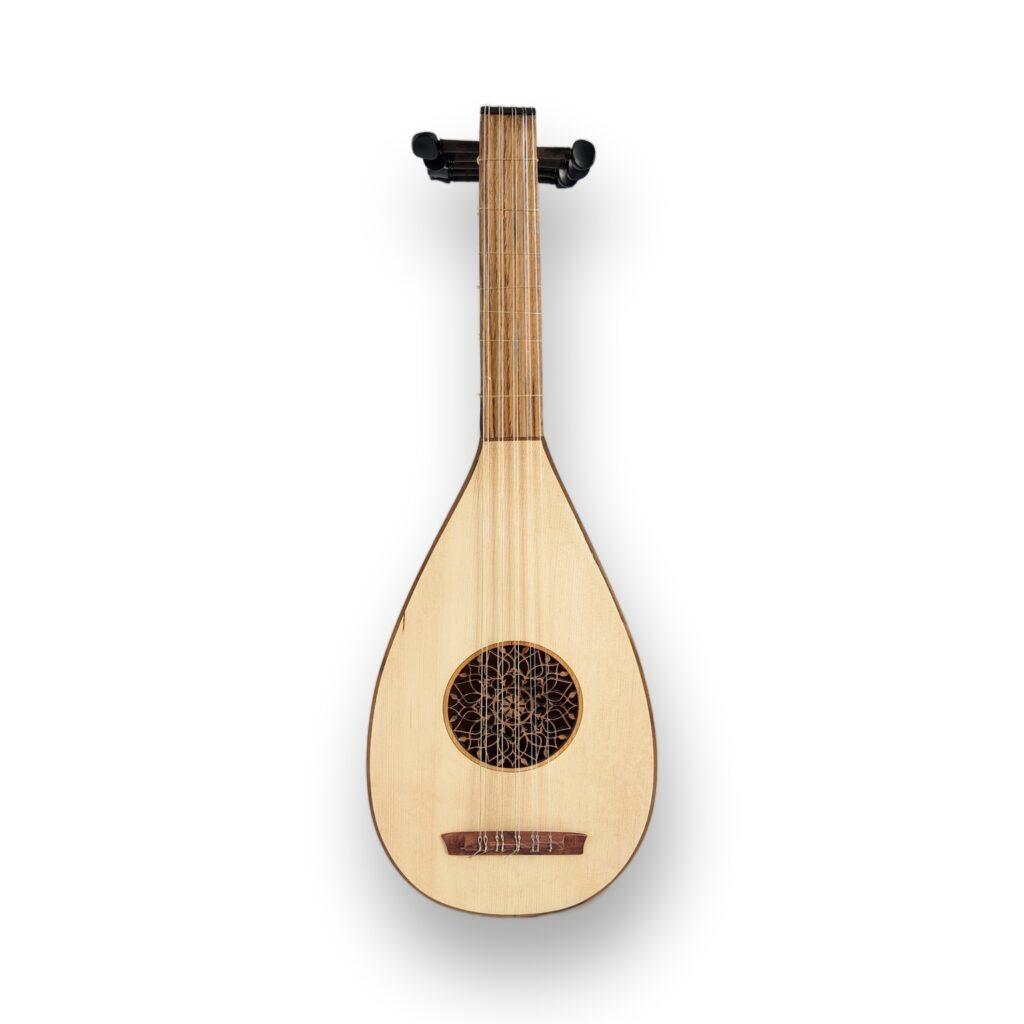
The Renaissance lute is a plucked, fretted string instrument built around a deep, ribbed pear-shaped body and a neck that ends in a sharply angled pegbox — a design lineage tracing back to the Arabic oud, carried into medieval Europe and refined across the 15th to 17th centuries into the instrument recognized today as the lute proper.
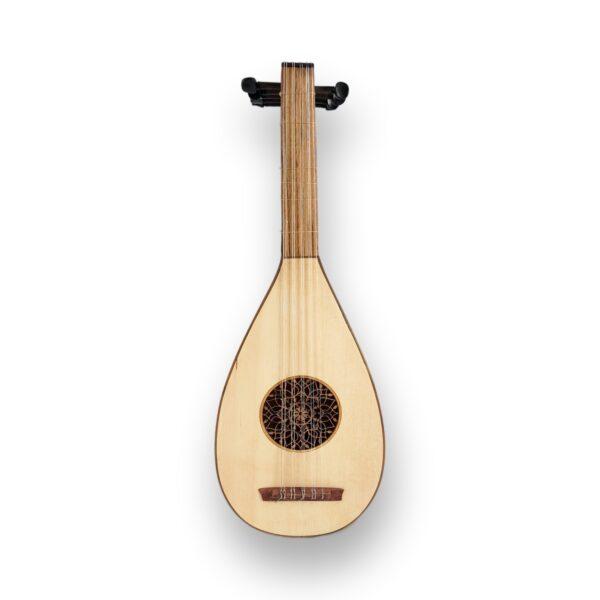
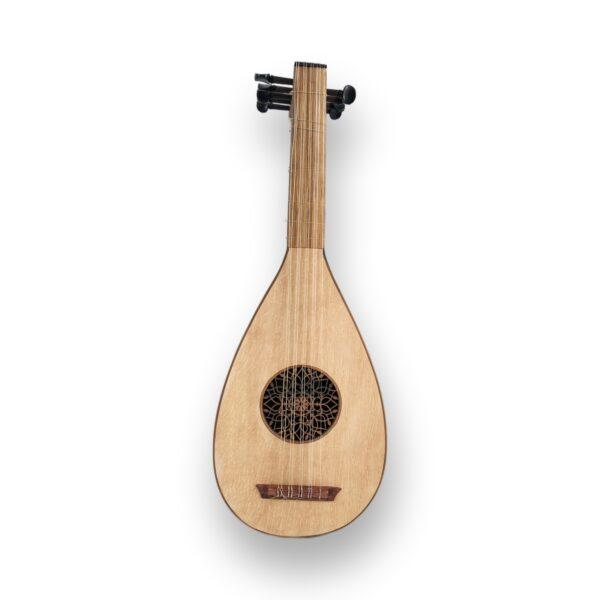
Construction follows a set of conventions distinct from its Middle Eastern ancestor. The bowl is built from narrow, bent wood staves (rib construction) — maple or mahogany among the common body woods — closed by a thin spruce soundboard carrying a carved, latticed sound-hole rosette (the “rose”). Gut frets are tied around the neck rather than fixed, allowing period-accurate adjustment, and strings run in courses — paired strings tuned in unison, with the topmost course (the chanterelle) traditionally left single for melodic clarity.
Lute Sizes and the Renaissance Consort
Lutes were built in a family of sizes tuned to different registers, so a Renaissance consort could cover a full vocal range much like a string quartet does today. From smallest/highest to largest/lowest: descant/treble (roughly 44-52 cm string length), alto (roughly 55-60 cm), tenor (roughly 64-72 cm), bass (roughly 74-78 cm), and great bass (roughly 88-95 cm). Course count shifted with period too — 5-course lutes (a single chanterelle plus four double courses) were standard through the mid-to-late 15th century, before 6- and 7-course instruments became the norm in the century that followed.
Tapadum’s Lute Collection
Every lute in this collection is built at Tapadum’s own workshop — hand-carved rib bodies, spruce soundboards, tied gut frets, and a carved rosette on each instrument, finished and individually inspected in-house before listing. Body wood varies by model (maple, mahogany, and other tonewoods depending on the build), each offering a distinct weight and tonal color while sharing the same rib-and-rose construction discipline.
Who Plays a Renaissance Lute Today?
Early music ensembles, historically-informed performance (HIP) practitioners, lute song accompanists, and collectors of Renaissance and medieval instruments make up the core audience. The lute suits solo repertoire — dance forms, fantasias, lute song accompaniment — as well as consort playing alongside recorders, viols, and other period instruments, and works equally well as a display piece for collectors of early instruments.
Worldwide shipping & 15-day return.
Frequently Asked Questions
What is a Renaissance lute?
What is the difference between a lute and an oud?
How many courses does a Renaissance lute have?
What size lute should I choose?
What wood is a lute body made from?