Description
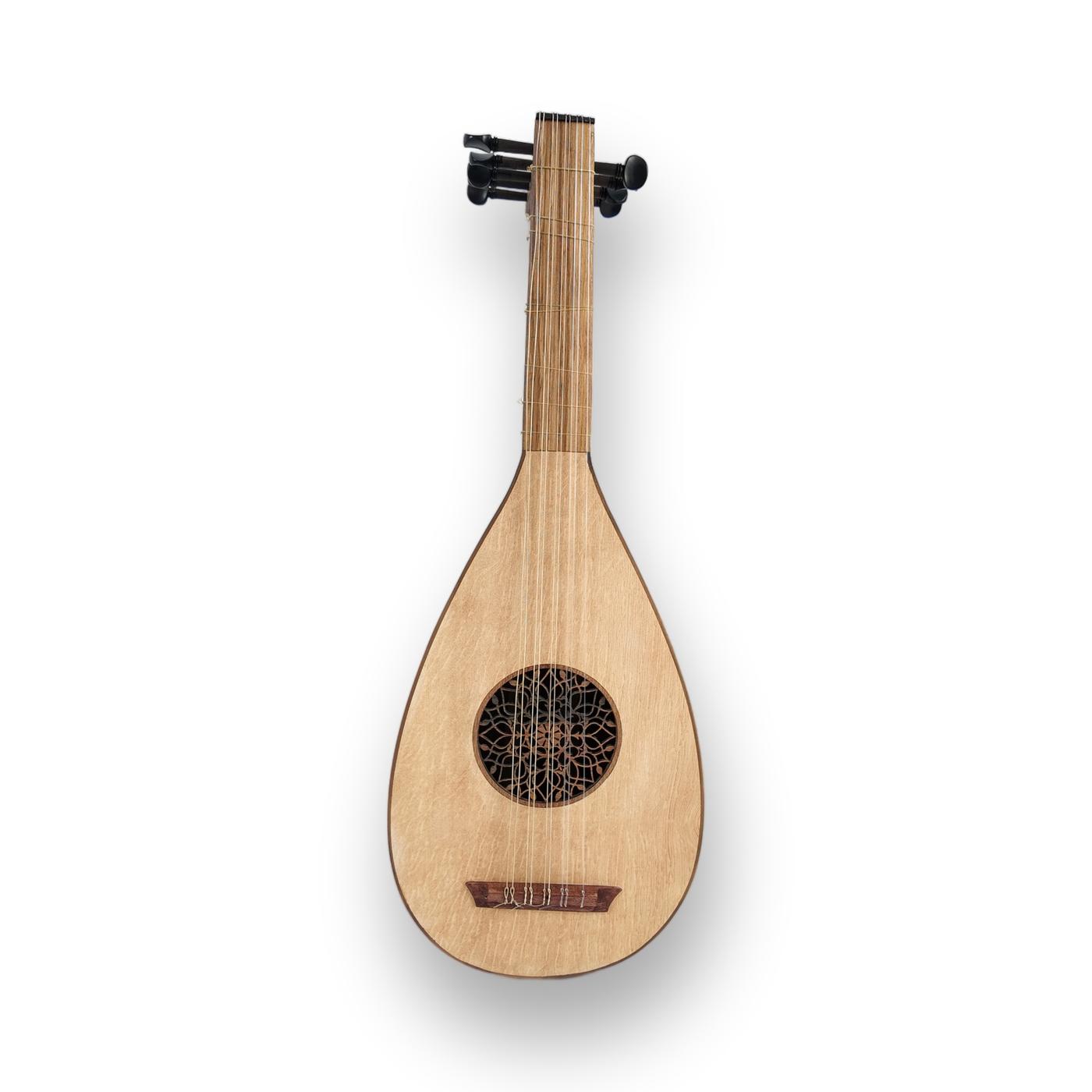
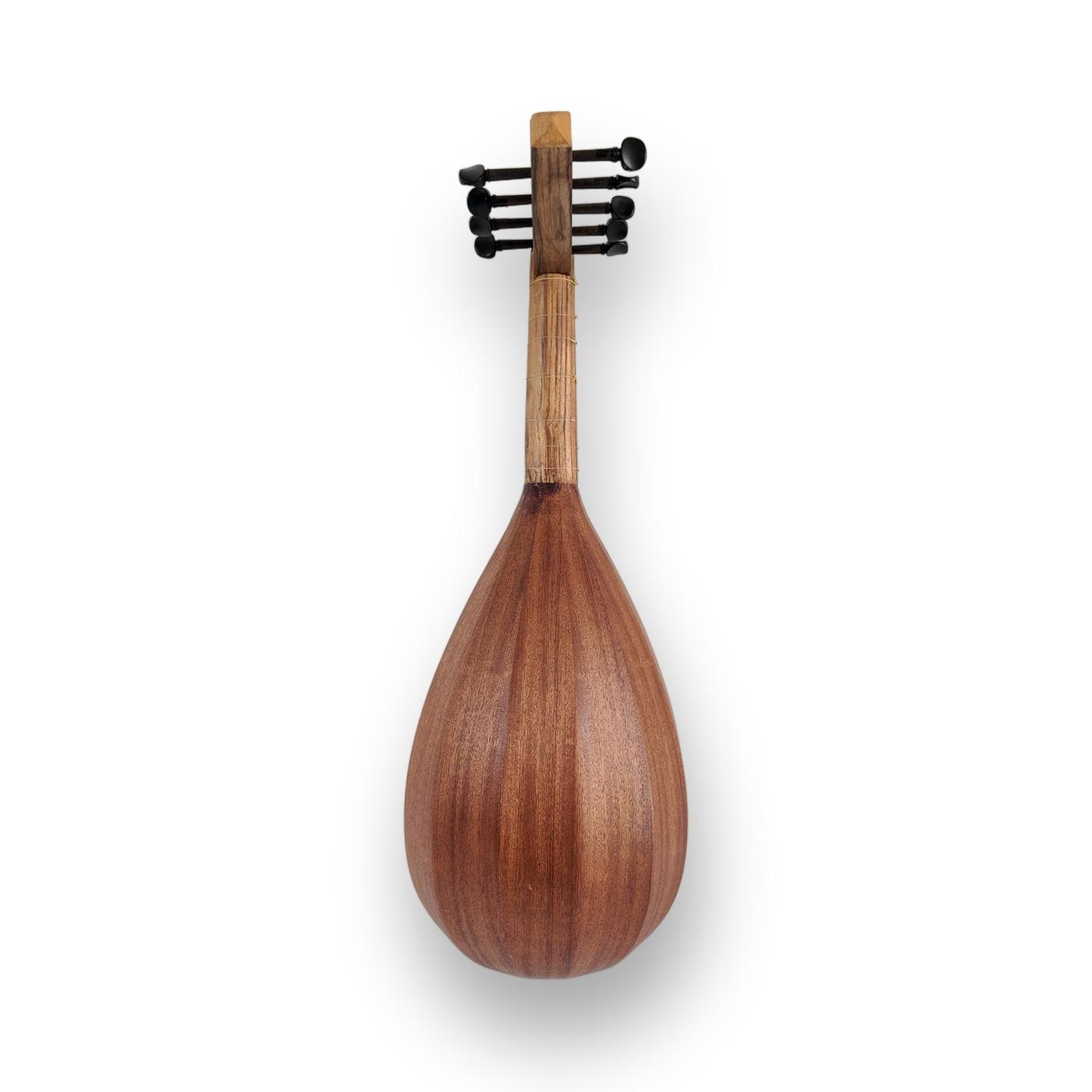
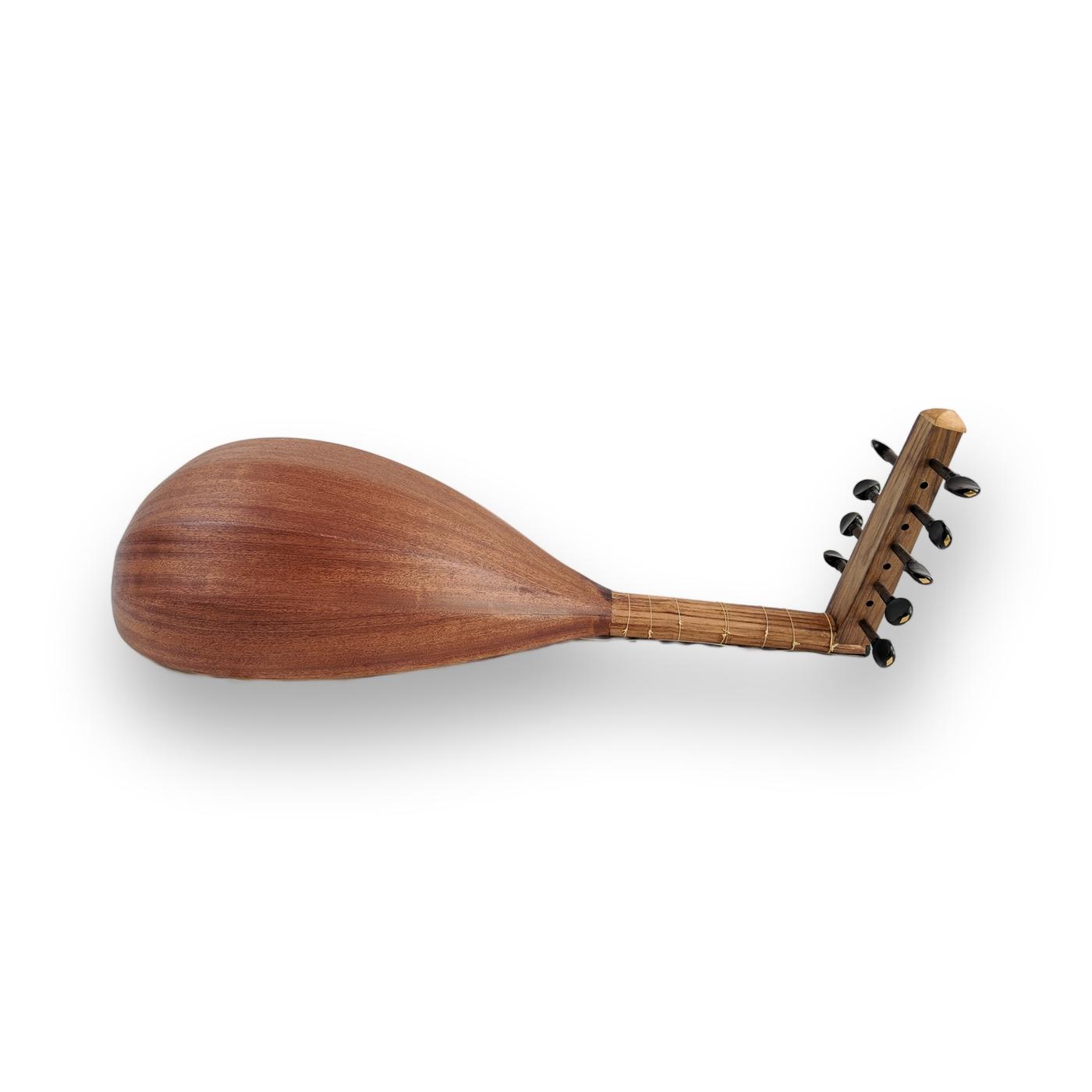
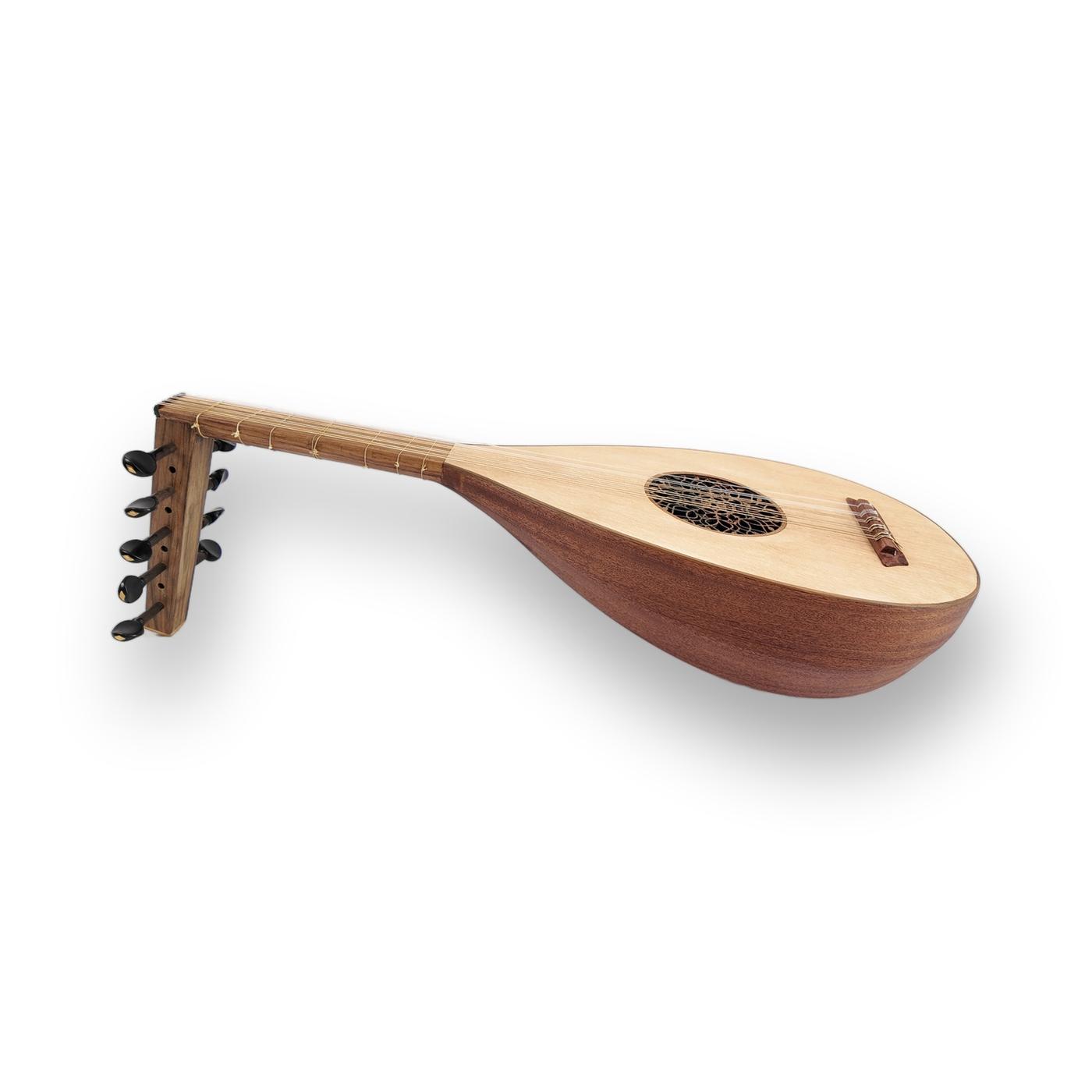
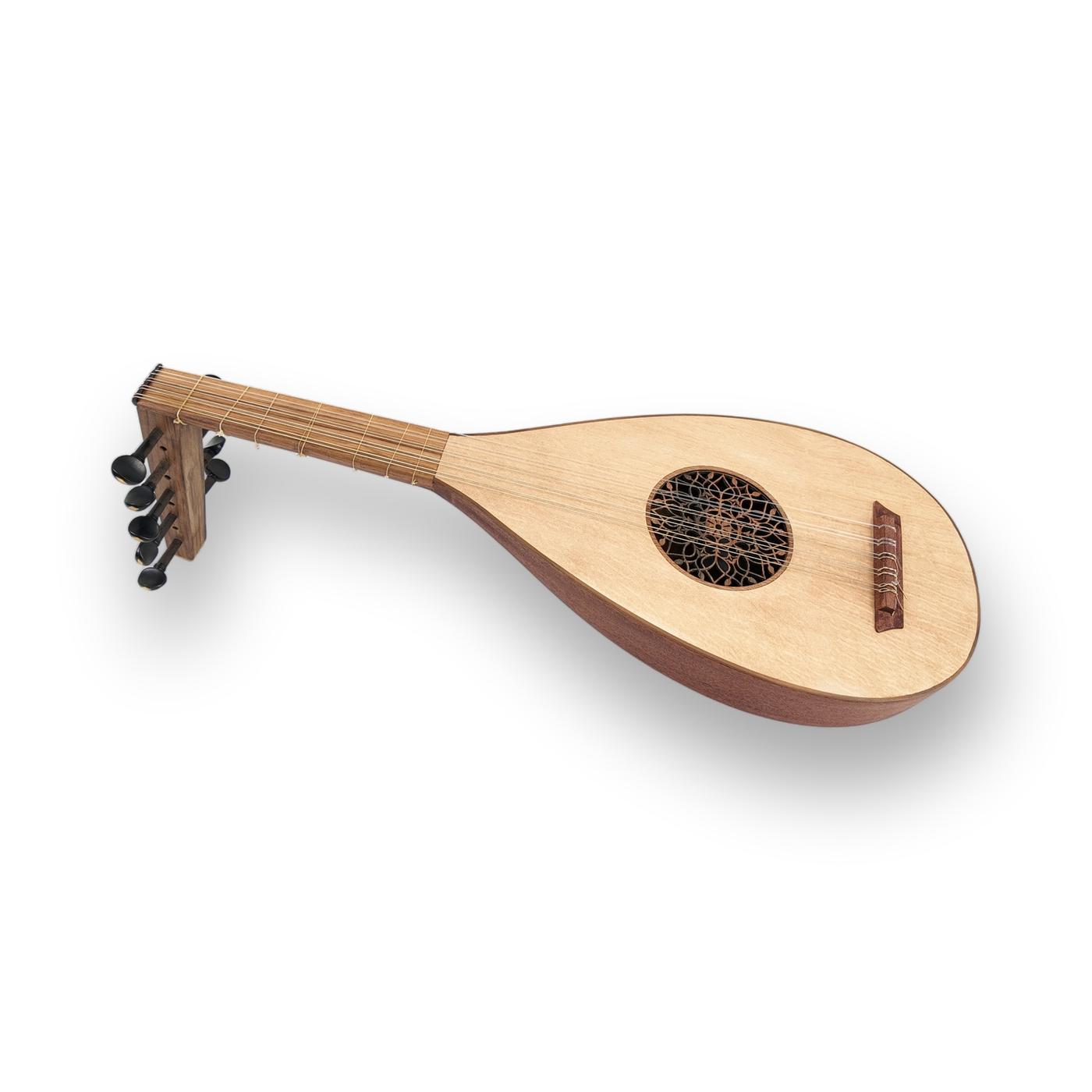
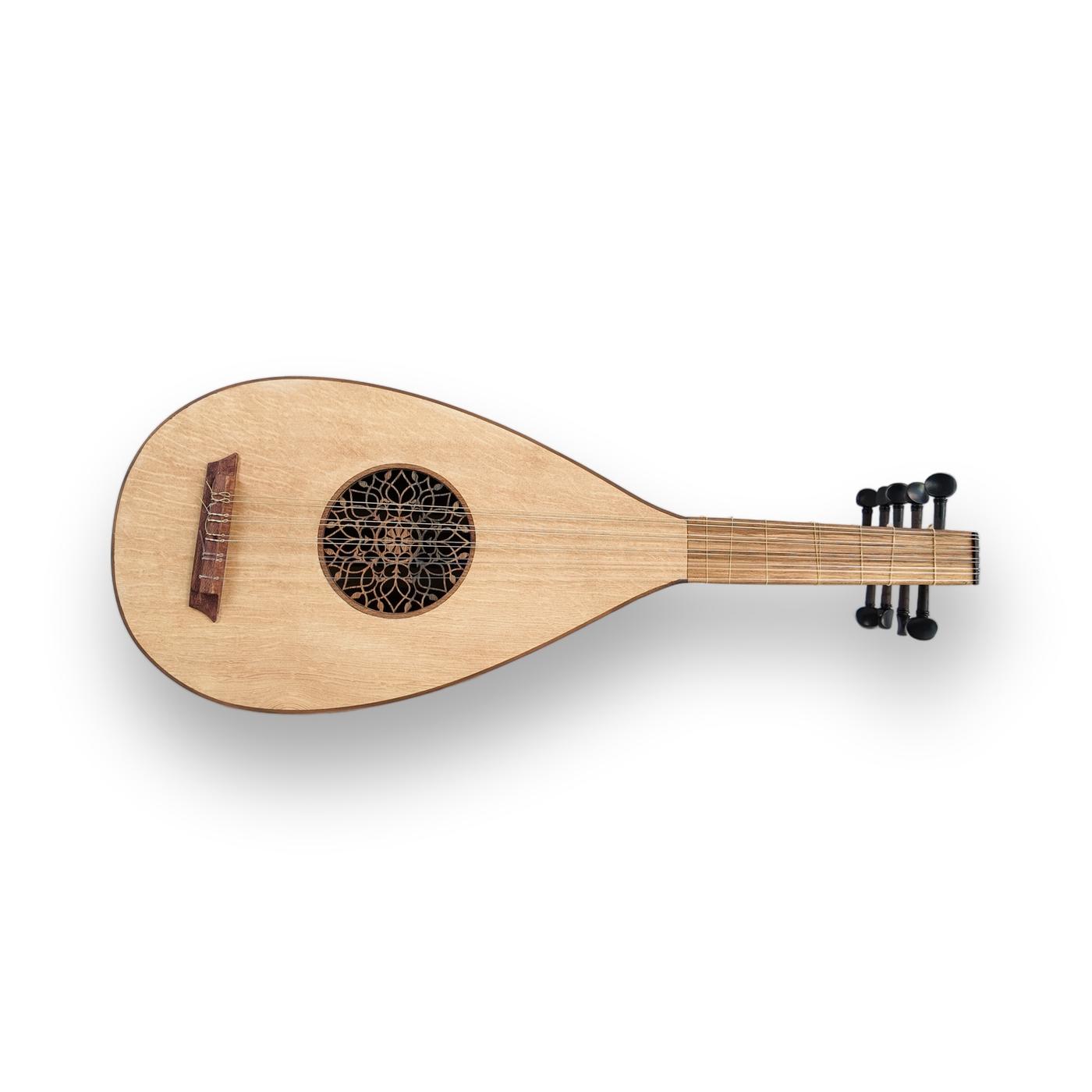
The Tapadum Renaissance Alto Lute is a hand-built, five-course lute voiced in the alto register of the historical Renaissance consort — a deep, ribbed pear-shaped body, an angled pegbox, and tied gut-style frets, built entirely at Tapadum’s own workshop. It follows the construction logic of the 15th-century lute: a single top course (the chanterelle) paired with four double courses, sitting between the descant and tenor voices of a period consort.
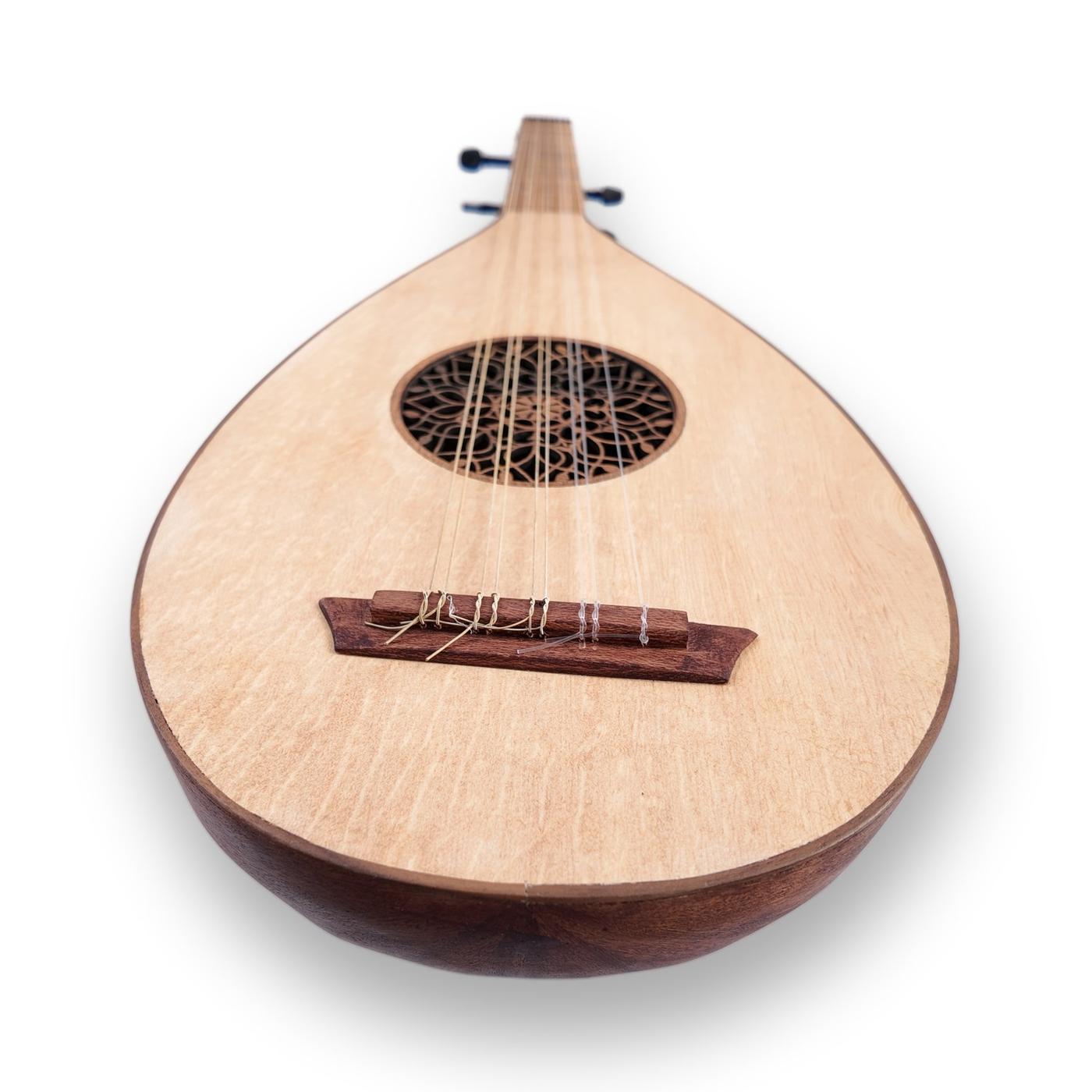
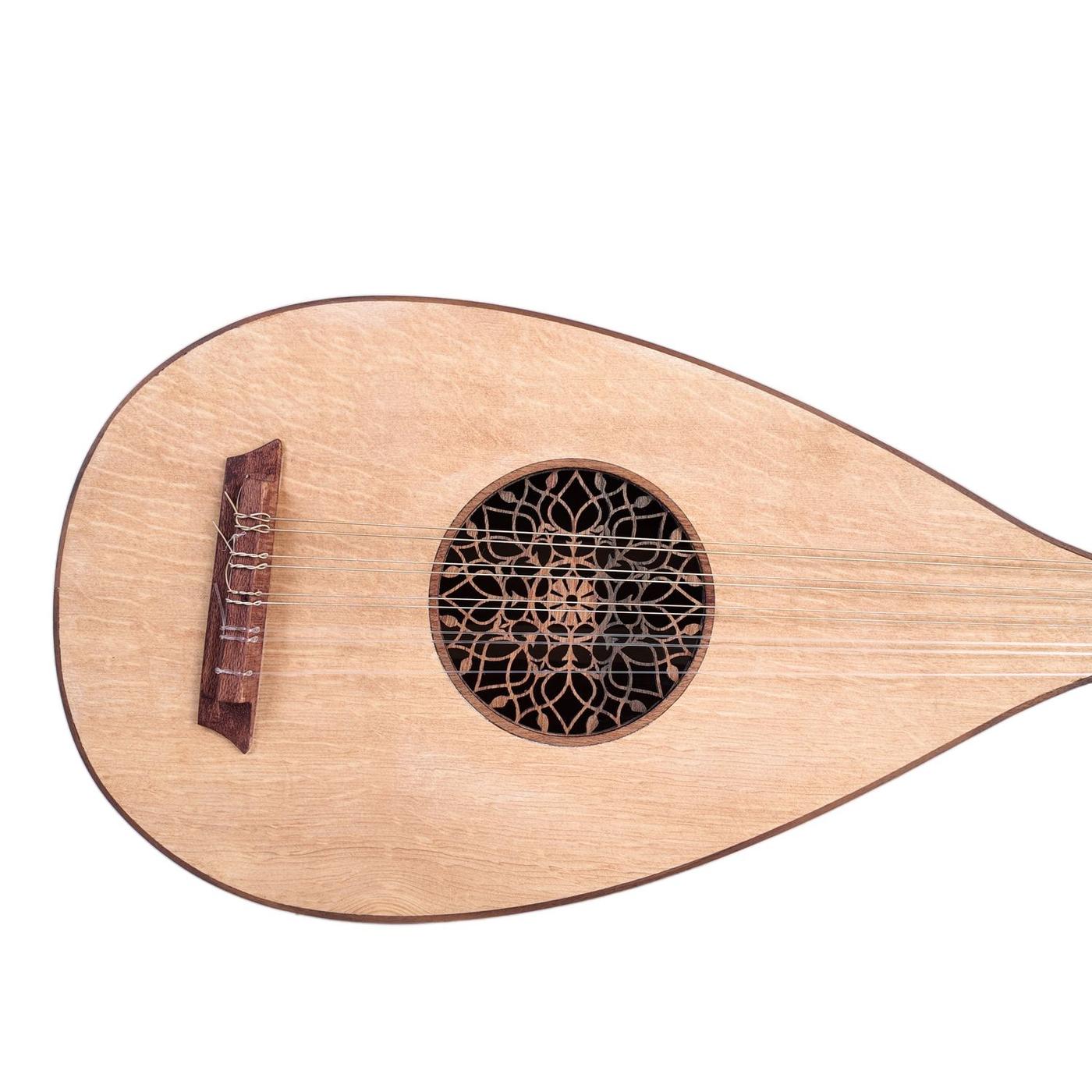
The body is carved from mahogany ribs, bent and glued into the lute’s characteristic pear-shaped bowl, closed by a spruce soundboard. Mahogany brings a denser, heavier body than lighter tonewoods, and tends toward a warmer, fuller low end with longer sustain — a tonal profile players favor when they want more body and depth under the melodic line. The soundboard carries a carved, latticed rosette cut directly into the spruce top rather than applied as a separate piece, and the pegbox bends back sharply from the neck in the angled profile that distinguishes a lute from its fretless oud ancestor.
Specifications
| Type | 5-course Renaissance lute (alto range) |
| Total length | 65 cm |
| String length (mensur) | 55 cm |
| Body (bowl) size | 40 x 23 x 15 cm |
| Strings | 9 strings in 5 courses (2+2+2+2+1) |
| Body wood | Mahogany |
| Soundboard | Spruce |
| Frets | Tied, adjustable |
Who This Lute Suits
This lute is built for early music ensembles, historically-informed performance (HIP) students and professionals, lute song accompanists, and collectors assembling a Renaissance instrument collection. Players who want a fuller, warmer voice under solo repertoire — or extra low-end presence in a consort setting — often lean toward the mahogany build over a lighter-bodied option, while still filling the same mid-high alto voice alongside other period string instruments.
Repertoire and Playing Style
The five-course layout suits the earlier end of the Renaissance lute repertoire — 15th-century dance forms, early fantasias, and lute song accompaniment, where the simpler course structure keeps voicing transparent. Renaissance lutes of this design were commonly strung in a fourths-thirds pattern (fourths between most courses, with a third worked in lower on the neck), a tuning logic carried forward from the historical instrument this build follows. The added sustain of the mahogany body rewards slower, sustained lute-song accompaniment and long melodic lines as much as the faster dance repertoire.
Care and Maintenance
Tied frets will need periodic repositioning as the gut settles, and can be replaced when worn — keep spares on hand if you play regularly. Store the instrument away from direct heat and sudden humidity swings, which affect the spruce soundboard’s response over time, and ease string tension slightly during long storage to protect the bowl and neck joint.
Worldwide shipping & 15-day return.