Description
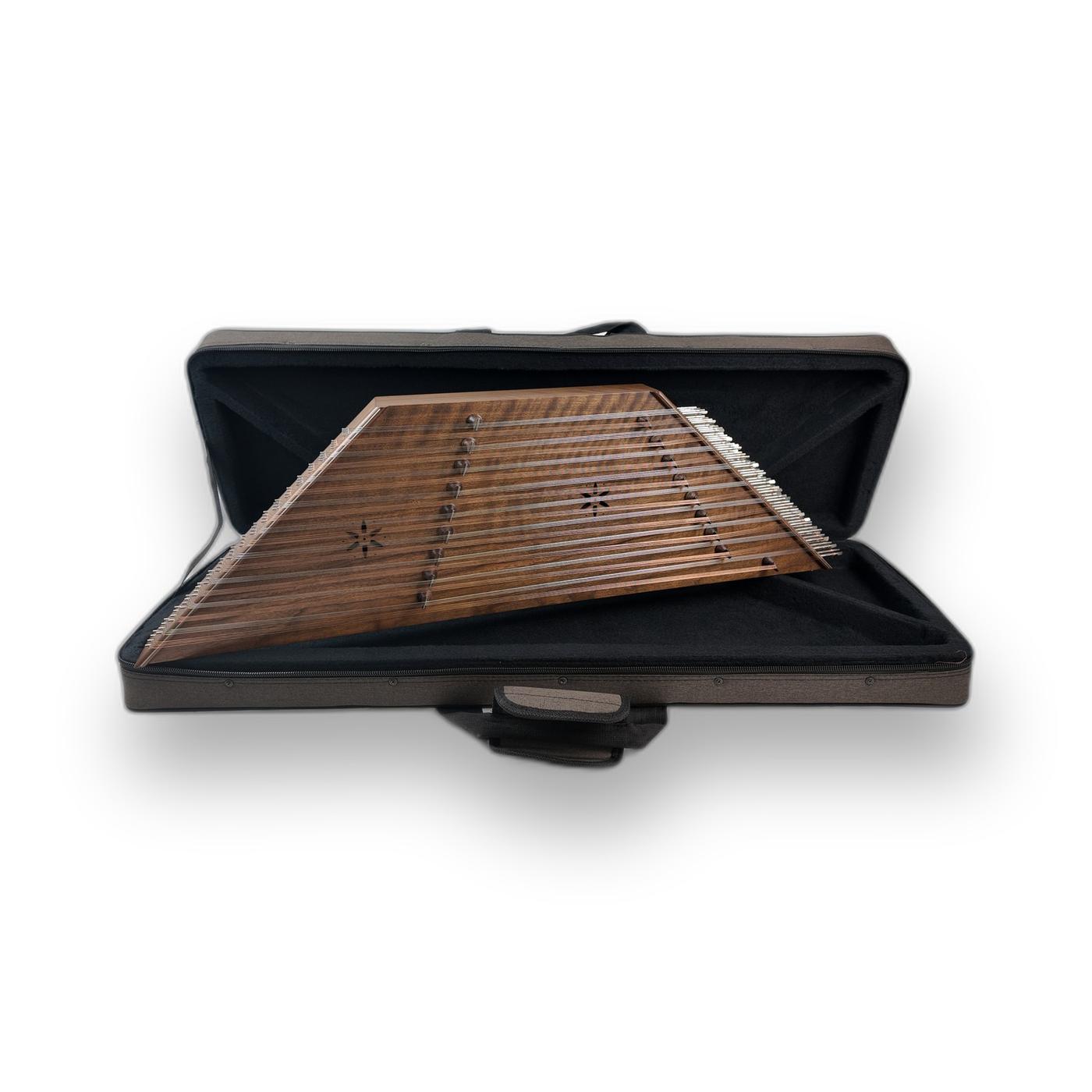
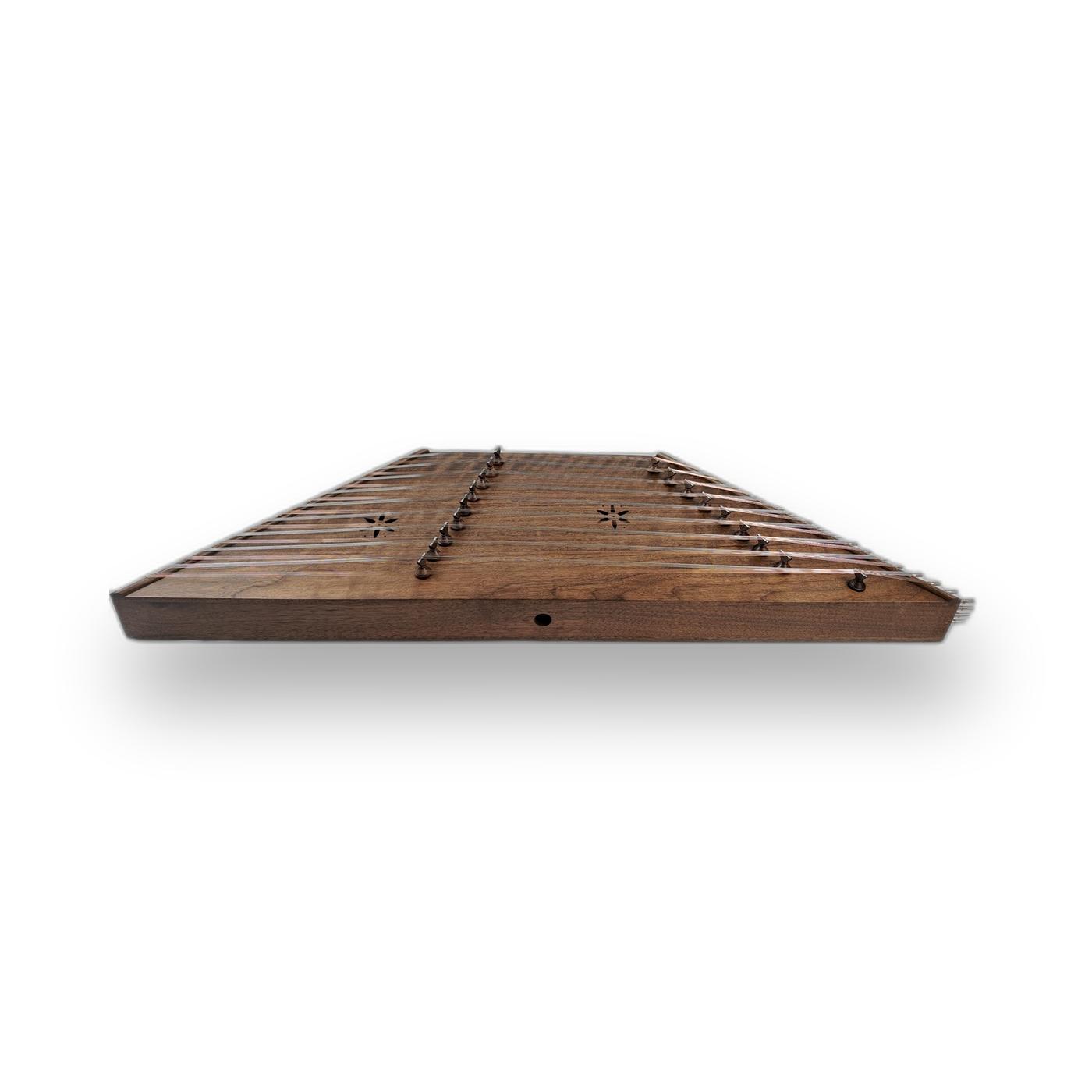
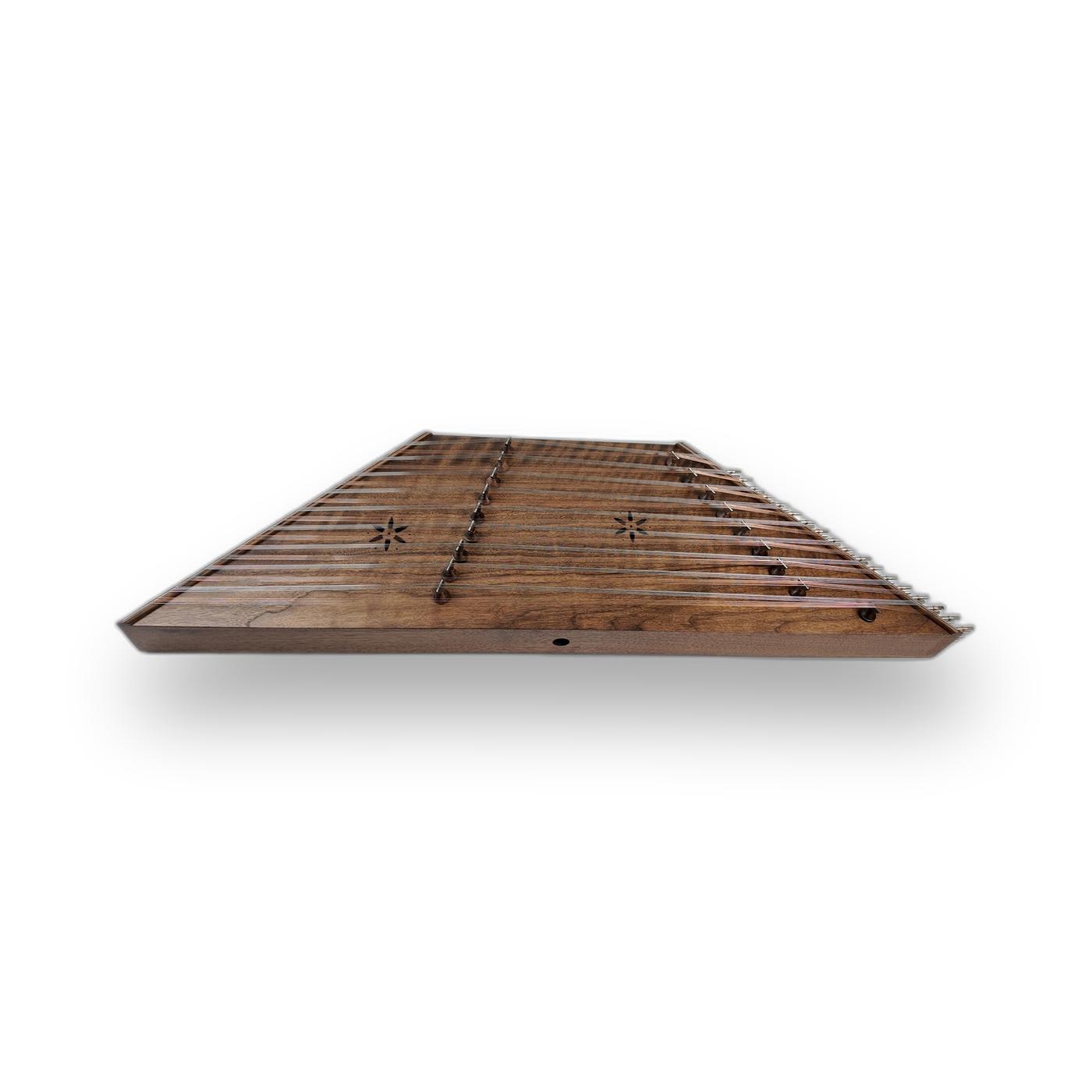
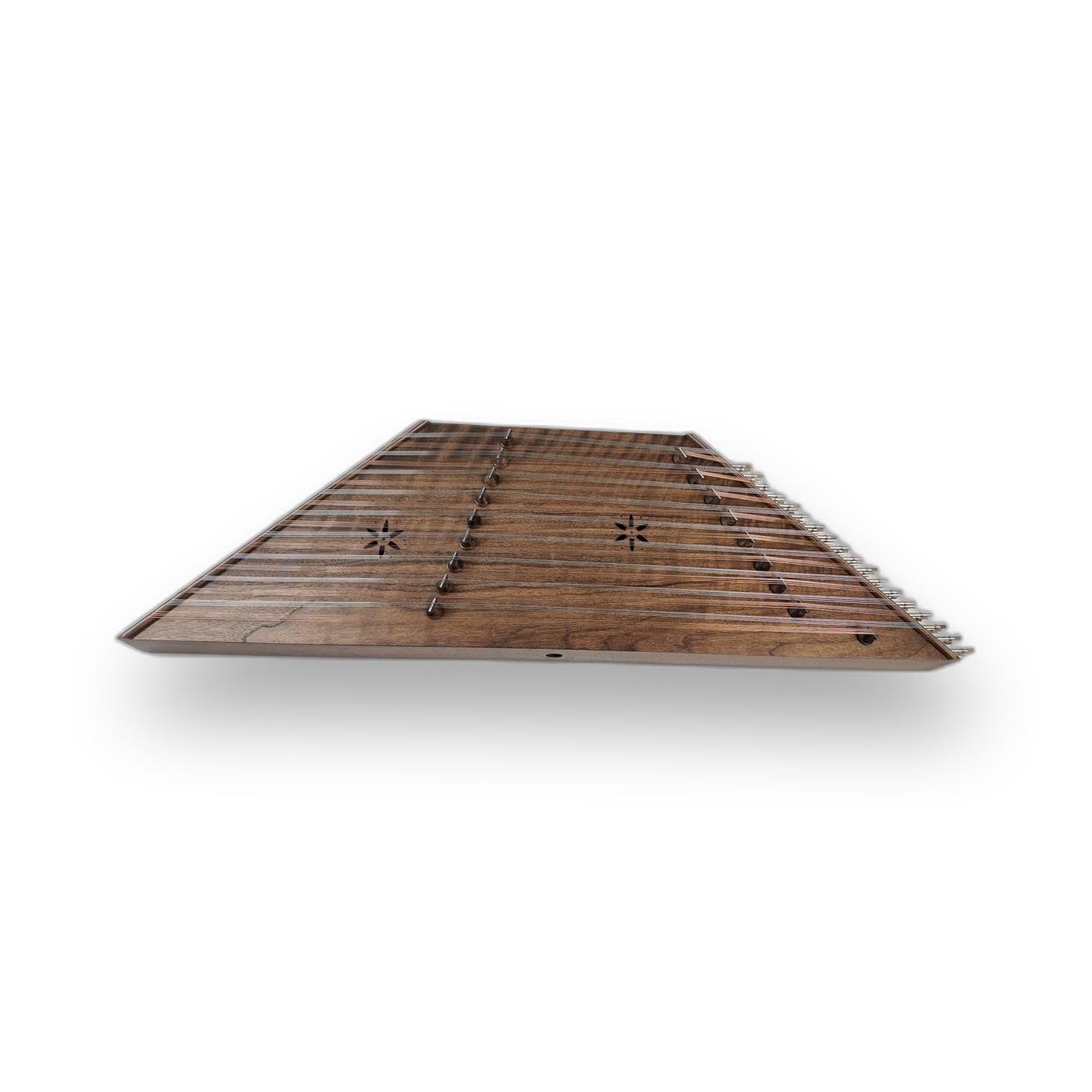
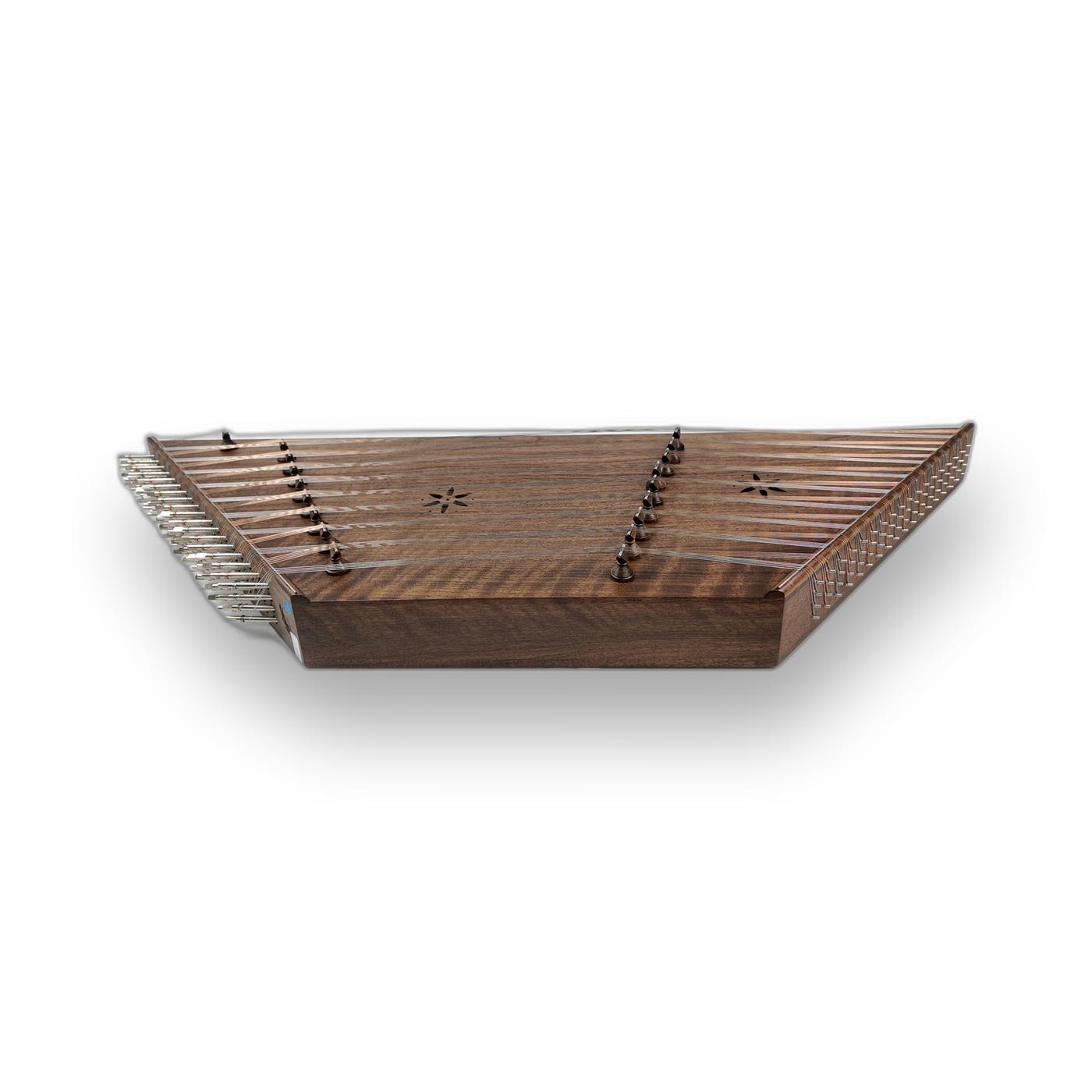
This Persian santur is a hand-built 9-bridge hammered dulcimer from the workshop of Latifi. The santur is the trapezoidal struck-string instrument at the heart of Persian classical music, played with a pair of light wooden mallets — and this is the full-size standard model that students and performers rely on.
Latifi builds in the tradition of Persian santur making, in which the instrument has been refined over generations. This is a traditional diatonic santur, made by hand and voiced for the warm resonance and clear articulation that define the dastgah repertoire.
Walnut body and resonant soundboard
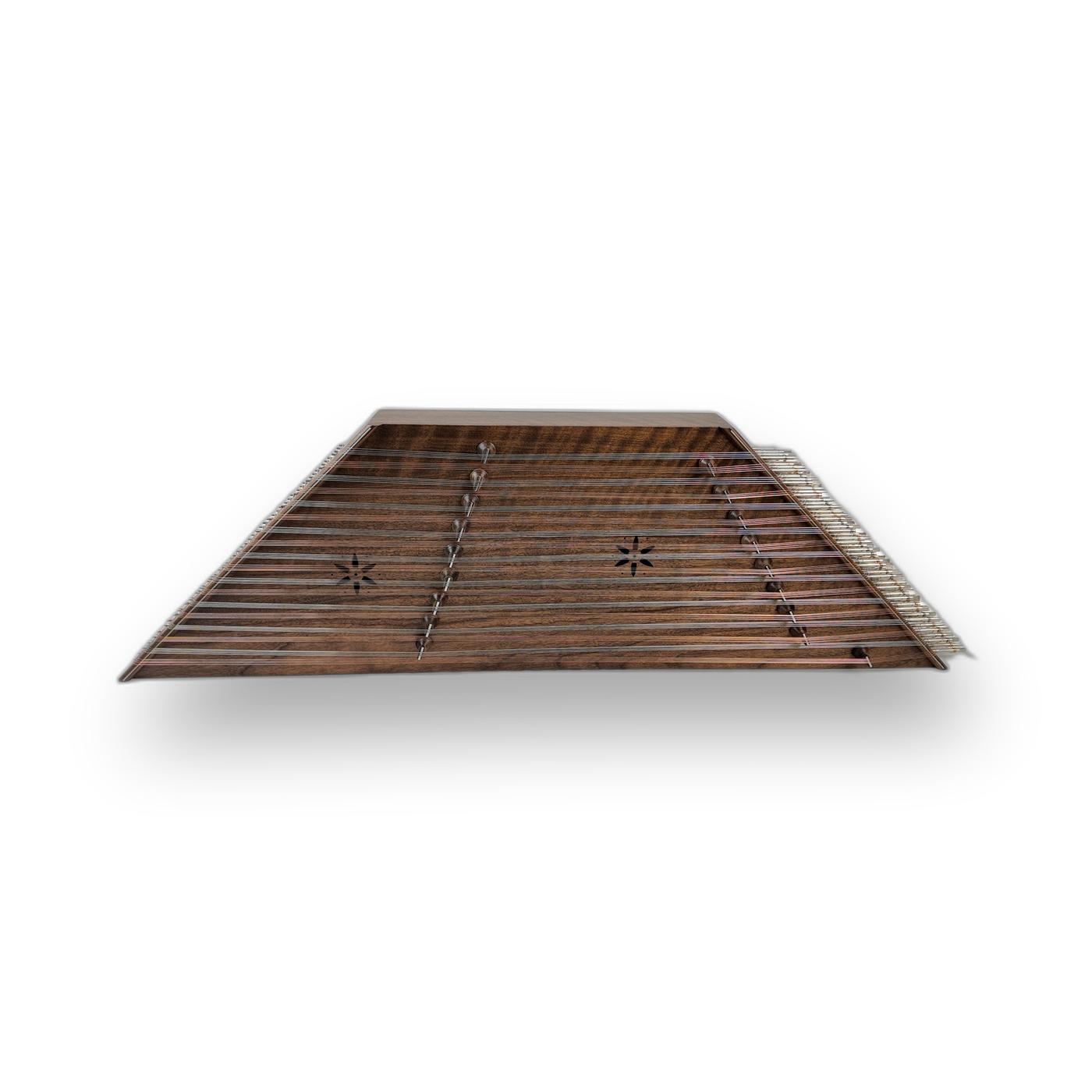
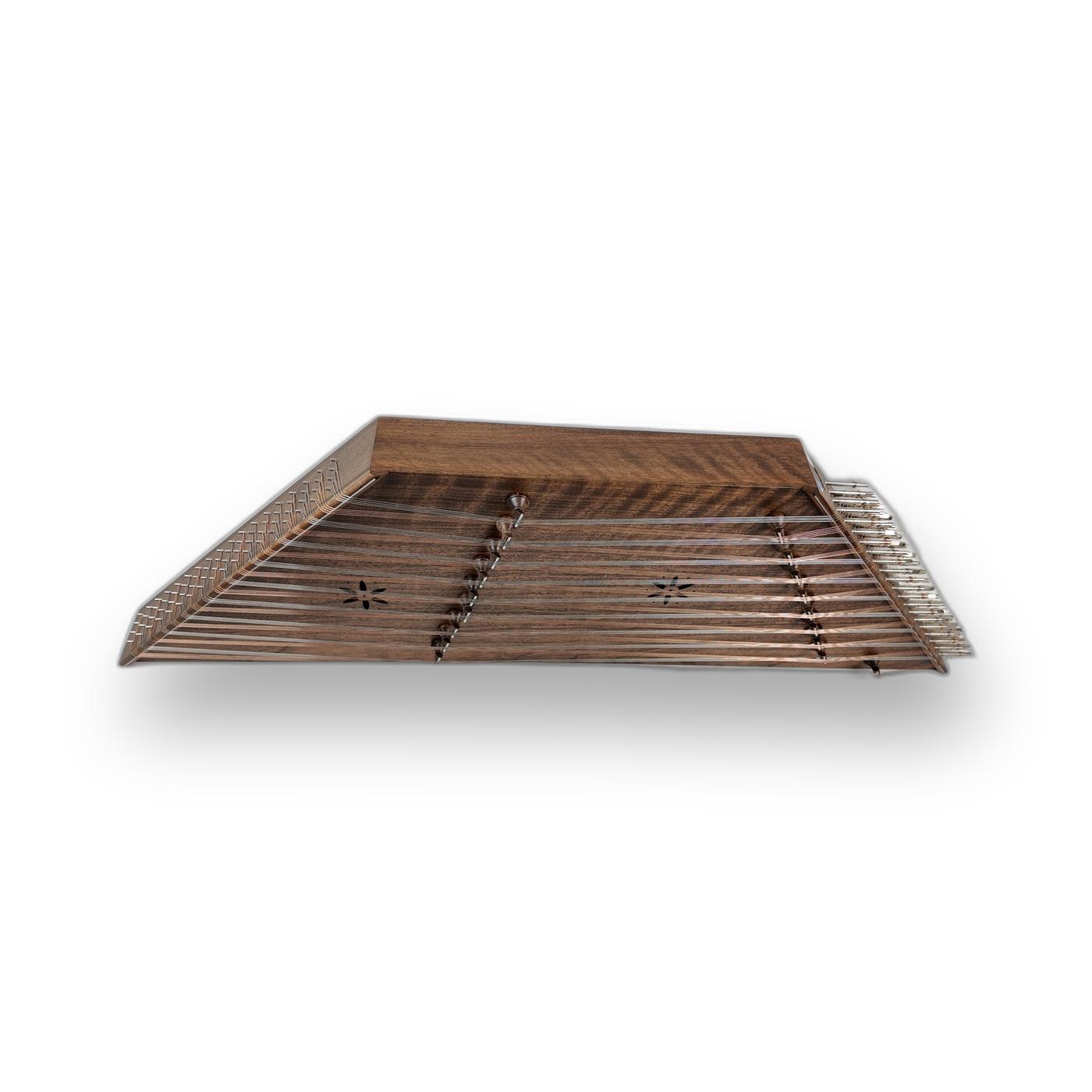
The instrument is built from walnut, a dense, fine-grained hardwood prized for its depth of tone and lasting stability. Its trapezoidal body and thin resonant soundboard lift the strings into the santur’s signature shimmering sustain — bright in the treble, round and warm in the bass.
Nine bridges, seventy-two strings
The Latifi santur carries the standard layout of nine bridges (kharak) on each side — eighteen in total — supporting 72 strings grouped in courses of four. Because each course crosses two parallel sets of bridges, a note can be struck on either side of its bridge to sound in two registers, giving the santur its wide three-octave range. The strings are struck with the mezrab (also called zahme), light wooden hammers held between the fingers that drive the rapid runs and dynamic shading of Persian classical playing.
Traditional diatonic tuning
This is a diatonic santur with a fixed tuning, the traditional configuration used across Persian classical music. Changing mode or key calls for retuning the relevant strings by hand — the long-established practice every santur player learns. For instant key changes or the full quarter-tone vocabulary without retuning, our Persian santur range also includes models with mandal mechanisms and sharping levers.
Specifications
| Instrument | Persian santur (hammered dulcimer) |
|---|---|
| Maker | Latifi |
| Bridges (kharak) | 9 per side (18 total) |
| Strings | 72 (courses of four) |
| Tuning | Diatonic (fixed) |
| Body wood | Walnut |
| Mallets | Mezrab / zahme (included) |
| Length (longest side) | approx. 90 cm |
| Back edge | approx. 36 cm |
| Depth | approx. 27 cm |
| Height | approx. 6 cm |
| Weight | approx. 5 kg |
Dimensions follow the standard Persian santur and are approximate; each handmade instrument varies slightly.
What’s in the box
- Latifi 9-bridge Persian santur
- Pair of mezrab / zahme mallets
- Tuning key (wrench)
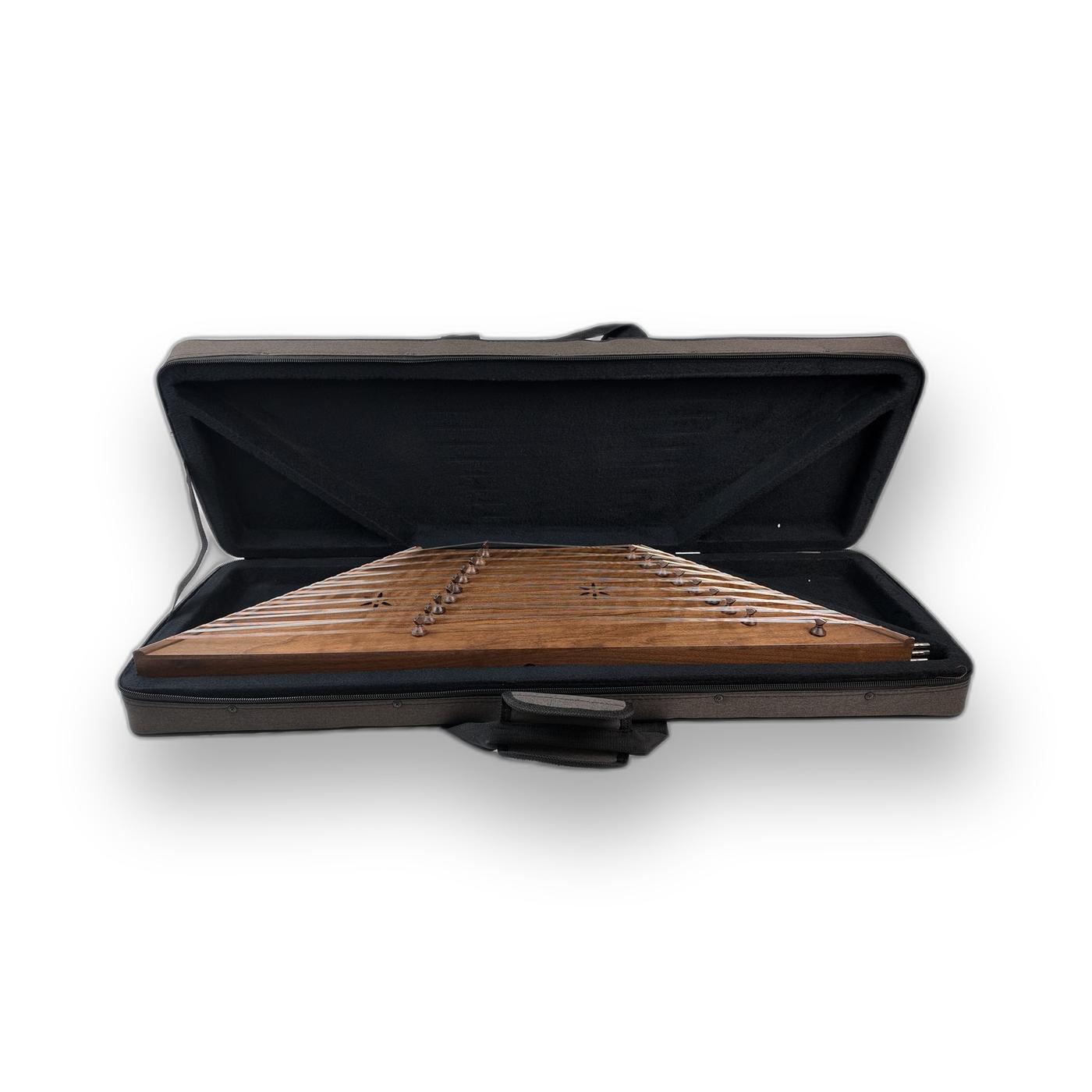
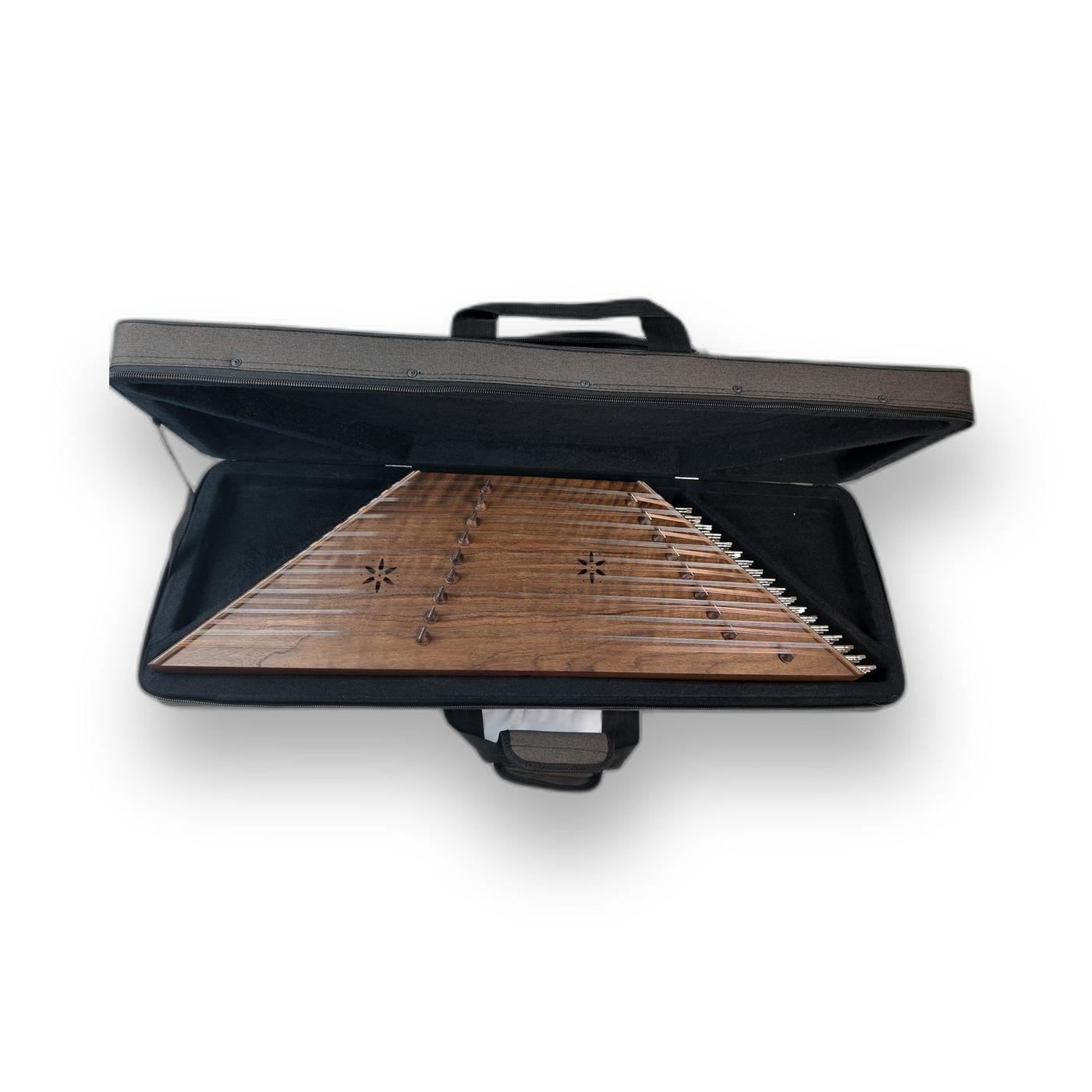
- Professional hard case
- A set of spare strings
Who this Persian santur is for
The standard 9-bridge santur is the instrument most teachers recommend for serious study. This Latifi build suits the advancing student stepping up from a starter instrument as much as the performer who wants a dependable, well-voiced santur for dastgah and avaz repertoire, solo taksim, vocal accompaniment, and ensemble work. It belongs to the wider Tapadum string instruments family.
Care
Keep the santur in its hard case when not in play, away from direct heat, damp, and sudden temperature swings that can unsettle tuning. Wipe the strings and soundboard with a soft, dry cloth, and check the tuning regularly with the supplied key — a new instrument settles over its first weeks and benefits from frequent small adjustments.
Worldwide shipping & 15-day return.