Description
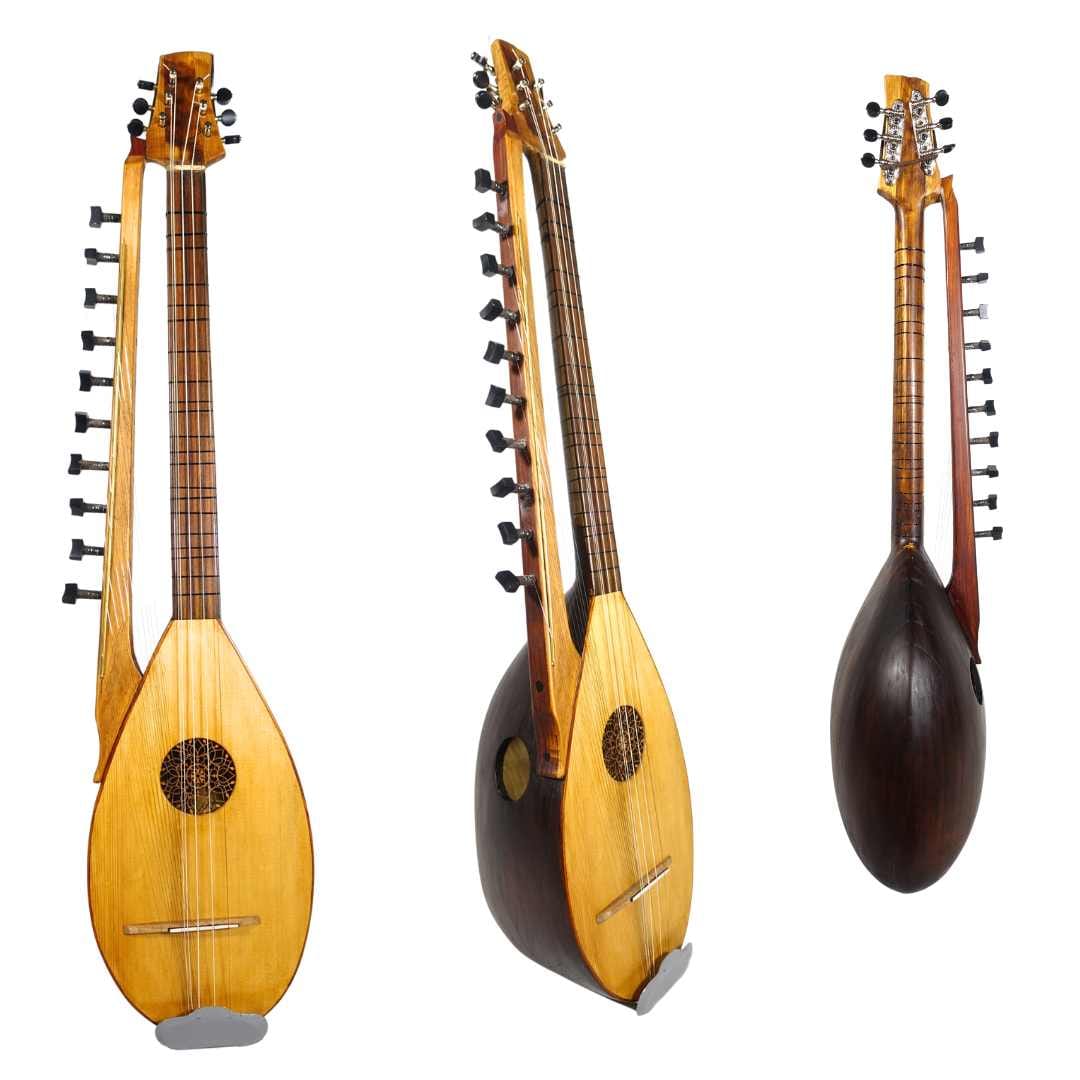
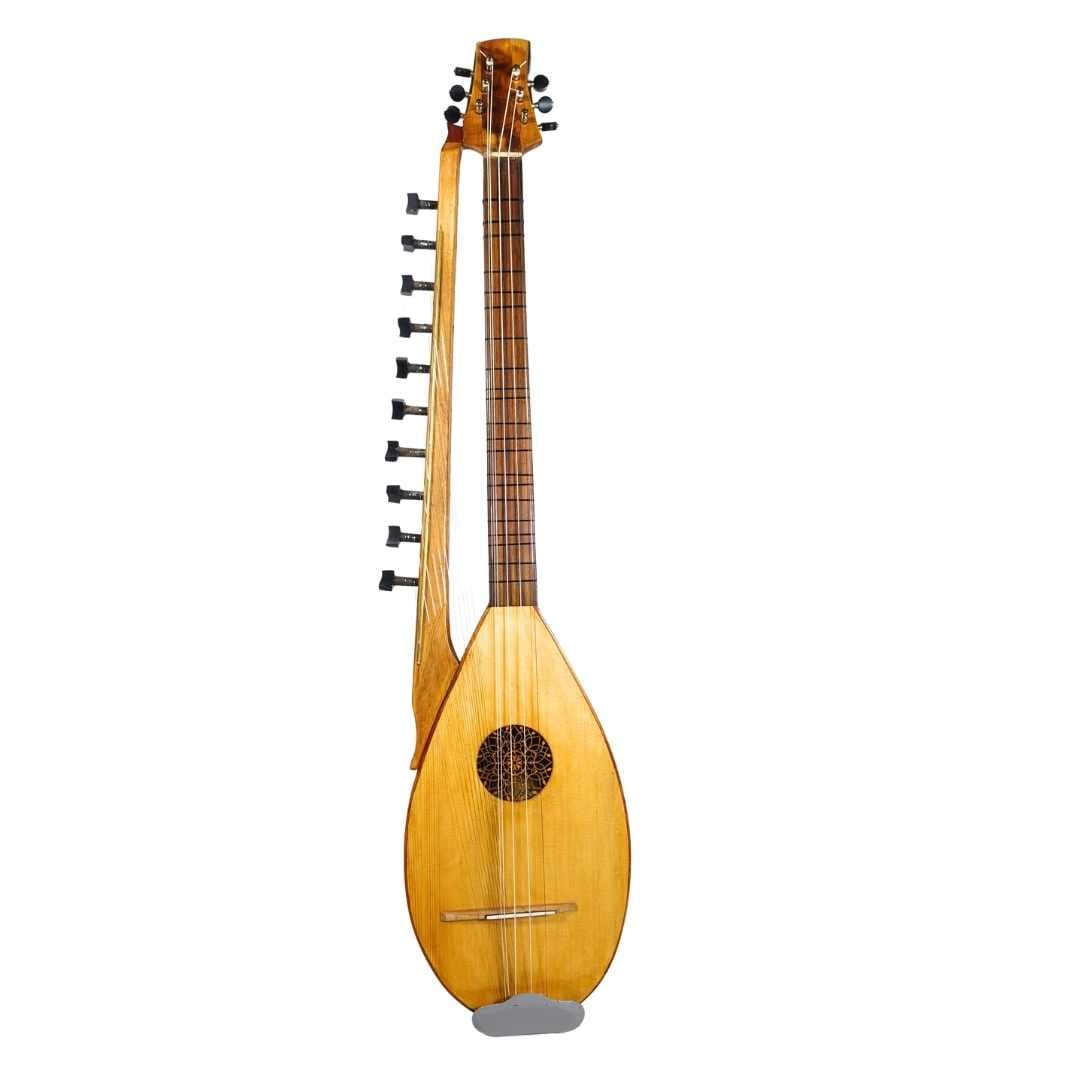
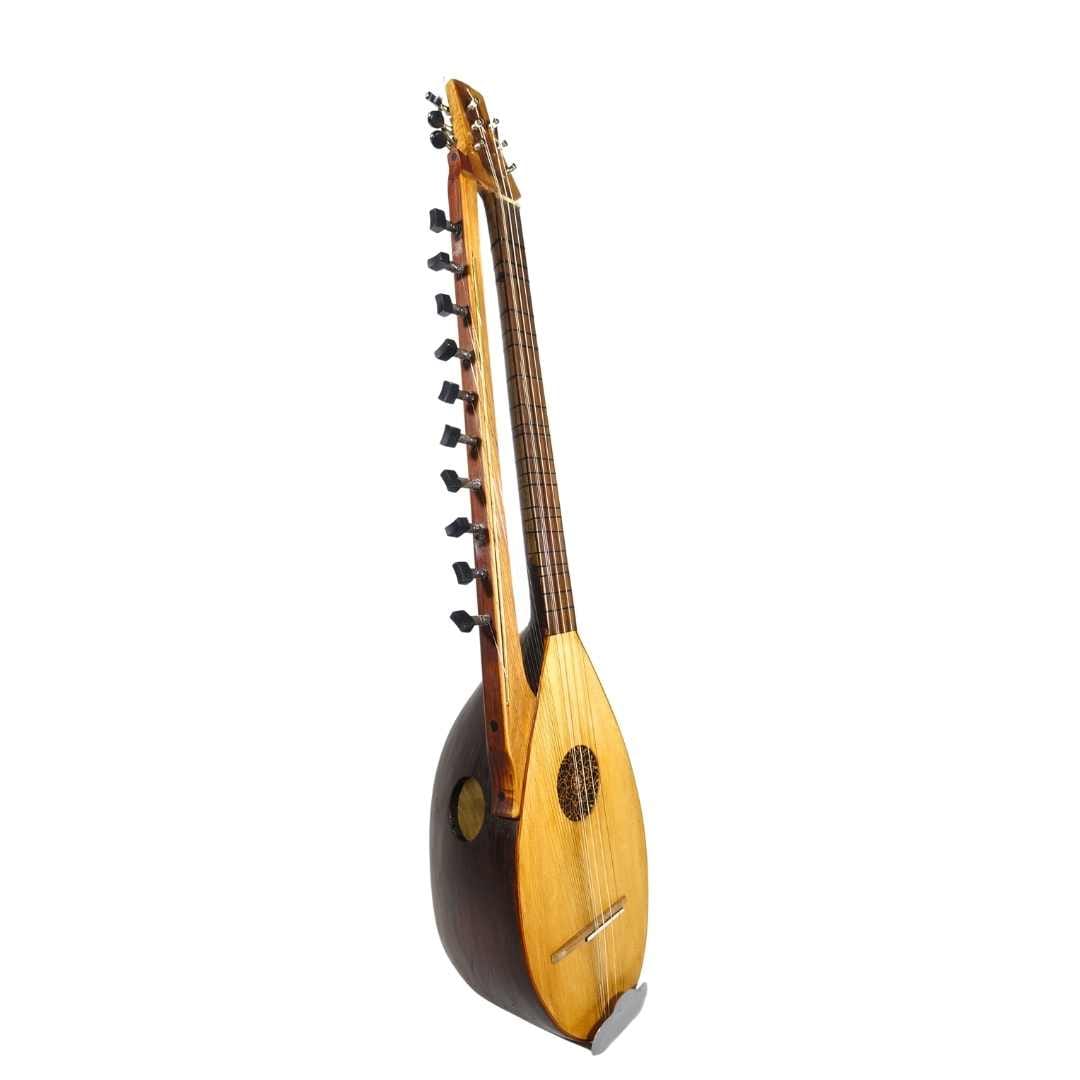
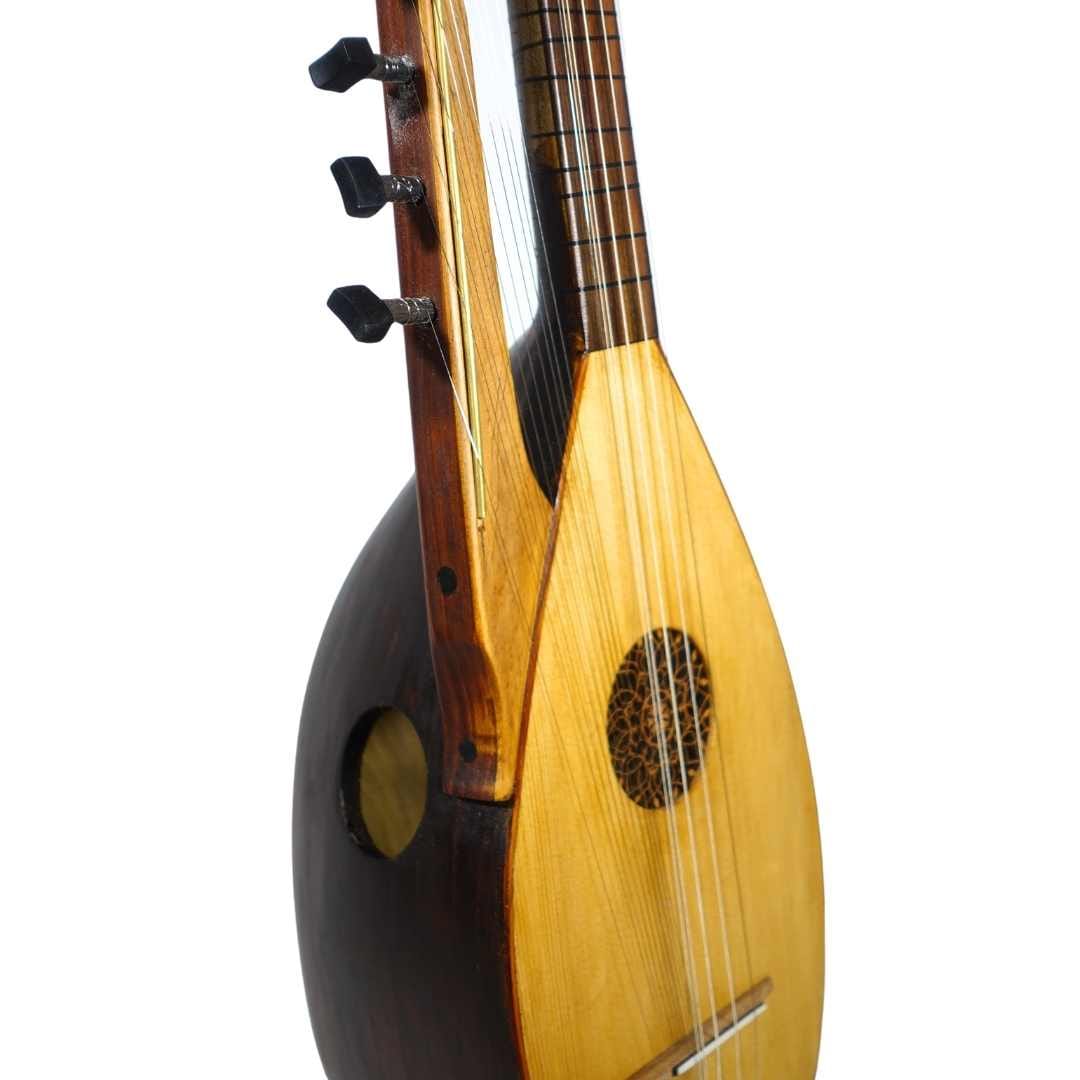
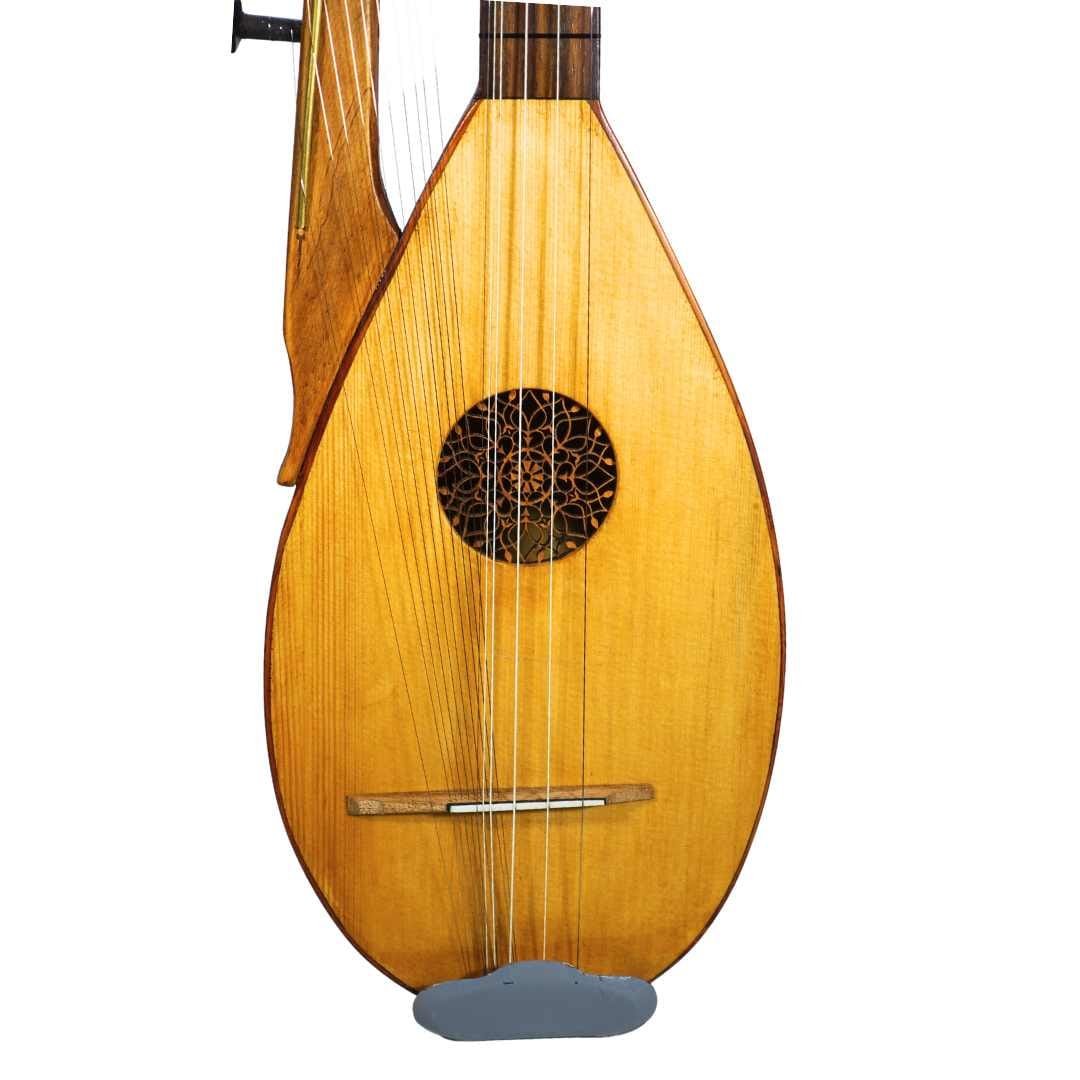
The curabab — also written Cura Rabab — is a modern hybrid string instrument that joins the fretted neck of the small Turkish cura to a rabab-style resonating body fitted with sympathetic strings. It plays like a member of the baglama and saz family but rings with the layered, drone-like resonance associated with the rabab of South and Central Asia.
A Cura–Rabab Hybrid
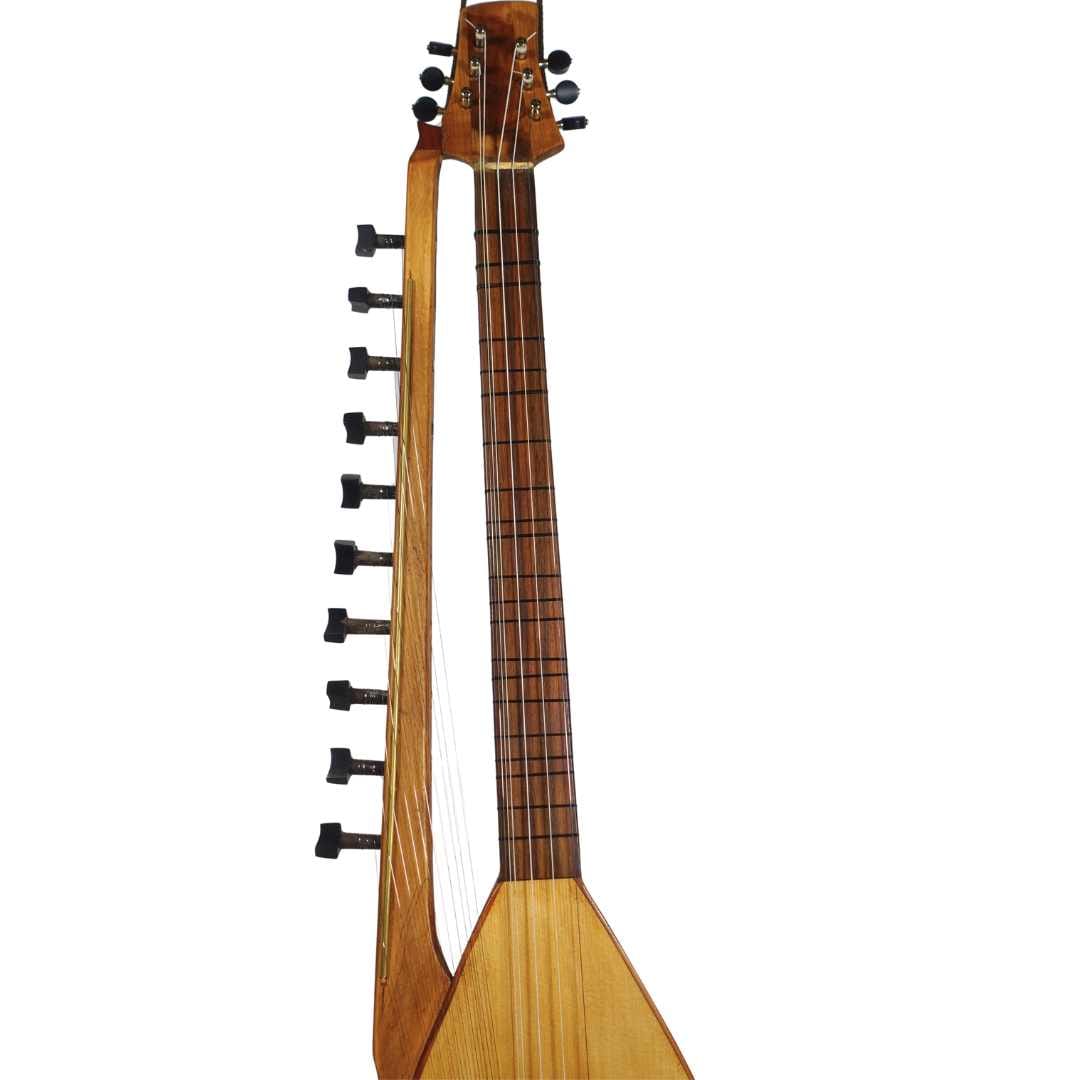
The cura is the smallest and highest-pitched member of the Turkish saz family, close in feel to instruments like the kopuz; the rabab (or rubab) is a plucked lute found across South and Central Asia, known for the shimmer of its sympathetic strings. The curabab brings the two together: you fret and pluck the main strings as you would on a cura, while a bank of sympathetic strings underneath vibrates in response, adding a continuous halo of resonance behind the melody. It sits alongside other contemporary Turkish hybrids such as the caglama.
Materials & Build
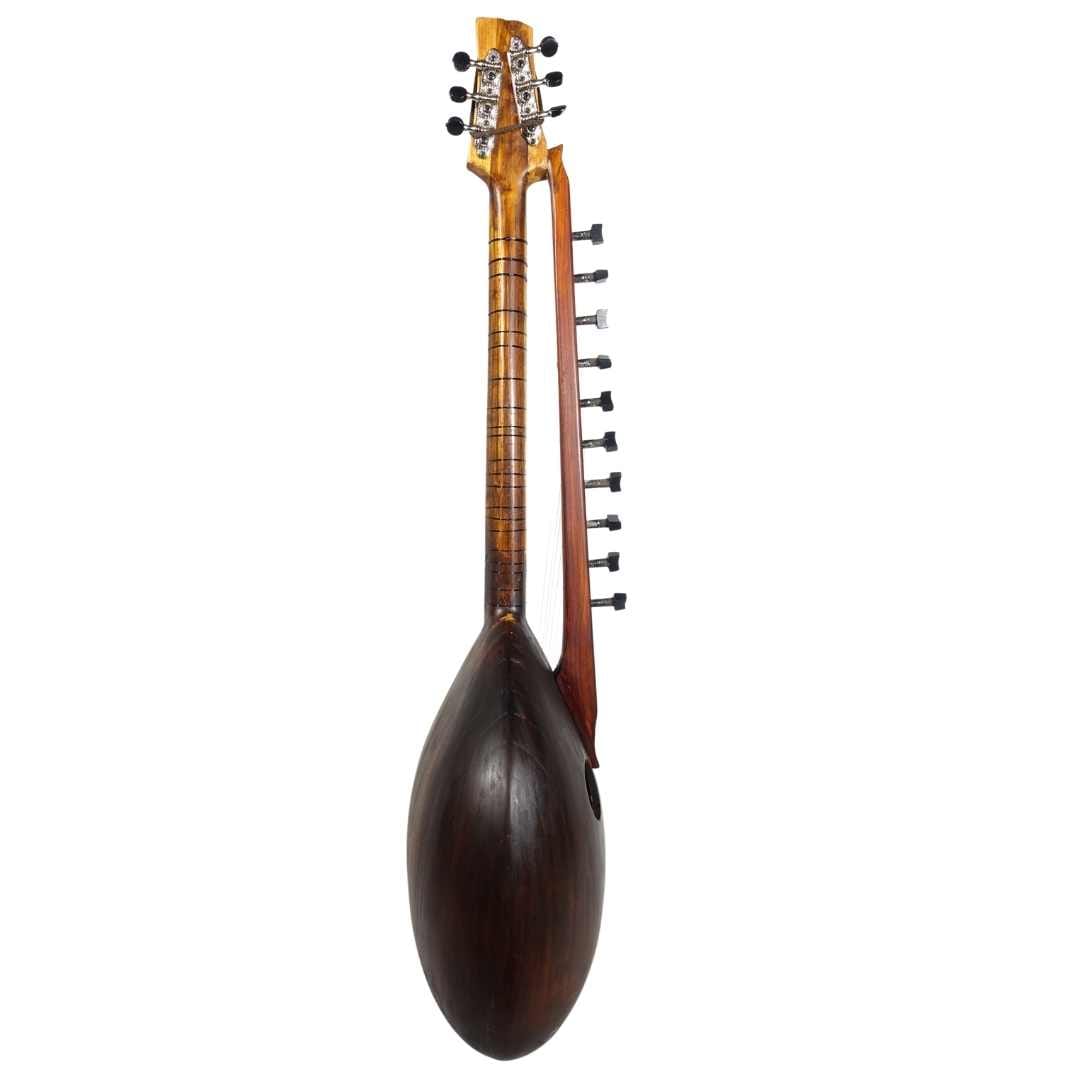
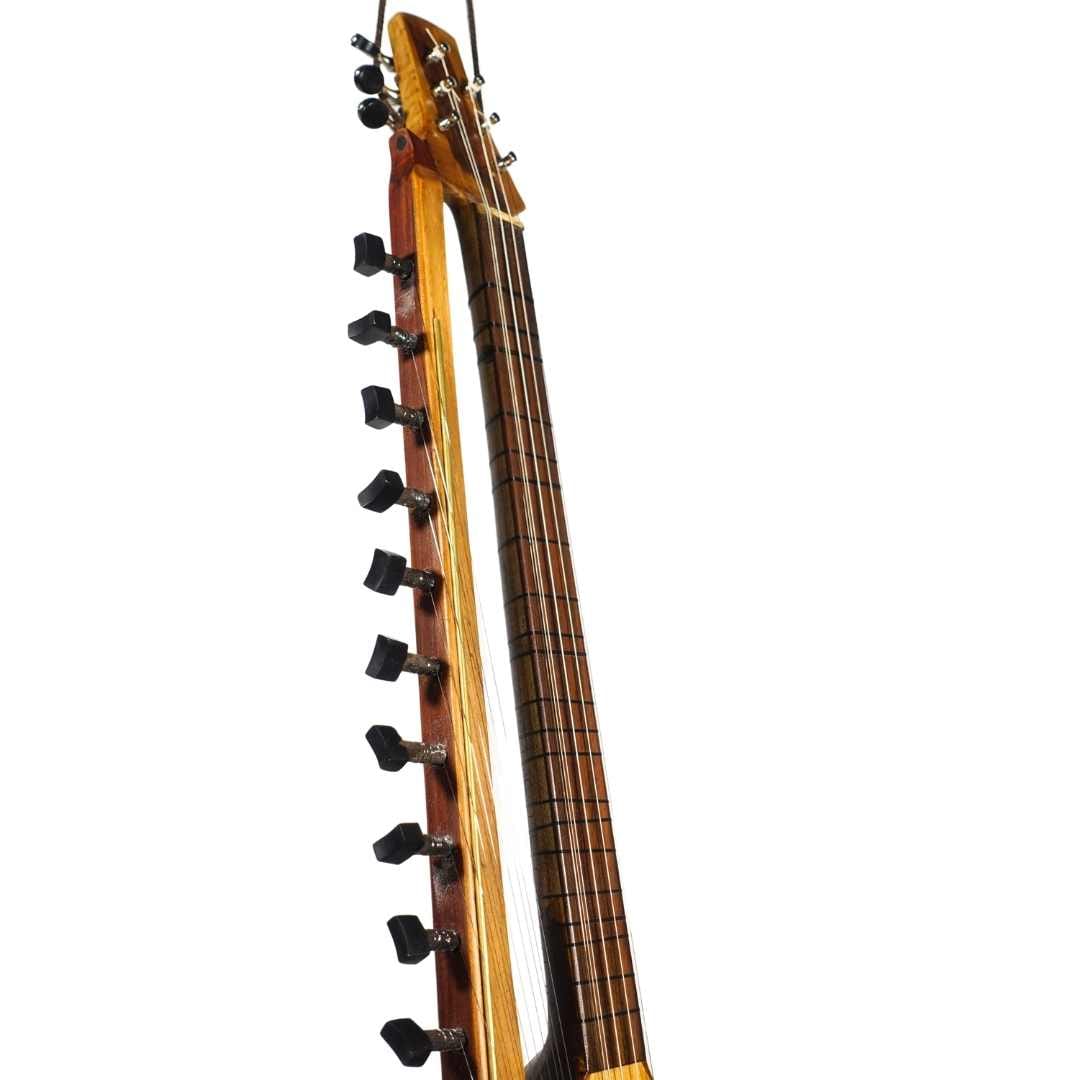
The body is carved from solid mulberry wood, a dense tonewood long favoured for Anatolian lutes for its warm, focused voice, and it is capped with a spruce top for clear projection and attack. The fingerboard is rosewood, smooth under the fingers for accurate stopping along the neck. The sympathetic strings run to ebony pegs, chosen for stable tuning, while the main strings use geared mechanical tuners for precise, drift-free adjustment.
Sympathetic Strings & Sound
The sympathetic strings are what set the curabab apart from a standard cura. Tuned to the notes of the scale you are playing, they are never struck directly — instead they resonate on their own as you play the main strings, thickening each note with a ringing overtone. That makes the instrument well suited to modal Turkish folk melody, Indian-influenced improvisation and cross-cultural fusion, where a sustained drone beneath the melody is central to the sound.
Technical Specifications
| Feature | Specification |
|---|---|
| Type | Hybrid fretted lute (Turkish cura × rabab) |
| Body | Solid mulberry wood |
| Top | Spruce |
| Fingerboard | Rosewood |
| Strings | Main strings plus sympathetic strings |
| Sympathetic-string pegs | Ebony |
| Main tuners | Geared mechanical |
| Included | Padded case |
Who the Curabab Is For
The curabab suits players who already know a saz or cura and want to explore the resonance of sympathetic strings, as well as fusion and studio musicians looking for a distinctive, layered string voice. Its fretted neck keeps it approachable for anyone coming from the saz world, while the sympathetic strings give experienced players plenty to work with. Each instrument ships with a padded case for transport and storage.
Care & Maintenance
Keep the curabab in its padded case away from direct heat, damp and sunlight, all of which can affect the mulberry body and spruce top over time. Wipe the strings and body with a soft cloth after playing, and re-tune the sympathetic strings whenever you change key so they keep resonating with the melody. For background on the two traditions behind it, see the baglama and the rubab.