
How to Choose Your First Ney: A Buyer’s Guide
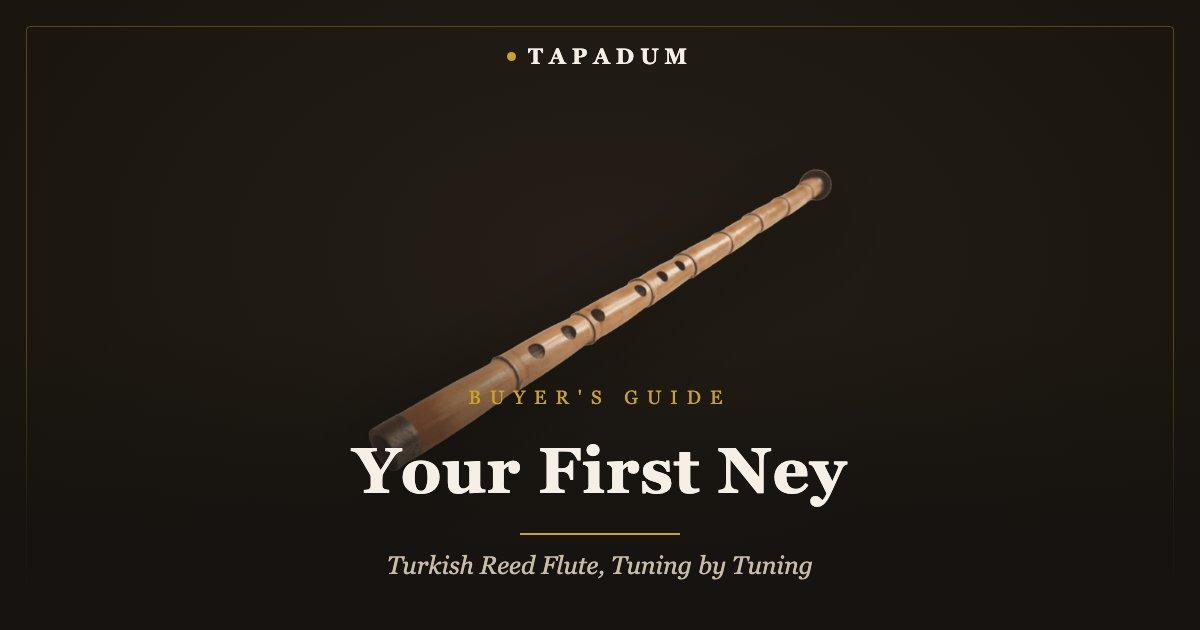
What you’ll learn: the real difference between a Turkish and an Arabic ney, why tuning — not budget tier — is the first decision for a Turkish ney, what separates a well-built ney from a poorly built one, and which of our five tunings suits a first-time player.
A ney is an end-blown reed flute at the heart of both Turkish classical/Sufi music and Arabic maqam music, and the first thing to get right is which tradition you’re buying into — they’re built differently and play differently. We carry Turkish ney exclusively, handmade from bamboo aged at least 15 years, in five traditional tunings. Because every model sits at the same price point, your real first decision isn’t budget — it’s which tuning to start on, and D (Supurde) or E (Bolahenk) are the two most forgiving choices for a beginner.
This guide covers the Turkish/Arabic distinction, how to judge build quality, what to expect from the learning curve, and a straight comparison of the five tunings we carry. See how the ney compares to its wind-family cousins in our Ney vs Kaval vs Mey guide.
Turkish Ney vs Arabic Ney: Know Which One You’re Buying
The two traditions build the mouthpiece differently, and that changes everything about how the instrument feels in your hands. A Turkish ney has a başpare — a separate mouthpiece piece, traditionally horn or bone, fitted onto the top of the cane — which shapes the airstream before it hits the edge. An Arabic ney skips the başpare entirely: the player’s lips rest directly against the raw, angled-cut cane. Arabic neys also tend to run wider in bore, giving a deeper, more resonant low end suited to Arabic maqam repertoire.
We carry Turkish ney, built for the makam system used in Ottoman classical and Sufi music — the same instrument behind the centuries of Ottoman music therapy we cover elsewhere on the blog. If you’re set on Arabic ney specifically, that’s a different instrument family with its own sourcing — this guide, and our catalog, is Turkish ney throughout.
Why Tuning Is the Real First Decision
A Turkish ney’s length determines its key, and each length has a traditional name. Since we sell every tuning at the same price and craftsmanship level, the decision that actually matters is which key to start on — not which tier to afford.
D (Supurde) and E (Bolahenk) are the two most commonly recommended starting tunings. Both sit in a middle range that’s long enough to hold comfortably and short enough that a beginner’s embouchure can produce a first tone without excessive breath pressure. Shorter, higher-pitched neys (like B/Kiz or A/Mansur) demand more embouchure precision; longer, lower ones ask for more air support. Neither is wrong to start on, but D or E removes one variable while you’re learning the harder skill: producing a clean tone at all.
What Makes a Well-Built Ney
Bamboo quality and aging matter more on a ney than on almost any other wind instrument, because the cane itself is the resonating body. We use bamboo dried for a minimum of 15 years, sourced from Turkey’s Ege, Marmara, and Mediterranean regions — under-dried cane is more prone to cracking and pitch instability as it continues to dry out after the instrument is built.
- Wall thickness: should be even along the full length — inconsistent walls create uneven tone between registers.
- Internal nodes: the cane’s natural internal segments need to be cleanly bored through; rough or incomplete boring chokes airflow and destabilizes pitch.
- Finger hole placement: holes should sit where your fingers naturally fall without straining your hand position.
- Başpare fit: on a Turkish ney, the mouthpiece should seat flush against the cane with no visible gap — a loose başpare leaks air and makes tone production harder than it needs to be.
What to Expect From the Learning Curve
Be realistic going in: most beginners need one to three weeks of regular practice before producing a reliable, clean tone. This isn’t a sign you have the wrong instrument — it’s normal for the ney specifically, which demands more embouchure control to produce sound at all than most wind instruments. A well-built instrument in a forgiving tuning (D or E) shortens that curve; it doesn’t eliminate it.
Our Turkish Ney Tunings at a Glance
| Tuning | Traditional name | Best for | Hear it |
|---|---|---|---|
| D | Supurde | Recommended first ney — forgiving length, easier tone production | ▶ Watch |
| E | Bolahenk | Recommended first ney — the other common beginner tuning | ▶ Watch |
| C | Yıldız | Intermediate players expanding their range | ▶ Watch |
| B | Kız | Shorter, higher — more embouchure precision required | ▶ Watch |
| A | Mansur | Longer, lower — more air support required | ▶ Watch |
All five are handmade in the same 15-year-aged bamboo. Once you’ve settled into D or E, our ney maintenance guide covers the storage and care that keeps a reed instrument playable for years.
Hear the tone of our recommended beginner tuning before you buy:
Shop all five tunings side by side:


Frequently Asked Questions
What’s the best ney tuning for a beginner?
D (Supurde) or E (Bolahenk) are the two most commonly recommended starting tunings — both sit in a length that’s forgiving for a beginner’s embouchure, unlike the shorter B (Kız) or longer A (Mansur).
What’s the difference between a Turkish ney and an Arabic ney?
A Turkish ney has a başpare, a separate mouthpiece fitted onto the cane; an Arabic ney has no başpare, and the player’s lips rest directly on the raw cane. Arabic neys also tend to be wider-bored with a deeper tone. We carry Turkish ney exclusively.
How long does it take to learn to play the ney?
Most beginners need one to three weeks of regular practice to produce a first reliable, clean tone. This is normal for the instrument — the ney genuinely demands more embouchure control than most wind instruments before it responds.
What should I check for build quality when buying a ney?
Even wall thickness along the cane, cleanly bored internal nodes, finger holes positioned for natural hand placement, and — on a Turkish ney — a başpare that seats flush against the cane with no gap.
Does Tapadum sell plastic or beginner-tier neys?
No — every ney we carry is handmade from aged bamboo cane at the same professional build quality, across five tunings. If a plastic practice ney is what you’re after, that’s a different product outside our current catalog.
[…] Bolahenk to the long Mansur. If the Mevlevi repertoire is what draws you to the instrument, our guide to choosing your first ney explains the tunings one by one. The comparison ney vs kaval vs mey shows how the ney differs from […]