
Tombak vs Darbuka: Persian and Middle Eastern Hand Drums Compared
What you’ll learn: why a tombak and a darbuka are both goblet drums but belong to different musical worlds, how their wood-vs-metal/clay construction shapes their sound, the real technique difference between Persian finger rolls and Arabic doum-tek, and which one fits the music you actually want to play.
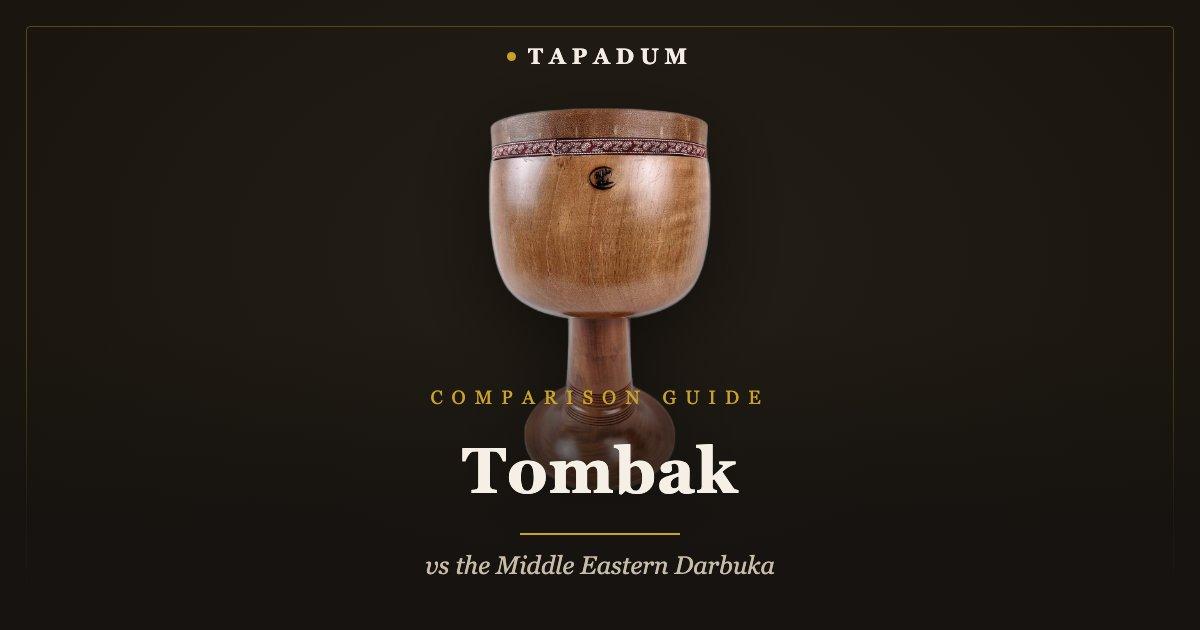
A tombak and a darbuka share a shape — the hourglass goblet body — but almost nothing else about how they’re built, held, or played. The tombak is a Persian hand drum, carved from a single block of walnut, ash, or mulberry, played with an intricate finger-and-wrist technique built for the subtle rhythmic cycles of Persian classical music. The darbuka is the working drum of Arabic, Turkish, and Balkan music, typically metal or clay-bodied, played with a sharper doum-tek slap technique built to cut through an ensemble.
If you’re deciding between them, the decision isn’t really about which is “better” — it’s about which musical tradition you’re actually reaching for. This guide covers the construction differences, the technique differences, and the real tombak models we carry.
Two Goblet Drums, Two Traditions
The tombak (also called zarb), which we introduce in our tombak overview, is the principal hand drum of Persian classical and folk music, its name an onomatopoeia for the drum’s own voice — the deep “tom” of a center strike and the sharp “bak” of an edge strike. It has held that central role in Persian ensembles for over a thousand years, keeping the intricate rhythmic cycles known as usul.
The darbuka comes from a different, wider family — the goblet drum of Arabic, Turkish, and Balkan music, known by regional names including doumbek and tabla. Rather than a single classical tradition, it’s the rhythmic backbone of a whole range of folk, popular, and ensemble music across the Middle East and Eastern Mediterranean.
Construction: Wood vs Metal or Clay
A tombak’s body is carved or turned from a single piece of wood — walnut for a dark, round low end; ash for a brighter, faster-speaking voice; mulberry for a warmer, classically favored tone. Its rim is subtly squared rather than rounded, which is what makes the rapid finger-snapping and rolling techniques of Persian playing possible. The head is traditionally goatskin.
A darbuka’s body is most often metal or clay (wood versions exist but are less common), with a rounder rim built for a different playing angle. Traditional heads were fish skin; most modern darbukas use synthetic or mylar heads for consistent tension across humidity and temperature. We cover the clay-vs-aluminum decision for darbuka specifically in our clay vs aluminum darbuka guide.
Playing Technique: Finger Rolls vs Doum-Tek
This is where the two instruments diverge most. Tombak technique centers on the fingers and a loose, floppy wrist — rapid rolls, delicate tonal shading, and a wide vocabulary of finger strokes that create nuance rather than raw volume. It’s built for subtlety, often blending into a Persian classical ensemble rather than driving over it.
Darbuka technique centers on the contrast between two strokes: a deep “doum” struck at the center, and a sharp “tek” struck at the edge. We break down the foundational doum-tek patterns — maksum, baladi, and malfuf — in our darbuka rhythms guide. Where tombak playing is about nuance, darbuka playing is about clear, driving rhythm that can cut through a full ensemble.
Sound Character
A tombak speaks softer and warmer, built to blend with melodic instruments like the setar or santur in an intimate classical setting. A darbuka speaks brighter and sharper, built to be heard clearly over other instruments in a fuller ensemble, from a wedding band to a dance performance. Neither is more “authentic” percussion — they’re built for opposite roles in the mix.
Tombak Models at a Glance
| Model | Wood | Character |
|---|---|---|
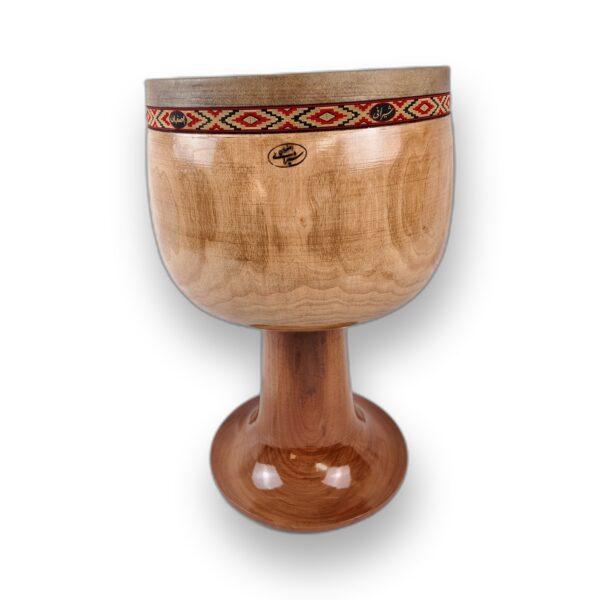
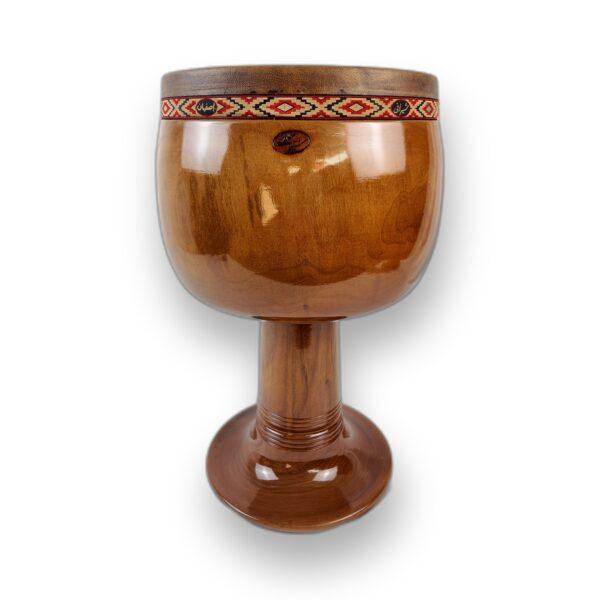
| Walnut Tombak by Shirani | Walnut | Deep, round low end — the classic dark tombak voice |
| Ash Tombak by Shirani | Ash | Bright, crisp, and quick to speak — a modern contrast to walnut |
| Mulberry Tombak by Shirani | Mulberry | Warm, classically favored tonewood |
| Walnut Tombak by Rahimi | Walnut | 4-mohr graded, hand-built in Isfahan |
Shop the range directly:
Which One Should You Choose?
Choose a tombak if you’re drawn to Persian classical music, want to develop a detailed finger technique, or are building an ensemble sound alongside instruments like the kamancheh or setar. Choose a darbuka if you want the driving doum-tek rhythms behind Arabic, Turkish, or Balkan music, or need a drum that projects clearly in a fuller band or dance setting. If you already play darbuka and are curious about tombak’s finger vocabulary — or the reverse — the technique differences are real enough that neither instrument shortcuts learning the other.
Frequently Asked Questions
Is a tombak the same as a darbuka?
No. Both are goblet-shaped hand drums, but the tombak is a Persian classical instrument carved from wood with a squared rim for finger technique, while the darbuka is a Middle Eastern drum typically made of metal or clay, played with a doum-tek slap technique.
Which is easier to learn, tombak or darbuka?
They’re difficult in different ways. Darbuka’s doum-tek technique gives clear rhythmic building blocks fairly quickly. Tombak’s finger-roll vocabulary takes longer to develop but rewards patience with far more tonal nuance.
What wood is best for a tombak?
Walnut gives a dark, round low end and is the traditional workshop standard; ash gives a brighter, faster-speaking voice; mulberry is prized for its warm, classic tone. None is objectively best — the choice depends on the sound character you want.
Can I play Persian rhythms on a darbuka, or Arabic rhythms on a tombak?
Not convincingly. The instruments’ rims, techniques, and tonal goals are built for their own traditions — a darbuka’s doum-tek slap doesn’t translate to tombak finger rolls, and vice versa.
Why does the tombak have a squared rim instead of a round one?
The subtly squared edge is what makes rapid finger-snapping and rolling techniques possible — it gives the fingers a cleaner point of contact than a fully rounded rim, which is tuned instead for a darbuka’s broader slap strokes.