
Percussion Instruments in Middle Eastern Music
Percussion Instruments in Middle Eastern Music
Percussion Instruments in Middle Eastern Music
Middle Eastern music, renowned for its historical roots, intricate modal structures, and distinctive rhythms, stands as one of the world’s richest musical traditions. A cornerstone of this musical tapestry is the percussion ensemble. These instruments serve as the rhythmic backbone, infusing the music with movement, depth, and character. Let’s delve into some of the most commonly used percussion instruments in Middle Eastern music and their unique characteristics. The rhythmic cycles these instruments carry have names and structures of their own, set out in our guide to usûl, the rhythmic patterns of Middle Eastern music.
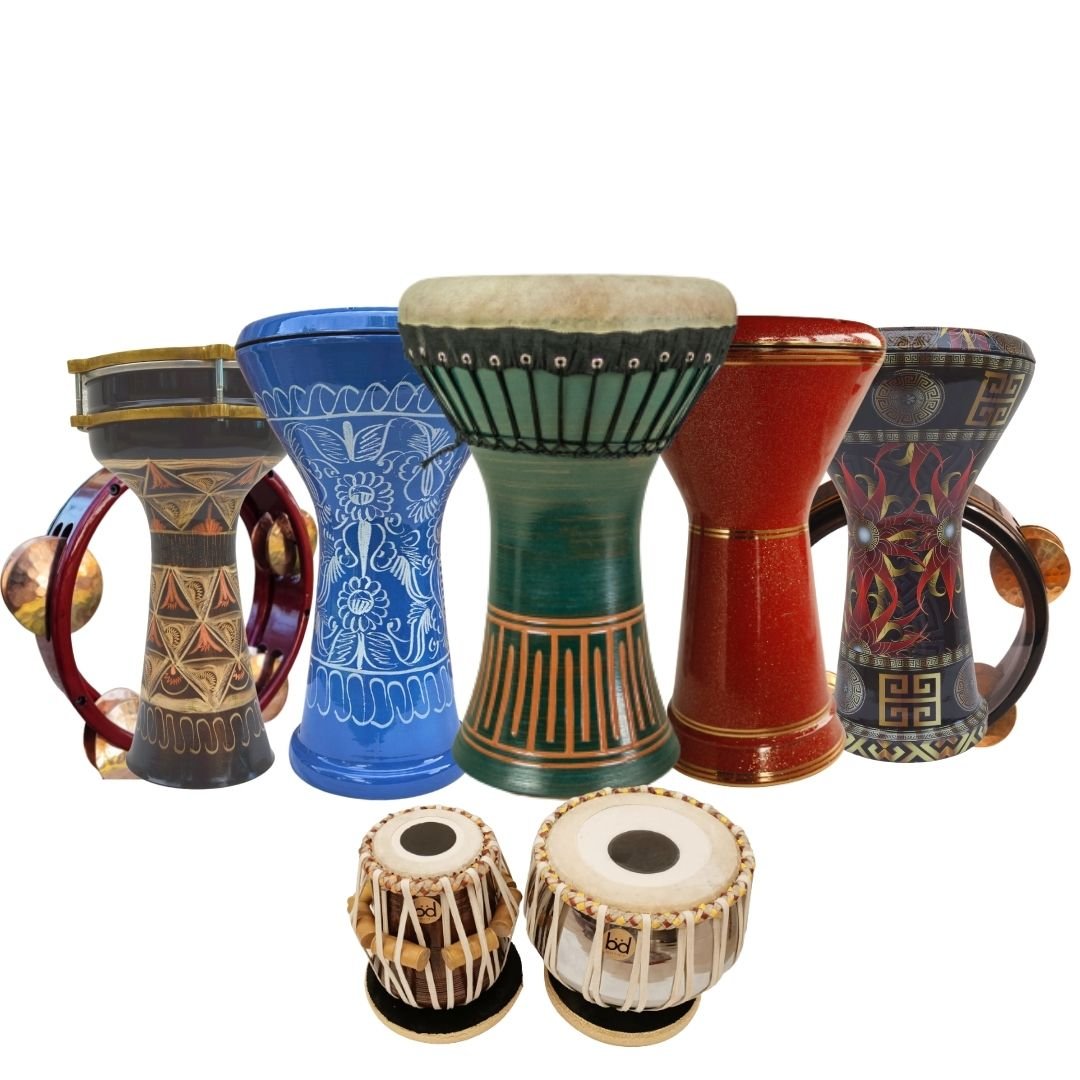
1. Darbuka The darbuka is one of the Middle East’s most iconic percussion instruments. Typically crafted from metal or ceramic, it features a leather-covered head. The darbuka is a fundamental rhythm provider in Middle Eastern music, particularly distinguished by its dynamic and fast-paced rhythms. Two primary striking techniques are employed:
- Dum: A deep, resonant strike at the center of the head.
- Tek: A higher-pitched strike at the rim.
The darbuka not only invigorates Middle Eastern music with various rhythmic patterns but also grants players the freedom to improvise. Darbuka virtuosos can create intricate rhythmic variations, showcasing their mastery. The dum and tek strokes above are the alphabet of that vocabulary; we take them apart stroke by stroke, together with the three rhythms most players learn first, in darbuka playing techniques and essential rhythms.
The clay-shelled darbukas in the Tapadum range are made by two pairs of hands in our Izmir workshop: the shell is thrown on the wheel by Ahmet Tashomcu, a master potter listed in Turkey’s National Inventory of Living Human Treasures and twice World Pottery Champion, and the goatskin head is then selected, tensioned and sound-tested by Mehmet Nihat San before the drum leaves the bench.
2. Bendir A large frame drum, the bendir offers a softer yet impactful rhythmic foundation in Middle Eastern music. Constructed with a wooden frame and a stretched leather head, the bendir is unique due to the thin metal jingles embedded in its interior. These jingles impart a subtle, shimmering effect, adding a mystical quality to the music. The bendir is commonly used in slower, meditative pieces, especially in Sufi music and spiritual ceremonies. Its soft, deep tone is highly favored in such contexts. Choosing a bendir, tuning its skin and keeping it stable as humidity changes is a subject of its own: The Bendir: Choosing, Tuning and Caring for a Frame Drum.
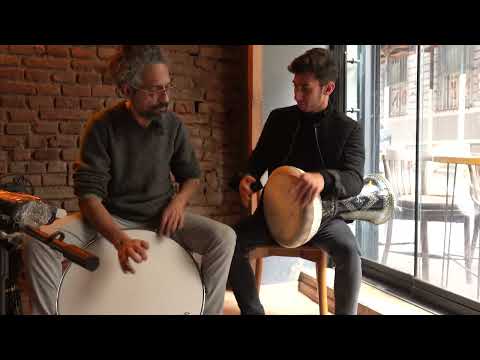

3. Daf Frequently used in Iranian and Kurdish music, the daf is a large frame drum also popular throughout other regions of the Middle East. Similar to the bendir, it typically has a larger diameter and metal rings on its interior. These rings vibrate as the drum is played, adding color to the rhythm. The daf produces a powerful, resonant sound, making it effective for providing a rhythmic foundation for large ensembles. The dafs in our own collection come from Iranian makers we work with directly; they can be seen in the Persian daf collection.
4. Riq Resembling a tambourine, the riq is a small frame drum adorned with small metal jingles. Primarily made from a wooden frame and a stretched leather head, the riq is ideal for rhythmic accents and embellishments in Middle Eastern music. Its dynamic nature allows it to be used in both fast and slow tempos, adding vitality to the music. Jingle count, frame depth and skin choice vary more between riqs than they first appear; our riq history, construction and buying guide goes through those differences.
5. Tef Similar to the riq, the tef is a frame drum but slightly larger. Versions without jingles or metal pieces are also common, often used for more pronounced rhythmic accents. The tef provides a more defined attack in Middle Eastern music, particularly in folk music.
6. Dohol (Davul) The dohol is a traditional large drum used in various Middle Eastern regions for weddings, celebrations, and processions. It is double-headed, with one side producing a deep, resonant sound and the other a higher-pitched tone. The dohol, played with a beater or drumstick, delivers a powerful, deep sound.
7. Tombak (Zarb) The tombak or zarb holds a significant place in Iranian music but is also used in other parts of the Middle East. Typically carved from a single piece of wood and covered with leather, it offers a wide range of tones when played with the fingers and hands. The tombak is renowned for its rhythmic improvisation capabilities, particularly in solo performances. Its finger technique is unlike that of any other drum on this list; we introduce it in Tombak: an introduction to Persian traditional percussion.
Conclusion Percussion instruments form the bedrock of Middle Eastern music, guiding listeners on a rhythmic journey. Instruments like the darbuka, bendir, daf, riq, tef, dohol, and tombak each contribute unique rhythmic characteristics, enriching the music. Played with specific techniques, these instruments embody the spirit of Middle Eastern music and preserve its traditional essence. The rhythmic foundation laid by these percussion instruments is a hallmark of Middle Eastern music and reveals its emotional depth. Several of the instruments described above — darbuka, frame drums, Persian daf and tombak among them — are built in our Izmir workshop or selected from makers we work with; the current range sits in the percussion collection.