Tombak
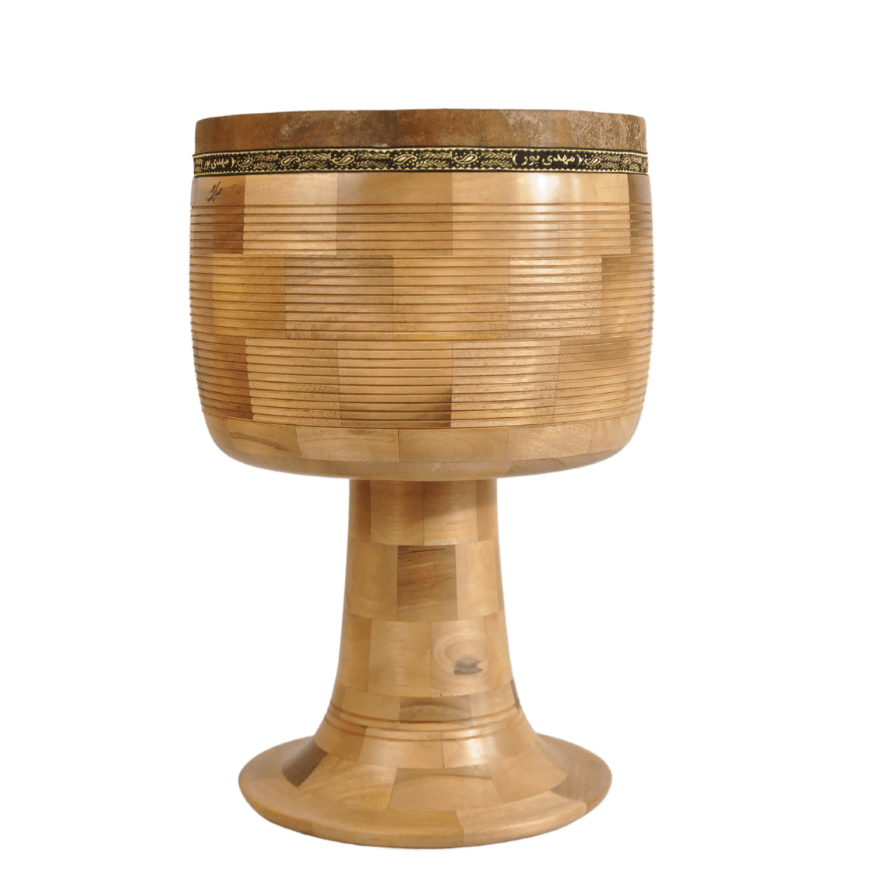
The tombak — also written tonbak and known as the zarb — is the principal hand drum of Persian classical and folk music: a goblet drum turned from a single block of hardwood and headed with a natural skin. Its name describes its two core sounds, the low round tom struck at the centre of the head and the bright bak flicked at the rim. Between them run the rapid riz finger-rolls that the Persian repertoire is built on.
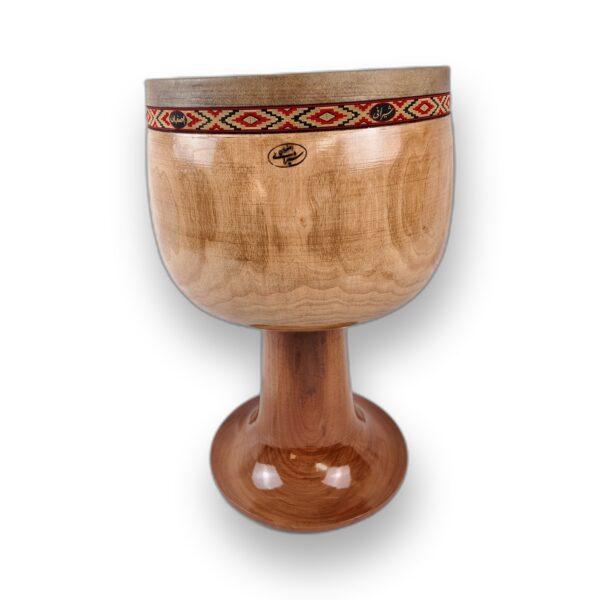
Woods and voice — Three tonewoods dominate Iranian workshops, and the choice sets the character of the drum. Walnut (gerdoo) is dense and oily; well seasoned it gives a dark, mature voice with long sustain, which is why it has been the first-choice tombak wood in Iran for generations. Mulberry (toot) — the wood of the setar and of santur bridges — sits between the extremes: warm, golden and sweetly resonant, and many players still call it the most musical of the three. Ash (zaban-e gonjeshk, “sparrow’s tongue”) is pale and straight-grained, brighter and faster to speak, built to carry across a room rather than sink into it. Heads are natural calfskin or camel skin — calfskin warmer and more supple under the hand, camel skin thicker and more stable in changing weather.
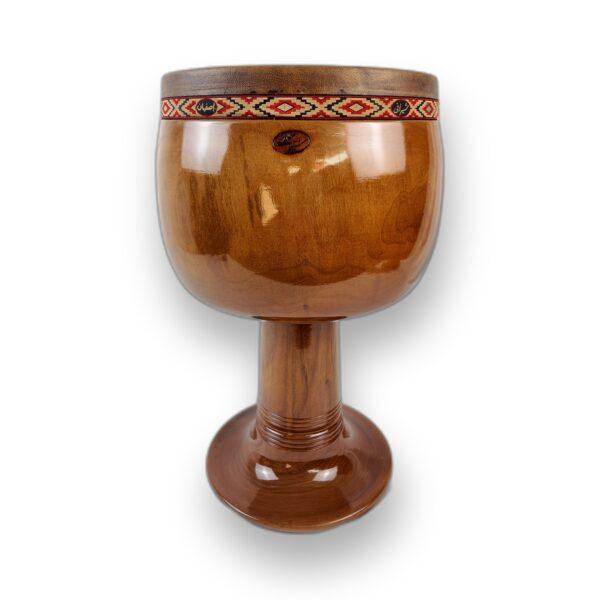
How a tombak is graded — Iranian workshops burn an oval seal into the shell, and the number of seals — the mohr — is how Persian drummers read an instrument’s grade. Three mohr marks a semi-professional to professional drum; four mohr sits at the professional end of the range. Counting the seals places a tombak before you ever strike it.
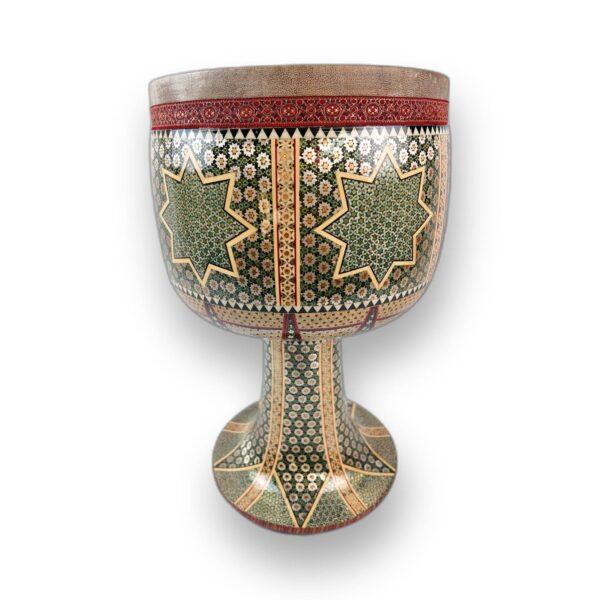
The workshops we carry — Our tombaks come from independent Iranian makers. Shirani works in Isfahan, ringing each drum with a woven red-and-cream Esfahan band beside the burned seal; Mousavi has been hand-turning zarbs in his Tehran workshop for some twenty-five years; Rahimi builds in Isfahan with twenty-eight years at the bench. The Khatam Tombak by Ghamar is dressed entirely in Isfahan micro-mosaic — brass, camel bone and hardwood, no paint — a collector-grade instrument that remains fully playable. Concert-scale drums here measure 27-28 cm across the head, 46-48 cm tall, and weigh 3.4-3.9 kg.
Choosing between them comes down to voice: players who put depth and warmth first reach for walnut, while those who want the tek to cut and carry choose ash. The Persian daf is the frame-drum counterpart in the same tradition, and our introduction to the tombak covers the instrument’s history and technique in more depth. Worldwide shipping & 15-day return.
Frequently Asked Questions
Is a tombak the same as a zarb?
What do the mohr seals on a tombak mean?
Which tombak wood should I choose: walnut, mulberry or ash?
What is the difference between calfskin and camel-skin heads?
How is a tombak played?
How much does a tombak cost?
Which tombak should a beginner choose?
Where can I buy an authentic Persian tombak?