Arabic Oud
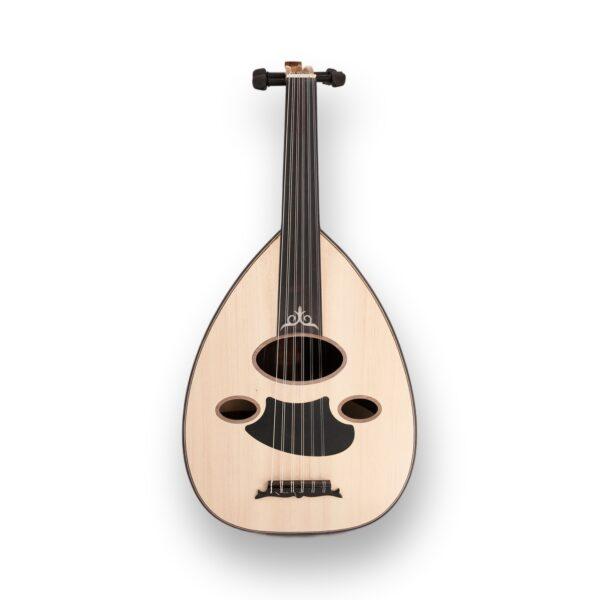
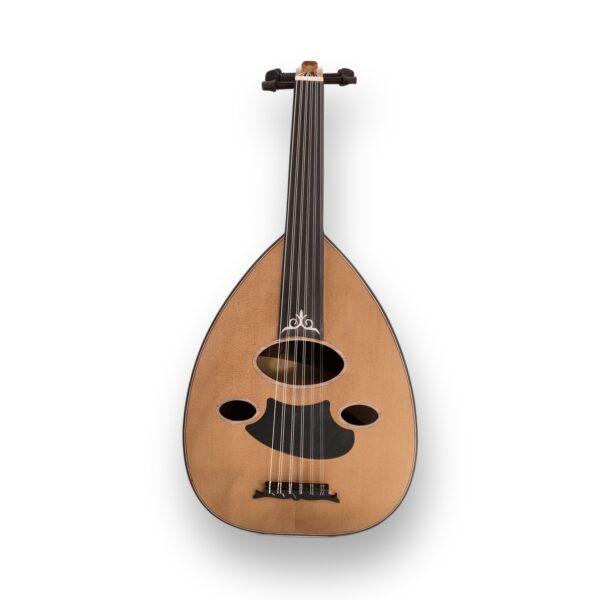
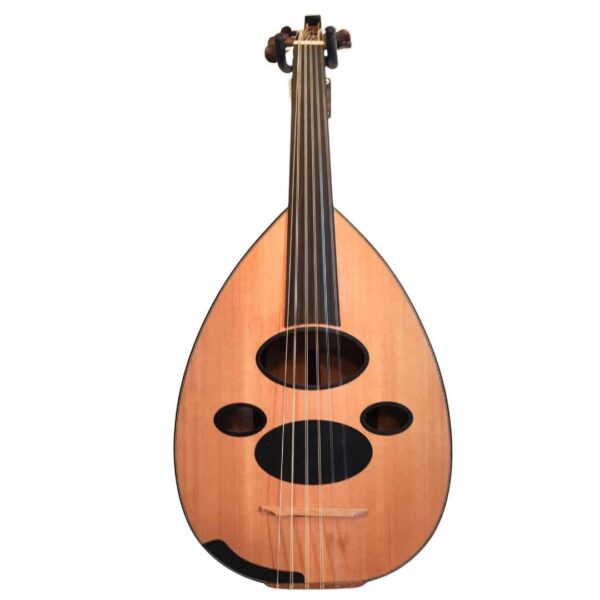
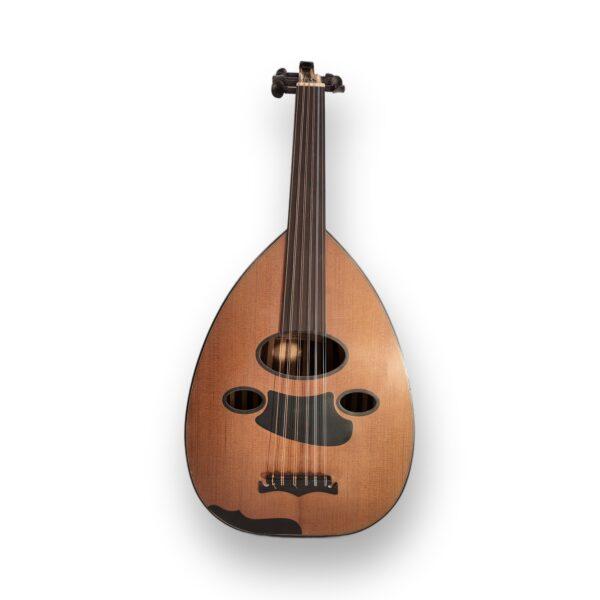
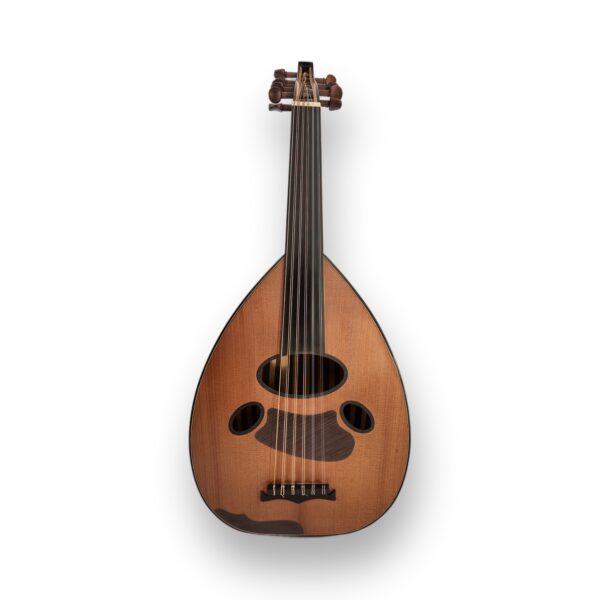
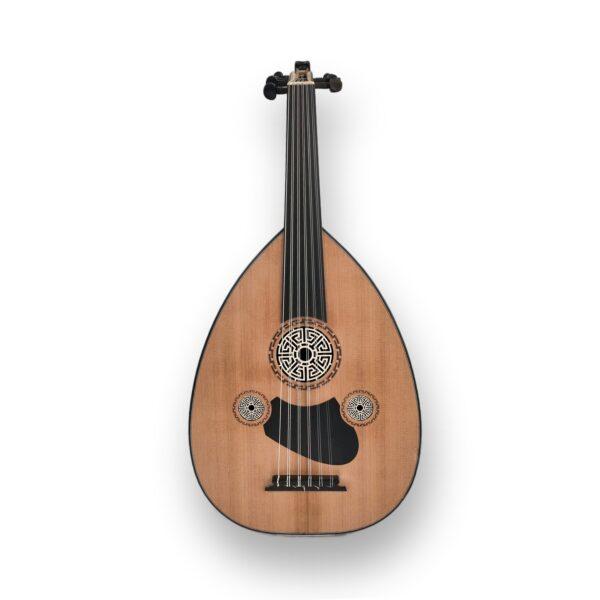
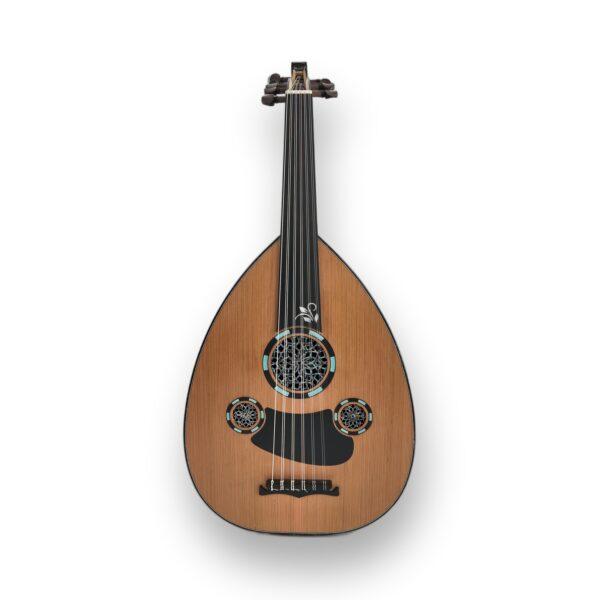
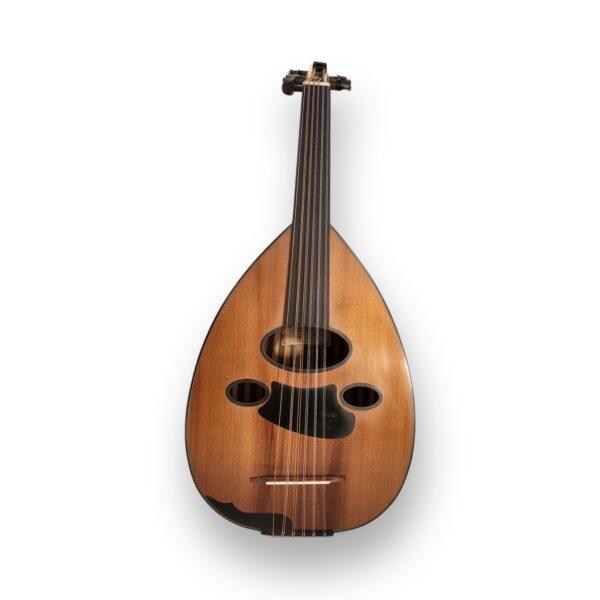
The Arabic oud is an eleven-string fretless lute at the heart of Arab classical music, raqs sharqi, and contemporary Middle Eastern ensemble work. Compared to its Turkish counterpart, the Arabic oud has a larger body and deeper bowl, producing a warmer, fuller voice with stronger bass presence — well suited to traditional Arabic maqam repertoire, ensemble accompaniment, and solo improvisation in the muwashshah and longa traditions.
Most Arabic ouds use a spruce or cedar soundboard paired with rosewood, walnut, or sometimes mahogany back and sides. Strings are typically arranged as five double courses plus a single bass string — eleven strings total — made of nylon or gut and tuned in fourths. The fretless fingerboard supports the quarter-tones and microtonal slides that define Arab classical music, essential for Egyptian, Syrian, Lebanese, and Iraqi maqam practice.
The Arabic oud is played with a risha (plectrum) to pluck strings and create rhythmic patterns, alongside fingerpicking for melodic phrasing and ornamentation. Solo improvisation (taqsim) showcases the instrument’s full tonal range, while ensemble work centers on accompanying vocal traditions and instrumental suites such as the wasla. The deeper bass voice gives the Arabic oud presence in larger Arabic music ensembles, where it often anchors the rhythmic and harmonic foundation.
At Tapadum, our Arabic oud collection brings together instruments from independent master luthiers working in Turkey and across the region. The range opens with the Smyrna line (from €549) — a walnut bowl with spruce or cedar top and fixed bridge, built as a first serious Arabic oud. Above it sit the traditional cedar-top Iraqi build with a mobile suspended bridge (€899) and the wenge-bowl instruments (€1,116), where the denser bowl wood tightens the bass and lengthens sustain — available with fixed or floating bridges depending on the model. The signature Yildirim Palabiyik Sultan Plus (€1,199) sits at the top of the acoustic range. Every instrument passes individual quality control — tuning stability, soundboard response, action, and string spacing — overseen by our string instruments specialist Sertan Sarioglu at our Izmir workshop before leaving for our Brisighella, Italy showroom.
Fixed or floating bridge? A fixed bridge is glued to the soundboard and carries string tension directly into the top — the standard Arabic setup, giving immediate attack and a strong fundamental. A floating (suspended) bridge transmits pressure through the top while the strings anchor at the tail, softening the attack and opening a longer, more singing sustain. Neither is better; the choice follows the repertoire and the touch you play with.
For Turkish maqam practice or brighter tonal character, see our Turkish Oud collection; for stage use with amplification, our Electric Oud range; for broader context across both traditions, see the Oud category overview. Worldwide shipping & 15-day return.
Frequently Asked Questions
What's the difference between an Arabic oud and a Turkish oud?
How is the Arabic oud tuned?
Where do I start with an Arabic oud?
What strings does an Arabic oud have?
Where can I find authentic Arabic ouds for sale?
How much does an Arabic oud cost?