
The Healing Effects of the Turkish Ney: Music Therapy in the Ottoman Empire
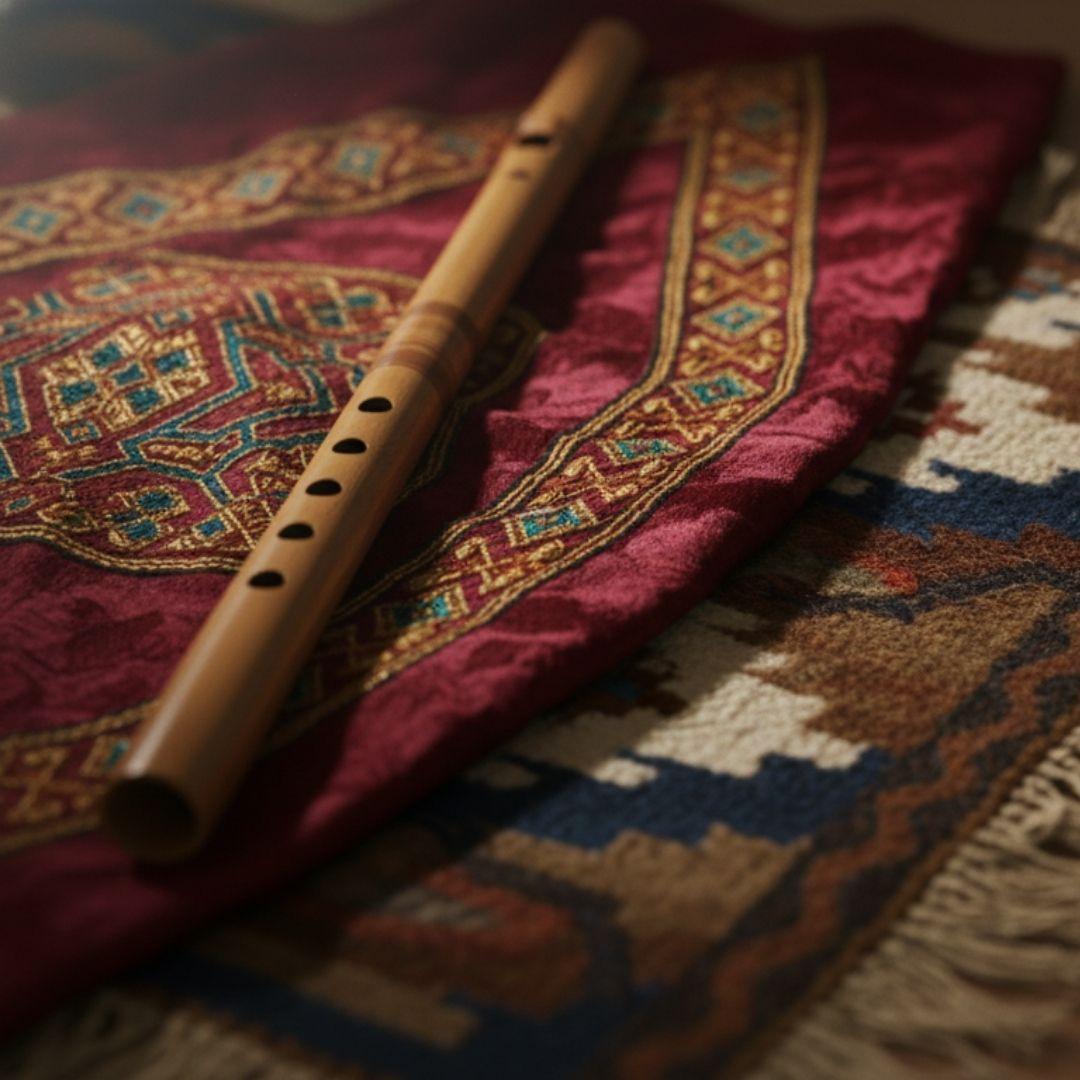
What you’ll learn: how Ottoman hospitals used prescribed music as treatment and what the historical record documents about it, the makam-to-illness system an 18th-century chief physician set out, why the ney in particular held a special place, and a clear line between what the history shows and what can honestly be claimed about the instrument’s effects today.
Ottoman physicians prescribed ney performances as medical treatment more than five centuries ago, inside purpose-built hospitals where music, running water and scent were combined deliberately. The practice was systematic, it was written down, and it predates formal Western music therapy by several hundred years.
That history is the subject of this article, and it is genuinely remarkable. What follows separates two things that often get blurred together: what the historical record documents — which is a great deal — and what we can claim today about the ney’s physiological effects — which is much less. Both are worth knowing, and running them together does a disservice to the first.
The Ottoman Darüşşifa: Hospitals That Prescribed Music
The word darüşşifa translates literally as “house of healing”. Built across Anatolia from the 13th century onward, these hospitals combined conventional treatment of the period — cauterisation, herbal remedies, cupping — with structured music sessions.
The most celebrated example is the Sultan Bayezid II Complex in Edirne, opened in 1488. The single-storey stone building was laid out with attention to prevailing winds and sunlight, and served patients for over four centuries. At its centre stood a courtyard with a domed ceiling and a twelve-cornered fountain.
The Ottoman traveller Evliya Çelebi described this hospital in his Seyahatname (Book of Travels). He recorded ten musicians — three singers, a ney player, a violinist, a miskal (pan flute) player, a santur player, a çeng (Ottoman harp) player, a dancer and a lute player — performing for patients three days a week. According to his account these were not entertainment but prescribed sessions, administered under the supervision of attending physicians.
Makam and Medicine: A Systematic Framework
Ottoman music therapy was not improvised. It rested on a theoretical framework linking specific makams — the modal scales of Turkish classical music — to specific physical and psychological conditions.
The most detailed classification comes from Hekimbaşı Gevrekzade Hasan Efendi, an 18th-century Ottoman chief physician. In his treatise Emraz-ı Ruhaniyeyi Negama-ı Musikiye he mapped makams to childhood diseases and psychological conditions. His system drew on Ibn Sina‘s Al-Qanun fi al-Tibb (The Canon of Medicine), which had already connected musical modes to temperamental states.
Read the table below as history, not as guidance. These are the correspondences an 18th-century physician set out within the medical theory of his time. They are a fascinating document of how Ottoman medicine thought about mind, body and sound. They are not treatment recommendations, and nothing here should be used in place of medical care.
| Makam | Application recorded by Gevrekzade |
|---|---|
| Irak | Childhood meningitis |
| Isfahan | Mental clarity; protection from colds and fevers |
| Zirefkend | Stroke recovery, backache, fostering physical strength |
| Rehavi | Headaches, nosebleeds, facial paralysis, phlegmatic conditions |
| Neva | Stimulating courage and vitality |
| Hüseyni | Enhancing feelings of beauty and calm |
| Uşşak | Inducing laughter and lightness |
Physicians also prescribed particular makams for particular times of day, on the understanding that the body’s responsiveness shifted through the daily cycle. Whatever one makes of the underlying theory, the systematic thinking is striking: this is a documented, written, institutionally applied framework several centuries before European medicine took a comparable interest.
Why the Ney Held a Special Place
Breath and the human voice
The Turkish ney is one of the few instruments in which the player’s breath passes directly across the instrument with no mechanical reed between. The player rests the başpare against the lips and directs air across the opening at a precise angle. It is a demanding way to make a sound — most beginners get nothing at all for the first weeks — and it produces a tone unusually close to the human voice: breathy, warm, and audibly made of air.
That resemblance is the honest reason the ney carries emotionally the way it does. We do not need a neurological explanation for why a sound that resembles a human breath feels intimate, and we are not going to offer one we cannot support.
The Sufi dimension
The ney is inseparable from the Mevlevi tradition. Rumi’s Masnavi opens with the “Song of the Reed” — the ney lamenting its separation from the reed bed, a metaphor for the soul’s longing for reunion. In Mevlevi sema ceremonies the ney leads, and its voice is what the whirling is set to.
This mattered medically as well as spiritually. Ottoman physicians treated the ruh — spirit — as part of what needed care, and an instrument already carrying that weight of meaning was a natural bridge between physical and spiritual treatment.
Tuning and range
Neys are made in a family of lengths, each named for its tuning — the C-tune Yildiz, the B-tune Kiz, the D-tune Süpürde, the A-tune. A longer ney sits lower and breathier; a shorter one is brighter and more penetrating. In a session that difference is real and audible, and choosing between them is a musical decision. Our guide to choosing your first ney explains what each tuning suits, and ney vs kaval vs mey compares it to its Anatolian neighbours.
What We Can and Cannot Say Today
Earlier versions of this article stated that the ney’s range “promotes alpha and theta brainwave states” and that the brain processes its tone in ways that activate empathy-related regions. We have removed those claims, because they are not supported at the level they were asserted.
What the history documents. That Ottoman hospitals prescribed music systematically, that a chief physician wrote down a makam-condition framework, that ten musicians played three times a week at Edirne, and that the building was designed around the practice. This is documented by named sources and is not in dispute.
What research supports, carefully. Music-based interventions have measurable effects on mood, perceived stress and anxiety. We set out what controlled studies actually measured, with sources, in the science of group drumming. That evidence concerns music broadly, not the ney specifically.
What is not established. That the ney’s frequency range drives listeners into named brainwave states; that a particular makam treats a particular illness; that any instrument gives a practitioner “precise control over the therapeutic effect”. The Ottoman framework is a historical medical theory, and reading it as clinical efficacy is a category error.
What listeners consistently report. That the ney slows them down, that it is difficult to listen to it and stay busy in the head, and that it carries grief particularly well. We hear this constantly and we take it seriously as observation. Our wider field guide to sound healing instruments applies the same distinction across the whole family.
Sound work of any kind sits alongside medical and psychological care, not in place of it.
The Healing Environment, Not Just the Sound
Ottoman practice did not rely on music alone. The Edirne darüşşifa integrated several elements into one designed environment.
Water. The central fountain gave a constant background of moving water, masking noise from outside the hospital and providing a continuous acoustic baseline between sessions. Patients could hear it from their rooms.
Scent. Aromatic herbs and incense accompanied the musical treatments, with particular scents paired to particular makams.
Architecture. The domed ceiling and stone walls were not incidental. The building distributed sound evenly through the wards so that patients heard the performance wherever they lay.
Whatever one concludes about the specific claims, the underlying instinct — that a healing environment should engage more than one sense, and that where you put a patient matters — reads as strikingly modern.
A Living Tradition
The Edirne darüşşifa now operates as a health museum, where concerts recreating the historical sessions are held with ten musicians, as Evliya Çelebi described.
The ney itself continues to be played worldwide — in concert halls, Mevlevi lodges, recording studios, and in music therapy settings where practitioners work with much the same intuition Ottoman physicians had, under a considerably more cautious set of claims. You can see the range we make and curate in our wind instruments collection.
Frequently Asked Questions
Was the Turkish ney actually used as medical treatment in Ottoman hospitals?
Yes, as a matter of historical record. The ney was one of several instruments performed in Ottoman darüşşifas as prescribed therapy. Evliya Çelebi documented a ney player among the ten musicians who gave concerts three days a week at the Edirne Sultan Bayezid II hospital, which operated from 1488 for over four centuries. That the practice existed and was systematic is well documented; its clinical efficacy by modern standards is a separate question that the historical record does not answer.
How did Ottoman physicians decide which music to prescribe?
Through a classification system linking makams to conditions. Hekimbaşı Gevrekzade Hasan Efendi’s 18th-century treatise set out detailed mappings — Irak makam for meningitis, Isfahan for colds, Rehavi for headaches. The theoretical foundation came from Ibn Sina’s Canon of Medicine. These correspondences belong to the medical theory of their time and are not treatment guidance today.
What makes the ney different from other flutes?
The player’s breath crosses the instrument directly, with no mechanical reed or fipple between. The angle of the lips against the başpare produces the note, which is why the ney is one of the hardest instruments to get a first sound from and why its tone sits so close to the human voice. That vocal quality is what players and listeners respond to.
Does the ney affect brainwaves or heart rate?
We do not claim so. There is real evidence that music-based interventions affect mood, perceived stress and anxiety, but claims that a specific instrument or frequency range drives specific brainwave states are not supported at the level they are usually made. What we can say is narrower: the ney is quiet, slow to speak, and vocal in character, and people consistently report that it settles them.
Can I experience Ottoman-style music therapy today?
The Edirne Sultan Bayezid II Health Museum hosts regular concerts recreating the historical sessions with ten musicians. The tradition also continues in Mevlevi sema ceremonies worldwide, where the ney remains the leading melodic instrument.
Which ney should I start with if this history interests me?
Most beginners start on a C-tune Yildiz or a D-tune Süpürde — mid-length instruments that are more forgiving than the longer, lower neys. Expect several weeks before a reliable note. Our first ney buyer’s guide covers tuning, reed quality and what to check before buying.