Sound Healing Instruments: A Field Guide to What Each One Does
What you’ll learn: what each instrument in the sound healing family actually does, what can honestly be said about the effects and what cannot, which of these instruments we stock and which we do not, how to begin a practice at home with two or three pieces, and what to listen for when choosing.
Walk into any sound bath and you will meet a handful of recurring instruments: bowls, gongs, a handpan, a frame drum, sometimes a monochord. This guide explains what each one is and what it does, so you can recognise them and understand why practitioners reach for one rather than another.
Two things to say up front, because they shape everything below. First, we are honest about the evidence: sound work is a practice with real reported benefits and a lot of overstated science around it, and we separate the two. Second, we are honest about our shelves — we stock four of the instrument families described here and not the others, and we say which is which rather than implying we sell everything.
If you already know what you want and are assembling a working kit, our companion guide to building a sound bath set is the practical one. This one is the field guide.
What Sound Healing Is
Sound healing is the intentional use of sustained tone and vibration to support relaxation, meditation and emotional processing. Practitioners work with three properties: frequency (how fast something vibrates, heard as pitch), resonance (how that vibration travels through a room and a body), and overtones (the quieter frequencies above a fundamental that give an instrument its character).
Cultures have used sound this way for a very long time — Sufi zikr, shamanic drumming, temple bells, Ottoman hospital music. That history is real and well documented. What is newer, and much shakier, is the layer of technical-sounding explanation that has grown on top of it.
What These Instruments Do — and What We Can Honestly Say
You will find confident claims that particular instruments “shift the brain into theta”, “stimulate the vagus nerve”, or “align your cells to a healing frequency”. We used to repeat some of those on this page. We do not any more, because they are not supported at the level they are usually asserted, and because the honest version is enough.
What is simply true. These instruments produce long sustain, dense overtones, and a wide quiet dynamic range. Sound like that is hard to listen to analytically — no rhythm to count, no melody to follow — and attention tends to settle when there is nothing to track. That mechanism is not mysterious and it is not small.
What the research supports, carefully. There is genuine evidence that music-based interventions affect mood, perceived stress and anxiety. We set out what controlled studies actually measured, with sources, in the science of group drumming. That evidence concerns music and participation broadly — not any specific instrument, and not any specific frequency.
What is not established. That a given instrument reliably drives listeners into a named brainwave state; that a particular tuning frequency has a particular physiological effect; that sound “releases blockages” or rebalances energy centres in any measurable sense. These are framings from within the practice, and they are worth understanding as such rather than as physiology.
What people consistently report. Slower breathing, released tension in shoulders and jaw, losing the sense of elapsed time, emotional material surfacing without being pushed. We hear this constantly and we take it seriously as observation. It is not the same category of claim as a measured effect.
None of this replaces medical or psychological care. Saying that plainly is part of working responsibly.
The Four Families We Stock
Handpan
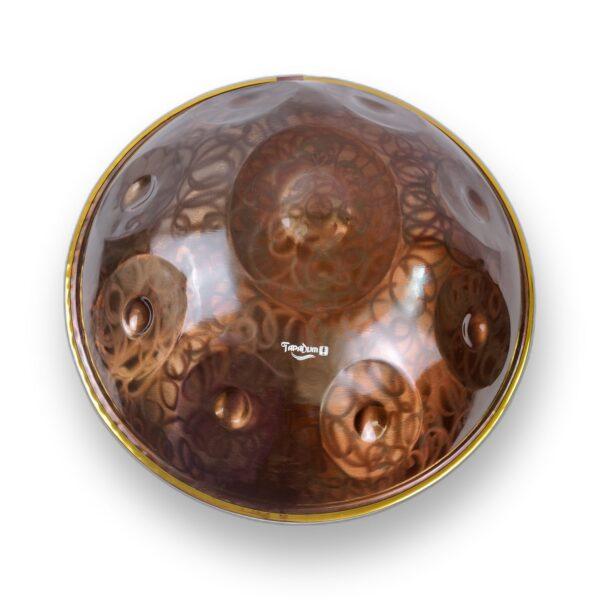
A steel dome played with the hands, tuned to a single scale, with a central low note surrounded by a ring of tone fields. Long sustain, rich overlapping harmonics, and — because only the notes of one scale exist on the instrument — no wrong notes available. It is the one instrument in a sound bath set that plays real melody while still sustaining like a bowl. Depth: handpan in sound therapy and how a handpan is tuned.
Steel tongue drum
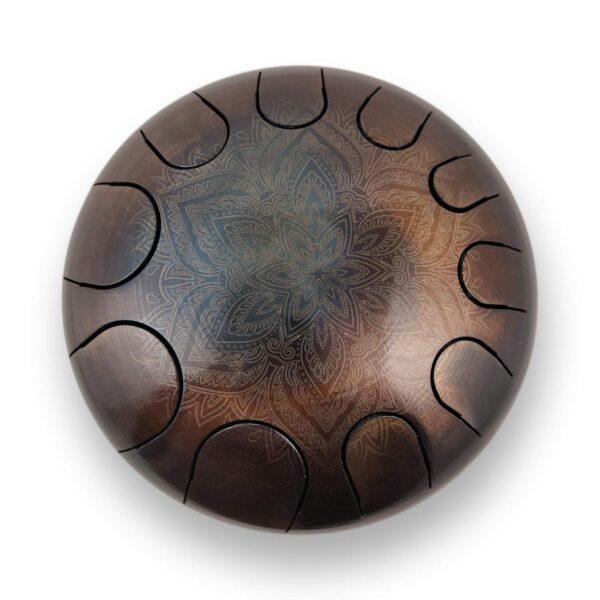
A smaller, closed steel body with cut “tongues” that sound when struck with fingers or soft mallets. Gentler attack than a handpan and a fraction of the price, which makes it the most common entry point into this work. Very intuitive — good with children, good in small rooms, good for one-to-one sessions. Depth: the tongue drum buyer’s guide and its use in meditation.
Udu
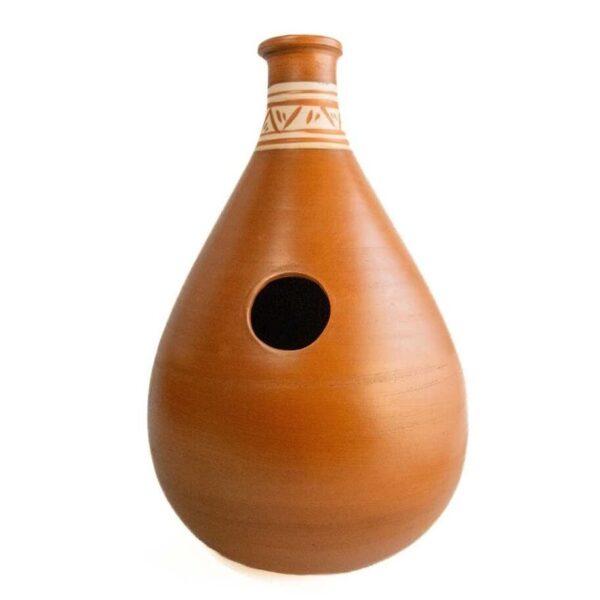
A clay vessel drum from the Igbo of Nigeria. Covering and releasing the side hole produces a deep, bending bass note that nothing else here makes; the body answers fingertips with soft, dry taps. The quietest instrument on this page by a wide margin, which is exactly why it suits small rooms and late evenings. Depth: everything about the udu drum.
Santur
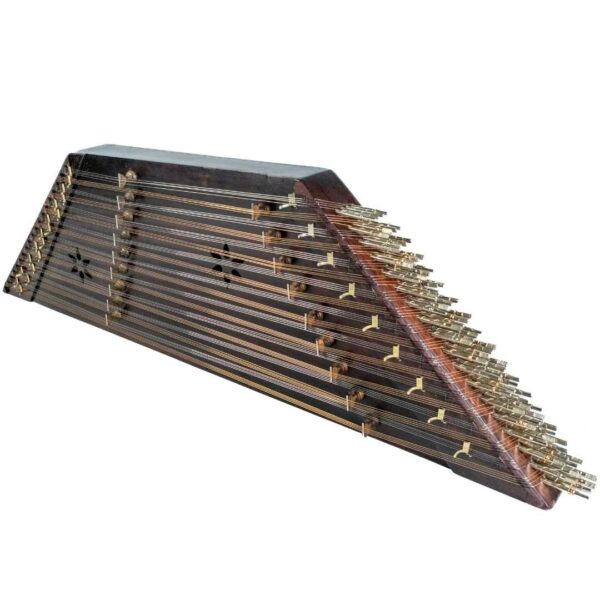
A Persian hammered dulcimer — a trapezoidal box with many courses of strings struck with light wooden mallets. It is not usually thought of as a sound-healing instrument, but its dense, shimmering overtone wash does a similar job to a monochord in a lying-down session. Depth: the complete santur guide.
Frame drums sit adjacent to this group and we stock them too — the Persian daf and Turkish bendir are covered in frame drums for meditation.
Instruments You Will Meet That We Do Not Stock
These appear in almost every sound bath and you should know what they are. We do not currently sell them, so treat this section as description rather than recommendation — and buy them from a specialist who does.
Himalayan (Tibetan) singing bowls. Metal alloy bowls played with a mallet, struck or rimmed in a circular motion. Long, complex sustain with audible beating between overtones. Often placed on or near the body so the vibration is felt directly. The anchor instrument of most sets.
Crystal singing bowls. Quartz bowls with a purer, more piercing tone than metal — fewer competing overtones, a cleaner single pitch. Louder and more directional than people expect, and fragile.
Gongs. The loudest and least controllable instrument in the practice, and the one that most needs skill. A gong can go from almost inaudible to overwhelming in one stroke.
Shamanic frame drums. Single-headed drums played with a beater at a steady pulse. Used for rhythmic, journeying work rather than sustained tone — a different job from bowls.
Koshi and elemental chimes. Small tuned chime bundles, each set to a scale, usually named for the four elements. Soft, high, and easy to use as punctuation — opening a session, closing a savasana.
Tuning forks. Metal forks at fixed pitches, activated and held near the ears or body. Used for very focused, localised work.
Monochord. A long resonant box strung with many strings tuned to the same or closely related pitches, stroked to produce a continuous overtone field. Often built into a table or chair so the client lies on it. The closest thing in the practice to an acoustic full-body wash.
Starting a Practice at Home
You do not need a studio, and you do not need one of everything. Two or three instruments cover most of what a home practice needs.
Decide what you actually want. Relaxation before sleep, a focus for meditation, emotional processing, or something to bring into a class you already teach — these lead to different instruments. Sustained melodic tone points to a handpan or tongue drum; rhythm and grounding points to a frame drum or udu.
Start small and balanced. One sustaining melodic instrument plus one quiet rhythmic one is a complete palette. A tongue drum and an udu will carry a full session between them, and together they cost less than most single premium instruments.
Build a ritual before you build a collection. A fixed time, a few breaths, one instrument played until the sound completely disappears. Notice where the vibration lands in your body rather than trying to steer the music. Consistency does more than variety here.
Prepare the room, not just the kit. Phones silent, soft light, as little visual noise as possible. A dedicated corner where the instruments live together means you will actually reach for them.
How to Choose an Instrument
Listen to the decay, not the attack. The sound should fade naturally and evenly rather than dying abruptly or breaking up. Decay is where the work happens in this practice.
Play it quietly. The single most useful test. An instrument that only opens up when struck hard is the wrong tool for a room of people lying down. Everything we select for this range has to sound full at low volume.
Check tuning stability. For steel instruments, ask how the tuning holds and how the surface is finished — stainless, nitrided and coated steels behave differently in humid rooms. For clay, check for hairline cracks.
Trust your own response over the theory. Low frequencies ground some people and flatten others; bright tones lift some and irritate others. The question worth asking is simply whether you feel more present with that sound in the room.
Frequently Asked Questions
What counts as a sound healing instrument?
Any instrument chosen for sustained, resonant tone rather than for melody or rhythm in the usual musical sense. In practice that means singing bowls, gongs, handpans, steel tongue drums, monochords, chimes, tuning forks and frame drums. What they share is a long decay and a rich overtone content, which is what allows a listener to stop tracking the sound analytically.
Which instrument should a beginner start with?
A steel tongue drum, in most cases. It is tuned to one scale so nothing sounds wrong, it is quiet enough for a flat, it is compact, and it costs a fraction of a handpan. If you want more range and depth later, a handpan is the natural step up. An udu is the alternative if you want something rhythmic and very quiet.
Do you sell singing bowls and gongs?
Not at present. Our sound healing range covers handpans, steel tongue drums, clay udu drums and santur, plus frame drums in the percussion collection. We describe bowls, gongs, chimes, tuning forks and monochords here because you will meet them in this practice and should know what they do, but you will need a specialist supplier for those.
Is sound healing scientifically proven?
Music-based interventions have measurable effects on mood, perceived stress and anxiety, and that evidence is real. Claims about specific frequencies, brainwave entrainment or energetic rebalancing are not supported at the level they are usually stated. The responsible position is that these instruments support well-being as a complement to medical and psychological care, not as a replacement for it.
What is the difference between a handpan and a tongue drum?
Both are steel, tuned to a single scale, and played with the hands. A handpan is larger, hammered from two shells, with concave tone fields and a much richer overtone bloom — and a much higher price. A tongue drum has cut tongues on a closed body, a softer attack, less harmonic complexity, and is far more affordable and portable.
How many instruments do I need for a sound bath?
Two is enough to run a real session and three is comfortable: something sustaining and melodic, something rhythmic and grounding, and optionally something bright for punctuation. Our guide to building a sound bath set works through the combinations and the order to buy them in.