
The Mey: Anatolia’s Soulful Double-Reed Wind Instrument
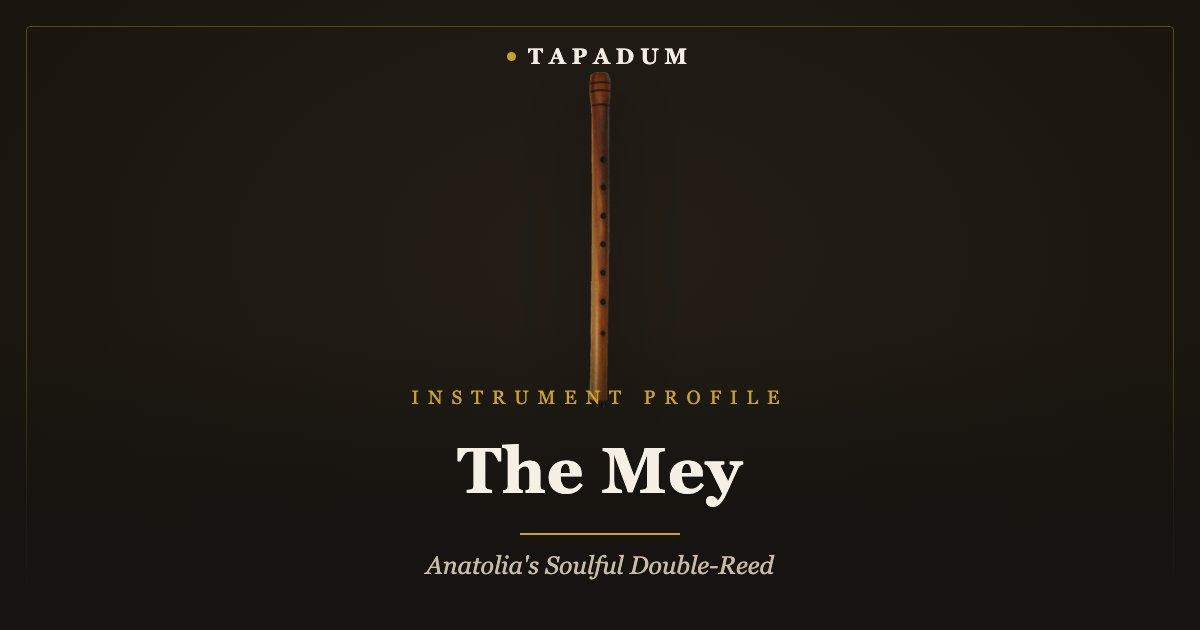
What you’ll learn: what makes the mey’s voice deeper and more intimate than its cousin the ney, why its double reed (kamış) demands more embouchure control than most wind instruments, whether it’s realistic as a first instrument, and how to choose a tone and keep the reed alive.
The mey is a short, cylindrical double-reed wind instrument at the center of Anatolian folk music, built from aged apricot wood and voiced through a wide cane reed called a kamış. Its sound sits lower and breathier than the Turkish ney — closer to an oboe than a flute — which is why it carries the melancholic, vocal quality heard in Turkish folk laments and wedding music alike. At Tapadum, the mey falls under our winds curator Volkan Incuvez, a multi-instrumentalist trained at Ege University’s State Turkish Music Conservatory. See how it compares to its wind-family cousins in our Ney vs Kaval vs Mey guide.
What Is the Mey?
The mey is built around a cylindrical bore in seasoned apricot wood, roughly 60 cm long, 10 cm wide, and weighing about 1.2 kg. Unlike the ney’s open reed-pipe design, the mey is sounded through a double reed — two thin blades of cane bound together — fitted into a wide mouthpiece at the top of the body. A small metal clip called the kıskaç sits on the reed itself, letting a player adjust pitch and reed opening mid-performance without stopping to reshape the cane.
The Kamış: Why the Reed Defines the Sound
Every mey’s character lives in its reed, not its body. The kamış is hand-cut from Arundo donax cane — the same reed species used across Middle Eastern double-reed instruments — and its width, thickness, and scrape determine how much breath pressure a player needs to speak a clean note. In our experience, this is the single hardest thing to learn on the mey: breath pressure and embouchure change the pitch as much as fingering does, which is why the same fingering can sound flat or sharp depending on how hard you’re blowing into it.
Mey vs Ney vs Duduk: Same Family, Different Voices
The mey is often confused with its wind-family relatives, but the differences are audible immediately. The Turkish ney is an open, end-blown reed flute with a airier, more vocal upper register — it was historically used in Sufi ceremony and Ottoman music therapy. The mey, by contrast, uses a double reed and a fully cylindrical body, which gives it a lower, more nasal, more grounded voice better suited to folk melody than to the ney’s soaring improvisation. Its closest international cousin is the Armenian and Caucasus duduk, which shares the double-reed design and a similarly deep, breathy tone, though the two instruments differ in bore proportions and reed construction.
Playing the Mey: Embouchure and Breath
When I first pick up a mey after weeks on the ney, the adjustment is entirely in the mouth, not the fingers. You’re not blowing across an edge — you’re compressing a double reed between your lips and controlling airflow through a much smaller opening. Small embouchure shifts bend pitch noticeably, which is exactly the technique traditional players use for the instrument’s signature vocal ornamentation and pitch slides. It rewards patience: the first weeks are as much about training your lips and breath control as they are about learning fingering.
Is the Mey Right for a Beginner?
Honestly — not as a true first instrument. The mey is built for intermediate and advanced wind players, and it responds best to musicians who already have reed-instrument experience on clarinet, oboe, or duduk. A complete beginner can learn the mey, but expect a steeper first few months than with an open-hole flute like the ney, and plan on lessons with an experienced teacher rather than teaching yourself from video alone. If you’re looking for a gentler entry point into Turkish wind instruments, the ney or kaval are typically the easier starting place.
Choosing Your First Mey — Tone and Key
Tapadum’s Professional Mey (€125) ships in five standard tones — Do, Si, La, Fa, and Re — with custom tones available made-to-order in three to ten days. Which tone you need depends on the ensemble or teacher you’re working with: folk ensembles typically specify a tone to match the group’s key center, so it’s worth confirming with your teacher before ordering rather than guessing. The reed itself is a consumable part, not a one-time purchase — expect to replace it periodically as the cane wears and the tone starts to thin or turn uneven.
Care and Maintenance
The mey’s biggest enemy is moisture left sitting inside the bore. After every session, remove the reed and let both the reed and the body dry completely before putting the instrument away — apricot wood cracks under repeated damp-to-dry cycles if you skip this. Keep the mey out of direct sunlight and away from sudden temperature swings, and apply bore oil to the interior every few months to keep the wood from drying out. Treat the reed as consumable: when the tone turns thin or uneven no matter how you adjust the kıskaç, it’s time for a new one, not a repair.
The Mey in Anatolian Folk Tradition
The mey’s low, breathy voice has carried Anatolian folk melody for generations — it appears in wedding processions, laments, and the long, ornamented melodic lines that define Turkish folk repertoire outside the Ottoman classical tradition. Where the ney found its home in Sufi ceremony and courtly music, the mey stayed closer to village and folk contexts, which is part of why its voice reads as more intimate and less formal than its taller cousin.
Frequently Asked Questions
What is a mey and how is it different from a ney?
The mey is a short, cylindrical double-reed wind instrument with a deeper, more nasal voice; the ney is a longer, open-ended reed flute with an airier upper register. The mey uses a double reed (kamış), while the ney is blown across an open edge.
Is the mey a good instrument for a beginner?
Not as a true first instrument — it’s built for intermediate and advanced wind players, and responds best to musicians with prior reed-instrument experience. Beginners can learn it, but should expect a steeper first few months and plan on lessons with an experienced teacher.
What is the mey’s reed (kamış) made of?
The kamış is a handcrafted double reed cut from Arundo donax cane, the same species used across Middle Eastern double-reed instruments. It’s a consumable part that needs periodic replacement as it wears.
What key or tone should I choose for my first mey?
Tapadum’s Professional Mey is available in five standard tones — Do, Si, La, Fa, and Re — with custom tones made to order. Confirm the right tone with your teacher or ensemble before ordering, since it depends on the group’s key center.
How do I care for a mey reed?
Remove the reed after every session and let it dry fully before storing the instrument. Keep the mey away from direct sunlight and temperature swings, oil the bore every few months, and replace the reed once its tone turns thin or uneven.
[…] and tonal centre. Readers can meet these instruments individually in our guides to the kaval, mey and […]