
Why Drumming Feels Good: Rhythm, the Body and the Brain

What you’ll learn: why a steady beat pulls your body into motion, why slightly off-beat rhythms feel best, what dopamine and pain-threshold studies actually measured, why playing a drum differs from listening, and what the research does not support.
Drumming feels good because a beat engages the brain’s movement and reward systems at the same time. Hearing a regular pulse activates motor areas even when you sit still. Rhythms with a little syncopation create the strongest urge to move and the most pleasure. And actively playing, rather than listening, has been linked to a higher pain threshold, a common indirect marker of endorphin activity.
Our earlier article on the science of group drumming covers what happens when people drum together over weeks. This one looks at a single player and a single drum: what happens in your body and brain the moment a rhythm starts to work.
Your brain hears a beat as something to move to
A steady beat is not processed only as sound. In a 2007 brain-imaging study, Jessica Grahn and Matthew Brett found that rhythms with a clear beat activated motor areas of the brain, including the basal ganglia and the supplementary motor area. Participants were only listening, not moving.
This helps explain why feet tap almost on their own. The brain predicts where the next beat will fall and prepares the body to meet it. When you play a drum, that prediction becomes action: the hand lands where the brain expected the beat.
Read the 2007 study on rhythm and beat perception in motor areas of the brain.
The groove sweet spot: why a little syncopation feels best
Musicians call the pull to move “groove.” Researchers have measured it. In a 2014 PLOS ONE study, Maria Witek and colleagues played drum breaks with different amounts of syncopation, meaning accents placed off the main beat. Listeners rated how much each break made them want to move and how much they enjoyed it.
The answer was an inverted U. Too little syncopation felt flat. Too much felt confusing. A moderate amount produced the strongest urge to move and the most pleasure.
A 2020 brain-imaging study by Tomas Matthews and colleagues added the next layer. Medium-complexity rhythms again scored highest for pleasure and wanting to move. Activity in reward-related regions, including the nucleus accumbens, caudate, and putamen, tracked both ratings.
Traditional hand-drum rhythms sit naturally in this sweet spot. A darbuka pattern such as maksum mixes deep centre strokes with lighter edge strokes that fall between the strong beats. If you want to feel the effect yourself, our guide to maksum, baladi, and malfuf on the darbuka is a good place to start.
Read the 2014 study on syncopation, body movement, and pleasure in groove.
Dopamine and the pleasure of anticipation
Dopamine is the brain chemical most linked to reward and motivation. A 2019 study in PNAS tested its role in musical pleasure directly. Twenty-seven healthy adults listened to music on three separate days: once after a drug that raises dopamine signalling, once after a drug that lowers it, and once after a placebo.
Raising dopamine increased the pleasure and motivation people reported. Lowering it reduced both. The authors concluded that dopamine plays a causal role in musical pleasure.
Rhythm is built for this system. Every beat sets up an expectation about the next one, and every satisfied or playfully delayed expectation is a small reward. The Matthews team proposed exactly this model for groove: circuits linking the cortex and the basal ganglia generate the beat internally, form expectations about it, and turn those expectations into pleasure.
Read the 2019 PNAS study on dopamine and musical reward.
Playing versus listening: the drummer’s advantage
Listening to music you love is rewarding. Making it yourself seems to add something more. In a 2012 series of experiments, Robin Dunbar and colleagues at Oxford measured pain tolerance before and after different musical activities.
Singing, dancing, and drumming raised pain tolerance afterwards. Listening to music did not. In one comparison, twelve drummers who played together regularly showed a higher pain threshold than nine musicians who worked in an instrument shop.
The researchers used pain tolerance as an indirect sign of endorphin release, the body’s own pain-relief chemistry. They did not measure endorphins directly, and the samples were small. Still, the pattern is consistent: active, effortful music-making behaves differently in the body from passive listening.
See the 2012 study on music performance and pain threshold.
Drumming is real physical work
Part of the good feeling is simply exercise. Researchers at the University of Chichester, working with Blondie drummer Clem Burke, recorded maximum heart-rate values, high sweat rates, and significant energy expenditure during rock drumming. In other words, a full drumming session is physical exercise, not only a musical one.
The same research group also reports that learning the drums is a potent stimulus for brain plasticity, the brain’s ability to reshape itself with practice. A hand drum played at home is gentler than a full rock kit on stage. But the principle holds: rhythm asks the arms, the breath, and attention to work together.
See the University of Chichester drumming and health research.
Why playing in time with others feels even better
Synchrony adds its own effect. In a 2015 study in Biology Letters, Bronwyn Tarr and colleagues asked groups to dance with more or less synchrony and more or less physical effort. Both synchrony and exertion independently raised pain threshold and feelings of closeness to the group.
That study used dance, not drums, but the ingredients are the same ones a drum circle provides: shared timing and physical effort. For the evidence on drumming groups specifically, including mood and stress findings, see our article on group drumming, stress, and connection.
Read the 2015 study on synchrony, exertion, and social bonding.
In short: a beat recruits the brain’s movement system, moderate syncopation recruits its reward system, dopamine links the two, and active playing adds physical effort that listening alone does not.
What the science does not say
The findings above are real, but they are often stretched. Four limits are worth knowing before you read wellness claims about drumming.
- Drumming is not a medical treatment. None of these studies tested drumming as a cure for any condition.
- “Endorphin release” was inferred, not measured. Pain tolerance is an indirect marker, and the samples were small.
- There is no special “healing frequency” or brainwave setting. The effects come from beat, movement, and effort, not from a magic tempo or pitch. Our article on 440 Hz versus 432 Hz looks at a related frequency myth.
- Taste matters. The dopamine findings concern music people enjoy. A rhythm you dislike will not reward you in the same way.
How to feel it as a beginner
You do not need training to experience groove. You need a drum that responds easily and a simple plan. In our Izmir atelier we test each clay darbuka against an aluminum reference, because tone and response decide how long a beginner keeps playing.
- Start with a steady pulse. Play one low centre stroke on every beat for a minute. Let your body settle into it.
- Add one off-beat accent. Place a light edge stroke between two beats. This is the first step into the groove sweet spot.
- Play slower than you think. A relaxed tempo makes the off-beat feel deliberate, not rushed.
- Keep sessions short and regular. Ten focused minutes most days build timing faster than one long session a week.
A darbuka gives the clearest contrast between deep and bright strokes, which makes off-beat accents easy to hear. A Persian daf or bendir suits a slower, steadier pulse; our article on frame drums for meditation explains why. Still deciding? Compare options in choosing a hand drum for beginners, or browse the full percussion collection.
Frequently Asked Questions
Why does drumming feel so good?
A clear beat activates the brain’s motor areas even while you only listen. Moderately syncopated rhythms also engage reward regions linked to pleasure and the urge to move. Dopamine plays a causal role in musical pleasure, and active playing adds physical effort that listening does not provide.
Does drumming release endorphins?
Possibly, but it has not been measured directly. A 2012 Oxford study found that drumming, singing, and dancing raised pain tolerance afterwards, while listening did not. Researchers use pain tolerance as an indirect marker of endorphin activity, and the samples were small.
Is playing a drum better than listening to music?
They work differently. Listening to music you enjoy is rewarding and linked to dopamine. Playing adds movement, physical effort, and active prediction of the beat. In the pain-threshold studies, only active music-making raised pain tolerance.
Which rhythm feels best to play?
Research on groove points to moderate syncopation: a steady pulse with some accents between the beats. Too simple feels flat and too complex feels confusing. Traditional darbuka rhythms such as maksum and baladi sit comfortably in this range.
Do I need lessons to feel the benefits?
No. The groove effect starts with a steady pulse and one off-beat accent. Short, regular sessions on a responsive hand drum, such as a darbuka or frame drum, are enough to begin.
Find Your First Drum
Four hand drums with different voices, from bright darbuka to deep frame drum:


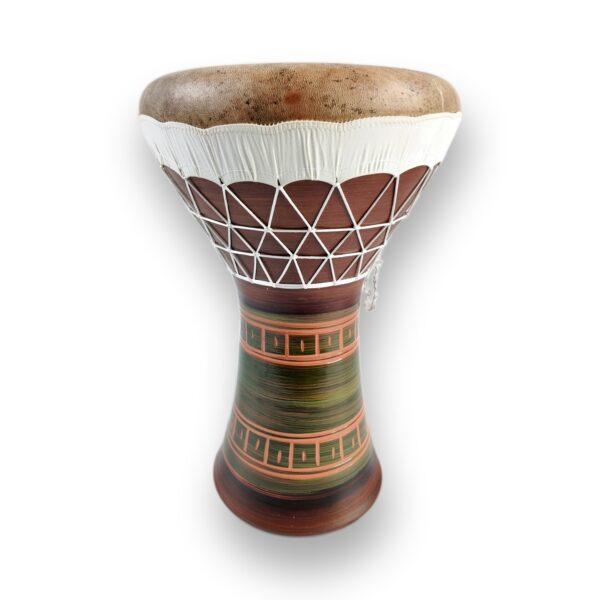
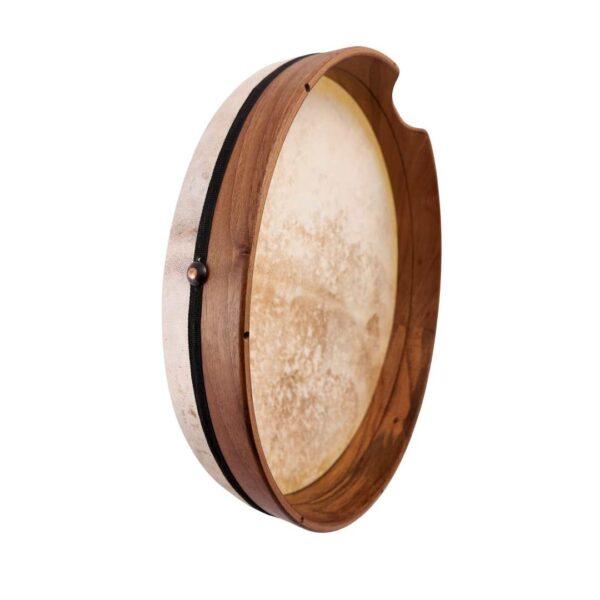
Practise the pulse at a steady tempo: Tapadum Tuner has a free browser metronome with darbuka and bendir sounds and usul patterns such as maksum, with no app to install.