
Black Sea Kemence: The Karadeniz Fiddle Behind Horon Dance Music
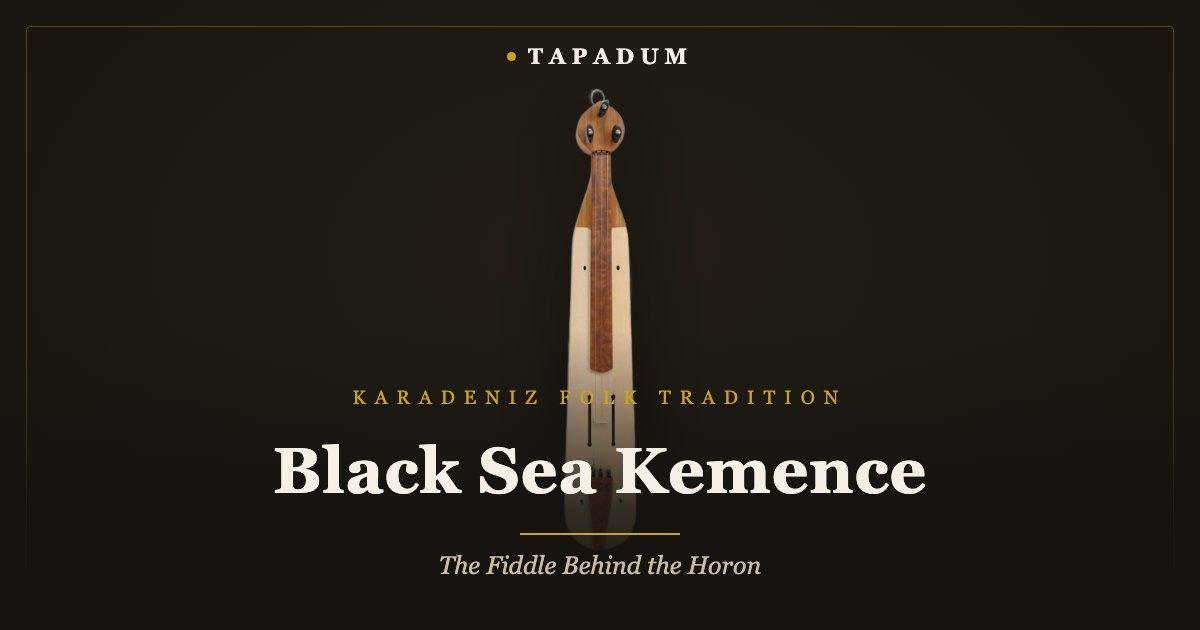
What you’ll learn: what the Black Sea kemence actually is (and why it’s not the same instrument as the classical kemence), how its single-block body and three strings are built, why it drives the horon dance, and what to look for when choosing one.
The Black Sea kemence (Karadeniz kemencesi) is a small, three-stringed bowed fiddle carved from a single block of wood, played upright rather than under the chin, and it’s the lead voice behind the horon — the fast, shoulder-trembling line dance of Turkey’s eastern Black Sea coast. It shares a name with the pear-shaped classical kemence of Ottoman court music, but the two are unrelated in shape, technique, and repertoire — a shared name that causes real confusion for new buyers.
This guide covers what actually separates the Black Sea kemence from its classical namesake, how it’s built and tuned, its role in the horon, and what to check before buying one.
Black Sea Kemence vs Classical Kemence: Not the Same Instrument
Both carry the name “kemence,” and that’s roughly where the resemblance ends. The Black Sea kemence is small, pear-ish but flatter, three-stringed, and played resting upright on the knee or against the chest — central to the folk dance music of the Karadeniz region. The classical kemence is a different, three-stringed bowed instrument descended from the medieval Byzantine lyre, played resting against the collarbone with the pegbox pointing up, and belongs to Ottoman classical fasil ensembles. If you’re shopping by sound rather than name, decide which regional tradition you’re after before you search — we cover the classical side in our classical kemence guide.
What Is the Black Sea Kemence?
The Black Sea kemence — also called the Pontic lyra — is a three-stringed bowed fiddle central to the folk music of Turkey’s eastern Black Sea coast. It’s carved from a single block of wood rather than assembled from separate glued pieces, which is why it’s sometimes grouped with other “integral lute” instruments in organology. Its voice is thin, nasal, and piercing by design — built to cut through the noise of a crowded dance floor rather than blend softly into an ensemble.
Construction: One Block, Three Strings
The neck, body, and pegbox are hollowed from a single piece of dense wood — mulberry, plum, or walnut are the traditional choices — with a thin spruce or pine soundboard glued on top at roughly 2-3mm thickness. The pegs are hardwood, usually matching the body, and inserted from the front rather than the side. This single-block build is part of what gives the instrument its shallow body and high string tension, both of which shape its sharp, human-voice-like tone.
Tuning and the Underhand Bow Grip
The three strings are most commonly tuned in perfect fourths — B-E-A is a frequently cited reference tuning — but working players treat that as a starting point, not a rule. Tuning shifts to suit the makam being played, and melodic lines lean on neutral intervals learned by ear rather than fixed Western scale degrees. The bow is short, strung with horsehair, and held in an underhand grip that gives the player fine pressure control — a technique distinct from the overhand grip used on a violin or the classical kemence.
The Kemence and the Horon
The Black Sea kemence is, first and foremost, dance music. The horon is a fast circular chain dance from the eastern Black Sea, danced with linked arms, trembling shoulders, and quick, tight footwork, and it’s built on aksak — “limping” — rhythms that don’t divide evenly: 7/8, 5/8, 9/8. The kemence leads that rhythm live, which is why the instrument’s cutting, high-tension voice matters as much as its tuning — it has to be heard over a moving crowd.
A Shared Regional Heritage
The Black Sea kemence’s history runs through the Pontic Greek, Laz, and Turkish communities who have shared the Karadeniz coast for centuries — the instrument itself likely dates to the Byzantine era, when the region was part of the Byzantine Empire, and the name “kemence” appears in sources as early as the 10th century. We’ve found that online debates over which single culture “owns” the instrument miss the point of its own history; we go deeper into that question, and the classical kemence’s parallel case, in Who Owns These Instruments?
Choosing a Black Sea Kemence
Three things matter most. Wood: mulberry, plum, or walnut for the single-block body — denser wood generally means a more focused tone. Setup: smooth front-inserted pegs that hold tuning under the instrument’s naturally high string tension. Strings: professional sets use nickel-wound, high-grade steel — a meaningful upgrade over generic strings for tone and stability.
Our Professional Turkish Black Sea Kemence is built to that standard — a genuine folk instrument for players who want the Karadeniz sound specifically, not a substitute for the classical kemence.
Frequently Asked Questions
Is the Black Sea kemence the same as the classical kemence?
No. They share a name but are different instruments — the Black Sea kemence is a folk fiddle from the Karadeniz region built for horon dance music, while the classical kemence is a pear-shaped instrument central to Ottoman classical fasil ensembles.
How many strings does a Black Sea kemence have?
Three, most often tuned in perfect fourths (B-E-A is a common reference), though working players retune to suit the makam they’re playing.
What wood is a Black Sea kemence made from?
Traditionally mulberry, plum, or walnut, hollowed from a single block for the neck, body, and pegbox, with a thin spruce or pine soundboard glued on top.
Why is the Black Sea kemence’s sound so piercing?
Its shallow single-block body and high string tension are built for cutting through a crowd — the instrument leads live horon dancing, so it has to be heard over moving dancers, not blend into a quiet ensemble.
What is the horon, and why does it matter for this instrument?
The horon is a fast circular chain dance from Turkey’s eastern Black Sea coast, built on uneven aksak rhythms like 7/8 and 9/8. The kemence is its lead instrument, driving the dance’s rhythm live.