
How a Handpan Is Tuned: Scales Explained
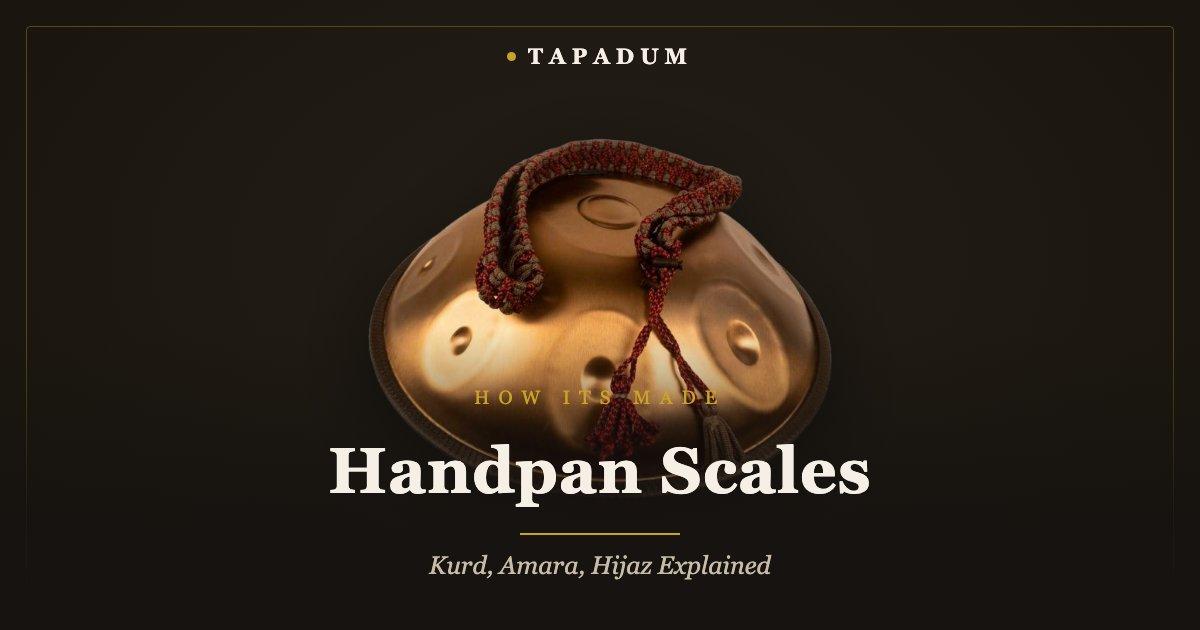
What you’ll learn: how a handpan is actually tuned (it’s hammered, not strung), what a “scale” really means on a handpan, the four scale families most players encounter, and why D Kurd dominates beginner instruments while other scales serve very different moods.
A handpan‘s tuning has nothing to do with strings or tension — every note is shaped by hammering a steel note field until its overtones lock into place, a process that can take a maker hours per instrument. What players call a “scale” isn’t just a set of notes; it’s a specific arrangement of a central low note (the ding) surrounded by a ring of top notes, and the exact intervals between them define the emotional character of everything you play.
This guide covers how tuning actually works, what a scale is built from, the handpan scale families you’ll run into most often, and why beginners keep landing on the same one.
How a Handpan Is Actually Tuned
Each note on a handpan lives in its own concave “note field,” and a maker tunes it by hammering the steel until three things align: the fundamental pitch, the octave overtone, and the compound fifth above that. Getting all three to agree — rather than clashing — is what gives a well-tuned handpan its long, bell-like sustain instead of a dull thud. This is done entirely by ear and hammer, pass after pass, which is why handpan tuning remains a skilled hand craft rather than a machine process.
Nitriding — a surface-hardening treatment that diffuses nitrogen into the steel — is applied after tuning on many instruments. It improves corrosion resistance and durability, and it also shapes the instrument’s sustain and overall timbre, which is why nitrided and raw stainless-steel handpans of the same scale can still sound noticeably different.
Anatomy of a Scale
Every handpan is built around a ding — a central, usually lower note struck to anchor a phrase — surrounded by a ring of top notes tuned to specific scale degrees. Some instruments add bottom notes (sometimes called “gu” notes) on the underside, giving a player a second register to work with. The number of top notes (commonly 7 to 12) and exactly which intervals they cover is what separates one scale family from another.
Common Scale Families
Scale names describe a mood and an interval pattern, not a brand. The same scale name from different makers should sound closely related, even if the maker’s individual tuning style varies.
- Kurd (D minor): the most common handpan scale by far — balanced, versatile, equally at home in meditative playing and more rhythmic improvisation. It’s the default recommendation for a first handpan.
- Celtic Minor / Amara: closely related to Kurd but typically built on a pentatonic core with one fewer note, which makes it harder to play a “wrong” note — a common second recommendation for total beginners.
- Hijaz: built around the raised second degree that defines the Phrygian-dominant sound — an unmistakably Middle Eastern character, a strong step up once you want a more dramatic, modal voice.
- Pygmy: a pentatonic scale with an ethereal, floating quality, often reached for in meditation and sound-healing contexts rather than melodic improvisation.
Why D Kurd Dominates Beginner Handpans
D Kurd’s popularity isn’t accidental — its particular set of intervals is genuinely forgiving. It’s difficult to land on a combination of notes that sounds actively wrong, which lets a new player focus on rhythm and dynamics before worrying about melodic theory. We cover the full case for starting there in our Best Handpans for Beginners guide, and if you’re still deciding between a handpan and a related instrument, our complete handpan guide and Steel Tongue Drum Buyer’s Guide both walk through D Kurd’s role across the wider tuned-percussion family.
Choosing a Scale Beyond Your First Handpan
Once you’ve spent real time on a Kurd or Amara instrument, the case for a second scale is usually about wanting a different emotional palette, not outgrowing the first one. Our Handpan Tapadum – 9 Notes D Kurd covers the standard beginner path; the Handpan Tapadum Pro – 12 Notes D Hicaz is a genuinely different instrument for players who want that modal, Middle Eastern character rather than a second general-purpose handpan.
Frequently Asked Questions
How is a handpan actually tuned?
By hammering each note field until its fundamental pitch, octave overtone, and compound fifth align — done by ear, pass after pass, entirely by hand. There’s no string tension involved.
What does “scale” mean on a handpan?
A scale is the specific set of notes and intervals built into an instrument: a central ding plus a ring of top notes (and sometimes bottom notes), tuned to a named pattern like Kurd, Amara, or Hijaz.
Why do so many beginner handpans use the D Kurd scale?
D Kurd’s intervals are unusually forgiving — it’s hard to play a combination of notes that sounds wrong, which lets a beginner focus on technique and rhythm before melodic theory.
What’s the difference between Kurd and Celtic Minor/Amara?
They’re closely related, but Amara typically has one fewer note built on a pentatonic core, making it even more forgiving to improvise on — often recommended as an alternative first scale.
Does nitriding change how a handpan sounds?
Yes, to a degree. Nitriding hardens and protects the steel surface, but it also affects sustain and timbre, which is why a nitrided and a raw stainless-steel handpan in the same scale can sound subtly different.
[…] looks only at the fundamental, so it can call a tired note “in tune”. Our article on how a handpan is tuned covers the hammering side of this in […]
[…] Oiling does not affect tuning. If you want to understand what does, see how a handpan is tuned. […]
[…] you want to return to, and think about the musicians or instruments you expect to play with. Our guide to handpan tuning and scales goes deeper into scale families and how a tuner shapes each […]