

Description
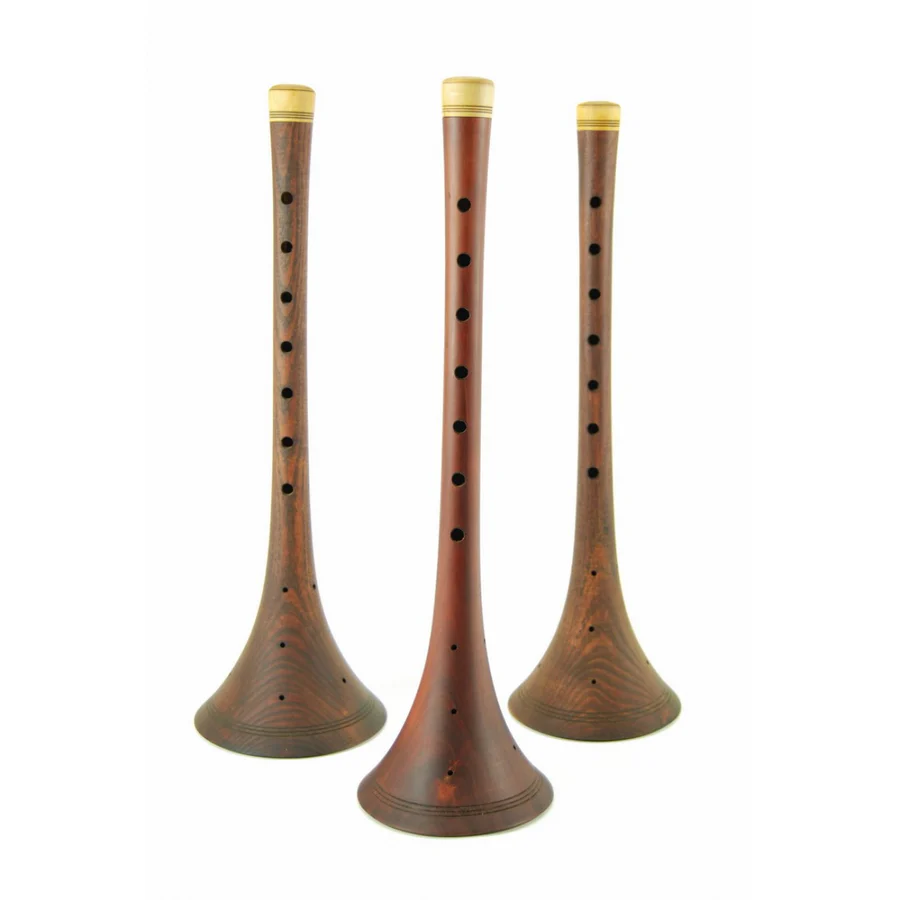
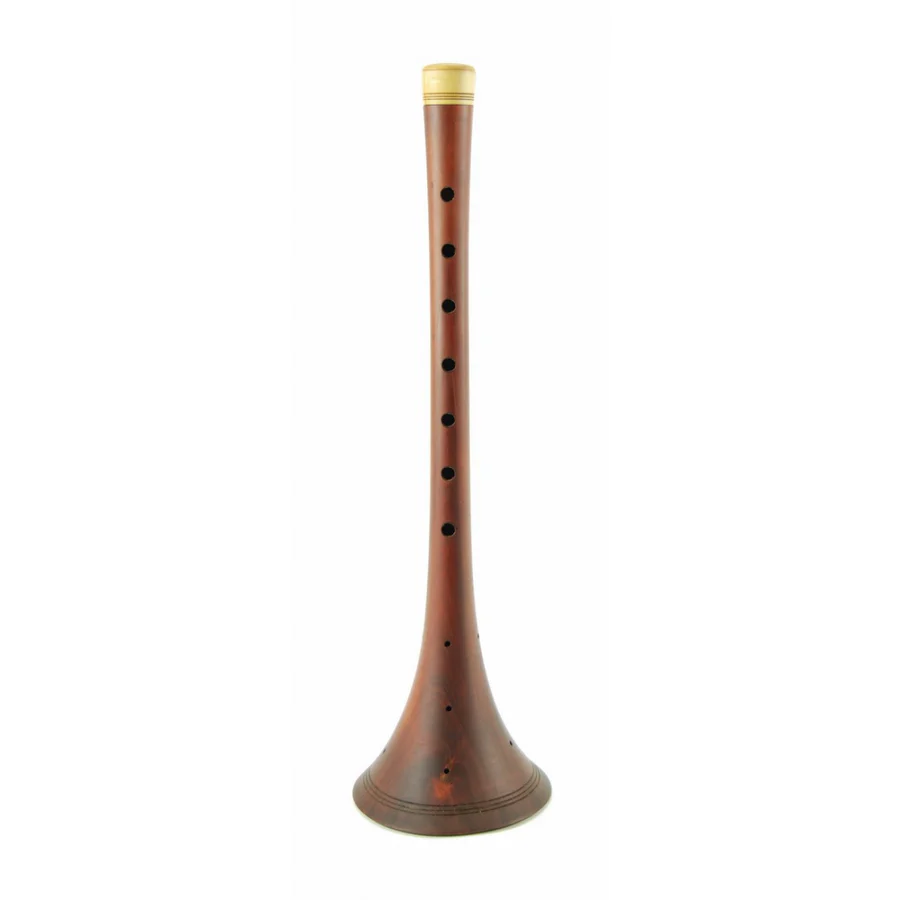
The Turkish Zurna is the double-reed shawm that carries outdoor music across Anatolia — the piercing, unmistakable voice that leads wedding processions, halay lines and village celebrations, almost always paired with a davul drum. This instrument is built by Ali Riza Acar, an Istanbul woodwind master with five decades at the bench, and is available in A, B and G.
Plum wood and the conical bore
The body of this Turkish zurna is turned from plum wood, one of the two fruitwoods Anatolian makers rely on for double-reed instruments. Plum is dense and tight-grained, which matters here more than on most instruments: the zurna’s bore is conical, flaring from a narrow throat at the reed end to a wide bell, and any softness or irregularity in the wood shows up immediately as an unstable upper register. A well-seasoned plum body holds its bore geometry through years of playing and through the humidity a wind instrument meets every time it is used.
The bore profile is what gives the zurna its power. Unlike the cylindrical bore of a clarinet, the conical bore overblows at the octave and drives the reed hard, producing an instrument loud enough to carry across an open square without amplification. That volume is the point — the zurna evolved as an outdoor instrument and was never designed to blend quietly into a room.
The double reed
Tone on a zurna is decided as much by the double reed as by the body. The reed is shaped, soaked and broken in by hand, and the same instrument will sound entirely different with a well-prepared reed than with a poor one — this is the single most common frustration for players new to the instrument. Reeds are consumable and are expected to be replaced; experienced players keep several in rotation and select by the room and the repertoire. A metal disc, the avurtlak, sits below the reed and supports the lips during the circular breathing that sustained zurna playing requires.
| Body | Plum wood |
| Bore | Conical |
| Reed | Double reed, handmade |
| Available tunings | A, B, G |
| Custom tunings | On request, 3–10 days preparation |
| Maker | Ali Riza Acar, Istanbul |
Who plays it
The zurna is a demanding instrument and this is a professional-grade one. It asks for strong breath support, circular breathing for the long unbroken lines of the repertoire, and patience with reed preparation. It suits folk musicians already working in Anatolian, Balkan or Middle Eastern traditions, players building a double-reed collection alongside the mey, and determined beginners who accept that the first months are spent on tone rather than melody. Players looking for a gentler entry into Anatolian winds are usually better served by the mey or the kaval.
Repertoire and pairing
Zurna and davul are a fixed pair in Turkish folk practice — the drum sets the rhythm, the zurna carries the melody, and together they cover the outdoor repertoire: halay, horon, zeybek, wedding processions and seasonal festivals. The instrument appears in closely related forms across the Balkans, the Caucasus and the Middle East, and has moved into contemporary fusion and film scoring for exactly the reason it was built: nothing else cuts through a mix the same way. Explore the wider Turkish wind instruments collection, see the full Zurna range, or read the instrument’s history on Wikipedia.
Care and storage
Swab the bore after playing and let the instrument dry before it goes away — trapped moisture is what cracks a turned fruitwood body. Store reeds separately in a ventilated case rather than left on the instrument; a reed sealed in a closed case while wet will not last. Keep the body away from direct heat and from dry indoor air in winter. A light application of bore oil once or twice a year is enough for plum wood.
Tune Your Zurna
Check your zurna’s pitch against a reference before playing with an ensemble — reed condition shifts intonation, so it is worth confirming each session. Open the Tapadum Tuner.
Built by Ali Riza Acar, whose workshop covers the full Anatolian woodwind range — kaval, mey, duduk, zurna and ney.



Reviews
There are no reviews yet.