Description
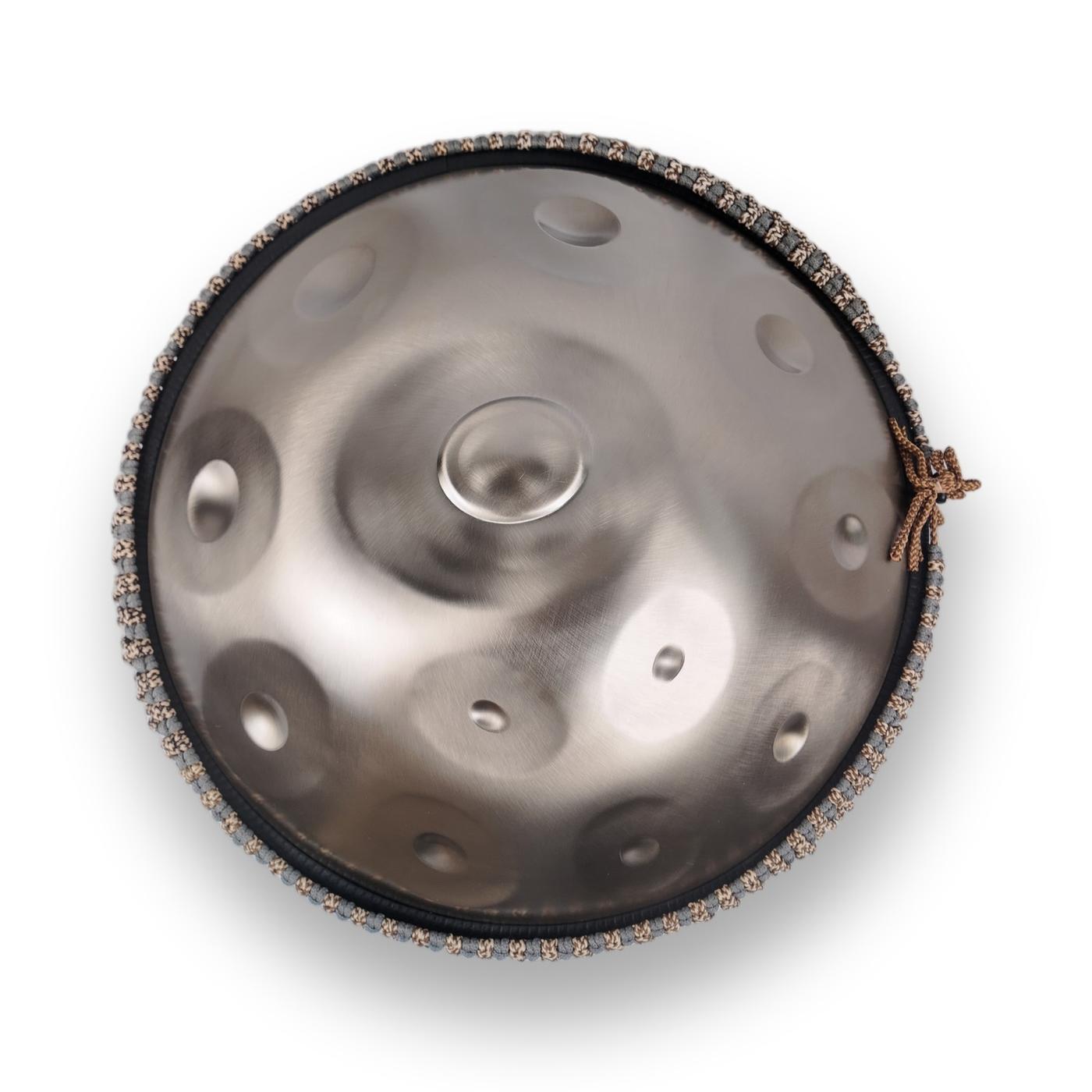
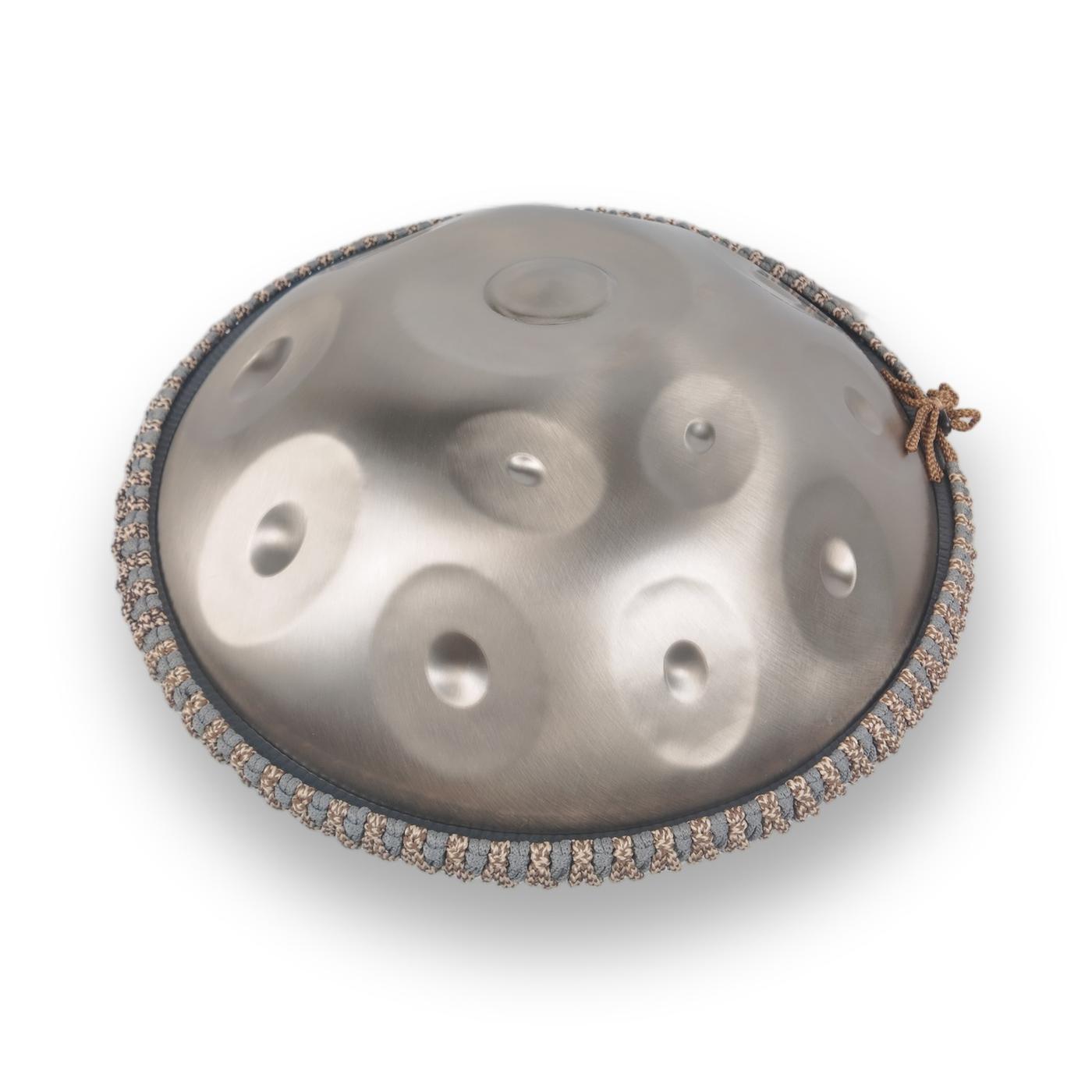
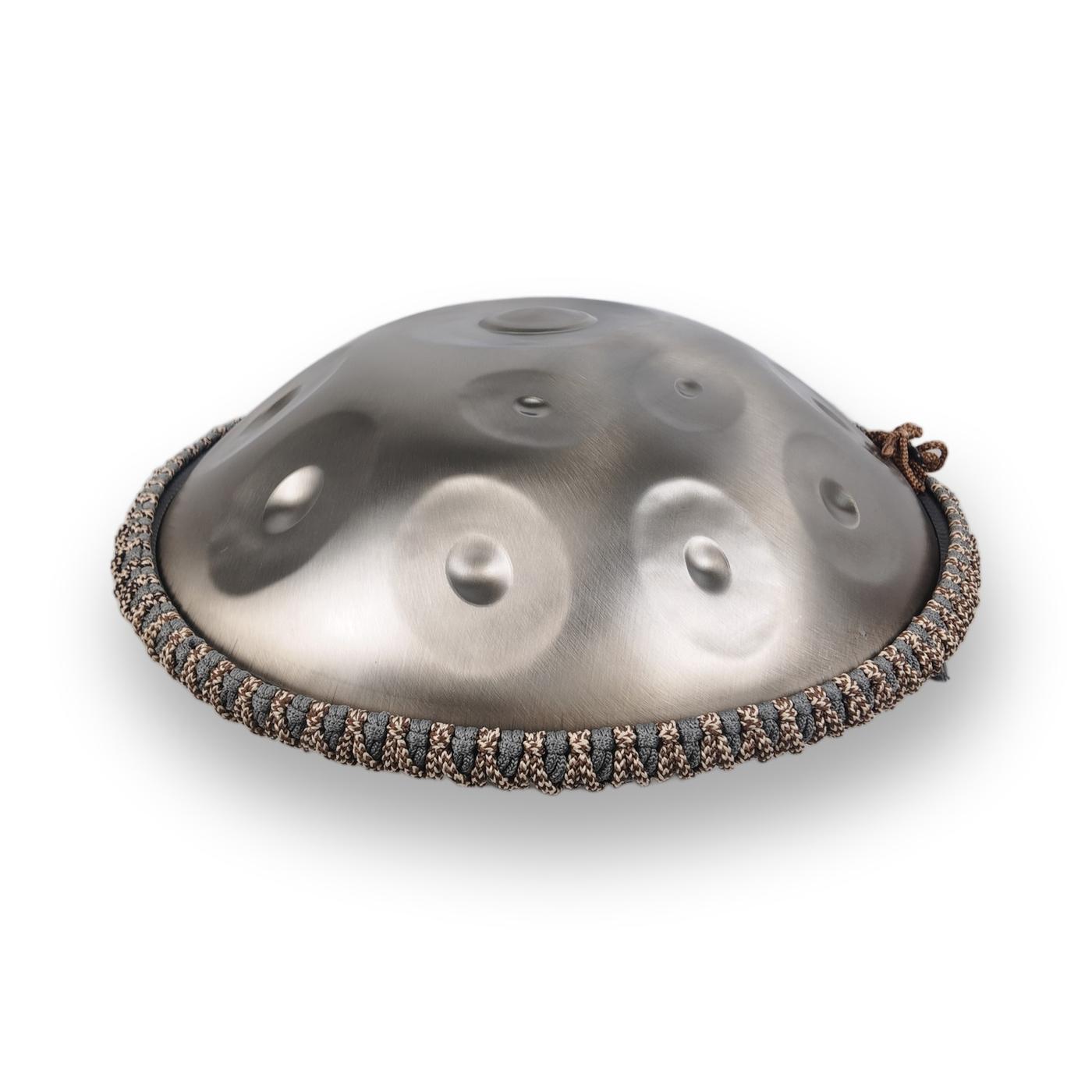
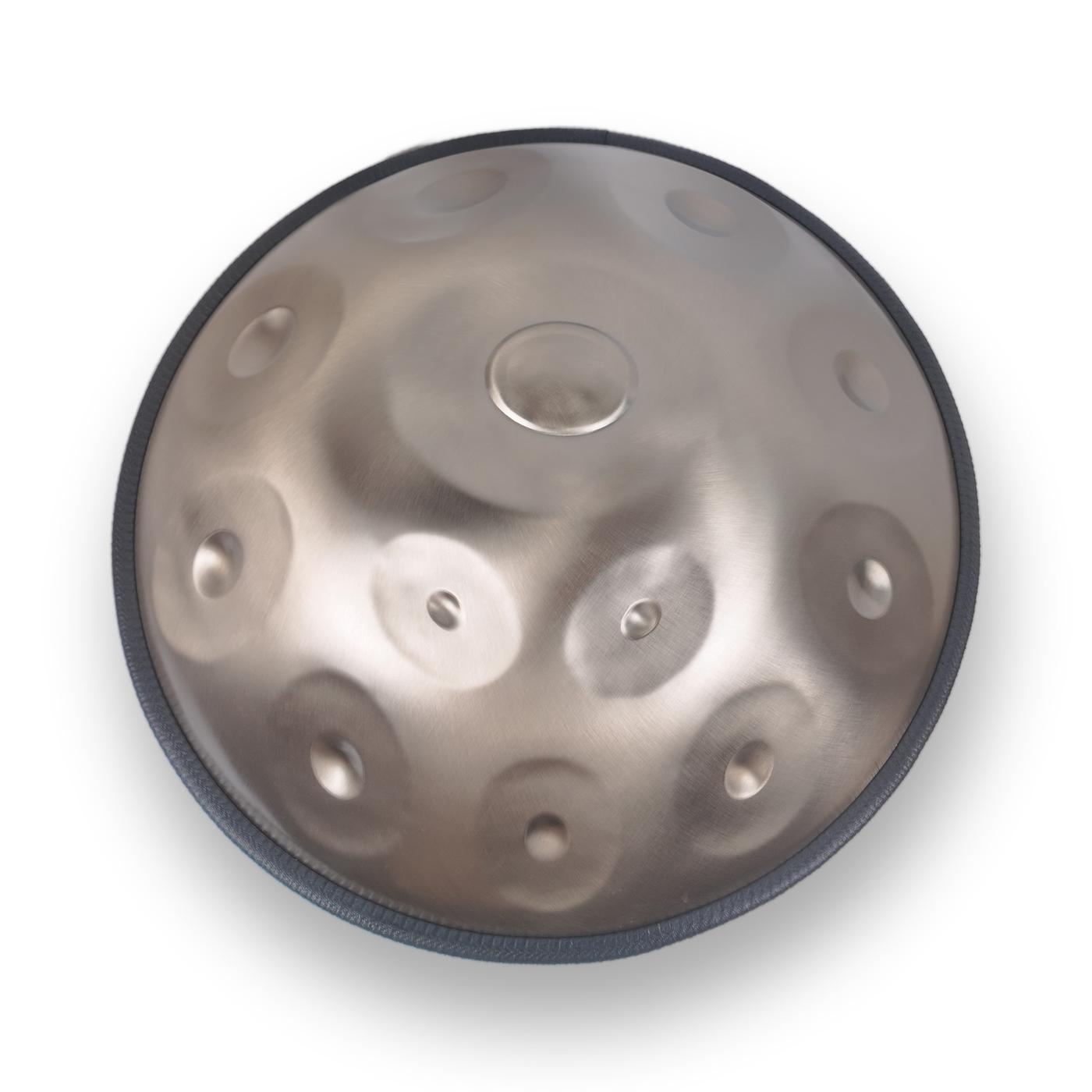
The Handpan Tapadum Pro – 12 Notes D Kurd Scale takes the most-played handpan tuning in the world and gives it room to move: twelve notes spanning a little over two octaves, from a low D3 doum up to a bright E5, every one of them on the top playing surface. It belongs to Tapadum Pro, our own-brand handpan line, and it is built for players who want to write melodies and chord progressions in D Kurd rather than circle inside one octave.
Twelve notes, two octaves: the D Kurd note map
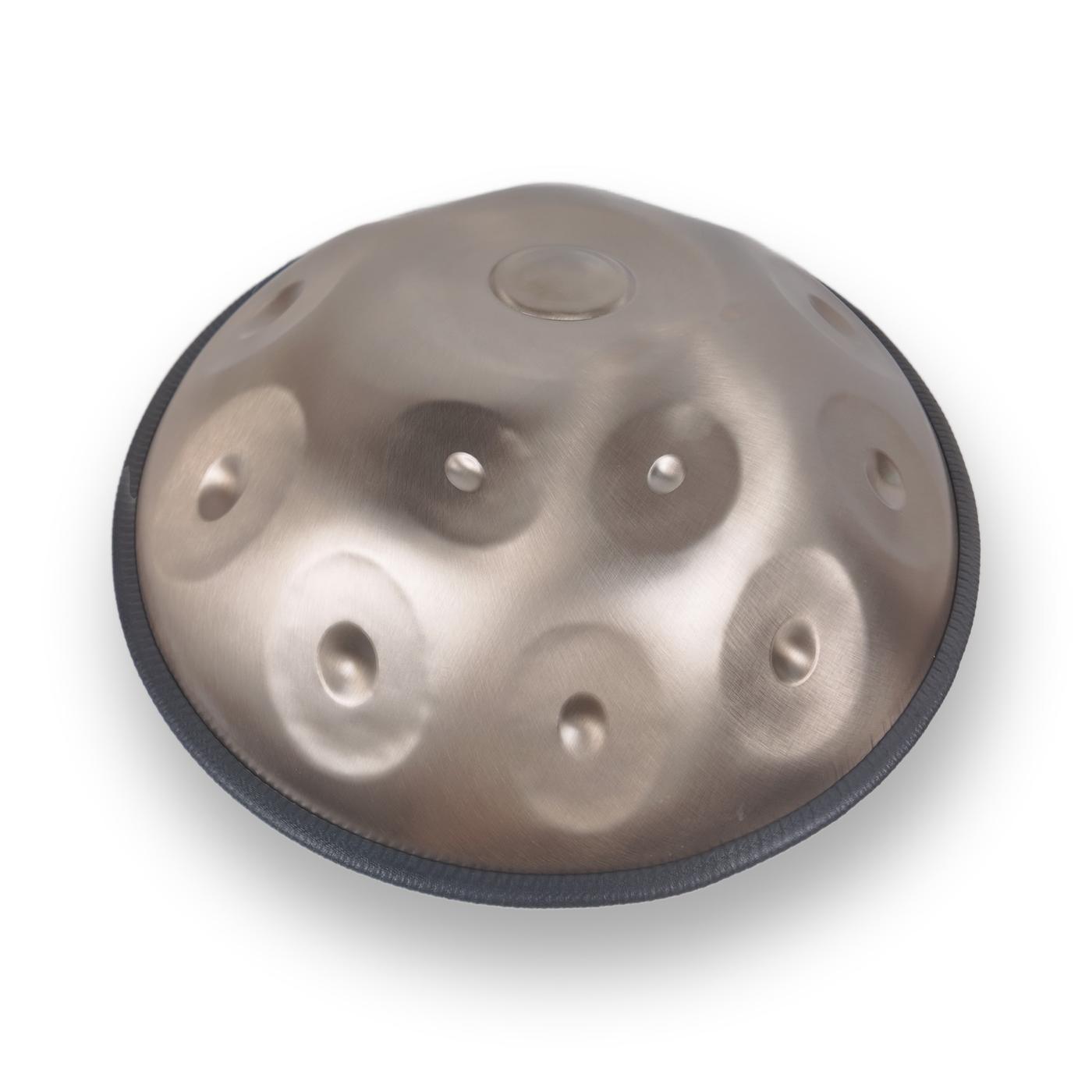
D Kurd is D natural minor — the Aeolian mode built on D — and its reputation rests on one practical fact: no note in it clashes with the low D underneath. The central doum sounds D3. Around it, eleven hand-hammered tone fields run A3, A♯3, C4, D4, E4, F4, G4, A4, C5, D5 and E5.
A typical 9-note D Kurd stops at A4. This layout carries on past it with C5, D5 and E5, so a phrase can climb a full octave above the middle D and resolve at the top instead of turning back early.
Six chords under your hands
The extra range matters most for harmony. Between the doum and the eleven tone fields, the Handpan Tapadum Pro 12 Notes D Kurd holds every note of six triads: D minor, F major, C major, A minor, G minor and B♭ major (the A♯3 field is the B♭ of the scale). You can hold a bass note with one hand and outline a chord change with the other — D minor to B♭, F to C — without running out of notes.
Beside a singer, a guitarist or a loop pedal, that is the difference between a drone and a progression.
Stainless steel, 440 Hz and the Tapadum Pro check
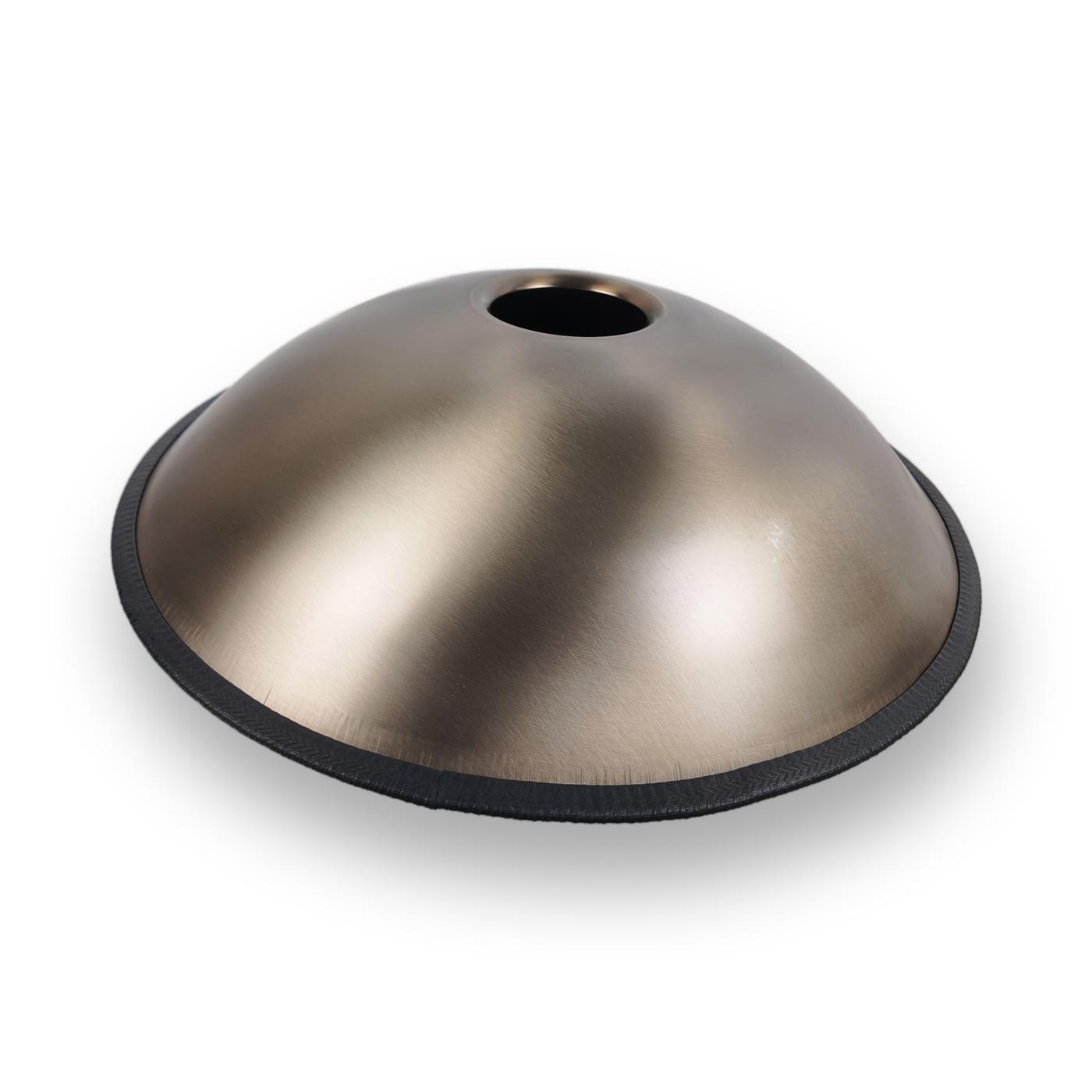
Like every handpan, it is made of two domed steel shells joined at the rim: the top shell carries the notes, the lower shell holds the gu, the port that shapes the resonance of the body.
The shells are stainless steel, which resists rust better than raw or nitrided steel and tends to sustain longer — useful on a 12-note instrument, where a held note has to stay clear while others are played over it. Tuning is referenced to A = 440 Hz, so it sits in pitch with guitars, pianos and recorded tracks.
Every Tapadum Pro handpan is checked on four points before it ships: tuning accuracy and stability across all notes, even volume and sensitivity from field to field, clean sustain without stray resonance, and comfortable note placement.
| Instrument | Handpan |
| Line | Tapadum Pro |
| Scale | D Kurd (D minor) |
| Notes | 12 — central doum + 11 tone fields, all on the top shell |
| Note list | D3 · A3, A♯3, C4, D4, E4, F4, G4, A4, C5, D5, E5 |
| Range | D3 – E5 |
| Tuning | 440 Hz |
| Material | Stainless steel |
| Diameter | 58 cm |
| Height | 28 cm |
| Weight | 4.3 kg |
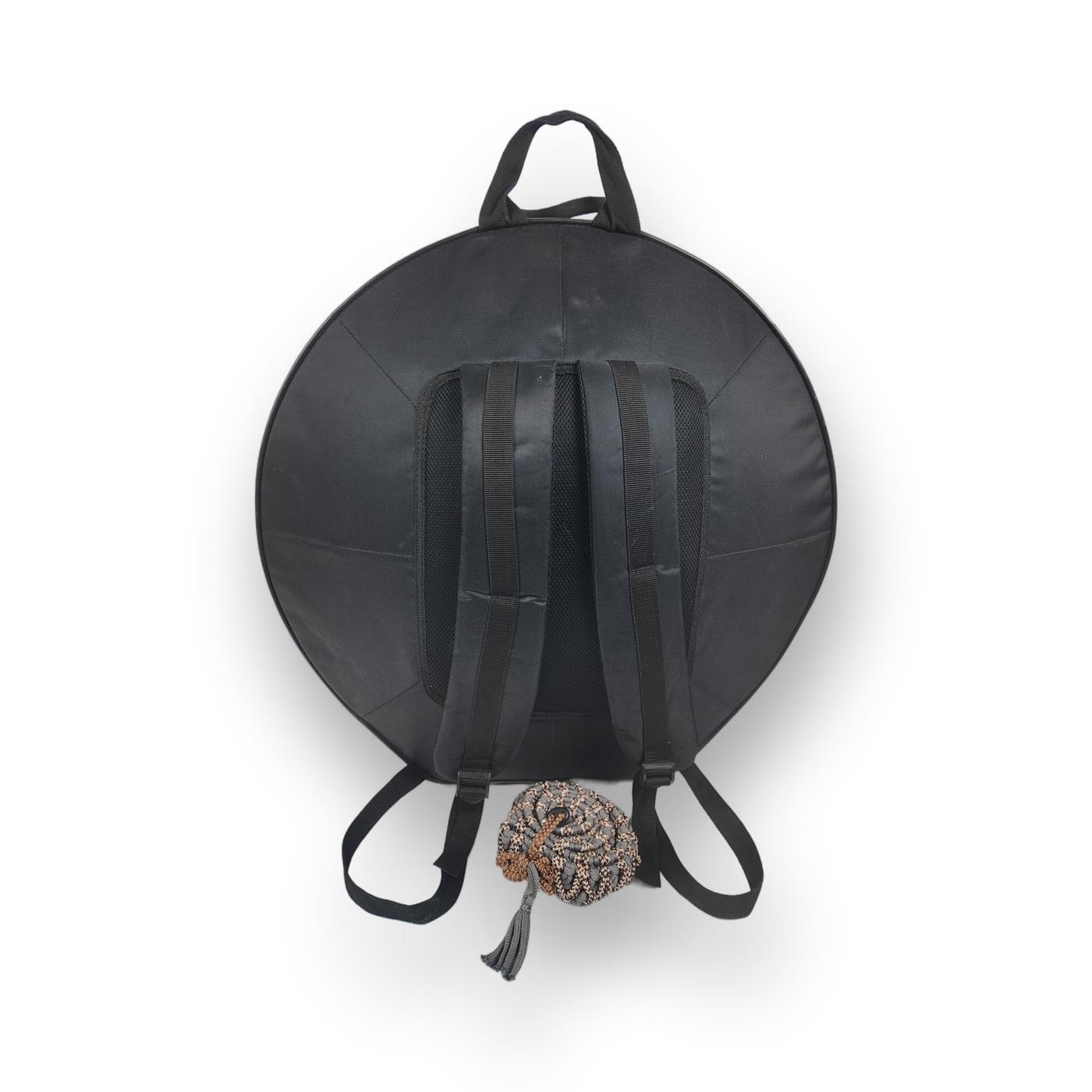
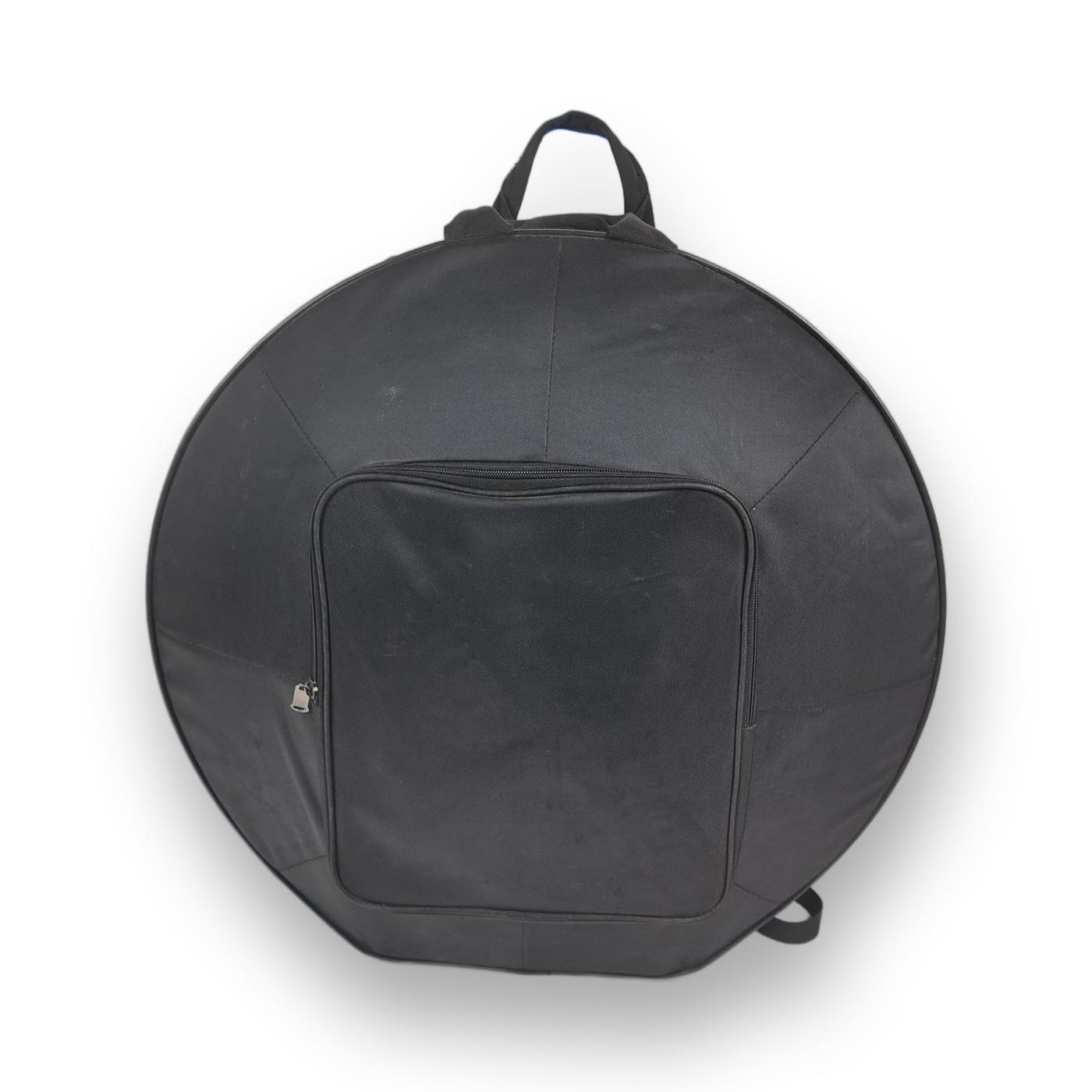
| Included | Hard case · handpan belt (rim protector) |
| SKU | Tap-Pro-12 |
What is included with the Handpan Tapadum Pro 12 Notes D Kurd
- Handpan Tapadum Pro – 12 Notes D Kurd Scale
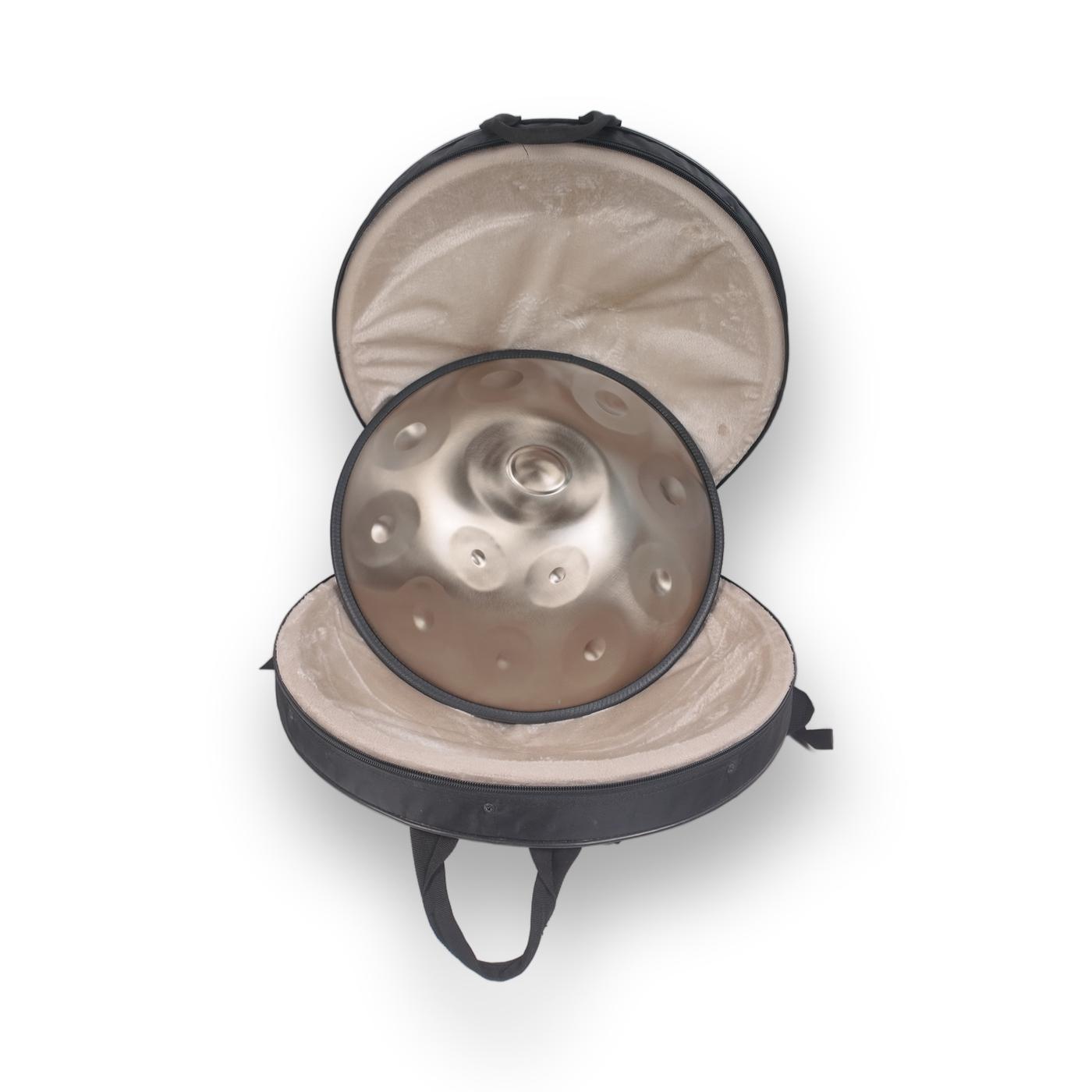
- Hard case with backpack straps, for storage and travel
- Handpan belt — the woven protective band that fits around the rim
Who it suits
This is more often a second handpan than a first. If you already play a 9-note — our own Tapadum Pro 9 Notes D Kurd is the natural starting point — you will find the same home scale here with the ceiling lifted, so nothing you have learned is lost.
It also suits intermediate and advanced players arriving from other instruments: guitarists, pianists and singers who think in chords and want a handpan that can follow a progression.
A complete beginner can start here, because D Kurd forgives almost everything, but twelve fields take longer to map than nine. Players drawn to a more dramatic colour in the same 12-note layout should hear the Tapadum Pro 12 Notes D Hicaz. For the same twelve notes with a bass register underneath, the Tapadum Pro 15 Notes D Kurd adds E3, F3 and G3 on the bottom shell.
Where it fits musically
Natural minor at 440 Hz drops into an ensemble without anyone retuning. It works in ambient and film scoring, song accompaniment, and world-fusion settings beside ney, oud or frame drum. In sound-bath, yoga and meditation sessions the three upper notes add a lighter texture over the grounding low D, which is why it also sits in our sound healing instruments family.
Care
Wipe the shell with a dry microfiber cloth after playing, and apply a thin coat of handpan oil from time to time — more often in humid or coastal air. Keep it out of direct sun and parked cars: prolonged heat is the main thing that can unsettle a handpan’s tuning. Between sessions, store it in its hard case. To compare scales and note counts, browse the full handpan collection.
Worldwide shipping & 15-day return.