Description
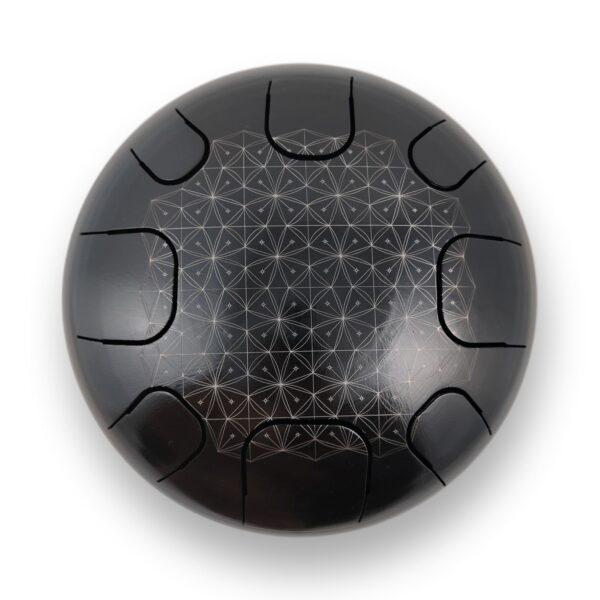
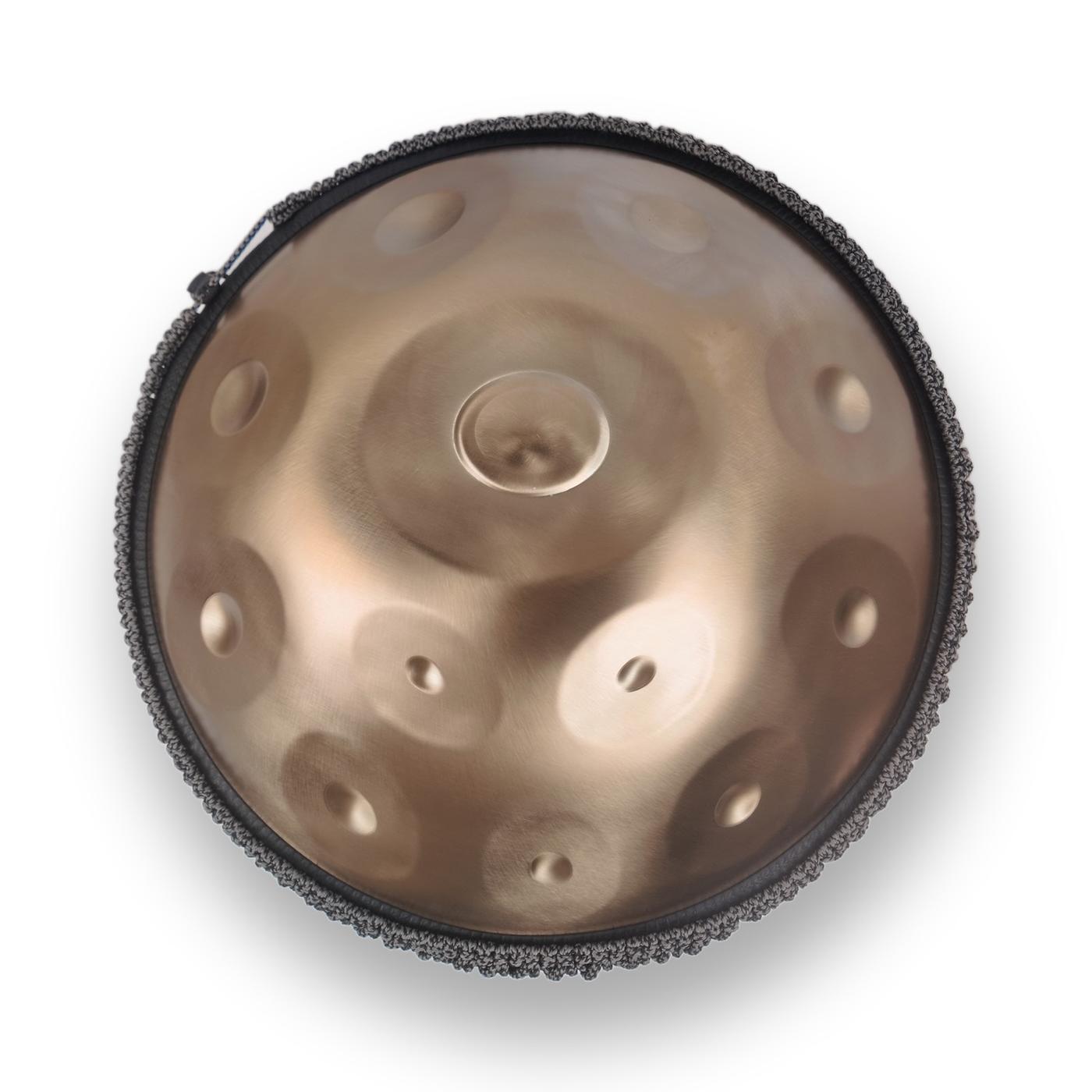
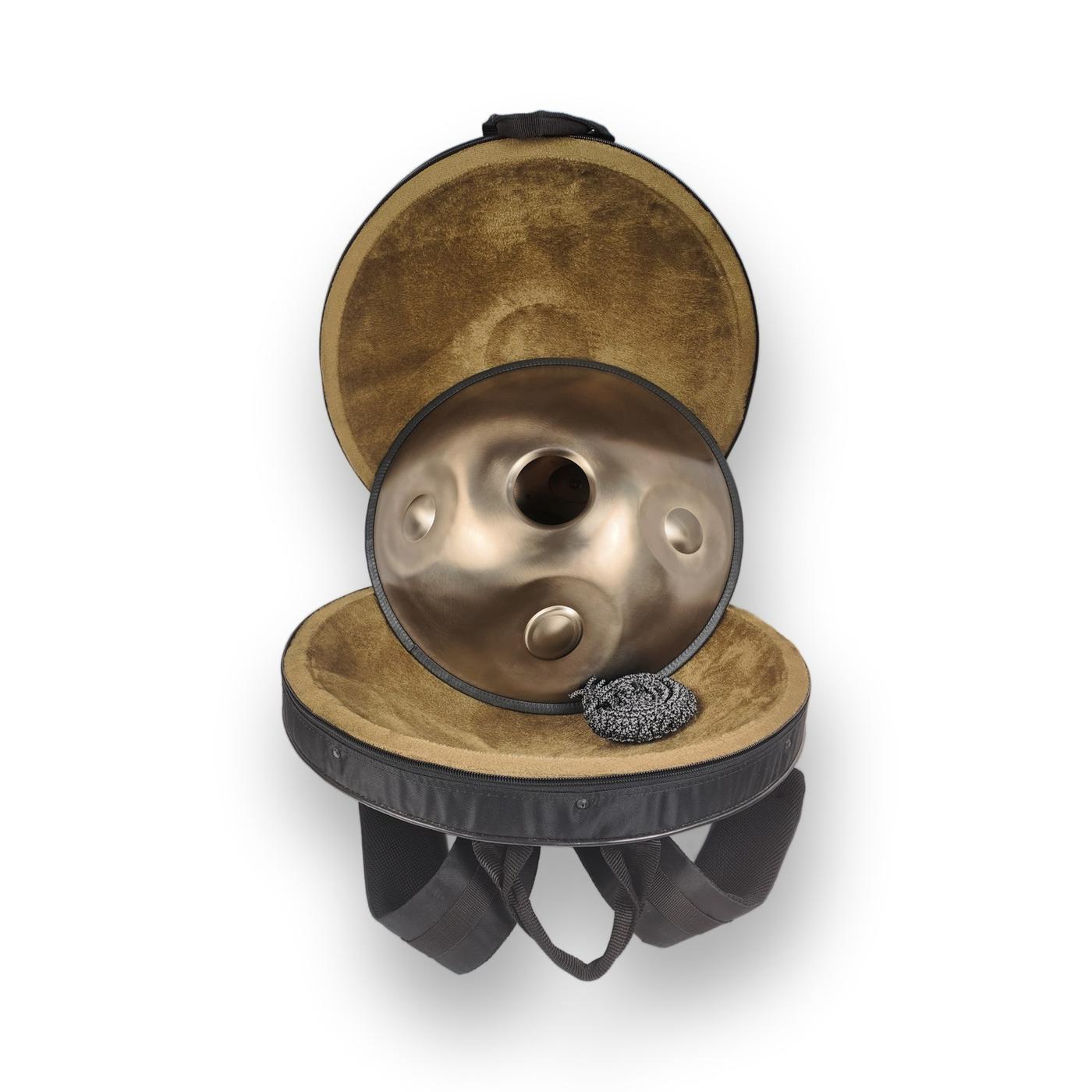
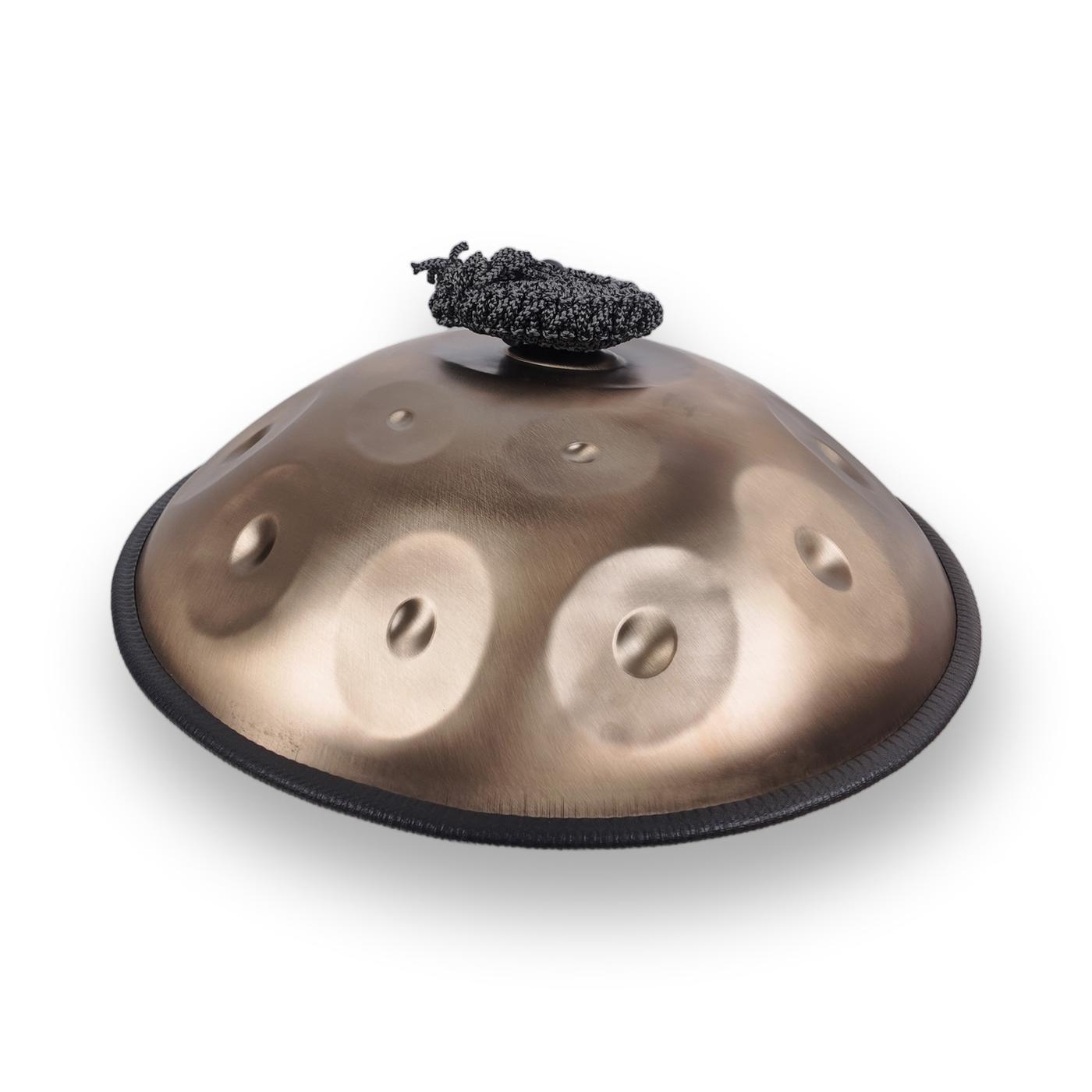
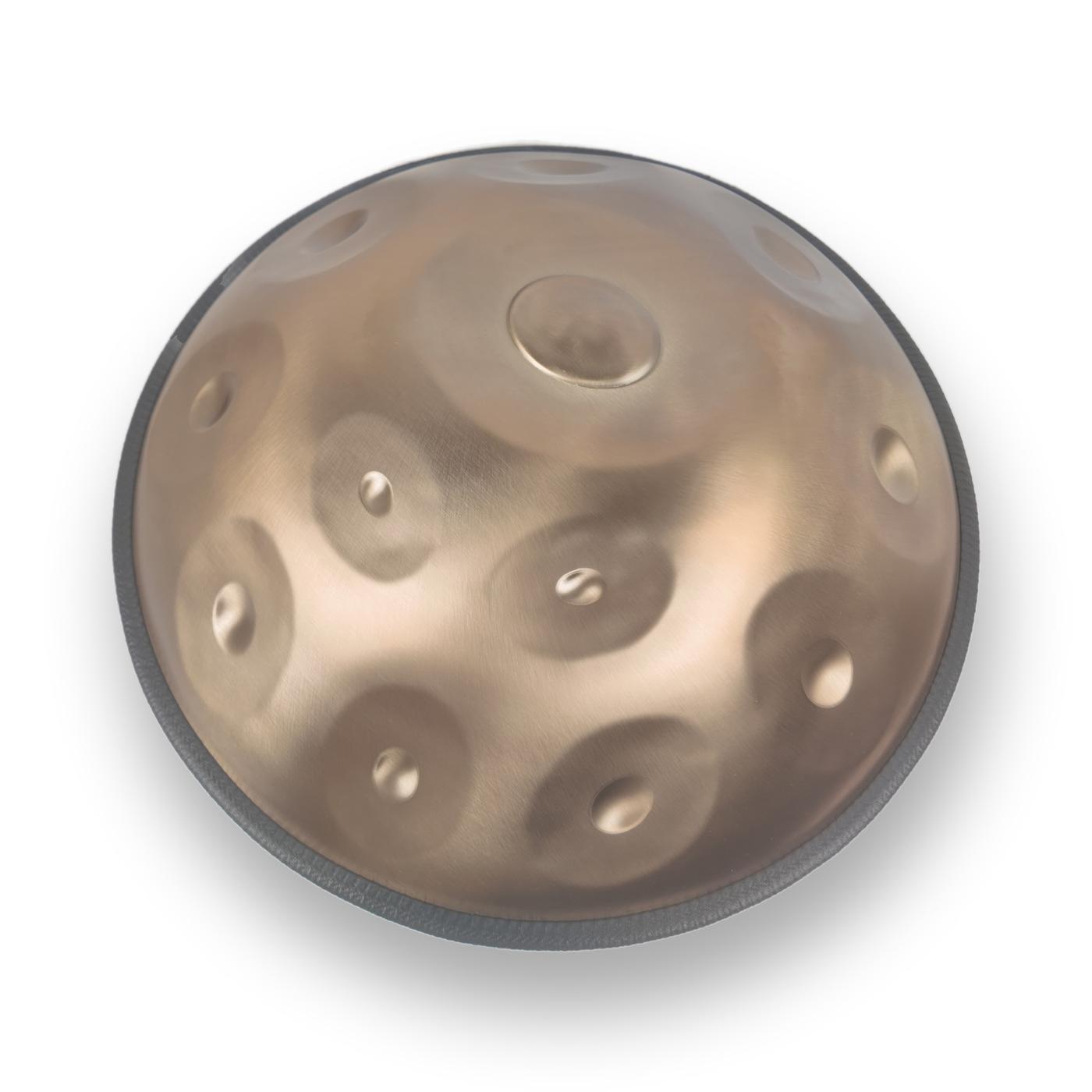
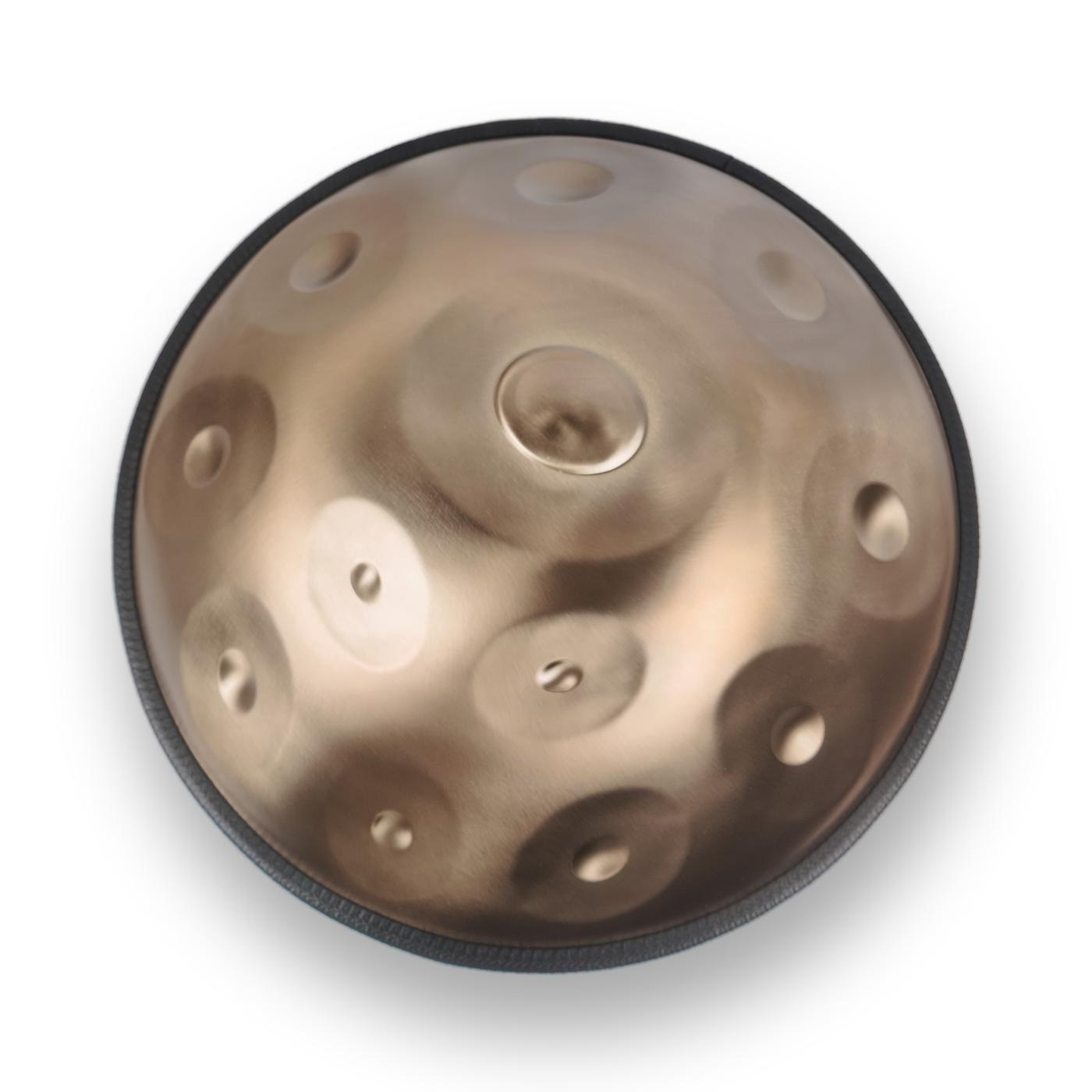
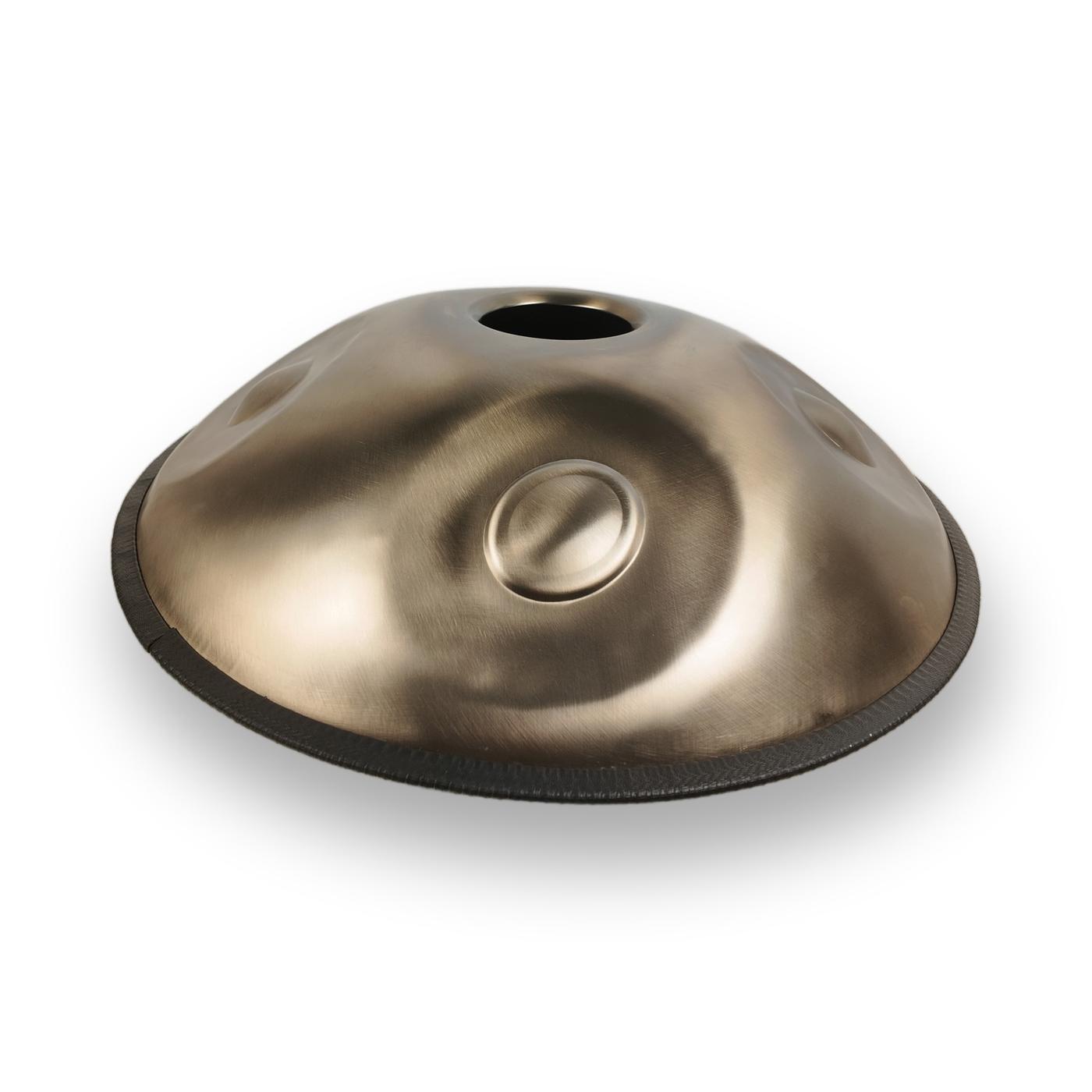
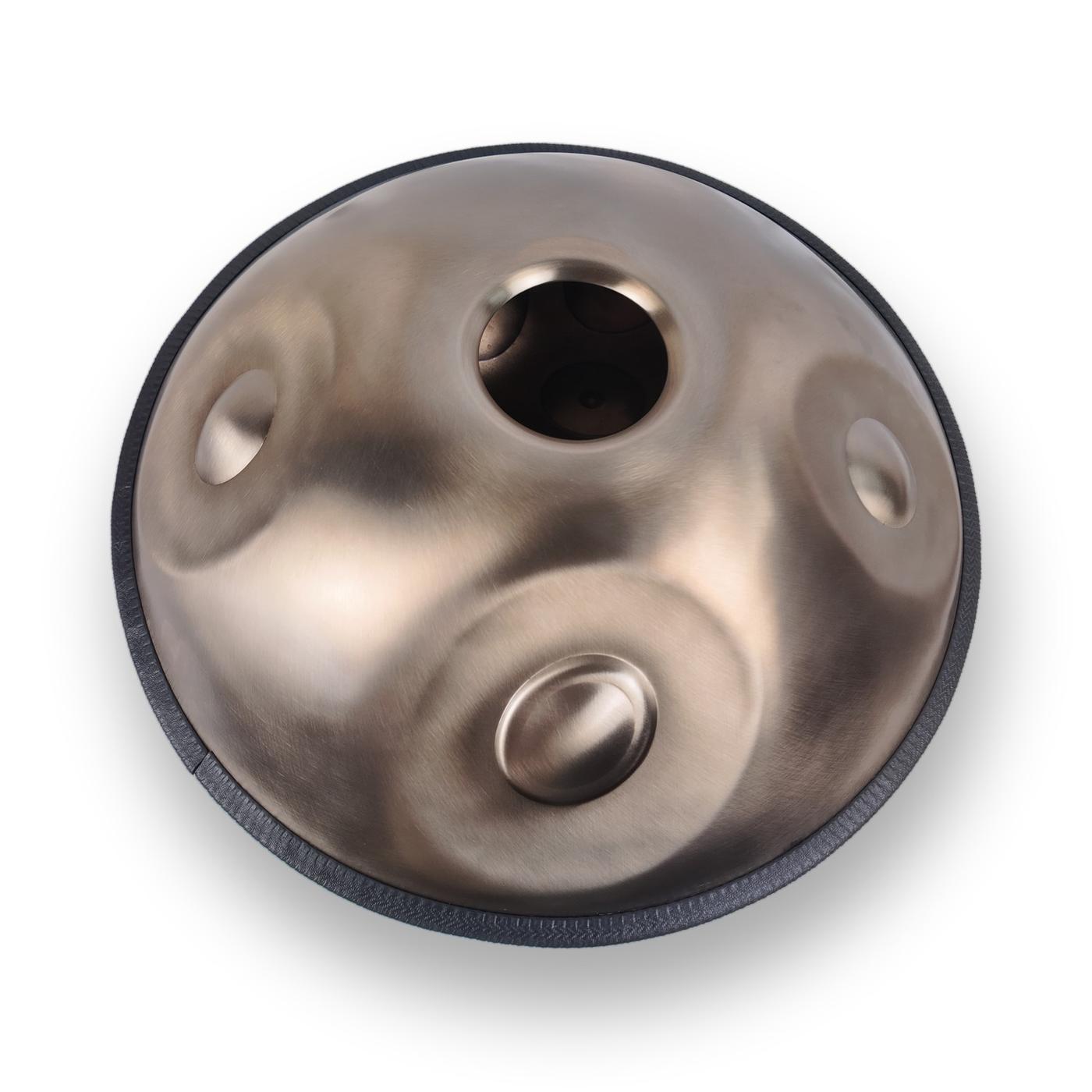
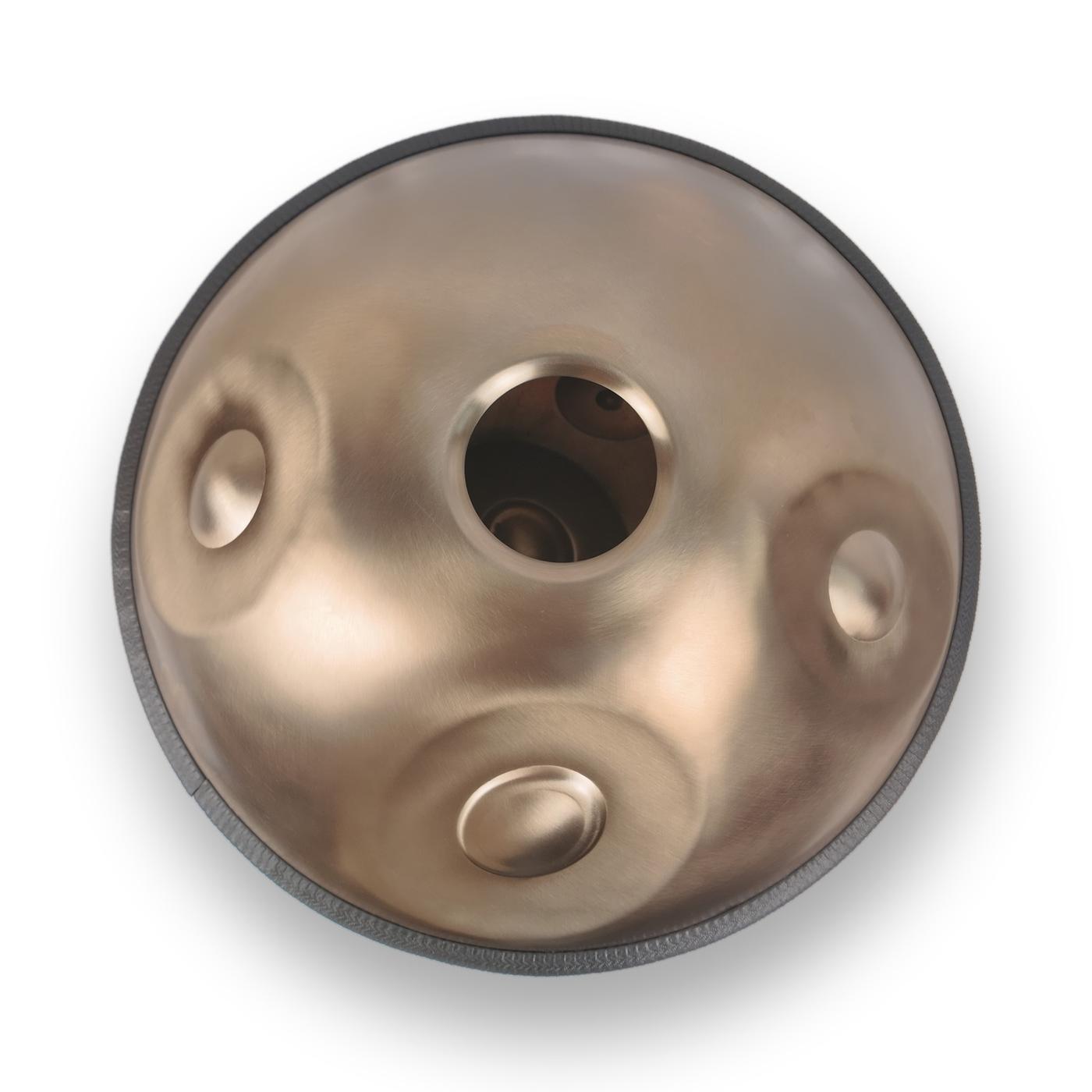
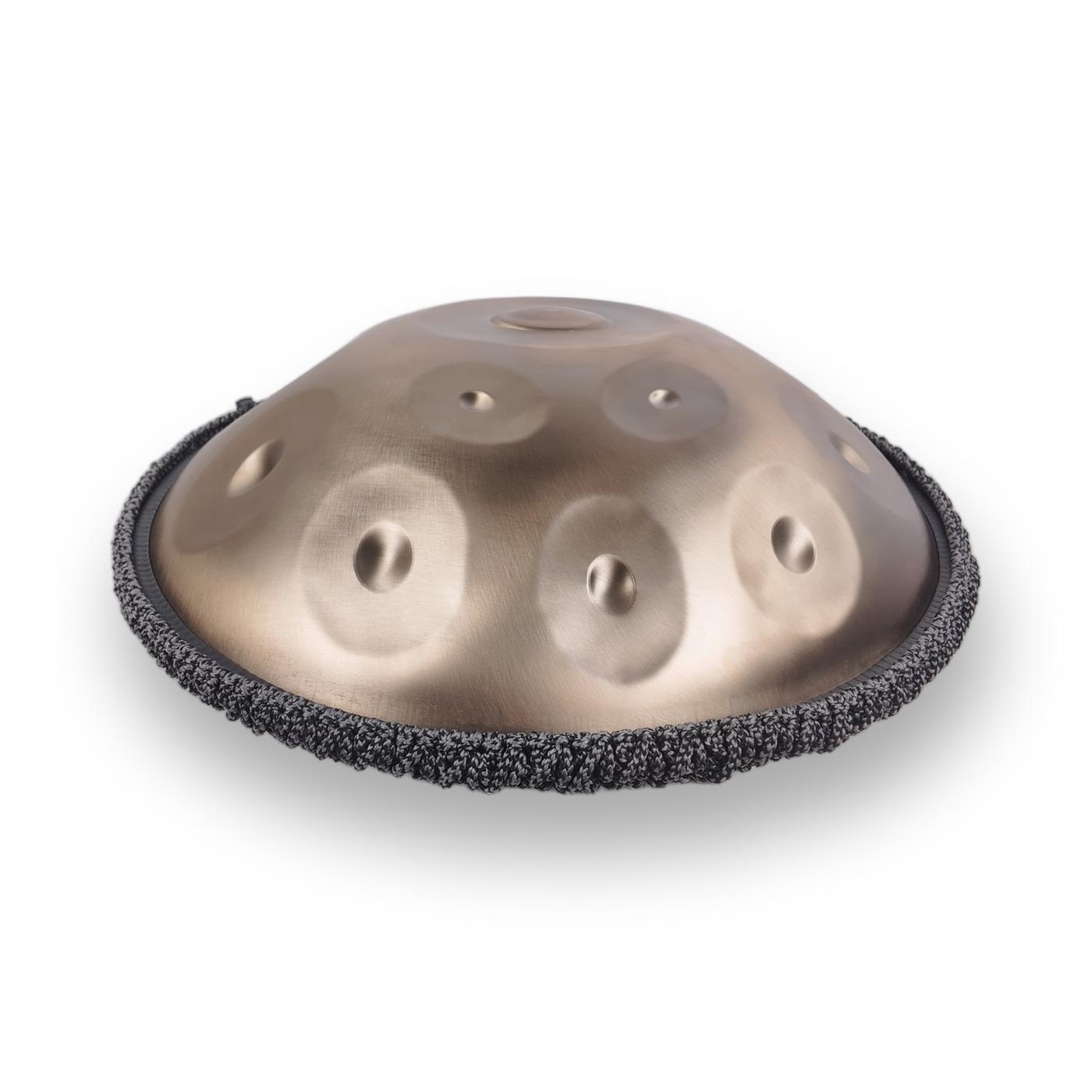
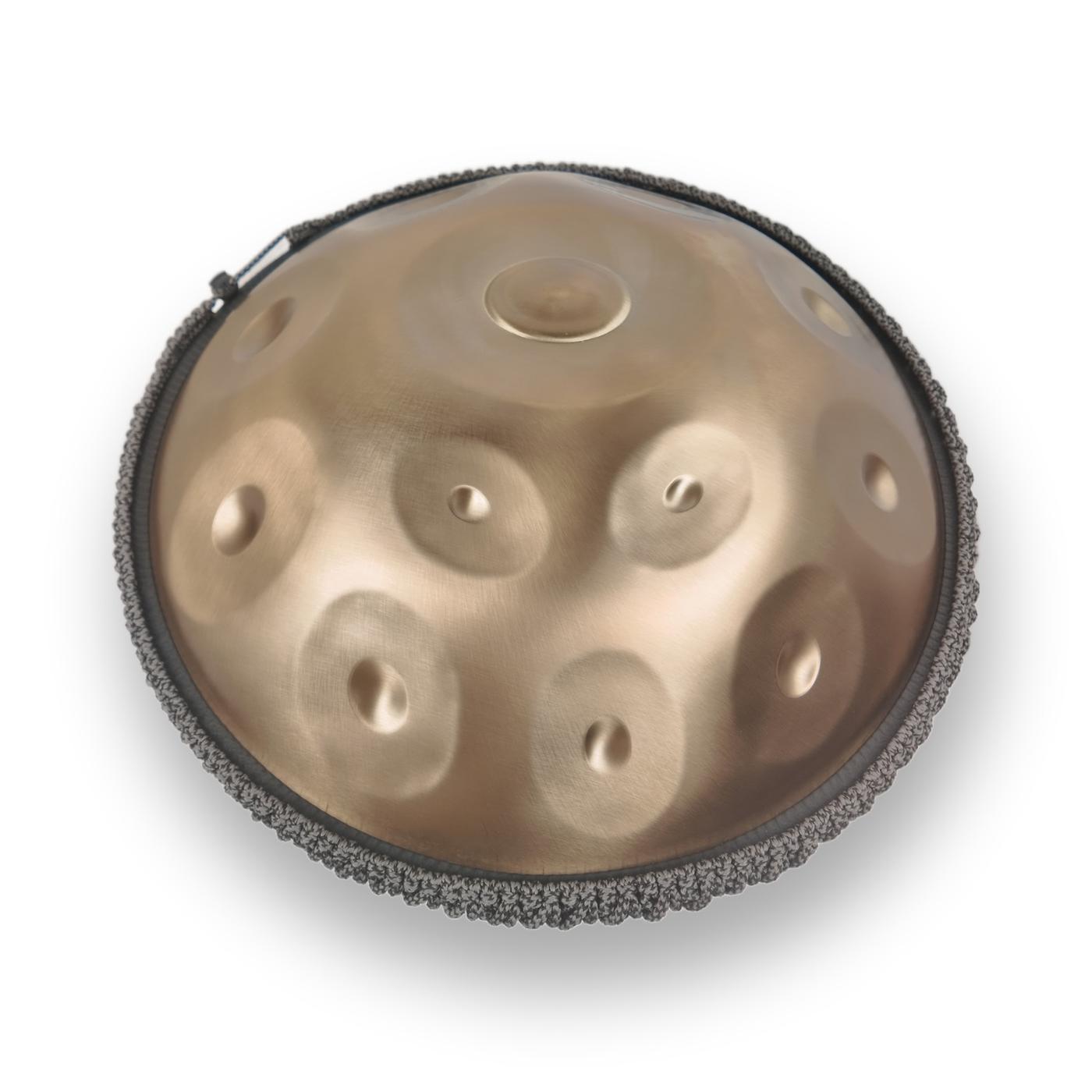
The Handpan Tapadum Pro – 15 Notes D Kurd Scale adds the one thing a top-only handpan cannot have: a bass register. Twelve notes sit on the upper shell; three more — E3, F3 and G3 — are tuned into the underside, beside the gu. It is the widest instrument in Tapadum Pro, our own-brand handpan line, and the one to choose when you want low notes that move rather than a single drone.
What the three bottom notes do
A standard D Kurd layout has a hole in its low end. The ding sounds D3 and the next note up is A3, a fifth away; everything between is missing. The bottom shell of this handpan fills exactly that space.
With E3, F3 and G3 in place, the Handpan Tapadum Pro 15 Notes D Kurd holds a complete, stepwise D natural minor scale from D3 to D4 — eight notes in a row — before the top shell carries on to E5. The upper twelve notes are the same set found on a 12-note D Kurd, so nothing is traded away to make room for the bass.
A bass line under the melody
F3 and G3 are the roots of F major and G minor. Add the D3 ding, A3, the A♯3 field (the B♭ of the scale) and C4, and all six main chords of the key have their root in the low register: D minor, F major, G minor, A minor, B♭ major and C major.
One hand can walk a bass line — D, F, G, A — while the other plays melody on the upper fields. For a solo performer that is the closest a handpan comes to accompanying itself. For a sound therapist it means a low drone that can change pitch instead of resting on a single D.
Playing the underside
The bottom notes are reached by curling the fingers or thumb under the rim while the instrument rests on the lap. They are easier to get to with the handpan on a handpan stand, which leaves the underside open to both hands. Most players use them as long, held notes beneath faster playing on top.
Two steel shells, fifteen tuned fields
Both shells are stainless steel. It keeps rust at bay with little effort and gives a long sustain, which the bass notes need: a low note that dies quickly cannot support a phrase. All fifteen fields are tuned to the same 440 Hz reference, so the instrument stays in pitch with guitars, pianos and backing tracks.
Tapadum Pro handpans go through a four-point check before shipping — tuning accuracy and stability, balance of volume and sensitivity between fields, clean sustain, and comfortable note placement. On this model the check covers the bottom shell as well as the top.
| Instrument | Handpan |
| Line | Tapadum Pro |
| Scale | D Kurd (D minor) |
| Notes | 15 — 12 on the top shell (central ding + 11 tone fields) + 3 on the bottom shell |
| Top notes | D3 · A3, A♯3, C4, D4, E4, F4, G4, A4, C5, D5, E5 |
| Bottom notes | E3, F3, G3 |
| Range | D3 – E5 |
| Tuning | 440 Hz |
| Material | Stainless steel |
| Diameter | 58 cm |
| Height | 28 cm |
| Weight | 4.3 kg |
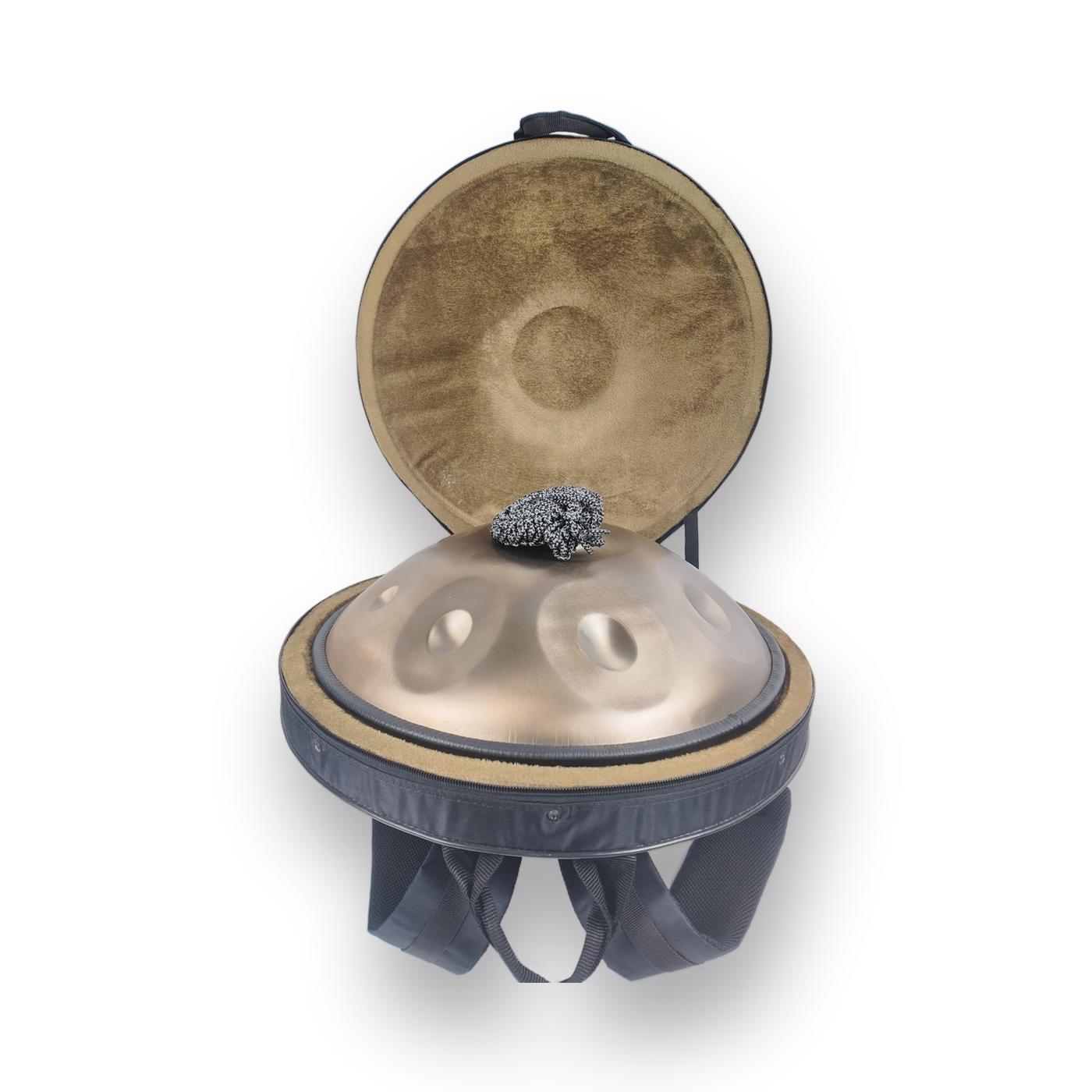
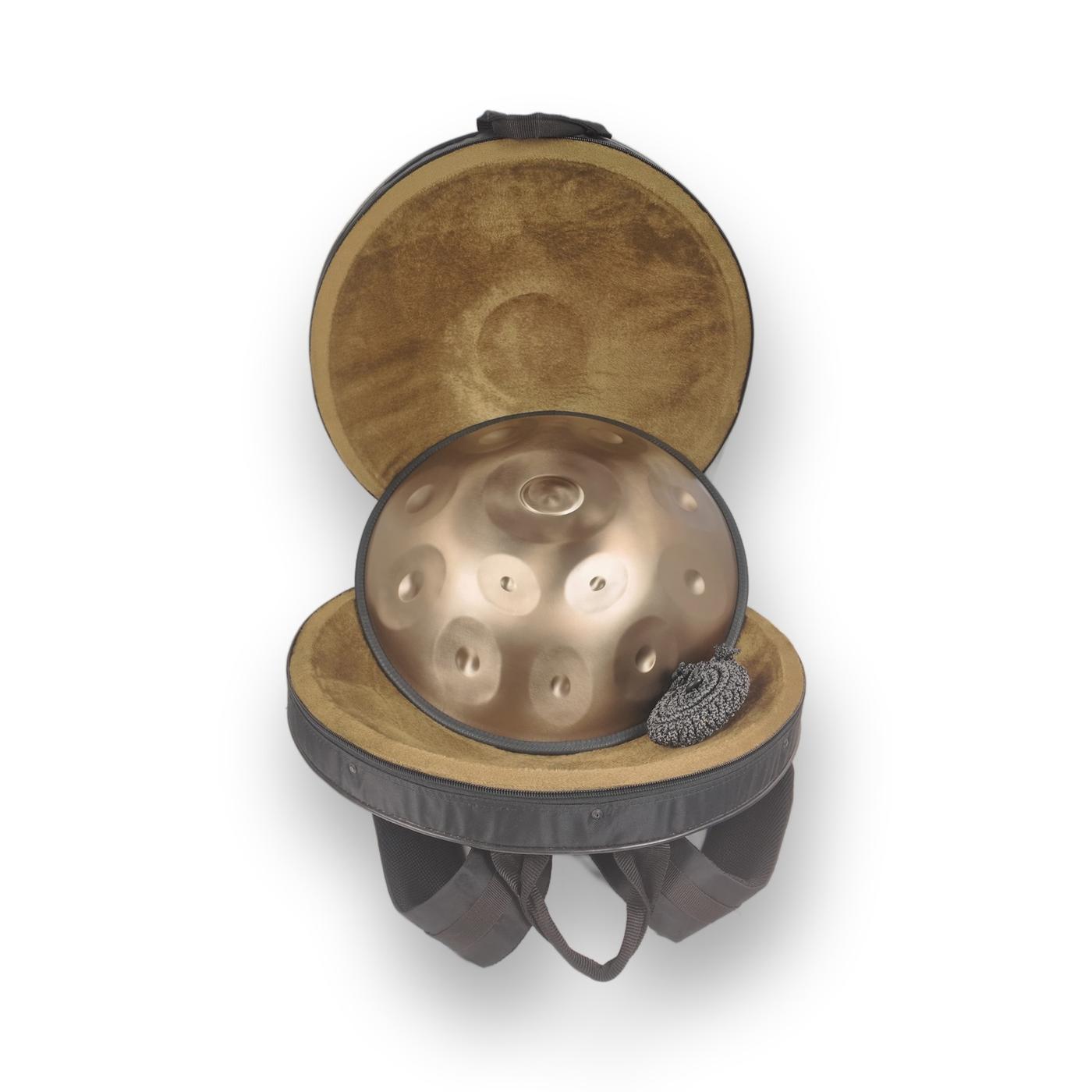
| Included | Hard case · handpan belt (rim protector) |
| SKU | Tap-Pro-15 |
What is included with the Handpan Tapadum Pro 15 Notes D Kurd
- Handpan Tapadum Pro – 15 Notes D Kurd Scale
- Hard case with backpack straps, for storage and travel
- Handpan belt — the woven protective band that fits around the rim
Who it suits
This is an instrument for experienced players: composers, solo performers and sound therapists who already know their way around a handpan and have started to miss the low end. Fifteen fields on two surfaces take real time to learn, and a first-time player will get further, faster, on our Tapadum Pro 9 Notes D Kurd.
If you want the wider melodic range but prefer every note on the playing surface, the Tapadum Pro 12 Notes D Kurd carries the same twelve top notes without the bottom shell tuning.
Where the low notes earn their place
Solo concerts and busking sets gain the most, because the bass keeps a piece moving when there is no second musician. In the studio, the bottom notes record as a separate layer under the melody. In sound-bath and meditation work, slow movement between D3, E3, F3 and G3 gives a session a sense of direction without raising the energy in the room — the reason this model also belongs to our sound healing instruments.
Care
Dry the steel with a microfiber cloth after each session and oil it lightly every 15 to 20 days, sooner in humid or coastal air. Remember the underside: the bottom fields need the same wipe as the top. Avoid direct sun and hot cars, since prolonged heat can shift the tuning, and rest the instrument on a stand or soft surface so the bottom notes are never pressed against a hard floor. Between sessions, keep it in its hard case. To compare it with other scales and note counts, see the full handpan collection.
Worldwide shipping & 15-day return.