
Building a Sound Bath Set: Which Instruments Practitioners Actually Use
What you’ll learn: which instruments actually anchor a working sound bath practice, where handpan, steel tongue drum, and frame drums genuinely fit around crystal bowls and gongs, and how to build a set in stages instead of buying everything at once.
Most sound baths are built around two anchor instruments: crystal singing bowls, which almost every practitioner owns at least one of, and gongs, used by roughly half. We don’t carry either — Tapadum’s collection is built around handcrafted ethnic instruments, not crystal bowl casting or gong forging. What we do carry is the layer practitioners add around that foundation: handpan, steel tongue drum, and frame drums like the daf, each bringing a distinct texture that sits alongside a bowl or gong without competing with it.
This guide is honest about that division of labor. If you’re building your first sound bath set, you’ll likely still need a singing bowl or gong from a specialist supplier. For the broader “why sound healing works” background, see our guide to sound healing instruments; this piece is narrower and more practical — which of our instruments practitioners actually reach for, and how to add them in a sensible order rather than buying a full set on day one.
The Two Anchor Instruments Most Sets Start With
Crystal singing bowls produce a pure, sustained tone from struck or rubbed quartz, and they’re close to universal in sound bath practice — most sessions open or center on one. Gongs add a fuller, more enveloping wash of sound, used by a smaller but still substantial share of practitioners, often just one gong rather than a full array. Both are specialist instruments made by dedicated bowl and gong makers, and that’s genuinely outside what an ethnic-instrument workshop like ours builds. If you don’t yet own either, start there before adding the instruments below.
Where the Handpan Fits: A Melodic Layer, Not a Replacement
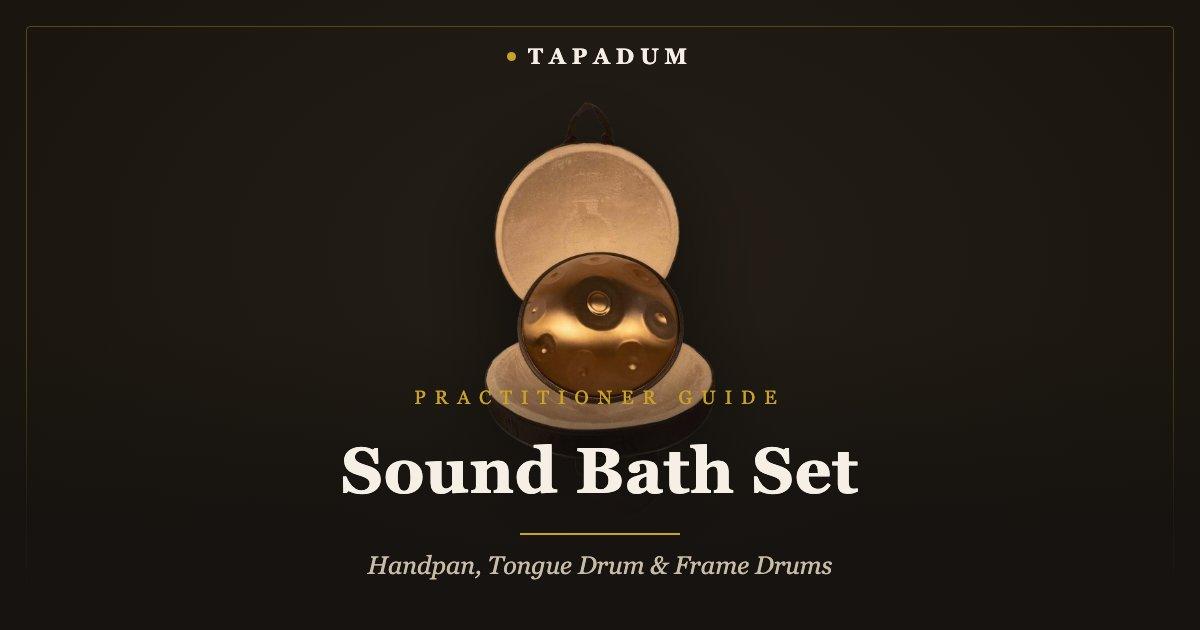
A handpan‘s notes carry a fundamental tone plus overtones that tend to sit in a register above or around a bowl or gong rather than clashing with it — which is why practitioners describe it as layering rather than competing. It’s still a supplementary instrument in most sound bath setups, not a primary one, but it does something bowls and gongs can’t: play an actual melody. A few minutes of handpan alone, slow and spacious, creates a more intimate moment inside a session that otherwise leans on sustained drone.
Our Handpan Tapadum (9 Notes, D Kurd) uses the D Kurd scale, one of the most common starting scales for exactly this kind of work — melodic, minor-toned, forgiving to improvise on. If you’re deciding between a handpan and a similar instrument, we compare the options directly in our complete handpan guide.
Steel Tongue Drum: The Lower-Cost Melodic Alternative
A steel tongue drum plays on the same idea as a handpan — tuned melodic percussion, played with hands or mallets — at a fraction of the price and with a gentler learning curve. It won’t project quite the same overtone complexity a handpan does, but for a practitioner adding a first melodic instrument to a bowl-and-gong set, it’s the more accessible entry point. Our full breakdown of scales, sizes, and how it differs from a handpan is in the Steel Tongue Drum Buyer’s Guide.
Frame Drums for Rhythm and Texture
Where bowls and gongs sustain and handpans carry melody, frame drums — the daf, bendir, riq, and related instruments — add a steady rhythmic pulse. That pulse plays a different role in a session: repetitive rhythm gives the mind something simple to follow, often used deliberately to shift a session’s energy before returning to stillness. The Persian daf in particular has a documented path from Sufi ceremony into modern sound bath practice, carrying that ceremonial association directly into contemporary use. If you’re choosing between frame drum types for this role, our Frame Drums of the World guide compares daf, bendir, riq, and mazhar side by side.
Building a Set in Stages
Buying everything at once is neither necessary nor, for most new practitioners, affordable. A staged approach matches spend to how a practice actually grows.
| Stage | What to add | Why here |
|---|---|---|
| Starting out | One crystal bowl or small gong (specialist supplier) + one frame drum | Establishes the drone/rhythm foundation on a modest budget |
| Working practitioner | Add a steel tongue drum or handpan | Introduces a melodic layer once the foundation is reliable |
| Full studio set | Multiple frame drums, both melodic percussion types, a larger gong | Enough range to shape a full session arc — open, build, melodic interlude, close |
What to Prioritize When Buying for Sound Bath Use
Sustain and tuning consistency matter more here than for casual playing. A handpan or tongue drum used in a session needs notes that stay in tune with each other over a long, quiet passage — any drift is far more audible in a silent room than in a mix with other instruments. We check tuning stability on every handpan and frame drum before it ships, because a practitioner can’t retune mid-session the way a band can adjust between songs. Build quality matters for the same reason: an instrument that’s handled daily and travels to sessions needs to hold up to that use, not just sound good in a showroom.
Frequently Asked Questions
Do I need a gong or singing bowl to start a sound bath practice?
Most working sound baths are built around a crystal singing bowl, a gong, or both — they’re close to a baseline in the practice. We don’t make either, so if you’re starting from zero, a specialist bowl or gong supplier is typically the first purchase, with a frame drum or melodic percussion instrument added around it.
Is a handpan a replacement for a gong or singing bowl?
No. A handpan is still considered a supplementary instrument in most sound bath setups — it adds a melodic layer that plays well alongside a bowl or gong’s sustained tone, but it doesn’t replace the enveloping wash those instruments provide.
What’s the difference between a handpan and a steel tongue drum for this use?
Both are tuned melodic percussion played by hand, but a handpan generally carries richer overtones and a higher price, while a steel tongue drum is more affordable and easier to pick up — a practical first melodic instrument before investing in a handpan.
Why do frame drums like the daf get used in sound baths?
A frame drum’s steady, repetitive pulse gives a session a rhythmic anchor point, often used to shift energy within a session before returning to stillness. The daf specifically carries a documented history in Sufi ceremonial music, which lines up naturally with its modern sound bath use.
What should I buy first if I’m just starting a sound bath practice?
Start with one drone instrument — a crystal bowl or small gong from a specialist maker — paired with one frame drum. Add a steel tongue drum or handpan once that foundation feels reliable, rather than buying a full set before you’ve run your first session.