Turkish Oud
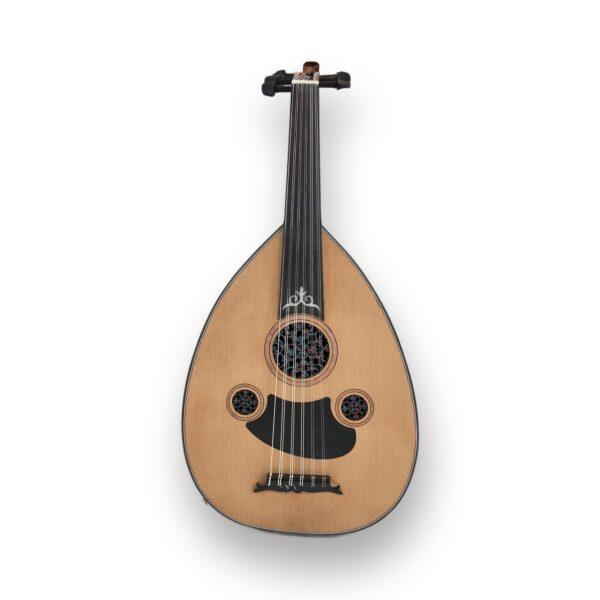
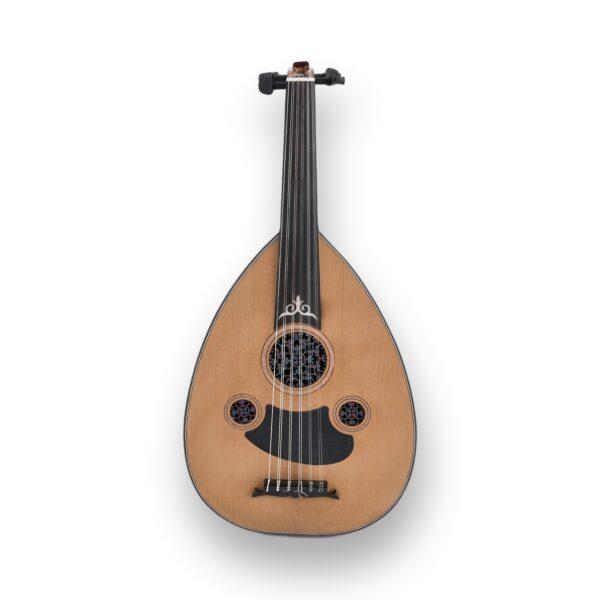
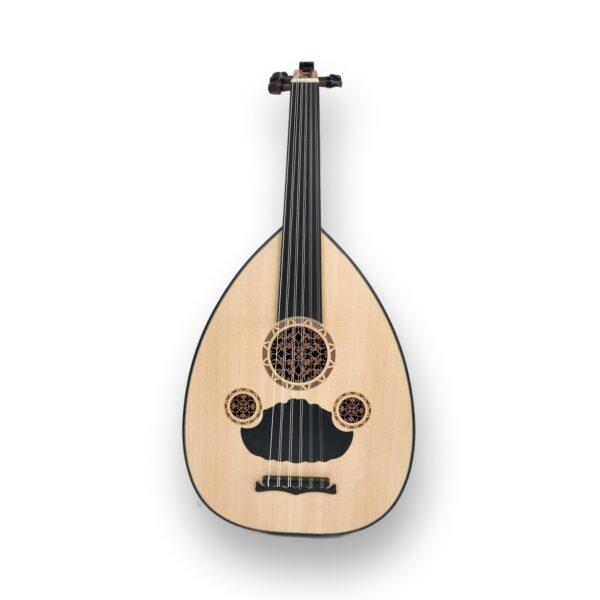
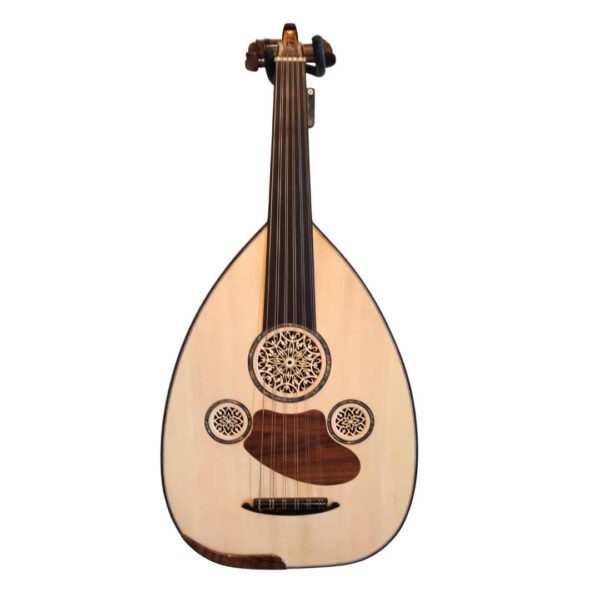
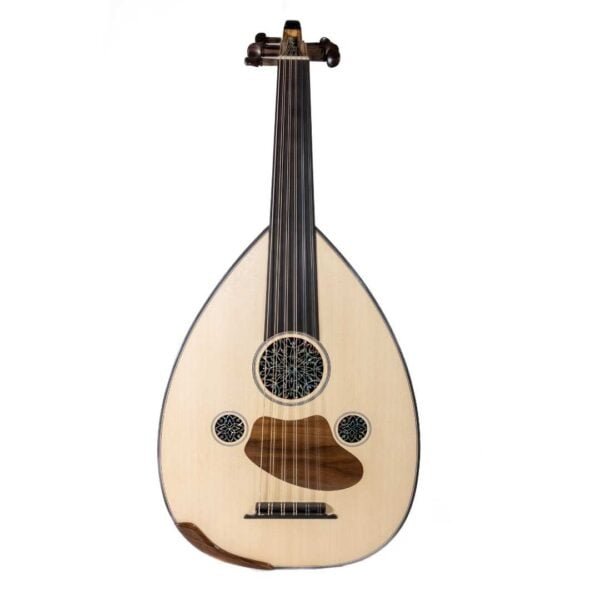
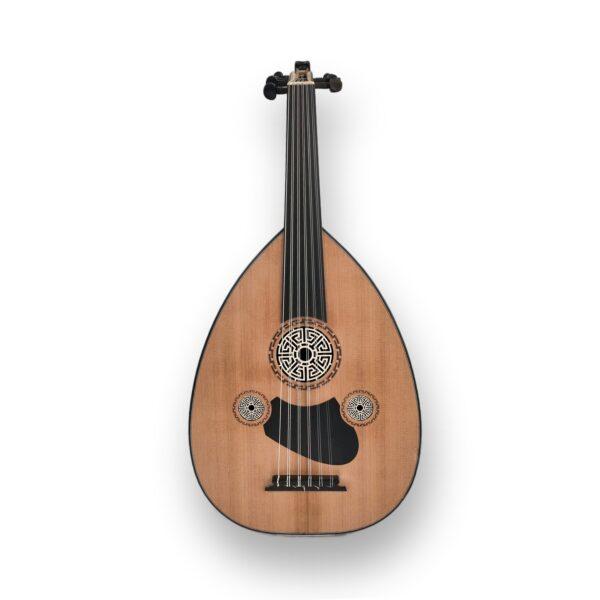
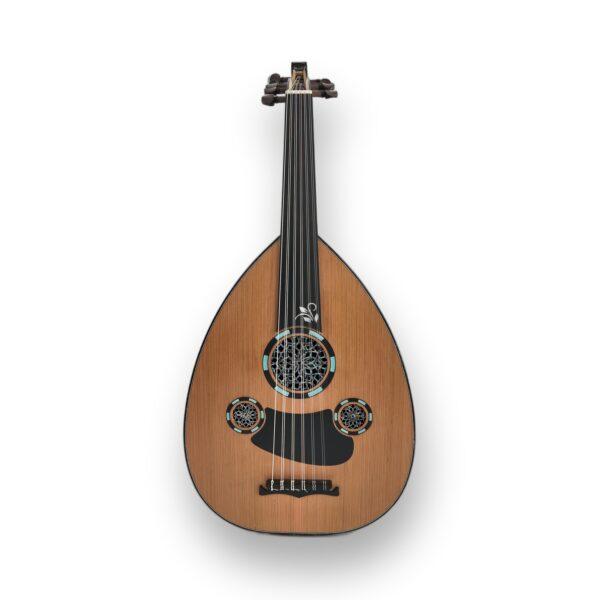
The Turkish oud is an eleven-string fretless lute at the heart of Turkish classical music, Ottoman court repertoire, and contemporary world music ensemble work. Compared to its Arabic counterpart, the Turkish oud has a smaller body and shorter neck, which produces a brighter, more focused voice with precise control over microtonal ornamentation — essential for Turkish maqam performance and the rapid melodic passages of Ottoman classical practice.
Most Turkish ouds use a spruce or cedar soundboard paired with walnut, mulberry, or mahogany back and sides. Strings are typically arranged as five double courses plus a single bass string — eleven strings total — made of nylon or wound metal and tuned in fourths. The fretless fingerboard supports the quarter-tones and microtonal slides that define Turkish maqam practice, including taqsim (improvised solo), çeşni (melodic flavor), and usul (rhythmic cycle).
The Turkish oud is played with a risha (plectrum) to articulate melodic lines, alongside fingerpicking for ornamentation. Its brighter timbre and shorter scale make it the instrument of choice for solo taqsim performance, fasıl ensemble work, and recording — where its focused mid-range cuts cleanly through dense arrangements. Players moving from Arabic oud often find the Turkish instrument’s response and string tension better suited to fast melodic passages and precise microtonal control.
At Tapadum, our Turkish oud collection brings together instruments from master luthiers in the Izmir workshop tradition. Signature pieces from Feramis Aktas (professional concert and electric ouds) and Yildirim Palabiyik (signature acoustic instruments) each carry distinct voicing, materials, and bracing decisions. Every instrument passes individual quality control — tuning stability, head tension, soundboard response, and balance across registers — overseen by our string instruments specialist Sertan Sarioglu at our Izmir workshop before leaving for our Brisighella, Italy showroom.
For Arabic maqam practice and deeper bass character, see our Arabic Oud collection; for stage use with amplification, our Electric Oud range; for broader context across both traditions, see the Oud category overview. Worldwide shipping & 15-day return apply across the collection.
Frequently Asked Questions
What is the difference between a Turkish oud and an Arabic oud?
How is a Turkish oud strung and tuned?
What woods are used in Turkish oud construction?
What's a good entry point into the Turkish oud range?
Who are the master luthiers behind Tapadum's Turkish oud collection?
How much does a Turkish oud cost?
Where can I buy an authentic Turkish oud?