
Description
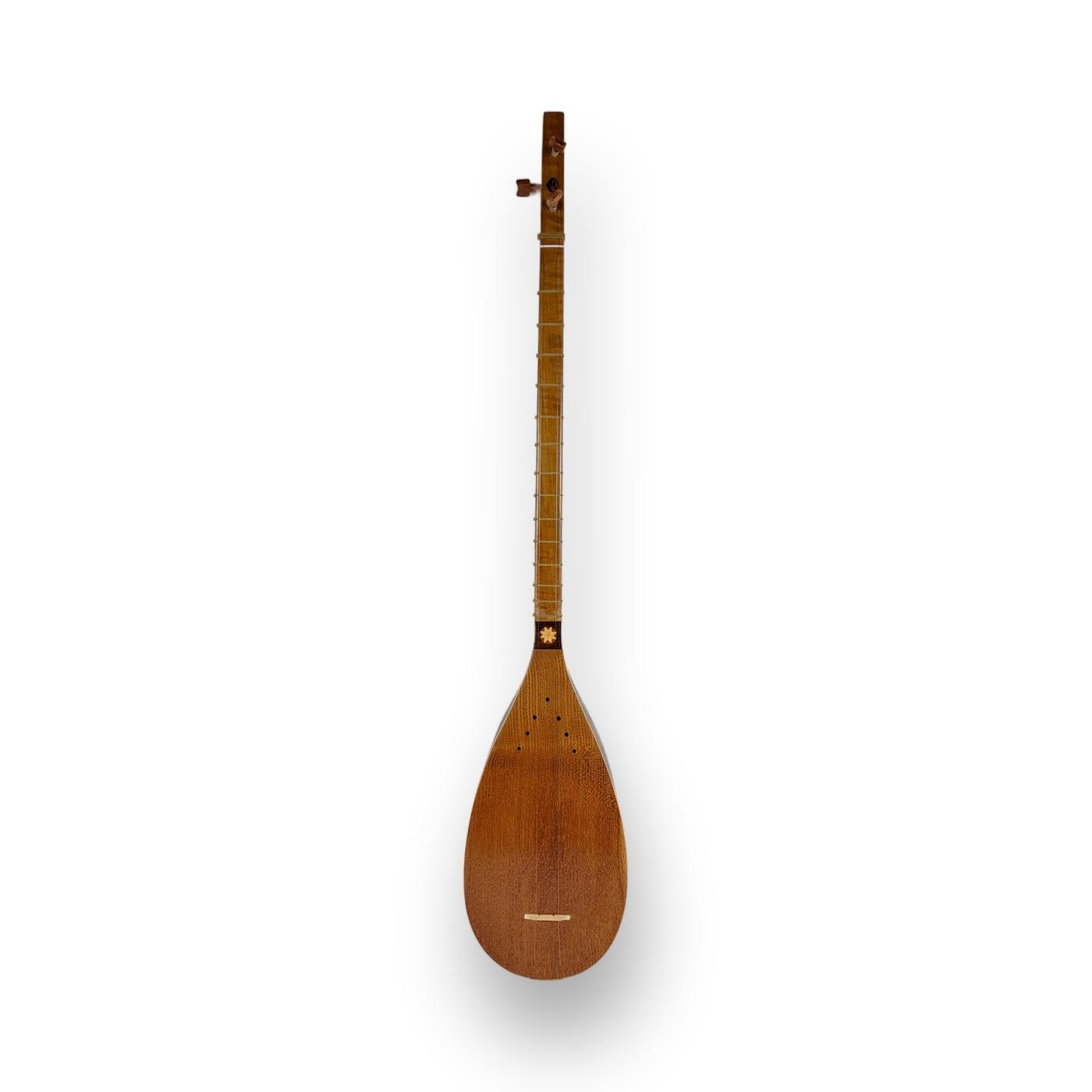
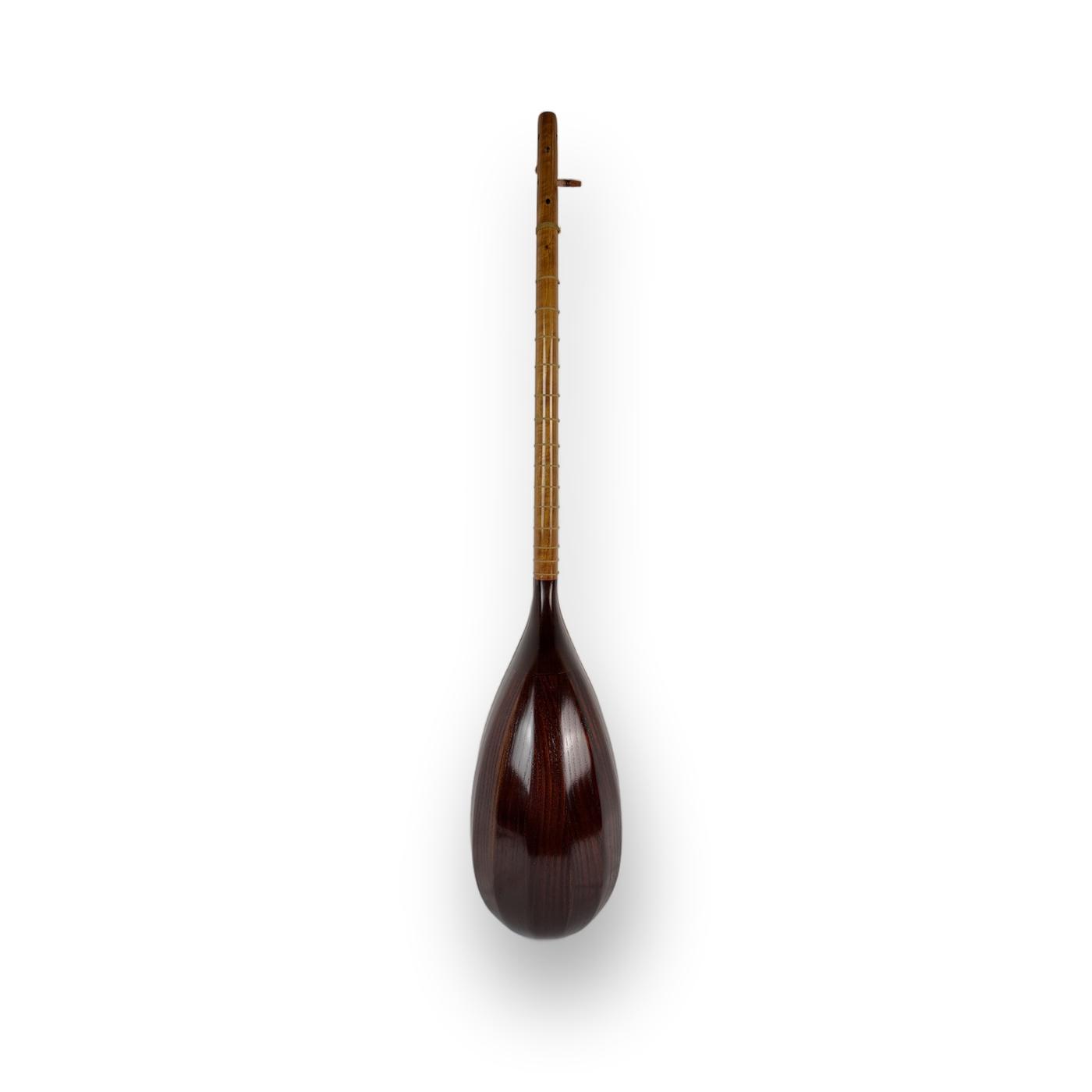
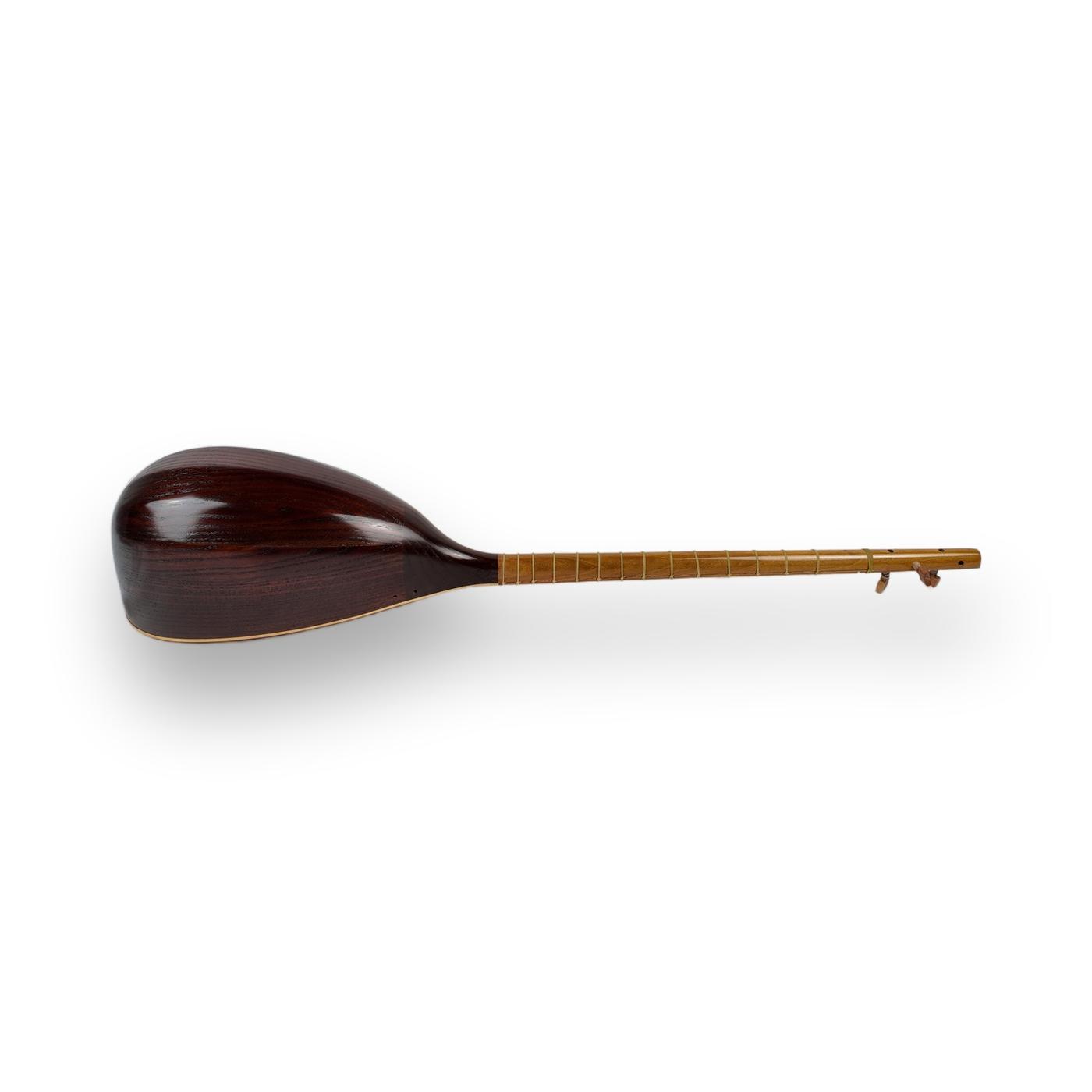
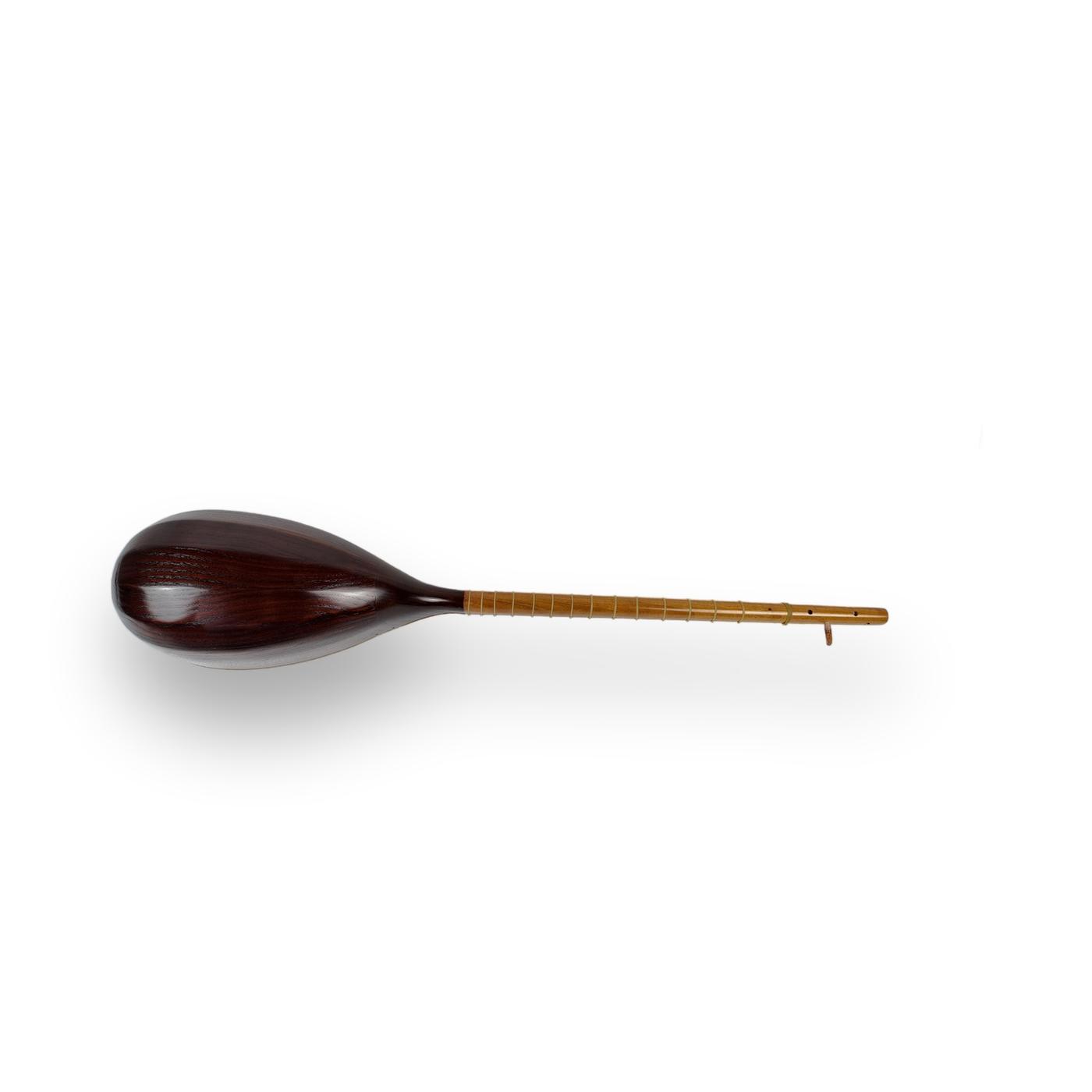
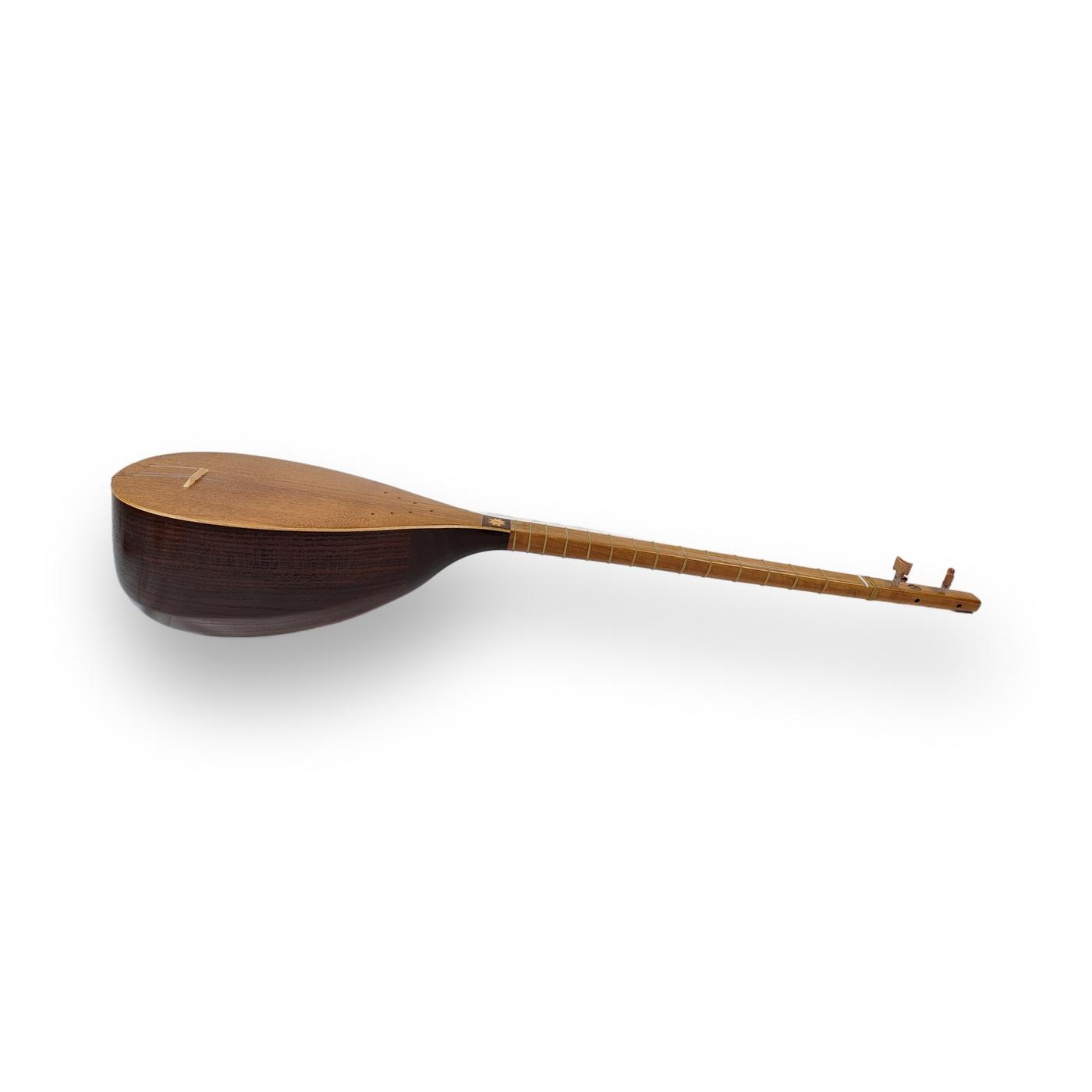
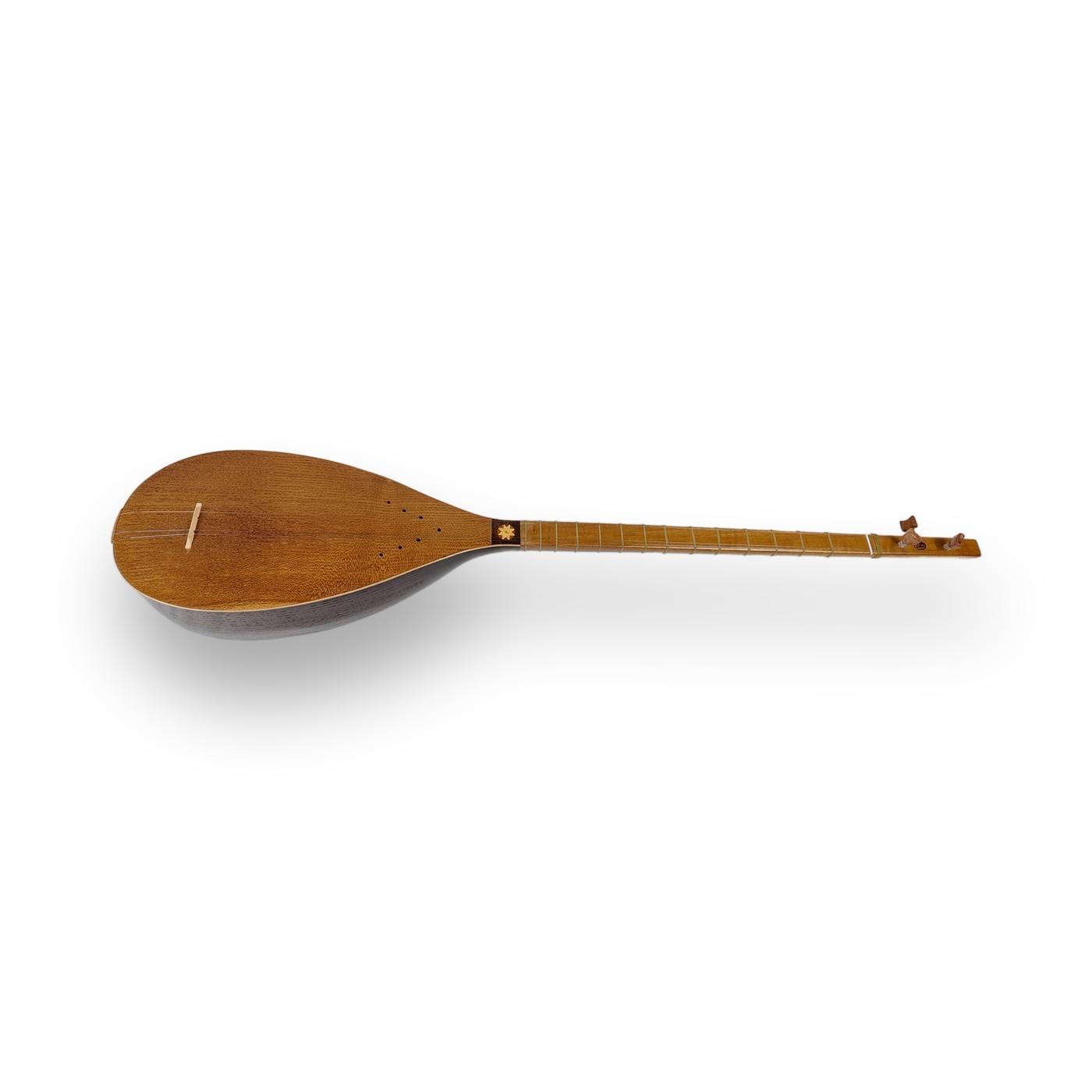
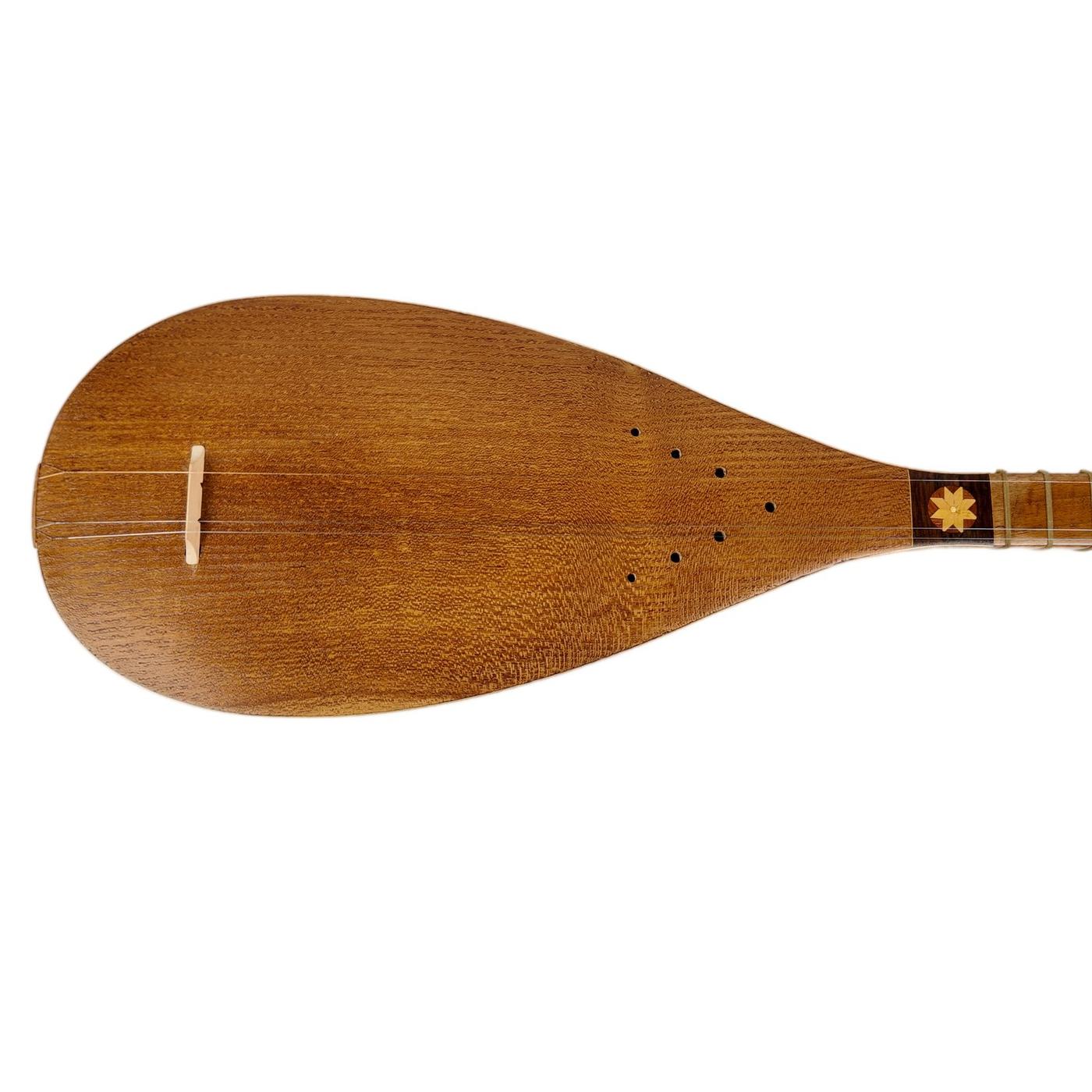
The Persian Tanboor by Zolghadr is a handcrafted sacred lute built for the devotional and classical music of Western Iran — a three-string, finger-played instrument made in the workshop of master luthier Mohammad Zolghadr. Carved from aged mulberry with a slender walnut neck, it carries the dry, resonant voice that has accompanied Kurdish and Ahl-e Haqq (Yarsan) sacred repertoire for centuries.
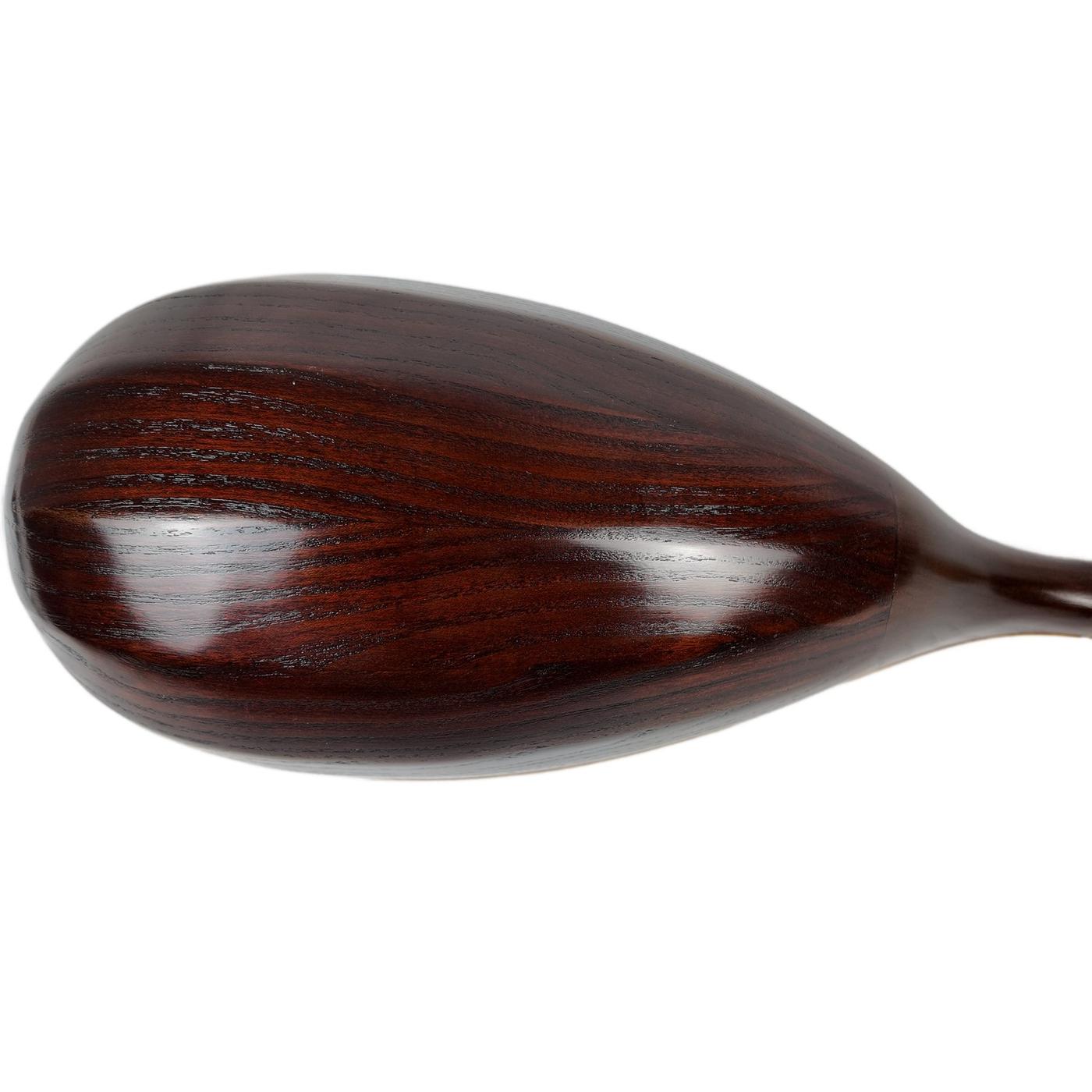
Aged mulberry body and soundboard
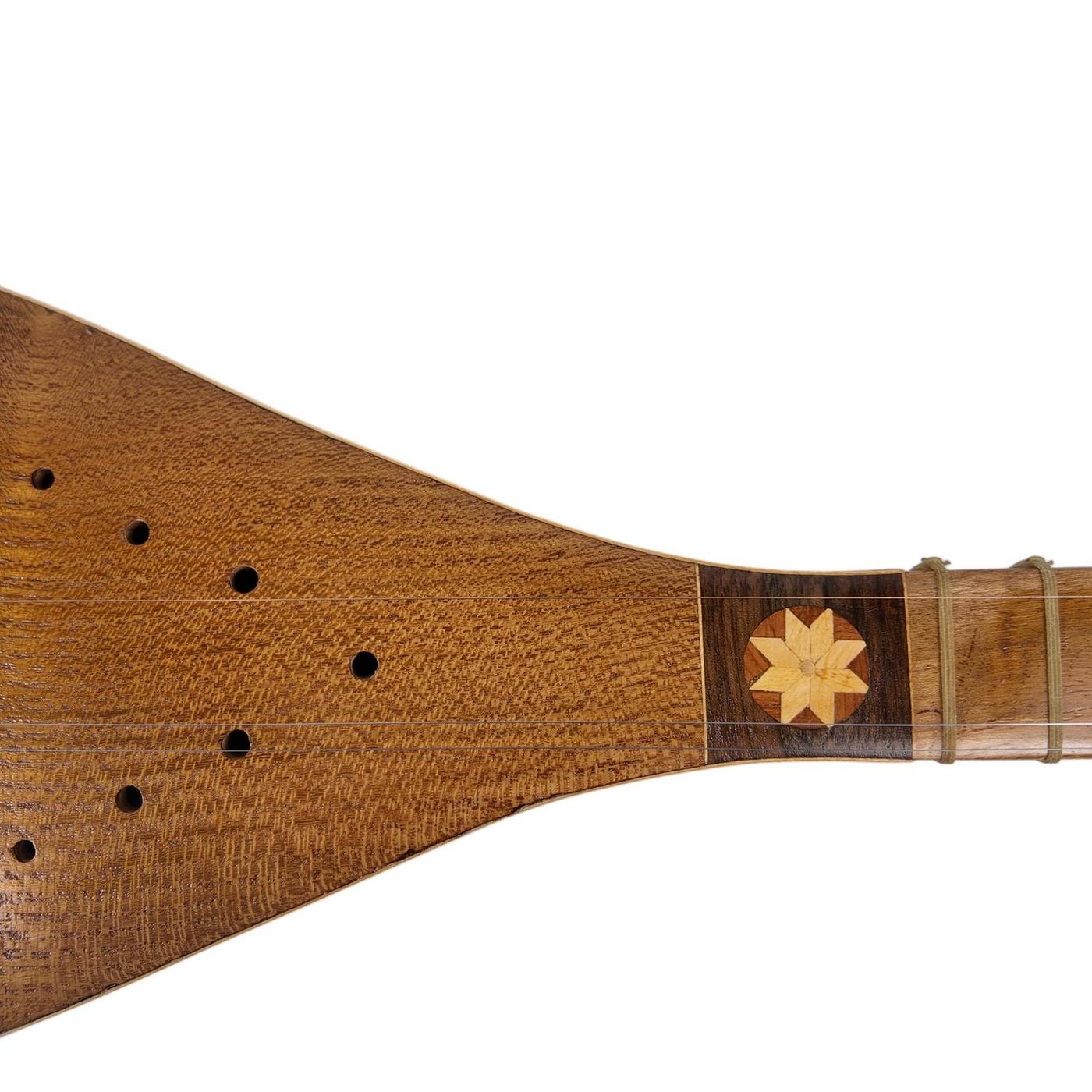
The pear-shaped bowl is built from seasoned mulberry, the tonewood at the heart of the Persian tanbur family, with a matching mulberry soundboard pierced by small patterned sound-holes. Mulberry gives the tanboor its warm, slightly dry resonance — clear on top, gently sustaining beneath — shaped to the centuries-old regional proportions that define the instrument’s voice.
Walnut neck with fourteen gut frets
A slender walnut neck carries the pegs and fourteen tied gut frets, set in the semi-tempered chromatic scale that supports the microtonal modes of the sacred repertoire. The gut frets can be nudged by the player to fine-tune individual intervals — essential for the modal subtleties of Yarsan and Kurdish music.
The Zolghadr Persian Tanboor: three strings, two courses
This tanboor is strung with three strings in two courses: a single upper string and a paired (doubled) lower course. Played with the fluid five-finger right-hand technique known as shor, the doubled course adds shimmer and sustain, while the lower string often sounds as a drone beneath the melody. It is tuned in intervals such as fourths and fifths, speaking in the ascetic, meditative sonority suited to its devotional role.
Specifications
| Maker | Mohammad Zolghadr |
|---|---|
| Body & soundboard | Aged mulberry |
| Neck & pegs | Walnut |
| Frets | 14 tied gut frets |
| Strings | 3 strings in 2 courses (single upper + doubled lower) |
| Scale length | 71 cm |
| Total length | 92 cm |
| Bowl | 36 × 19 × 16 cm |
| Weight | 0.70 kg |
| Tuning | Fourths / fifths; lowest string as drone |
| Playing | Finger-played (no plectrum) |
| Quality grade | Two-mohr (maker’s seal) |
A two-mohr build
Each instrument from Mohammad Zolghadr carries the maker’s seal — the traditional mohr grading by which Iranian luthiers mark a finished piece. This is a two-mohr build: Zolghadr’s mark of a confident, well-voiced instrument with carefully selected tonewood, a step above an entry single-mohr piece.
Who it’s for
The Persian Tanboor suits players of Yarsan and Kurdish devotional repertoire, Persian classical students exploring the tanbur family, and meditation or sound practitioners drawn to its dry, hypnotic resonance. Finger-played, it rewards both the beginner and the experienced player. Within the wider string instruments family it sits close to the Persian setar, with which it shares the long-necked lute lineage.
Music and tradition
Above all the tanboor is the sacred instrument of the Ahl-e Haqq (Yarsan) tradition of Kermanshah and Lorestan, accompanying sacred hymns (zekr) and ceremonial chant. The twentieth-century master Ostad Elahi expanded its technique and repertoire; today it is heard in Kurdish folk, Persian classical, and contemporary meditative settings alike. Unlike the larger, plectrum-played Ottoman Turkish tanbur, the Persian tanboor is smaller and sounded with the bare fingers.
Care
Keep the tanboor away from direct heat and sudden humidity changes, and store it in its case. If unplayed for a long period, ease the string tension slightly. The tied gut frets can be repositioned gently to refine intonation as the instrument settles.
Tune Your Tanboor
Use our free online tuner at tuner.tapadum.com — it includes a chromatic mode and string presets to help you set the tanboor’s courses and drone before you play.
Every Zolghadr tanboor is curated by our string instruments specialist Sertan Sarioglu and checked for tuning stability, fret positioning and string response before shipping from our Brisighella, Italy showroom. Worldwide shipping & 15-day return.


Reviews
There are no reviews yet.