

Description
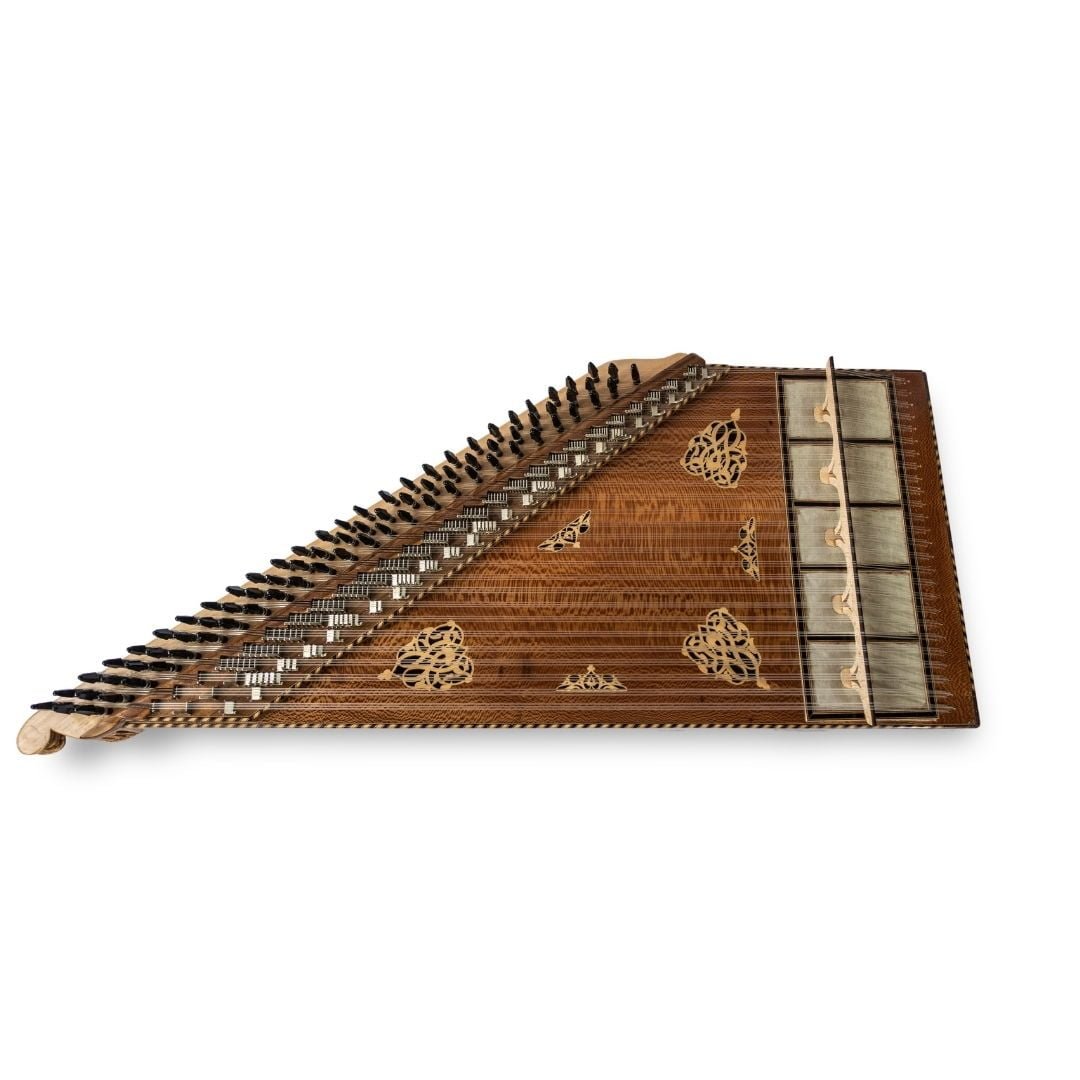
The Professional Turkish Qanun by master luthier Ozgur Gurbuz is a concert-grade trapezoidal zither built for serious performers and dedicated students of Turkish and Arabic classical music. Each instrument is handcrafted to order using carefully selected tonewoods, delivering the crystalline, shimmering voice that has made the qanun the melodic anchor of Middle Eastern ensembles for over a millennium.
Materials & Construction
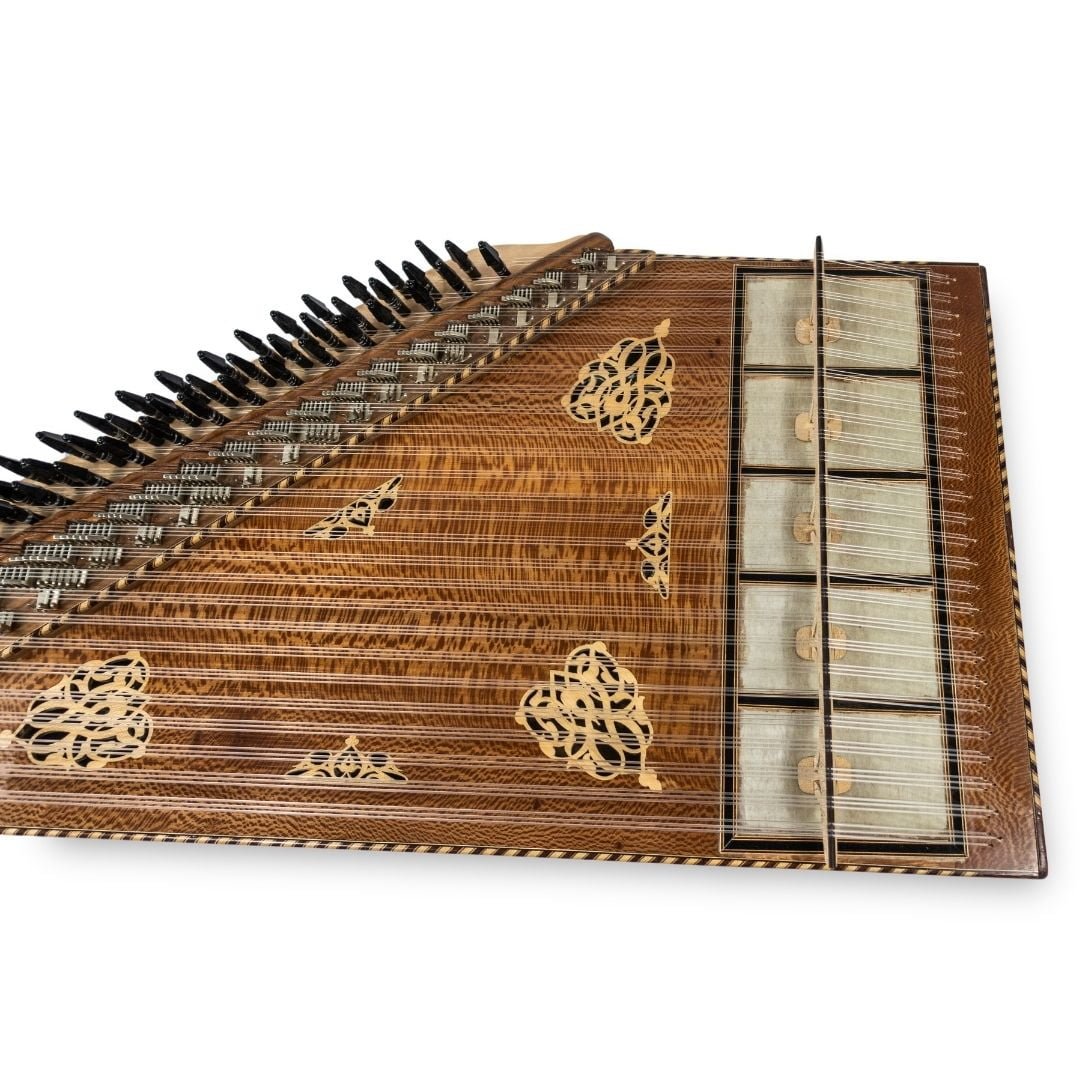
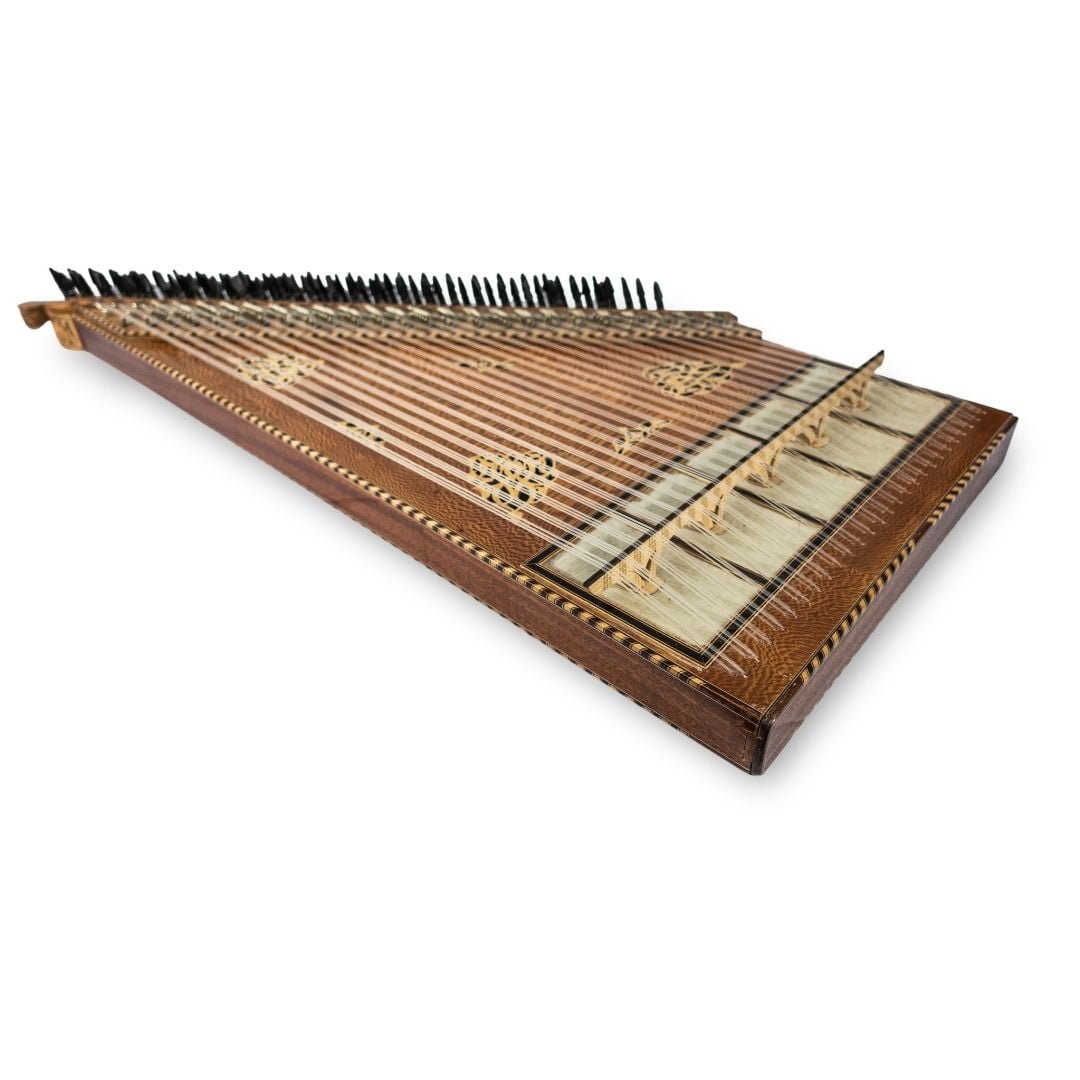
The soundboard of this Professional Qanun is crafted from plane wood, a dense, fine-grained timber that provides the bright, sustained resonance essential for clear melodic projection across the qanun’s wide string range. The frame and the carved rosettes (kafes) are made of maple, chosen for its structural rigidity and natural acoustic transparency — the frame carries the tension of dozens of string courses without dampening the soundboard’s vibration.
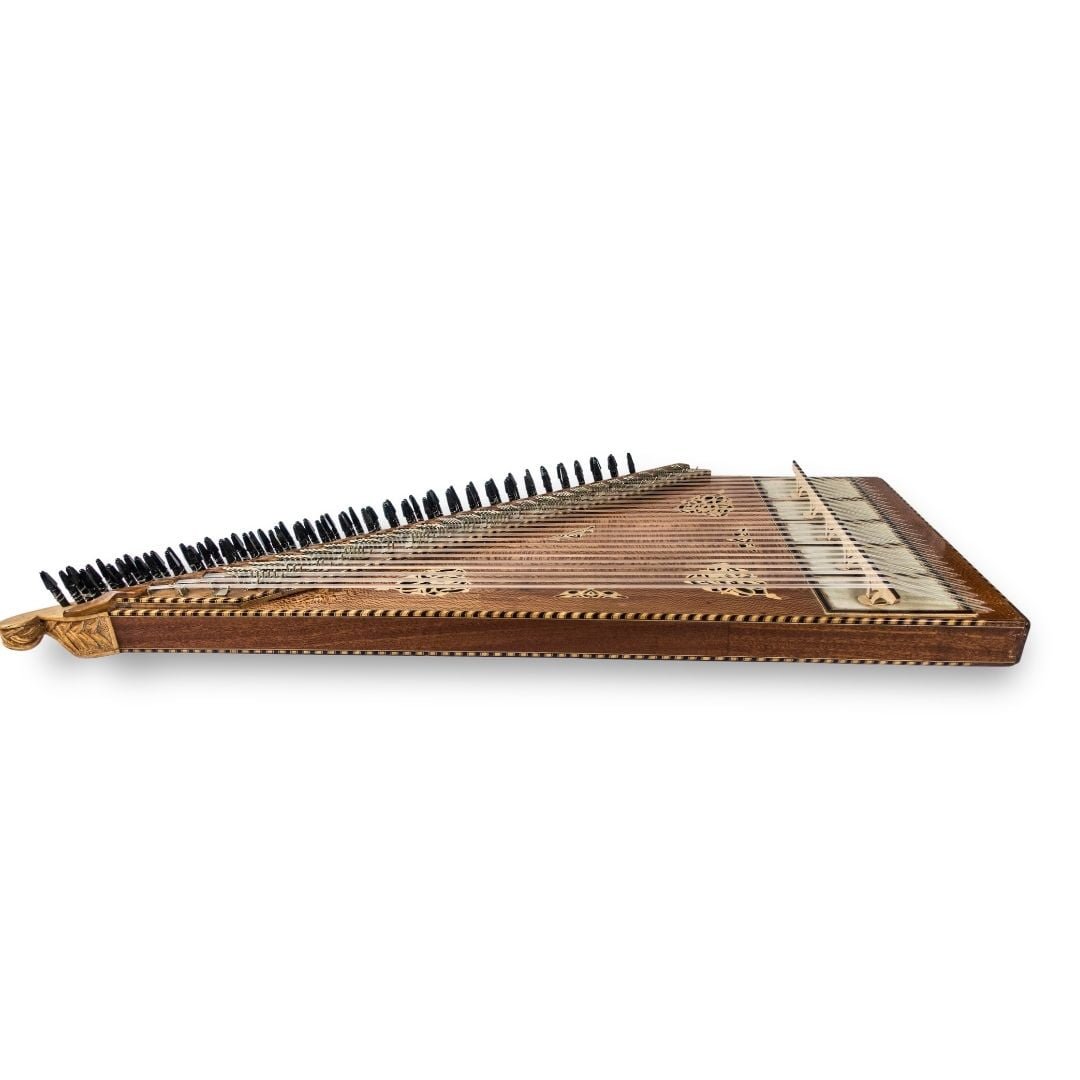
The bridge is constructed from maple and finished with delicate mahogany marquetry inlay, combining functional precision with visual elegance. Tuning pegs are turned from cornelian cherry wood (kizilcik), offering smooth, stable tuning that holds reliably under performance conditions. The instrument’s side embroidery features intricate mahogany detailing, while maple and mahogany fillets along the edges complete the aesthetic — every surface reflects the level of craftsmanship expected from a professional-grade instrument.
Sound & Playability
The qanun functions as the tuning master of the traditional Middle Eastern ensemble — other musicians listen to the qanun player to establish pitch and maqam before performance begins. This instrument’s plane wood soundboard produces a bright, bell-like clarity with generous sustain, allowing rapid melodic runs, delicate trills, and sweeping glissandos to ring with precision. The mandal system — small metal levers set under each string course along the angled left side of the instrument — enables the player to shift pitches microtonally mid-performance, navigating between different maqams without interrupting the musical flow.
Specifications
| Feature | Detail |
|---|---|
| Soundboard | Plane wood |
| Frame / Rosettes (kafes) | Maple |
| Tuning pegs | Cornelian cherry wood (kizilcik) |
| Bridge | Maple with mahogany marquetry |
| Side embroidery | Mahogany |
| Side fillets | Maple and mahogany |
| Luthier | Ozgur Gurbuz |
| Weight | 5.1 kg |
| Dimensions | 105 × 55 × 20 cm |
This product is made to order. Please contact us for information about ordering conditions and lead times.
Who Is This For?
This qanun is built for intermediate to advanced players and serious students enrolled in conservatory-level study of Turkish or Arabic classical music. The instrument’s tonal projection and mandal precision make it equally suited for solo performance, ensemble work, and studio recording. Players transitioning from student-grade instruments will notice an immediate improvement in sustain, tuning stability, and dynamic range.
Musical Traditions & Genre Compatibility
The qanun occupies a central role in Turkish classical music (Turk sanat muzigi) and Arabic tarab ensembles, where it traditionally performs alongside the oud, ney, violin, and riq. In Turkish tradition, the instrument is known as kanun and is built with four arching pillars — a structural distinction from Arabic variants. Players working within the makam system — navigating modes like Rast, Hicaz, Nihavend, and Saba — will find the mandal mechanism indispensable for achieving the precise microtonal intervals these scales require. Read our in-depth guide on the qanun’s role in Middle Eastern music for more context on the instrument’s history and playing technique.
Care & Maintenance
Store the qanun in its included hard case when not in use. Keep the instrument away from direct sunlight, humidity extremes, and rapid temperature changes — wood expands and contracts, affecting tuning stability and potentially cracking the soundboard. Wipe the body with a dry, soft cloth after each use. Check mandal alignment periodically and ensure tuning pegs turn smoothly. Strings should be replaced when tone becomes dull or intonation drifts consistently.



Reviews
There are no reviews yet.