
Description
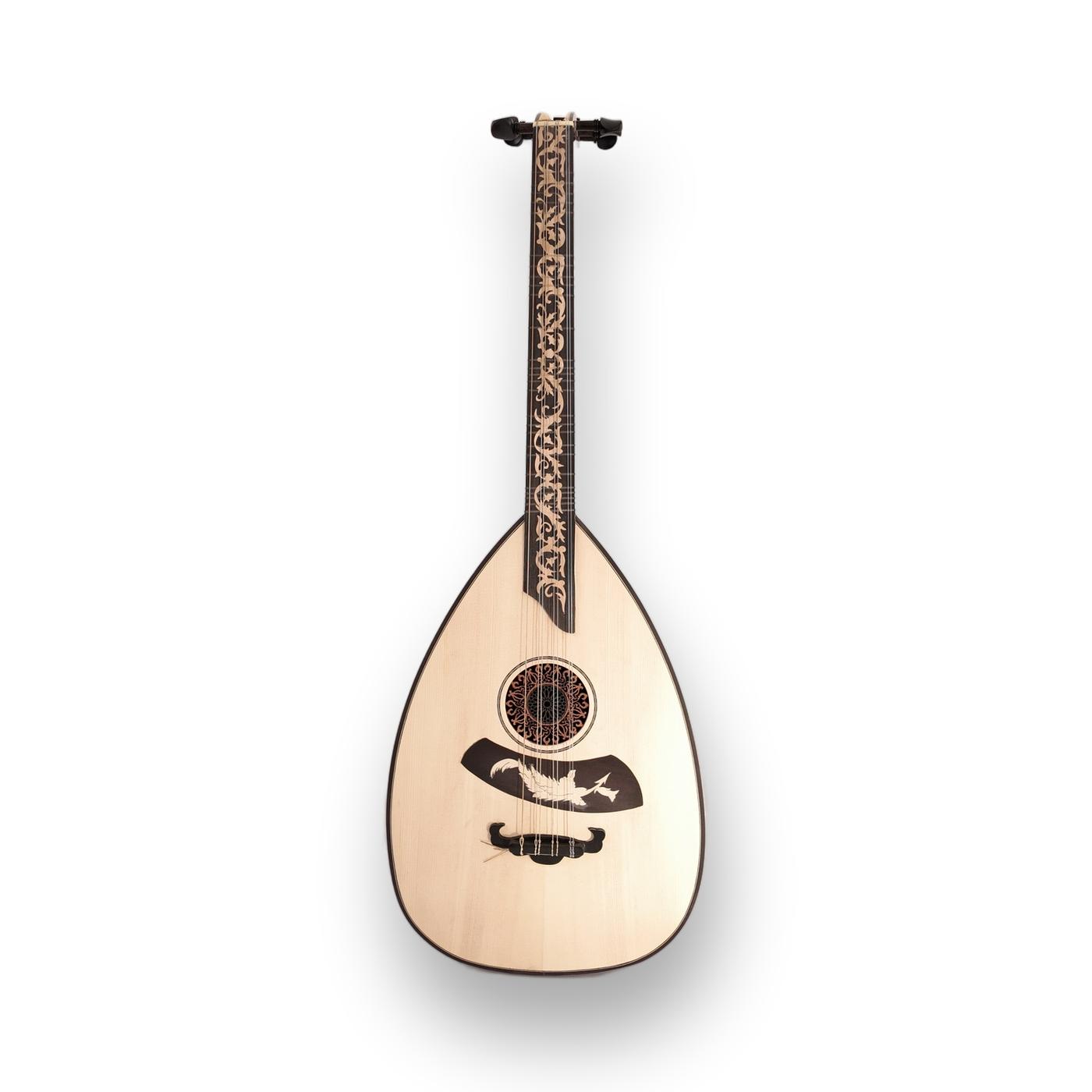
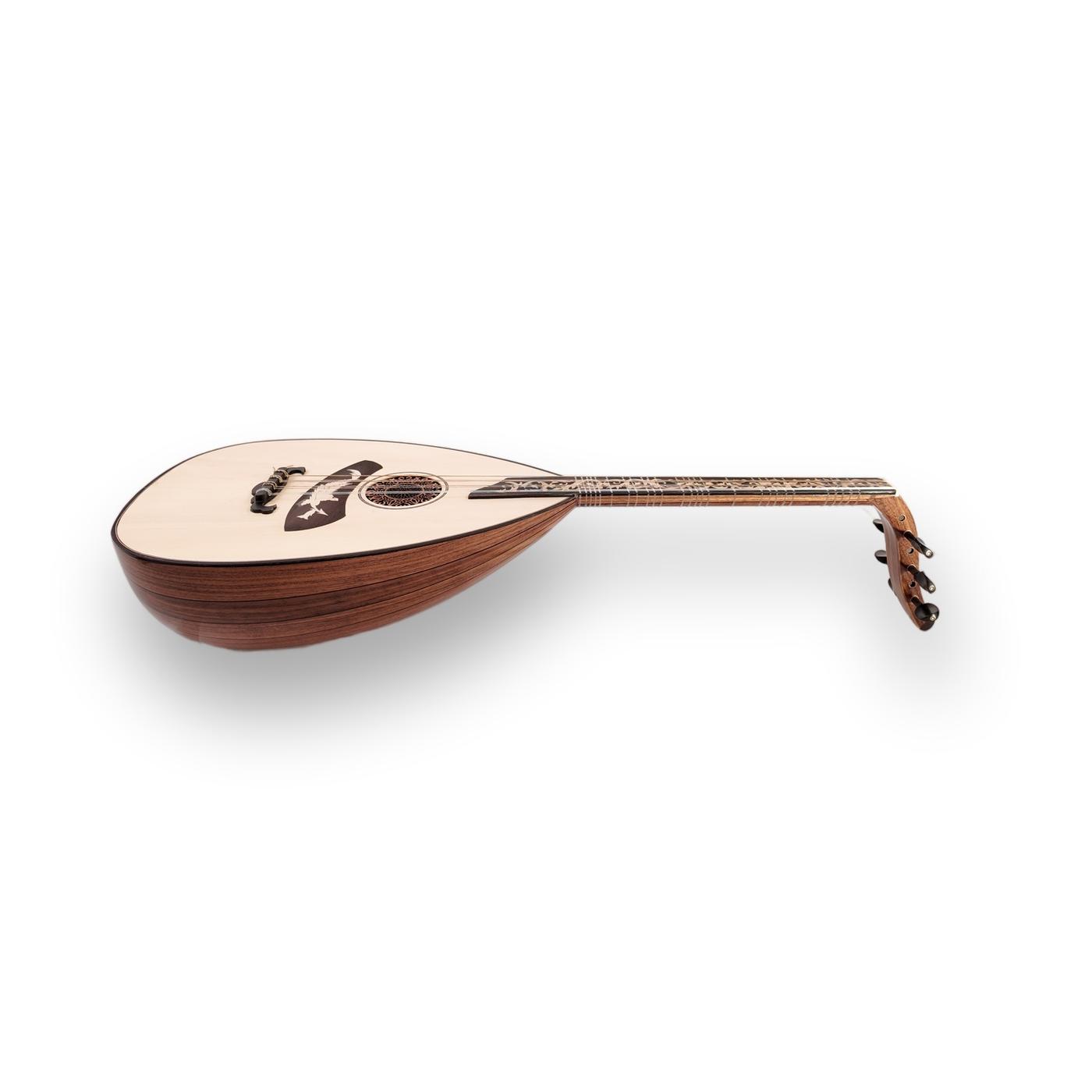
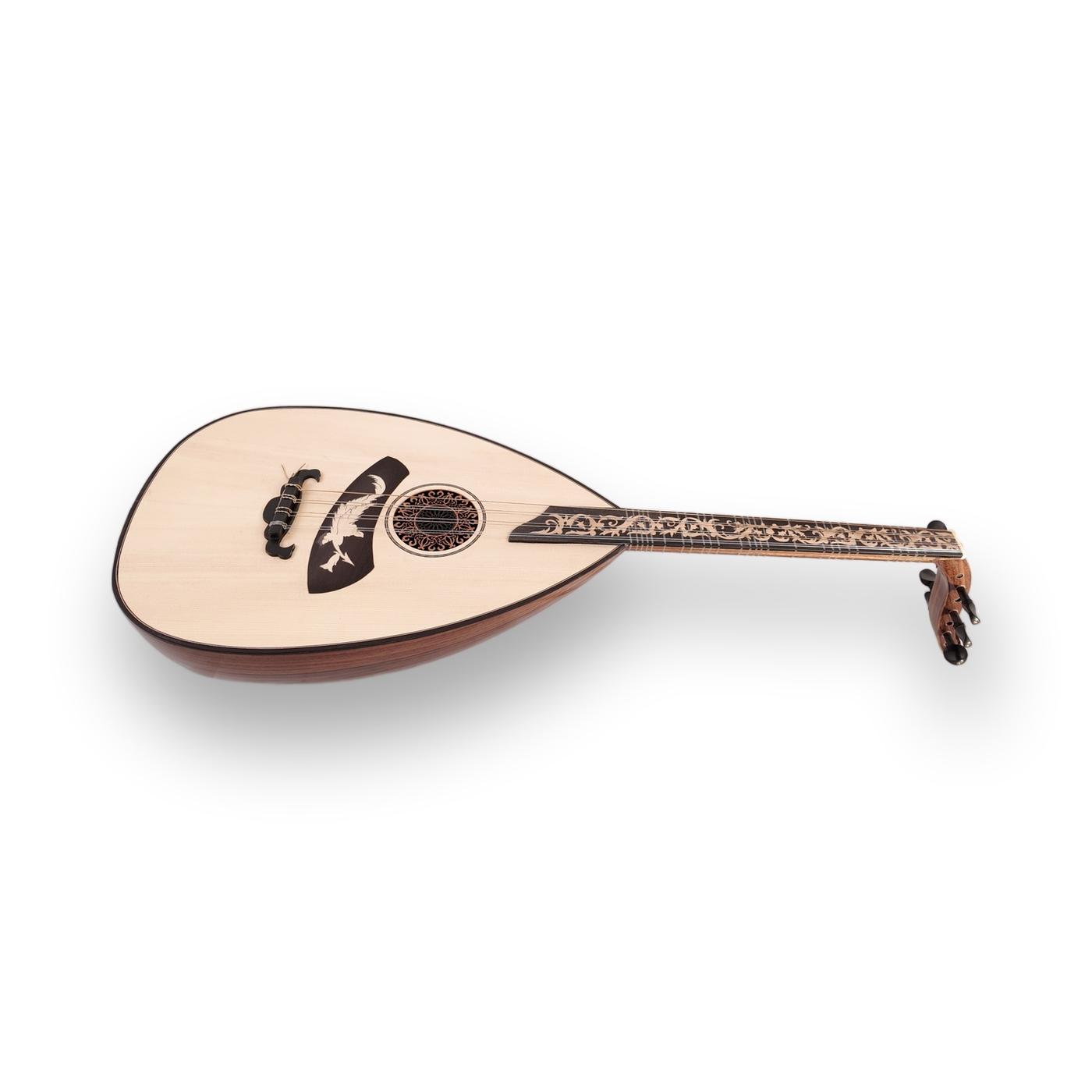
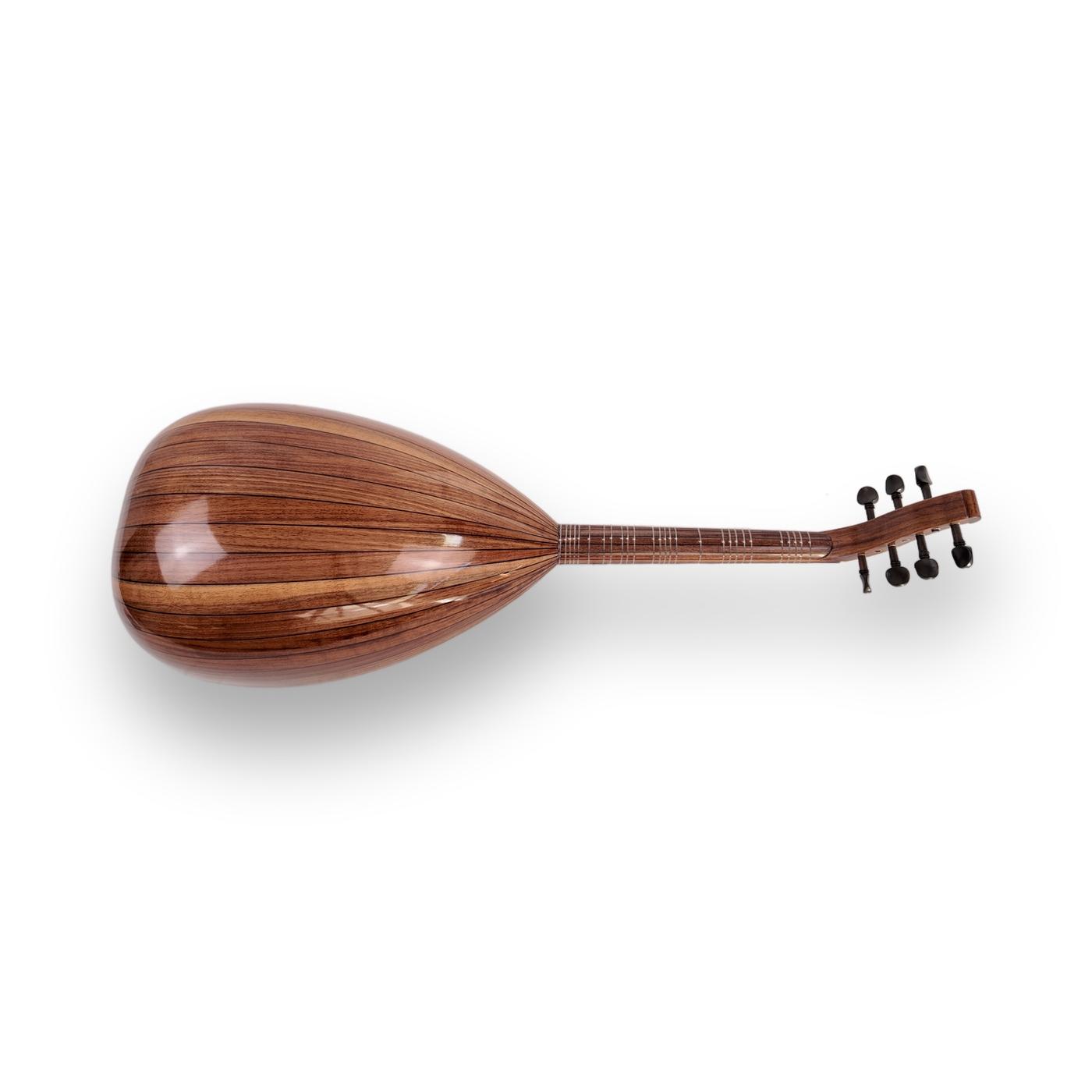
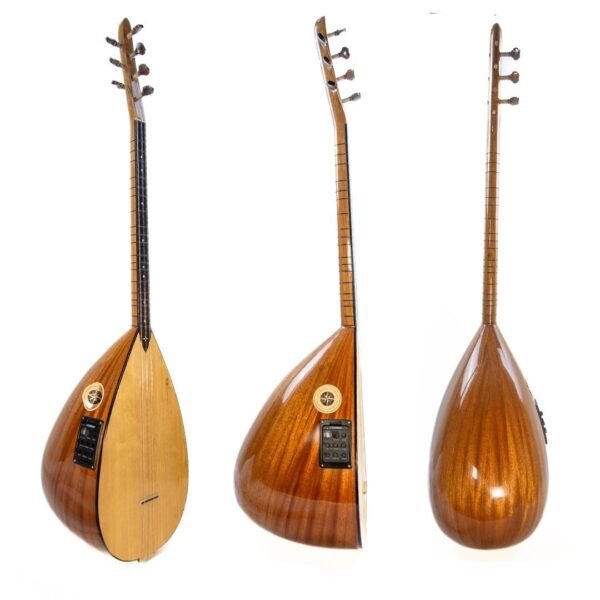
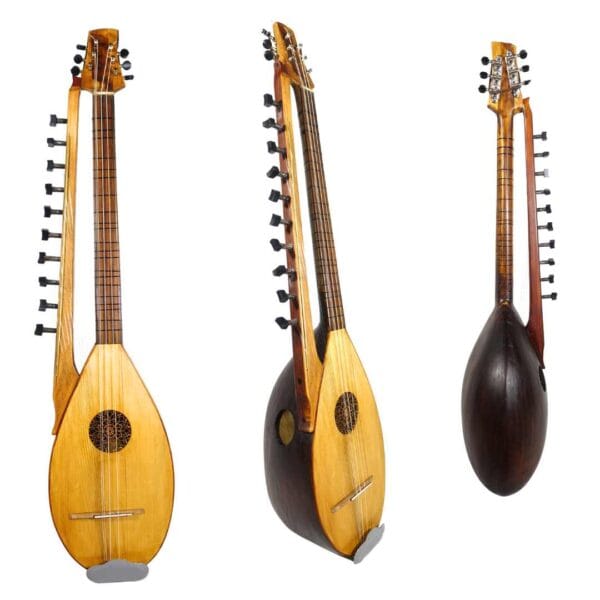
Handcrafted by Izmir master oud maker Mustafa Gezerdag, this Turkish lavta pairs a solid walnut bowl with a spruce top — part of a small series built around the same decorative fingerboard and pear-shaped body, distinguished from its siblings by bowl wood alone. A fretted plectrum lute that sits between the Arabic oud and the Anatolian saz, the lavta trades the oud’s fretless slide for a fretted neck that gives it a brighter, more precisely articulated voice.
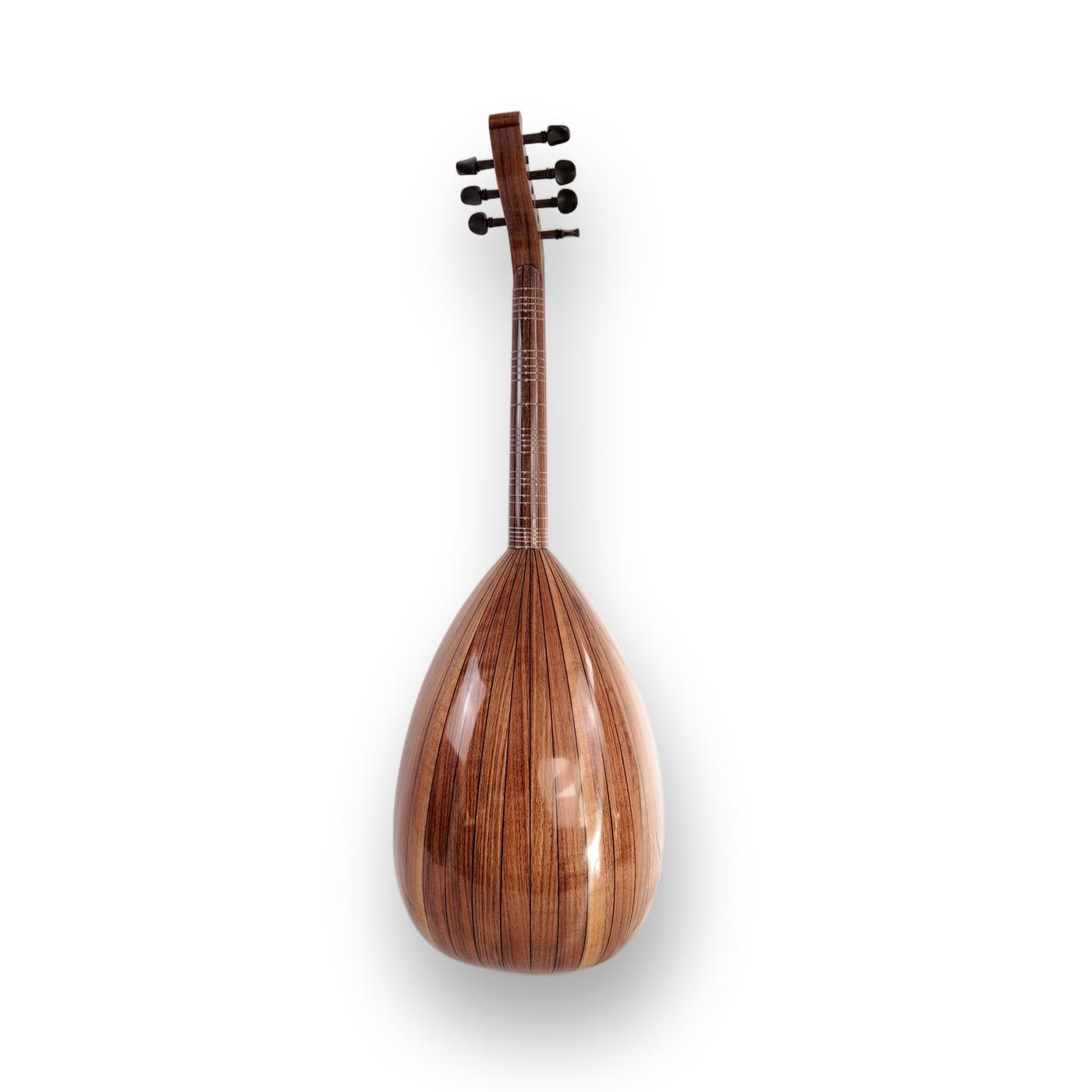
Solid Walnut Bowl
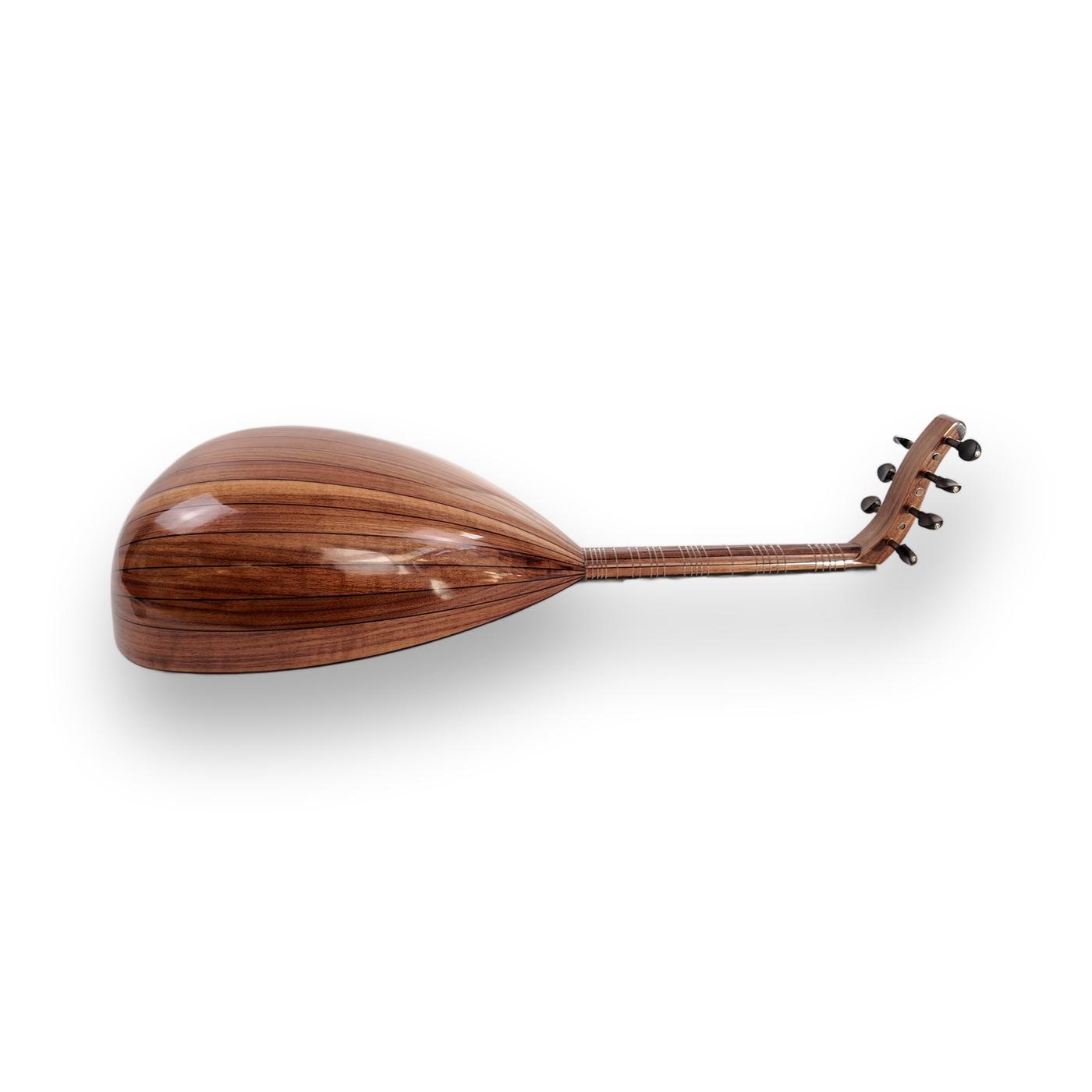
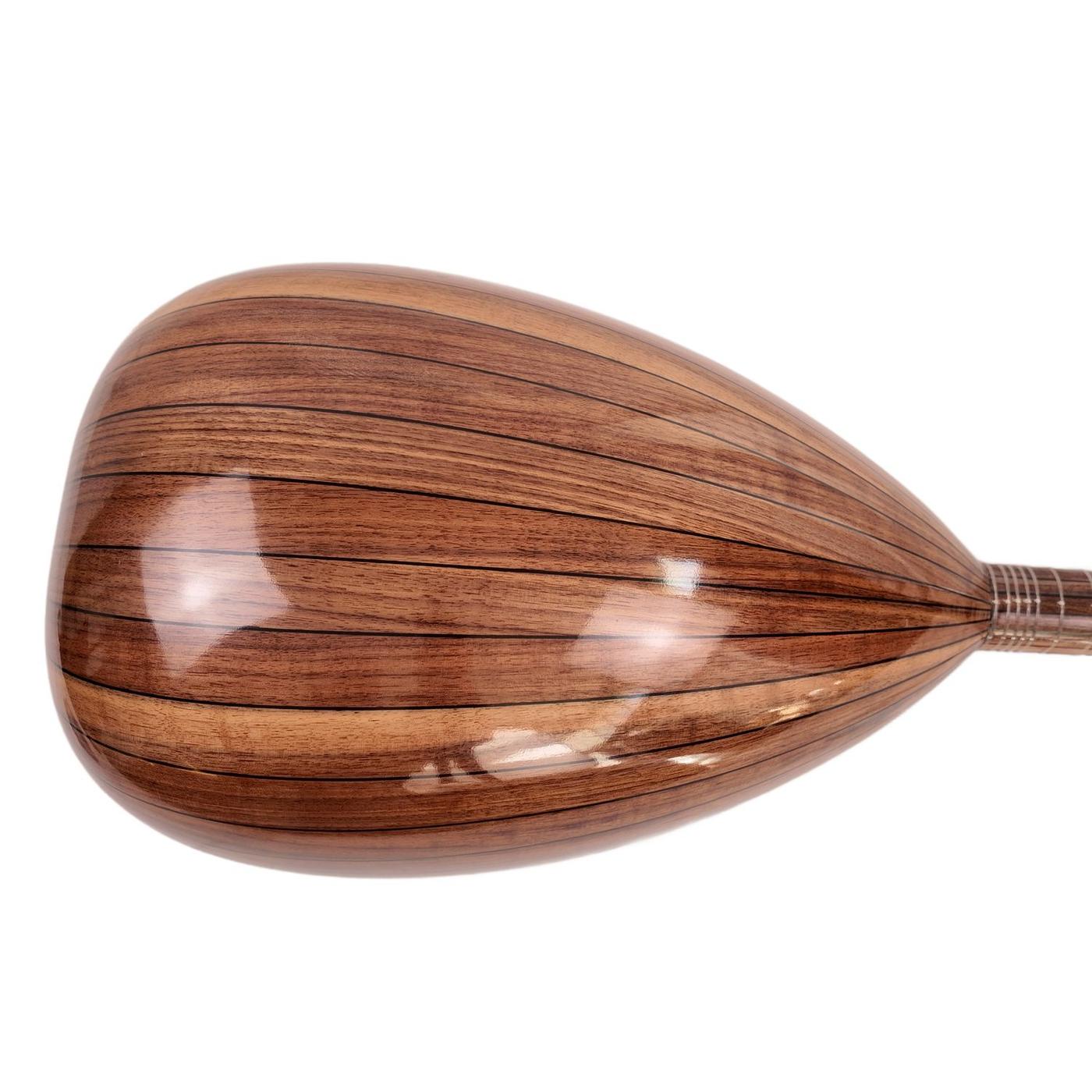
Walnut is often paired with a contrasting second wood for the ribs — as in the walnut-and-mahogany model of this series. Here it stands alone: a solid walnut bowl with no maple or mahogany strips breaking the surface. Walnut’s density gives a deep, resonant low-mid presence with clean note definition, and without alternating wood seams the bowl reads as a single warm caramel-brown sweep from neck joint to base rather than a striped pattern.
The Rosette and Inlaid Fingerboard
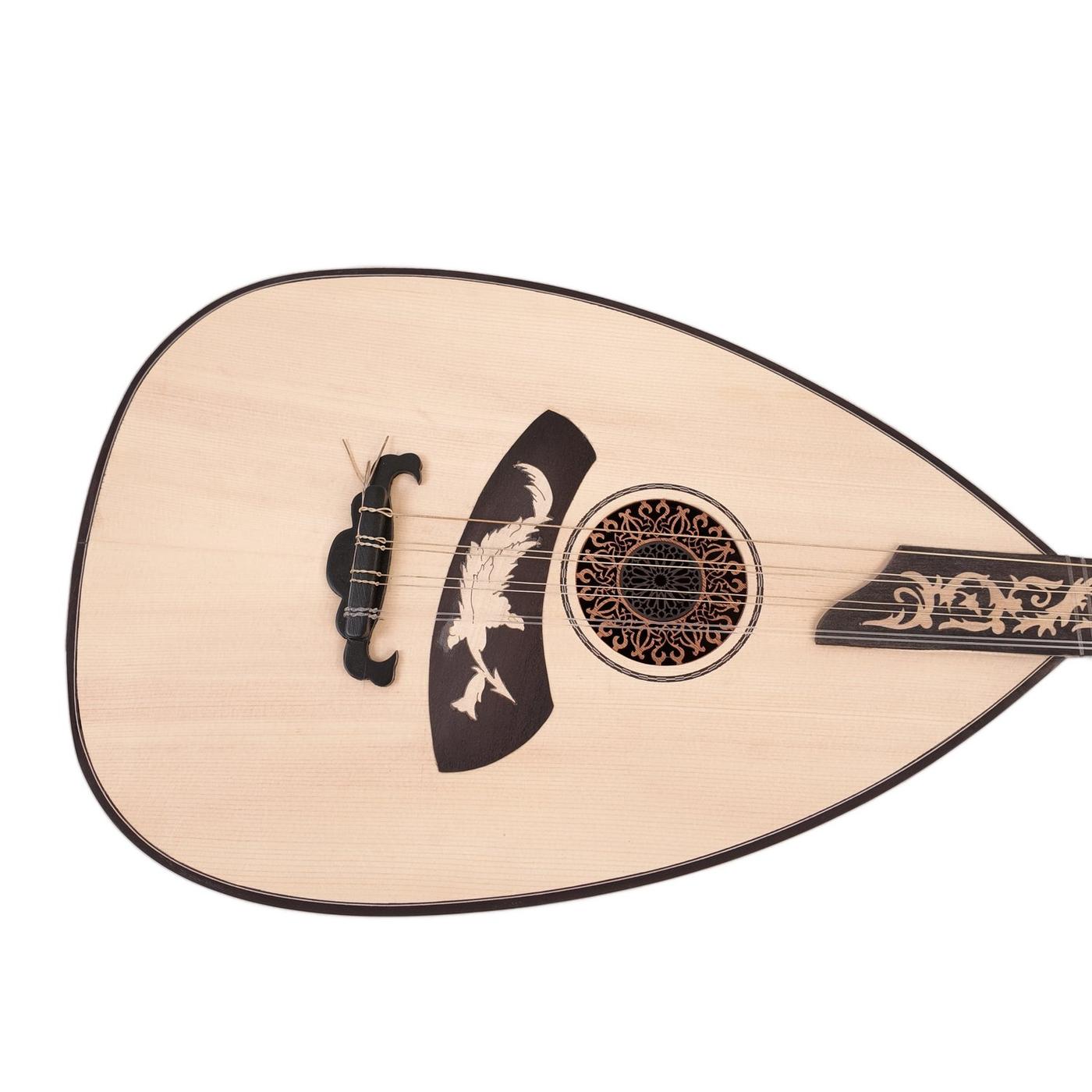
The soundhole carries the same carved lattice-pattern rosette as the rest of the series, and the black pickguard is finished with the same hand-inlaid bird-and-feather motif in mother of pearl. The fingerboard, too, shares the series’ signature: a continuous scrolling inlay running its full length, more commonly seen on museum-grade instruments than on workshop production.
Spruce Top, Pine Fingerboard and Ebony Pegs
The top is solid spruce, carved for the stiffness-to-weight ratio that gives a pear-shaped lavta body its projected, articulate tone. The fingerboard is built on pine under the inlay work, and tuning runs on ebony friction pegs, the traditional choice for lavta’s fretted, makam-tuned courses.
Specifications
| Body | Solid walnut |
|---|---|
| Soundboard | Spruce |
| Fingerboard | Pine, with decorative inlay |
| Pegs | Ebony friction pegs |
| Bowl Length | 44.5 cm |
| Bowl Width | 30.5 cm |
| Body Depth | 15.5 cm |
| String Length (Scale) | 68 cm |
Who This Lavta Is For
Players drawn to a walnut voice — deep, clean, and well-defined in the low-mids — will find this the most classically-toned instrument in the series. It suits fasil ensemble work where a grounded low end anchors the group, and holds up well under sustained taksim passages that lean on the instrument’s fundamental. It’s a natural fit for players moving from the oud, where walnut bowls are also common, into the fretted lavta tradition.
Care and the Rest of the Series
Keep the bowl away from direct heat and sudden humidity swings, and check the tied gut or nylon frets periodically, as they can shift slightly with playing and need occasional repositioning for accurate intonation. This model is one of four bowl-wood options built by Mustafa Gezerdag on the same body and fingerboard: see the brighter maple & mahogany model, the warmer solid mahogany model, or the balanced walnut & mahogany model. The whole series sits in our lavta category; for a case and spare strings, see our accessories collection. Readers curious about the instrument’s place in Ottoman music can find more on the lavta on Wikipedia.
Worldwide shipping & 15-day return.

Reviews
There are no reviews yet.