
Ney vs Kaval vs Mey: Choosing the Right Anatolian Wind Instrument
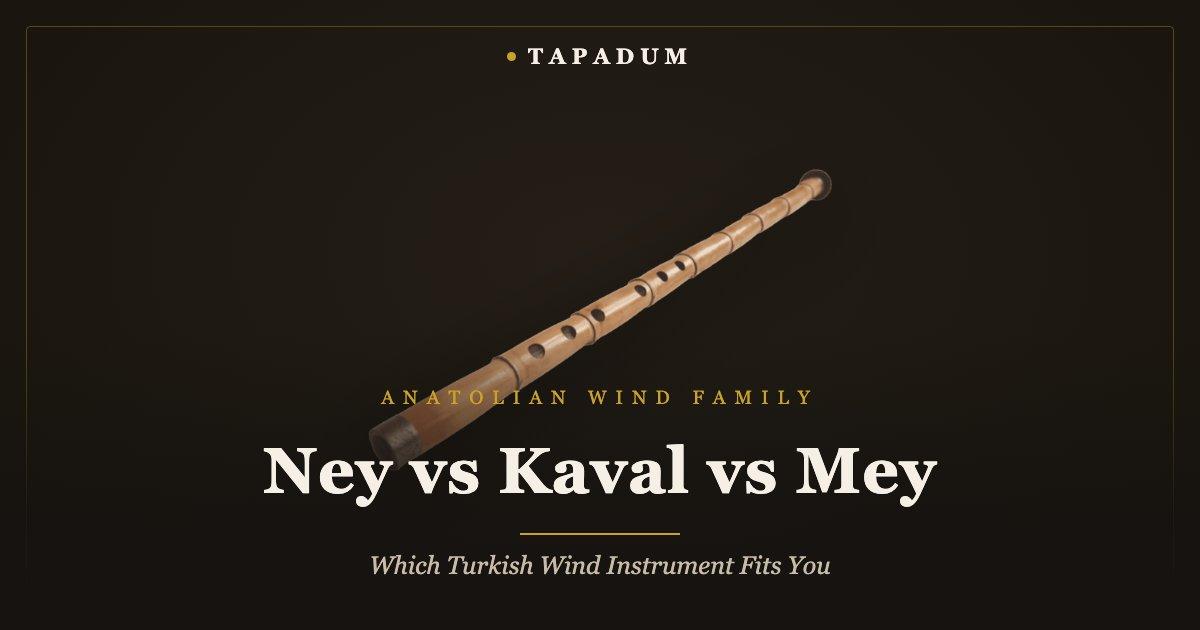
What you’ll learn: the real mechanical difference between ney, kaval, and mey (mouthpiece vs open rim vs double reed), how that difference shapes their sound and repertoire, and which one actually fits the music — and the learning curve — you’re looking for.
Ney, kaval, and mey are all Anatolian wind instruments, all played end-on, and all frequently confused by newcomers — but each one shapes air differently, and that single mechanical difference is what separates their sound, their repertoire, and how hard each is to learn. The ney uses a fitted mouthpiece called a başpare, the kaval has no mouthpiece at all, and the mey speaks through a double reed. Everything else — tone, tradition, difficulty — follows from that.
This guide compares the three side by side: how each produces sound, what music each one actually plays, and which one fits a first-time buyer’s goals.
The Core Difference: Three Ways to Shape Air
All three instruments are end-blown, but the resemblance stops there. A ney has a başpare — a separate mouthpiece piece, traditionally horn or bone — fitted onto the top of the cane, which shapes the airstream before it reaches the edge. A kaval skips a mouthpiece entirely: it’s open at both ends, and the player blows directly across a sharpened rim, a technique closer to a Western concert flute. A mey doesn’t use an open airstream at all — it’s sounded through a double reed called a kamış, the same reed-vibration principle behind an oboe.
The Ney: Turkish Sufi and Classical Voice
The ney is the reed flute at the heart of Turkish classical and Sufi music — the instrument most associated with Mevlevi ceremony and centuries of Ottoman music therapy. Its başpare-shaped airstream gives it a breathy, layered tone that can whisper or cry depending on breath control, and Turkish ney comes in five traditional tunings, each suited to a different register of the makam system.
The Kaval: Anatolian-Balkan Shepherd’s Flute
The kaval has no notch and no reed — just an open pipe and a sharpened rim, a design that traces back to shepherds in the Taurus Mountains who carried it across Anatolia and into the Balkans. That open-pipe design gives it an airier, breathier voice than the ney, and its long, unhurried melodic lines still echo the pastoral repertoire it grew up in.
The Mey: Anatolia’s Deep, Vocal Double-Reed
The mey trades airstream shaping for a double reed entirely, which is why it sits lower and rounder than either the ney or the kaval — closer to an oboe than a flute. Built from seasoned apricot wood, it carries the melancholic, vocal quality heard in Turkish folk laments and wedding music, and its reed (not its body) is what defines its character.
Sound and Repertoire Compared
| Ney | Kaval | Mey | |
|---|---|---|---|
| Sound production | Başpare mouthpiece | Open rim, no mouthpiece | Double reed (kamış) |
| Voice | Breathy, layered | Airy, open | Deep, vocal, melancholic |
| Home tradition | Turkish classical / Sufi | Anatolian-Balkan folk | Anatolian folk laments & weddings |
| Closest Western cousin | None — unique embouchure | Concert flute technique | Oboe (double reed) |
Which One Should You Choose?
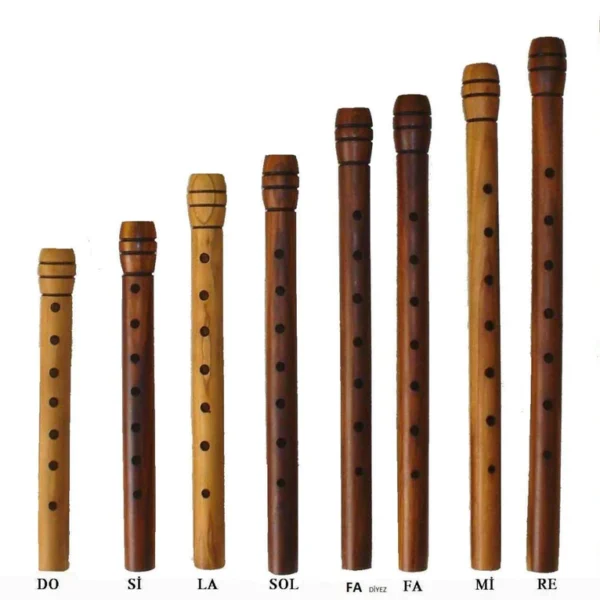
Choose a ney if you’re drawn to Sufi or Ottoman classical repertoire and want the instrument most tied to that tradition — start on D (Supurde) or E (Bolahenk), the two most forgiving tunings. Choose a kaval if you want a folk voice with roots in shepherding culture and don’t mind a technique closer to Western flute. Choose a mey if you want the deepest, most vocal of the three and are ready for the extra embouchure work a double reed demands. None of the three shortcuts learning the others — the mouthpiece mechanism is different enough that skill doesn’t transfer directly.
Shop the range directly:


Frequently Asked Questions
What’s the main difference between a ney, a kaval, and a mey?
How each shapes air to produce sound: the ney uses a fitted mouthpiece (başpare), the kaval has no mouthpiece and relies on an open rim, and the mey uses a double reed. That difference drives everything else about their tone and technique.
Which is easiest to learn: ney, kaval, or mey?
They’re difficult in different ways. The kaval’s technique is closest to a Western flute, which can make it the most approachable for players with prior flute experience. The ney and mey both demand embouchure control that takes longer to build from scratch.
Can I play the same music on all three instruments?
Not really. The ney belongs to Turkish classical and Sufi repertoire, the kaval to Anatolian-Balkan folk music, and the mey to Anatolian folk laments and wedding music. Each has its own melodic vocabulary built around its own technique.
Does skill on one of these instruments transfer to the others?
Only partially. Breath control and musical phrasing carry over, but the actual sound-production mechanism — mouthpiece, open rim, or reed — is different enough on each that technique doesn’t transfer directly.
Which of the three has the deepest, lowest voice?
The mey. Its double reed and wider bore give it a lower, more vocal register than either the ney or the kaval, closer to an oboe than a flute.