
The Persian String Family: Setar vs Tar vs Santur vs Kamancheh
What you’ll learn: the four different ways Persian classical music makes string sound — plucked with a bare nail, plucked with a plectrum, struck with mallets, and bowed — and which instrument (setar, tar, santur, or kamancheh) actually fits the sound and role you’re after.
Persian classical music builds its entire string sound from four instruments that produce sound four completely different ways: the setar is plucked with a bare fingernail, the tar is plucked with a metal plectrum, the santur is struck with wooden mallets, and the kamancheh is bowed. Each mechanism gives its instrument a distinct role — intimate solo voice, ensemble leader, bright percussive texture, or vocal-like lead line — and understanding that mechanism is the fastest way to know which one you actually want.
This guide walks through all four side by side: how each makes sound, what role it plays in an ensemble, and which one fits a specific listening or playing goal.
Four Ways to Make Sound in Persian Classical Music
The setar is played with the bare nail of the right index finger — no plectrum at all — which gives it the softest, most introspective voice of the four. The tar is plucked with a small brass plectrum called a dastaneh, producing a brighter, more projecting tone built to lead an ensemble. The santur isn’t plucked at all — it’s struck with a pair of light wooden mallets, giving it a bright, percussive, bell-like character entirely different from the other three. The kamancheh is bowed with horsehair, the only one of the four capable of a sustained, singing line that mimics the human voice.
The Setar: Solo, Intimate, Nail-Plucked
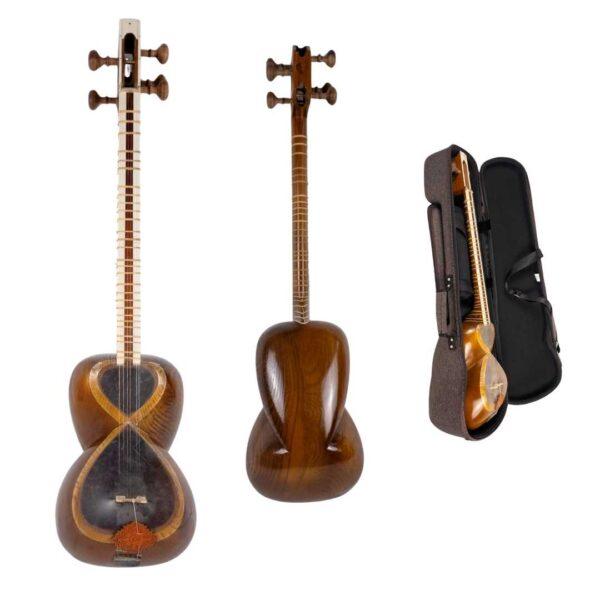
Despite its name meaning “three strings,” the modern setar has four, played with the bare fingernail rather than a plectrum. That technique produces a quiet, close voice suited to solo playing, meditation, and intimate listening rather than projecting over an ensemble — it’s the instrument Persian classical musicians reach for when the music turns inward.
The Tar: Ensemble Voice, Plectrum-Driven
The tar’s double-bowl body and twelve strings (six courses) give it both harmonic depth and the projection to lead an ensemble, and its brass dastaneh plectrum produces tremolo, staccato, and legato articulation the setar’s bare-nail technique can’t match. Where the setar turns inward, the tar is built to carry a group.
The Santur: Struck Strings, Bright and Percussive
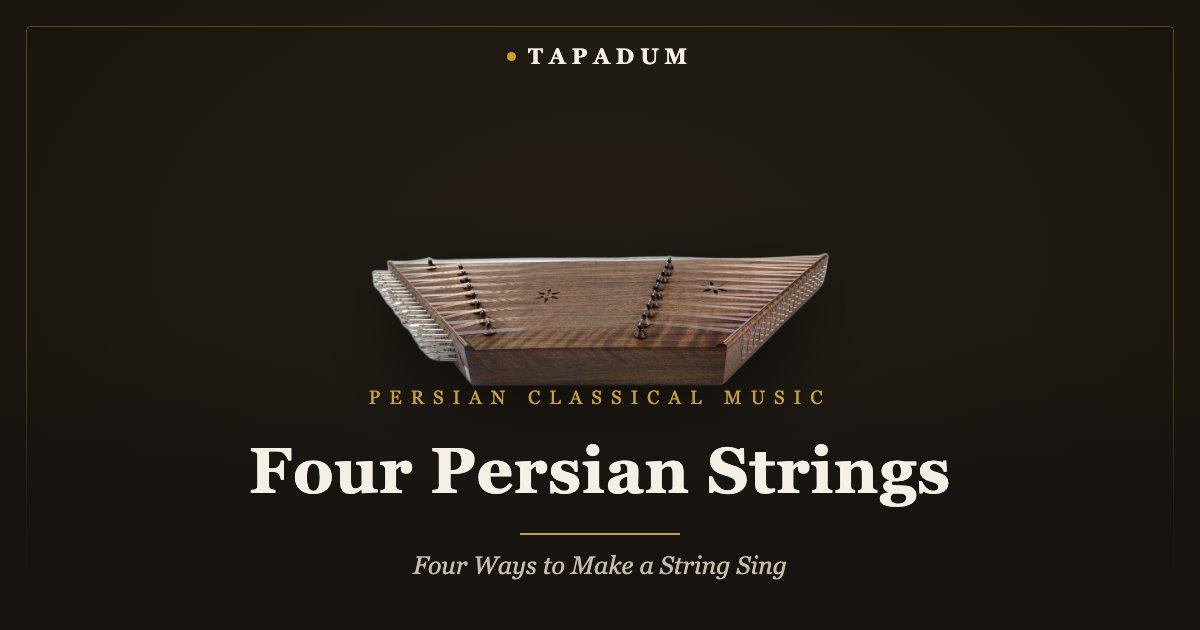
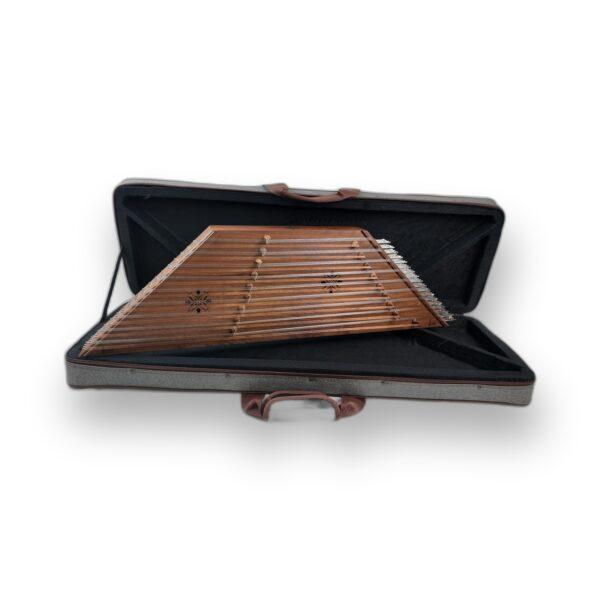
The santur breaks the pattern entirely — it’s a trapezoidal box of up to 72 strings struck with a pair of light wooden mallets called mizrab, producing a bright, shimmering, almost bell-like texture no plucked or bowed instrument can replicate. It sits closer to a percussion instrument in technique even though it’s classified as a string instrument by the notes it produces.
The Kamancheh: The Bowed, Singing Voice
The kamancheh is a spike fiddle played upright with a horsehair bow, and it’s the only instrument in this family capable of the sustained, sliding, voice-like phrasing that defines vocal ornamentation in Persian music. Where the other three articulate in discrete plucks or strikes, the kamancheh can sing a continuous line the way a human voice does.
Comparing the Four
| Setar | Tar | Santur | Kamancheh | |
|---|---|---|---|---|
| Sound production | Bare-nail pluck | Brass plectrum | Struck with mallets | Horsehair bow |
| Character | Soft, intimate | Bright, projecting | Percussive, shimmering | Sustained, vocal |
| Typical role | Solo / meditative | Ensemble lead | Textural / rhythmic-melodic | Melodic lead / improvisation |
| Strings | 4 | 12 (6 courses) | Up to 72 | 4 |
Which One Should You Choose?
Choose a setar for solo, introspective playing — it rewards close listening more than performance. Choose a tar if you want to lead an ensemble or need an instrument with real projection. Choose a santur if you’re drawn to a bright, percussive texture unlike anything else in the family — it also tends to be the most approachable for players coming from hammered dulcimer or mallet-percussion backgrounds. Choose a kamancheh if you want the closest thing to a singing voice among Persian string instruments, and don’t mind that its technique — rotating the instrument to meet the bow — takes real practice to internalize.
Shop the range directly:

Frequently Asked Questions
What’s the easiest Persian string instrument to start on?
There’s no universally easiest one — each demands a different skill first. The santur’s mallet technique is often the fastest to produce a pleasant sound, while the setar, tar, and kamancheh all require real embouchure- or bowing-equivalent technique before they respond cleanly.
What’s the difference between a setar and a tar?
The setar is plucked with a bare fingernail and has four strings; the tar is plucked with a brass plectrum and has twelve strings across six courses. The setar is built for intimate solo playing; the tar is built to lead an ensemble.
Why is the santur considered a string instrument if it’s struck?
Classification follows how the sound is generated, not the playing gesture — the santur’s strings vibrate to produce pitch, the same principle behind a piano. It’s struck rather than plucked or bowed, but it’s still fundamentally a string instrument.
Which of the four sounds most like a human voice?
The kamancheh. Its bow allows continuous, sustained, sliding pitch changes that plucked or struck instruments can’t produce, which is why its voice is often compared directly to singing.
Can I learn more than one of these instruments at once?
It’s possible but demanding — each uses a genuinely different technique (nail-pluck, plectrum, mallet-strike, bow), so skill on one doesn’t transfer directly to the others. Most players specialize in one before adding a second.