One Brand, Many Cultures: The Tapadum Cross-Cultural Bridge
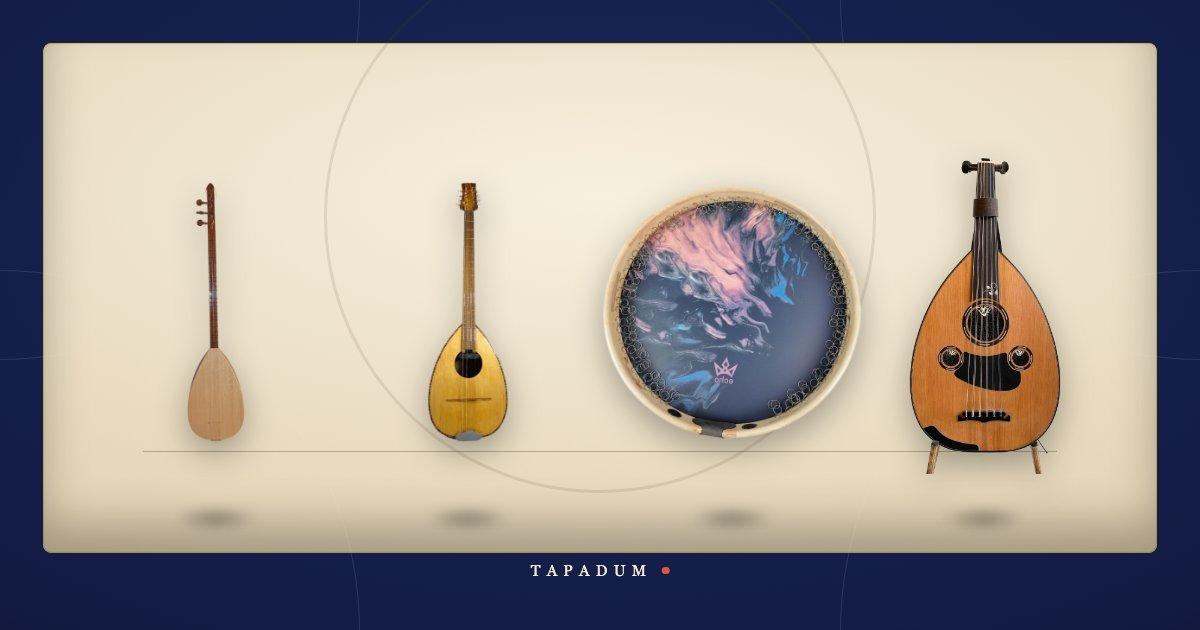
What you’ll learn: why one music store carries instruments from Turkey, Iran, the Arab world, Greece, and the Balkans side by side, the real historical routes that connect them, and how Tapadum’s own catalogue traces those connections instrument by instrument.
Walk into Tapadum and you will find a Turkish baglama saz a few shelves from a Persian daf, a Greek bouzouki near an Arabic riq, a Bulgarian tambura within reach of an Anatolian darbuka. That is not a curator’s whim. These instruments share routes, not just a region — trade roads, imperial courts, and migrating musicians carried necks, skins, and tuning systems across borders for a thousand years before any of today’s national labels existed.
Tapadum exists because that shared history is real, and because one workshop can honor several traditions without flattening them into one. This piece traces the actual connections — where they are documented, not assumed — instrument family by instrument family.
A Region Shaped by Trade, Not Borders
The instruments in this store come from a stretch of the world — Anatolia, Persia, the Arab Levant, Greece, the Balkans — that has never been musically isolated. Ottoman rule alone connected all of it for over four centuries, moving court musicians, luthiers, and instrument designs between Istanbul, Cairo, Baghdad, Sarajevo, and Athens. Long before that, the Silk Road and Mediterranean sea trade did the same work more slowly — a pattern of cultural exchange documented by the Metropolitan Museum of Art’s own history of the Silk Road.
The result is not one shared instrument wearing different names. It is a family of related solutions — a long neck over a small body, a skin stretched over a frame, a bowl resonator plucked or bowed — each adapted by a specific culture into something that is genuinely its own. Tracing the family does not erase the individual branch.
The Long-Necked Lute Family: Saz, Bouzouki, Buzuq, Tambura
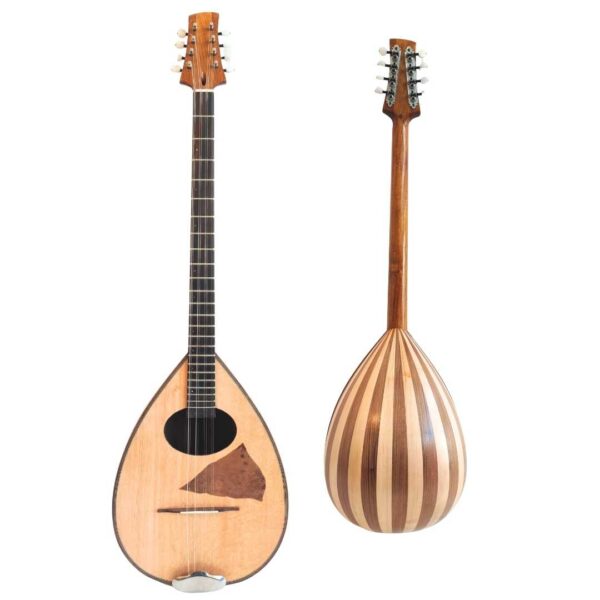
The clearest example sits in our string room. The Turkish baglama saz, the Greek bouzouki, the Lebanese-Syrian buzuq, and the Bulgarian tambura are all long-necked plucked lutes, and their kinship is documented, not folklore. Ottoman court instrument inventories list a family of tanbur-type lutes — including a “tanbur bouzourk,” whose name is the direct linguistic ancestor of “bouzouki.” As the Ottoman Empire moved musicians and instruments across Anatolia, the Levant, and the Balkans, that lute family split into today’s distinct, differently-tuned, differently-played instruments.
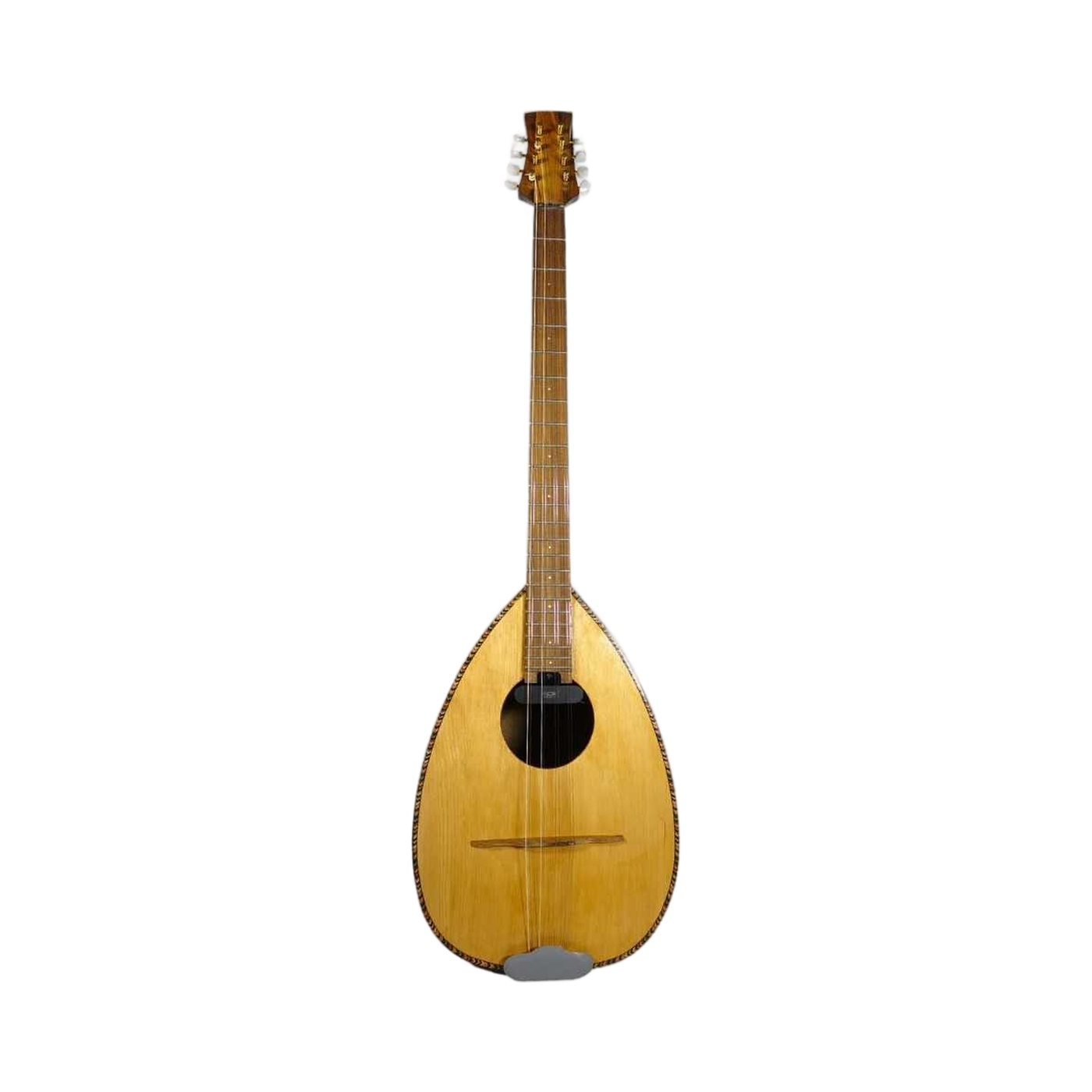
Each one now has its own voice: the saz built for modal Anatolian folk repertoire, the bouzouki carrying rebetiko’s tremolo-driven melancholy — a tradition recognized by UNESCO as Intangible Cultural Heritage in 2017 — the buzuq built for the microtonal ornamentation of Arabic maqam, the tambura anchoring Bulgarian and Macedonian dance music. We carry all four, and we treat the differences as the point. Archaeopress’s research on the saz/bağlama family traces the Ottoman-era split in detail; our own guide to bouzouki vs buzuq covers exactly where they diverge in fretting, tuning, and repertoire today.
The Frame Drum Family: Daf, Bendir, Riq, Mazhar
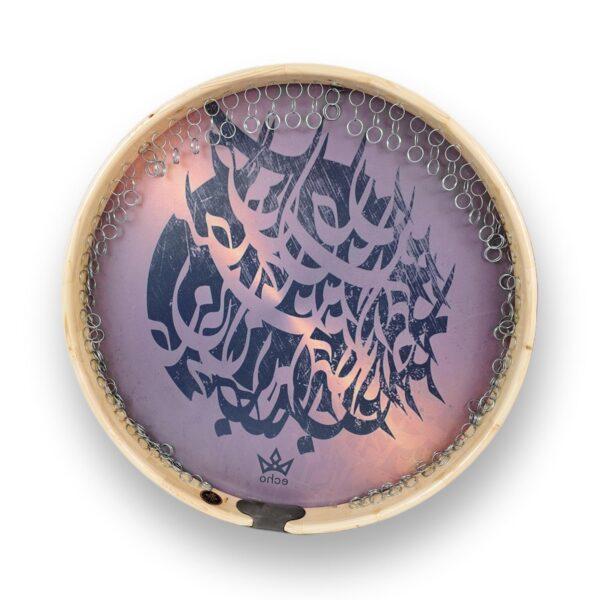
Percussion tells the same story from a different angle. The frame drum — a skin stretched over a circular wooden ring, played by hand — is one of the oldest instrument forms in the region, and nearly every culture here kept a version of it. The Persian daf carries inner metal rings for a shimmering sustain. The North African and Anatolian bendir often hides a snare underneath for a warm buzz. The Arabic riq adds metal jingles, closer in build to a tambourine. The mazhar, larger and deeper, holds a slow ceremonial pulse.
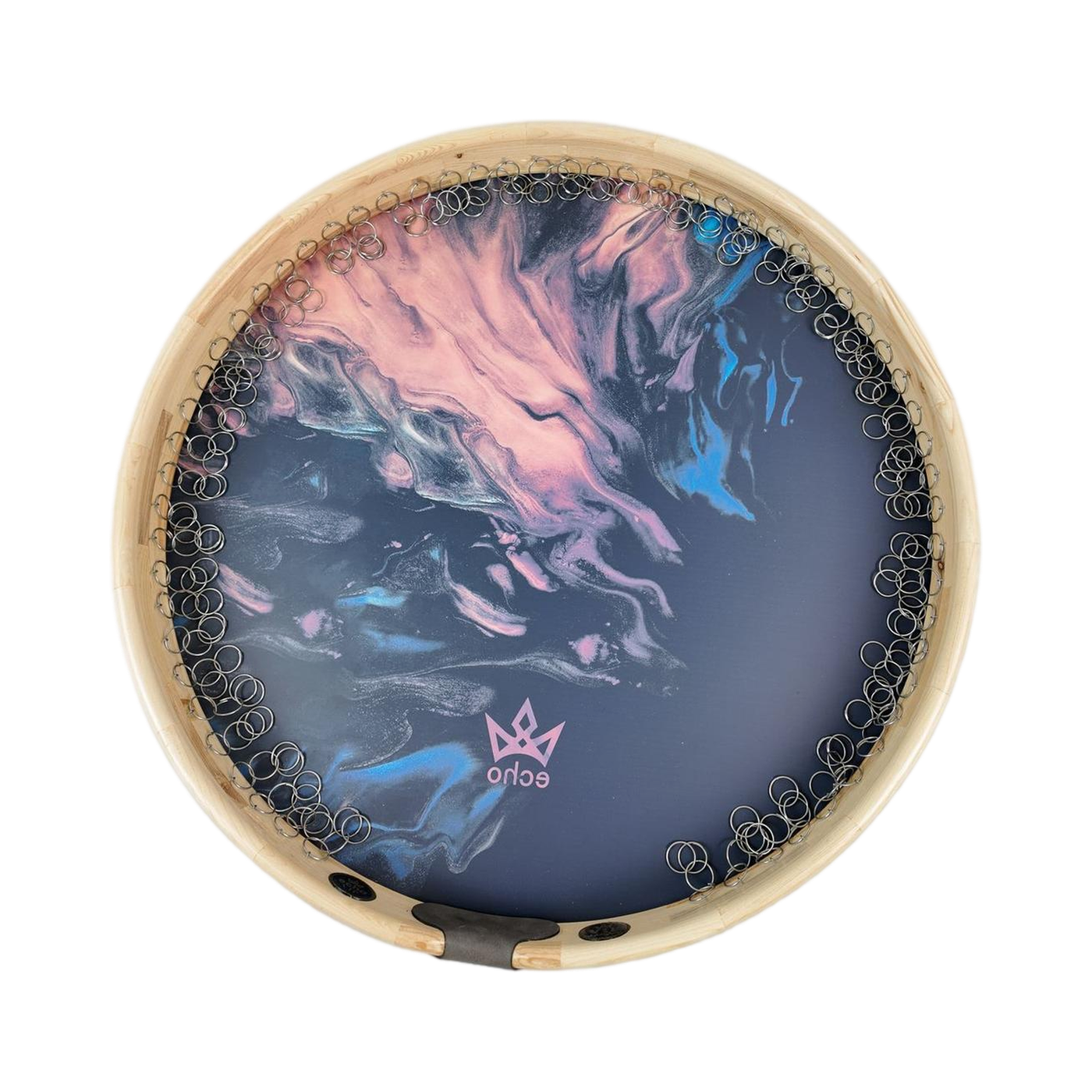
None of these is a variant of another — they are four separate solutions built for four different musical roles, and a player who only knows one will misjudge the others. Our frame drums of the world guide compares all four side by side, construction and role included.
The Qanun: One Instrument, Two Systems
Sometimes the same instrument name hides two genuinely different builds rather than a shared one. The qanun — the trapezoidal plucked zither at the heart of both Turkish and Arabic classical music — is the clearest case. The Turkish kanun uses a dense bank of small lever “mandals” under each string group to shift microtones precisely for maqam and makam systems; the Arabic qanun uses fewer, larger levers built for a different regional tuning practice. Same origin, same silhouette, genuinely different instrument in the hands of a player who knows both. Our guide to choosing a qanun, Turkish vs Arabic walks through exactly what separates the two systems.
Bowed Strings: Kamancheh and Kemence
The bowed spike-fiddle family draws the same map. The Persian kamancheh, the classical Turkish kemence, and the Black Sea kemence — despite the shared name with its classical cousin — are three distinct instruments with different bodies, stringing, and playing postures, each rooted in its own regional repertoire. We cover the wider Persian bowed-string picture in the Persian string family, and the Black Sea instrument’s own separate identity in Black Sea kemence: the Karadeniz fiddle.
The Oud’s Journey Into Europe
No instrument in the catalogue carries the cross-cultural story further than the oud. Its Arabic name — al-ud, “the wood” — became the root of the European word “lute” once the instrument crossed into Al-Andalus with the 9th-century musician Ziryab, who is credited with adding its fifth string. From there the fretless, pear-shaped body spread through medieval Europe as the lute, eventually influencing the entire European plucked-string tradition, guitar included. Early Music Muse’s research on Ziryab traces the route in more depth.
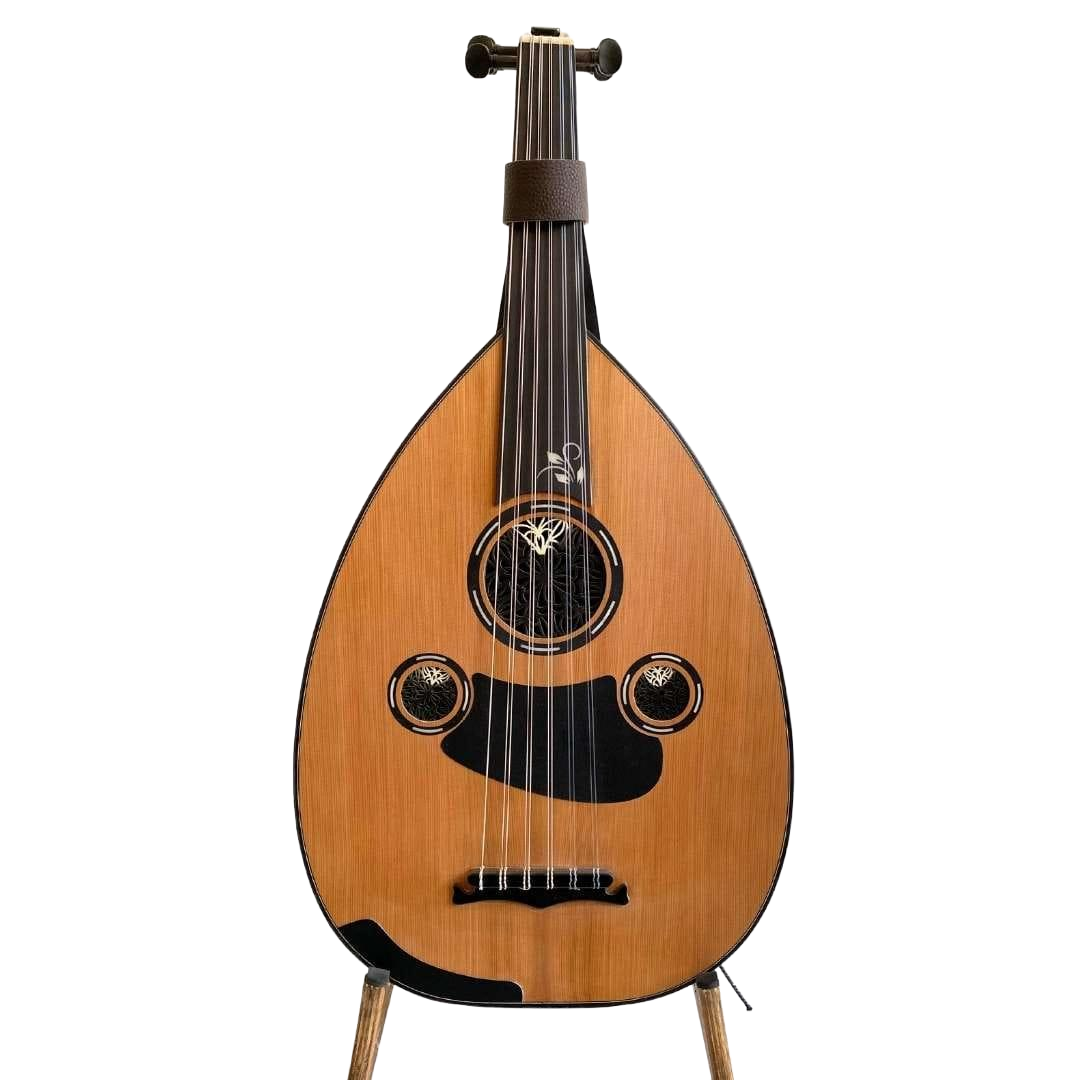
Today the oud itself has split into distinct regional builds — Arabic and Turkish tunings differ, and the choices a builder makes for each are deliberate, not interchangeable. We trace this history in full, with sources, in Ziryab and the Birth of the Lute.
Shared Maqam, Separate Names
The connections run deeper than instrument shape — they run into the tuning systems themselves. Arabic maqam, Turkish makam, and Persian dastgah are three related but distinct modal systems, each built around specific melodic paths and microtonal inflections rather than the fixed major/minor scales of Western music. A trained ear can hear the family resemblance between them the same way it hears the resemblance between the saz and the bouzouki — related logic, different execution, and real expertise required to move between them.
If you play any of these instruments, our own Tapadum Tuner includes drones and presets across several of these modal systems, and our Oud Maqam Basics guide is a starting point for hearing the difference yourself.
Why We Make Some of These Ourselves
Curating instruments from five traditions is one thing; building some of them is another. Tapadum runs two workshops in Izmir — one focused on percussion, one on strings — where a small team of makers builds and finishes instruments under our own name rather than importing white-label stock. That choice exists because cross-cultural respect has to extend past the sales floor: an instrument’s proportions, wood selection, and skin tension carry as much cultural information as its name does, and getting them wrong flattens the tradition even when the label is correct.
One Founder, Several Traditions
Tapadum’s own catalogue mirrors its founder’s musical life. Özgür Yalçın has spent nearly three decades as a composer and multi-instrumentalist moving between Turkish, Arabic, and wider Mediterranean repertoire — playing oud and baglama across projects that themselves cross borders, from the Karkum Project’s blend of Anatolian and Mediterranean folk to a recorded duet with guitarist Peppe Frana under the name Kara Güneş. The store did not adopt a cross-cultural catalogue as a marketing position; it grew out of one musician’s actual, decades-long practice of moving between these traditions.
Why This Matters When You’re Choosing an Instrument
None of this is trivia if you are actually choosing between instruments. A beginner comparing a baglama and a bouzouki, or a daf and a bendir, is not choosing between two versions of the same thing — they are choosing between two instruments built for different repertoire, different technique, and often a different feel in the hands entirely. Knowing the family they come from helps you ask the right question before you buy: not “which is better,” but “which tradition am I trying to play in.” Every buying guide linked in this piece answers that question for its own instrument pair.
An Honest Note on Ownership
None of this is a claim that these instruments “belong” to everyone equally, or that national traditions do not matter. They do — a bendir and a mazhar are not the same instrument wearing different clothes, and treating them that way would be its own kind of disrespect. Shared ancestry and distinct ownership are not contradictions; most living traditions carry both. If you want the fuller version of that argument, including the social-media debates it usually shows up in, we wrote a dedicated piece on it: Who Owns These Instruments?
Frequently Asked Questions
Is the bouzouki really related to the Turkish saz?
Yes, historically. Ottoman court records list a “tanbur bouzourk” among a family of long-necked lutes that also included instruments related to the modern baglama saz — the name “bouzouki” descends directly from that term. The two instruments diverged over centuries into distinct tunings, repertoires, and playing styles.
Why does Tapadum sell instruments from so many different countries?
Because the instruments themselves come from a historically connected region — Anatolia, Persia, the Arab world, Greece, and the Balkans were linked by trade routes and centuries of Ottoman rule that moved musicians and instrument designs across borders. The catalogue reflects that real, documented history rather than a marketing decision.
Are the daf, bendir, riq, and mazhar the same instrument?
No. All four are frame drums, but each is a distinct instrument with its own construction, tuning approach, and traditional role — a daf’s inner metal rings, for example, produce a very different sound from a riq’s jingles. They share a family resemblance, not an identity.
Does the oud’s history really connect to the European lute?
Yes. The word “lute” derives from the Arabic al-ud (“the wood”), and the instrument’s fretless, pear-shaped design entered Europe through Al-Andalus, most famously credited to the 9th-century musician Ziryab. It went on to shape the entire European plucked-string tradition.
Start Exploring the Bridge
One instrument from each tradition covered above — a starting point for hearing the family resemblance for yourself: