
Description
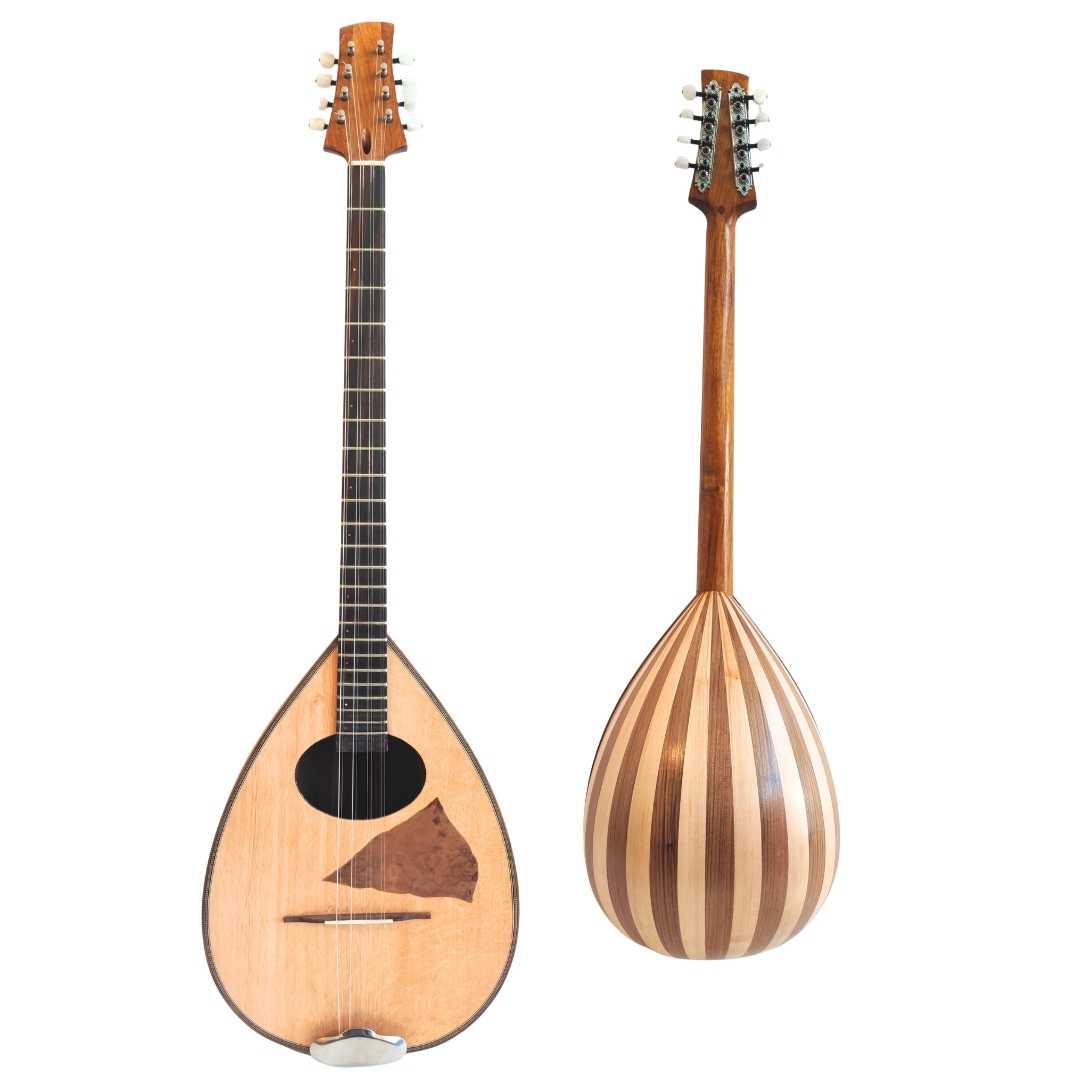
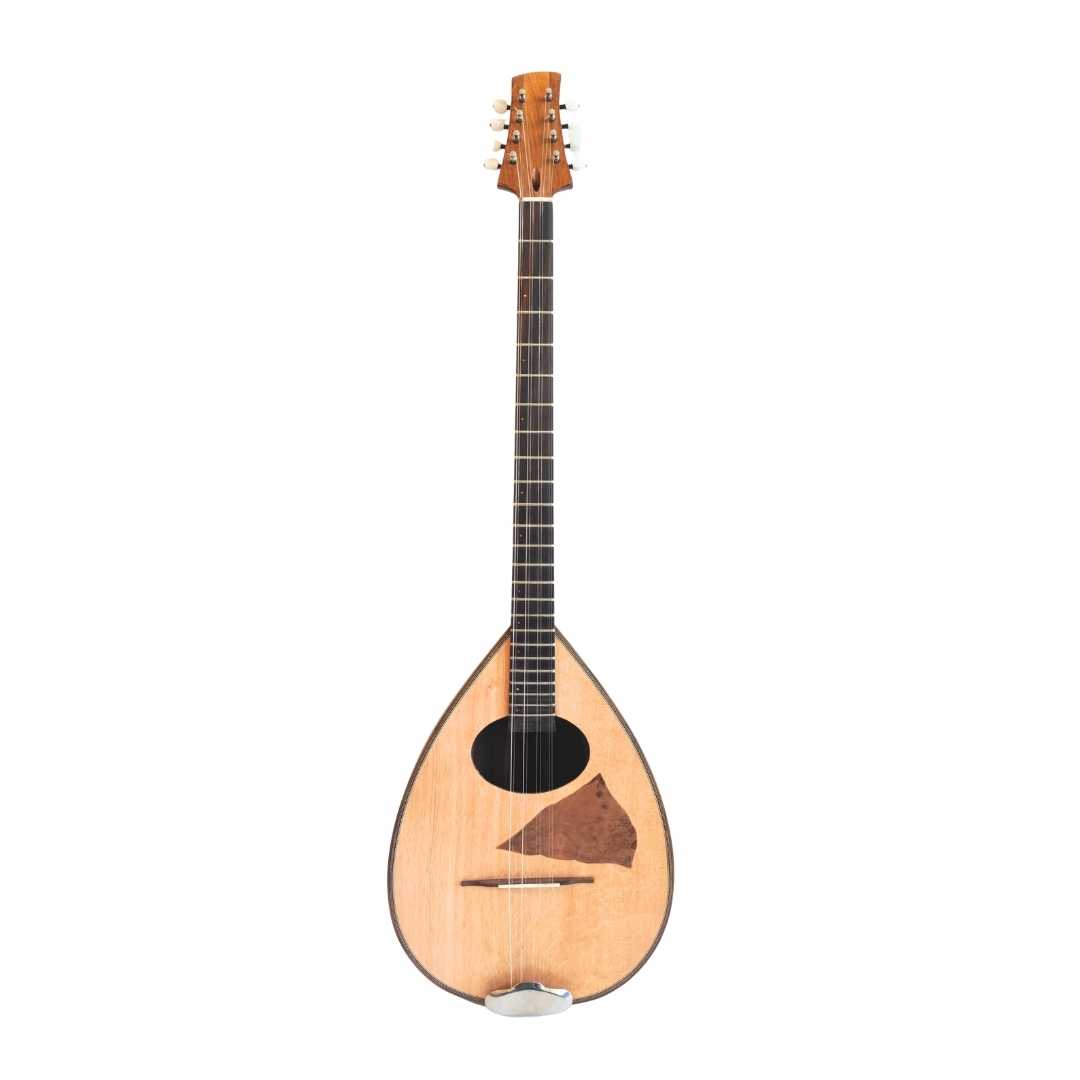
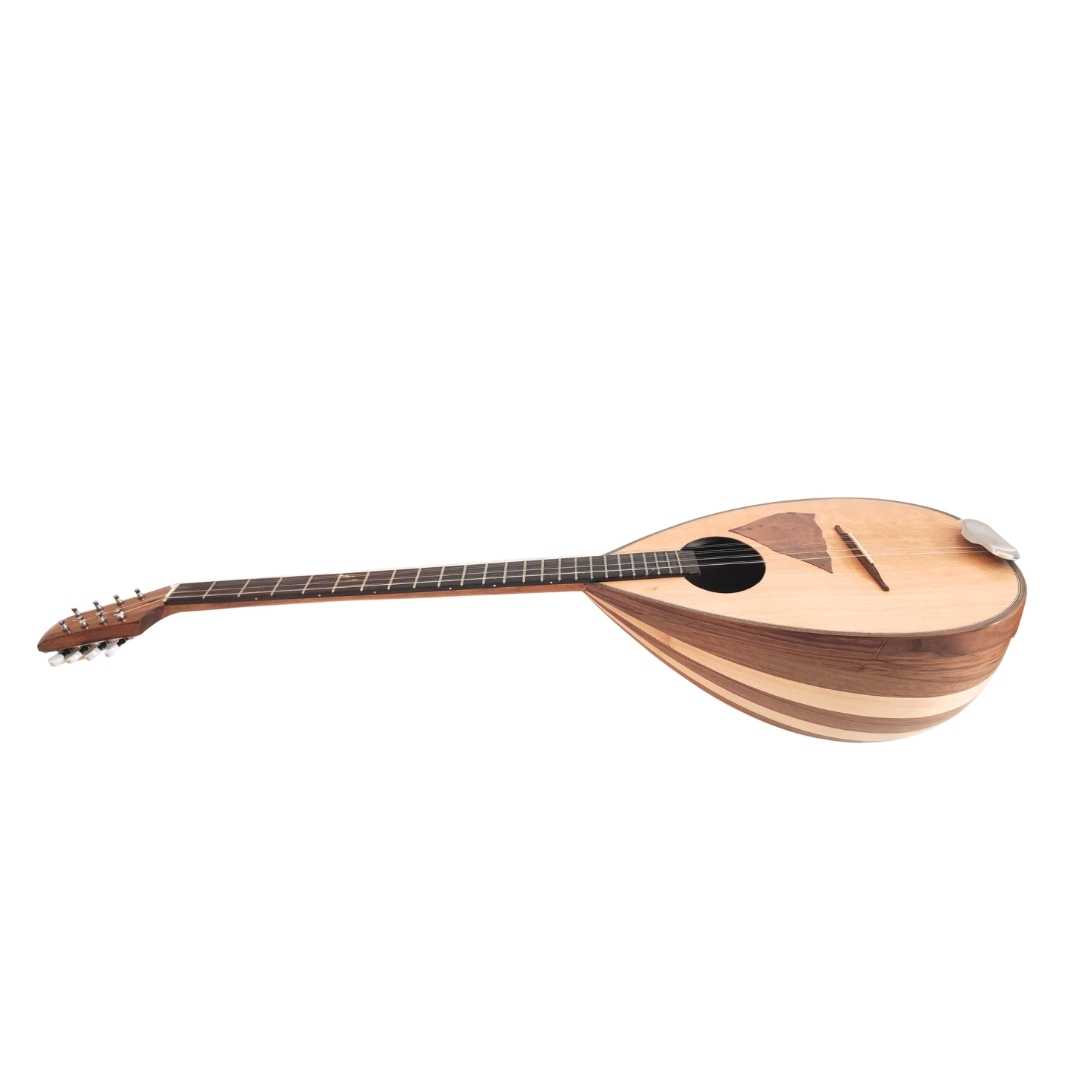
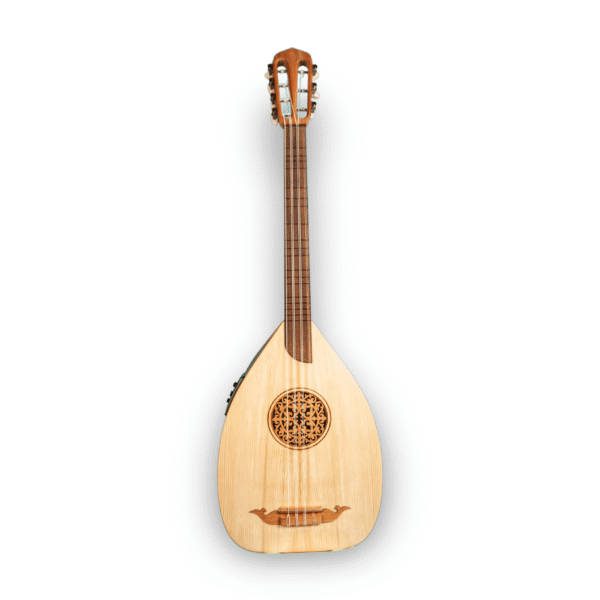
The Greek bouzouki in its tetrachordo form is a long-necked plectrum lute at the heart of rebetiko, laïko, and contemporary Greek music. This four-course, eight-string model is built around the modern C–F–A–D voicing, pairing a deep, sustained low end with the bright, ringing tremolo that gives the bouzouki its unmistakable melodic voice.
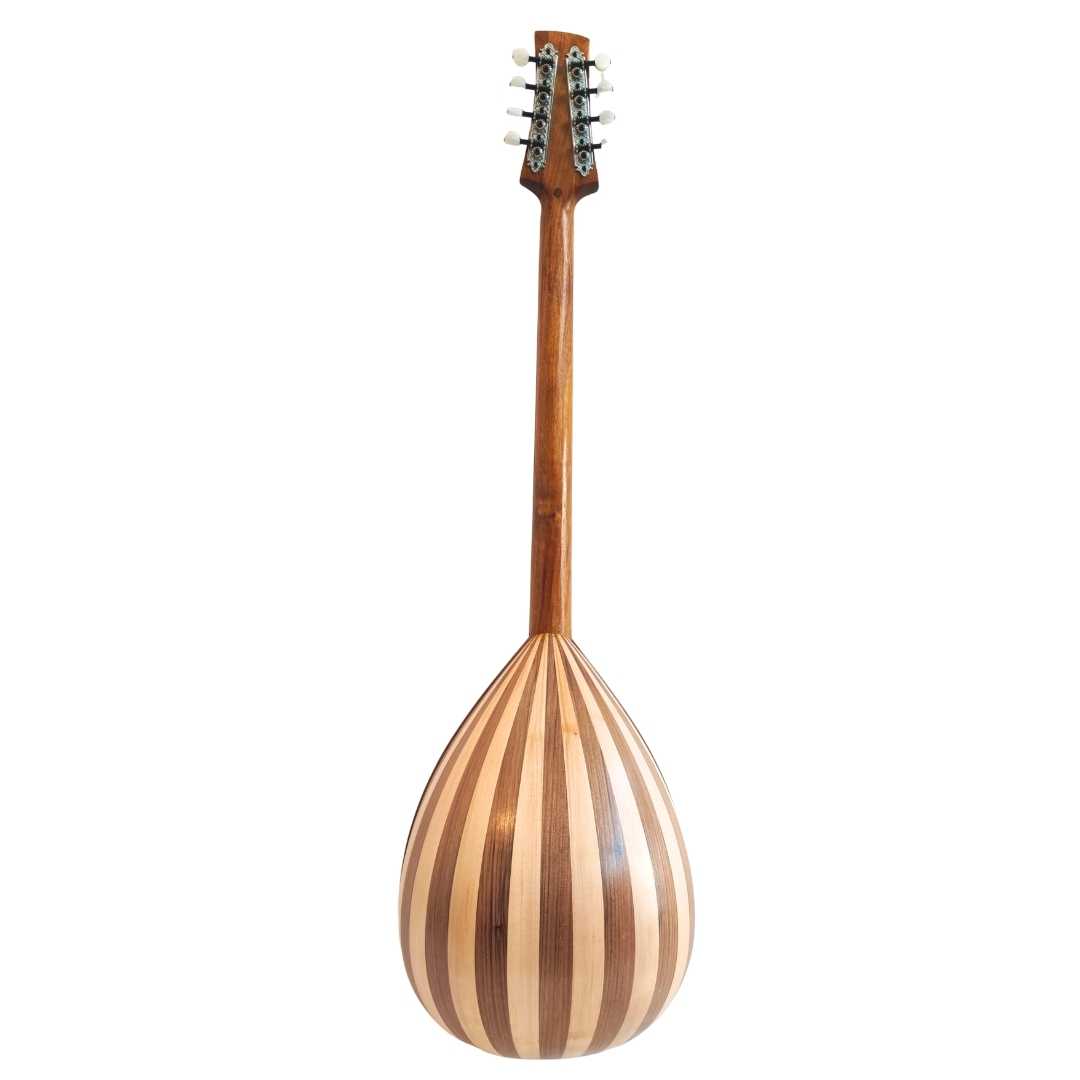
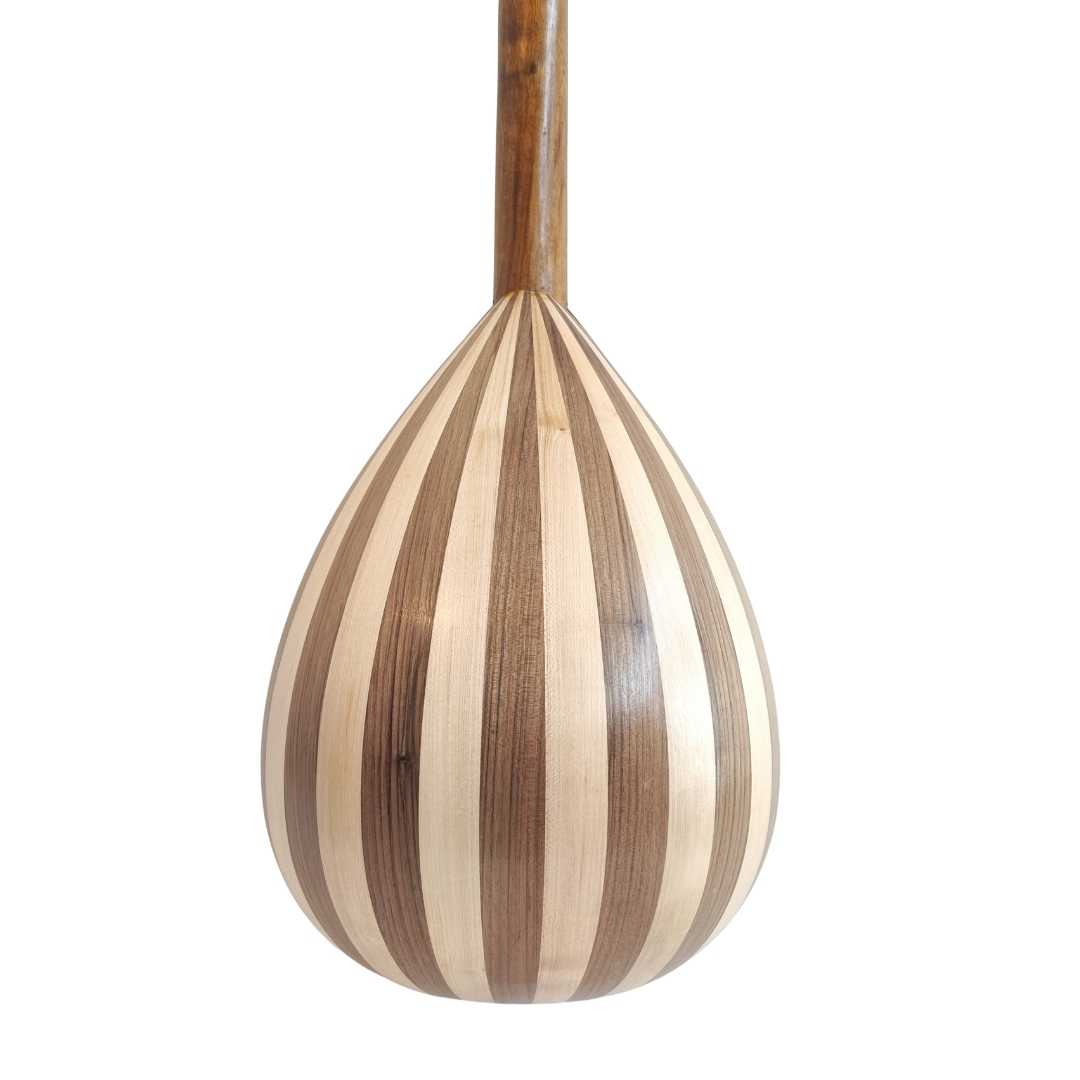
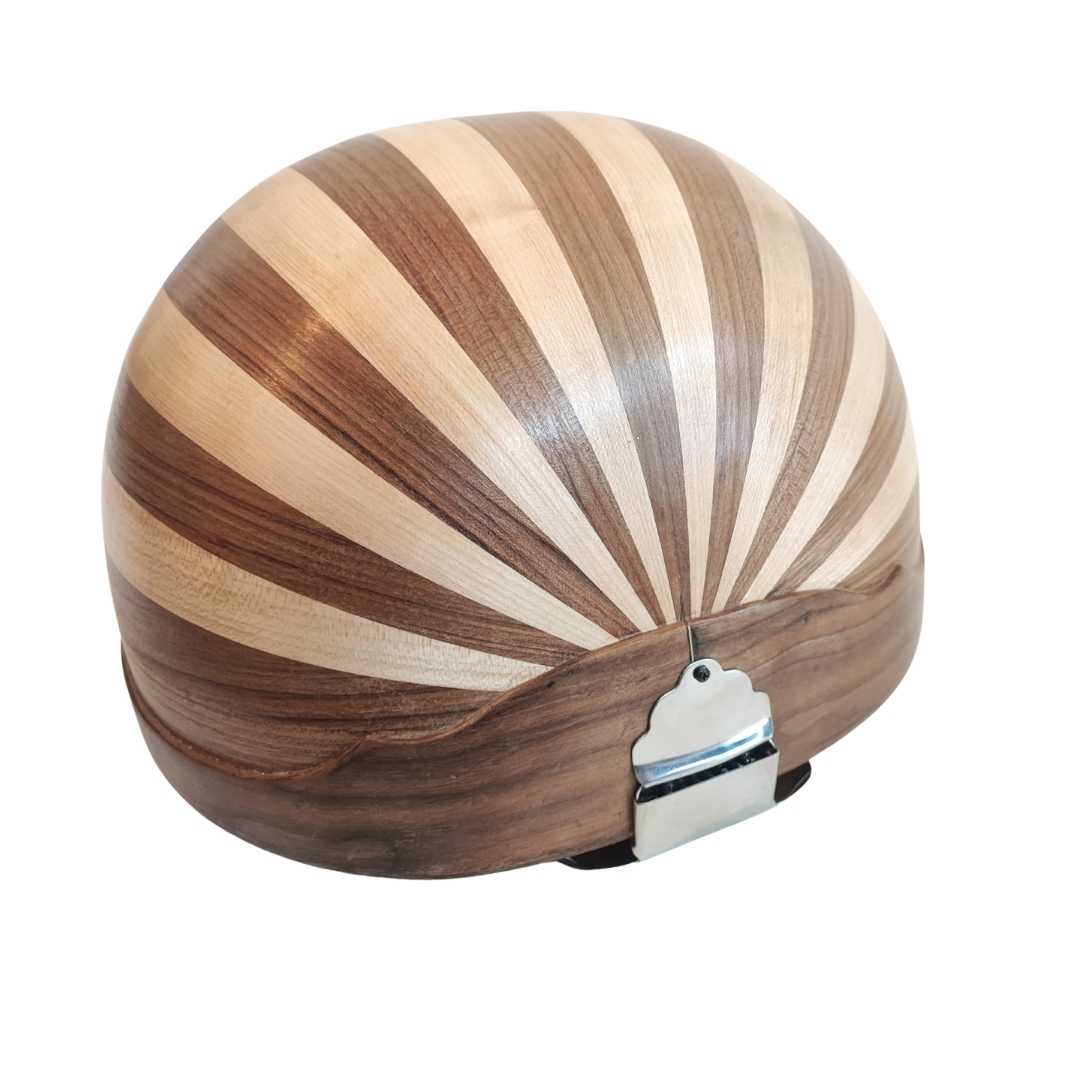
The staved, pear-shaped bowl is built from mahogany and walnut. Mahogany gives a warm, even fundamental with strong sustain, while walnut adds depth and a darker colour to the lower courses, producing the full, resonant body that drives both melodic runs and chordal accompaniment. The bowl is assembled by hand, so each instrument carries small natural variations rather than factory uniformity.
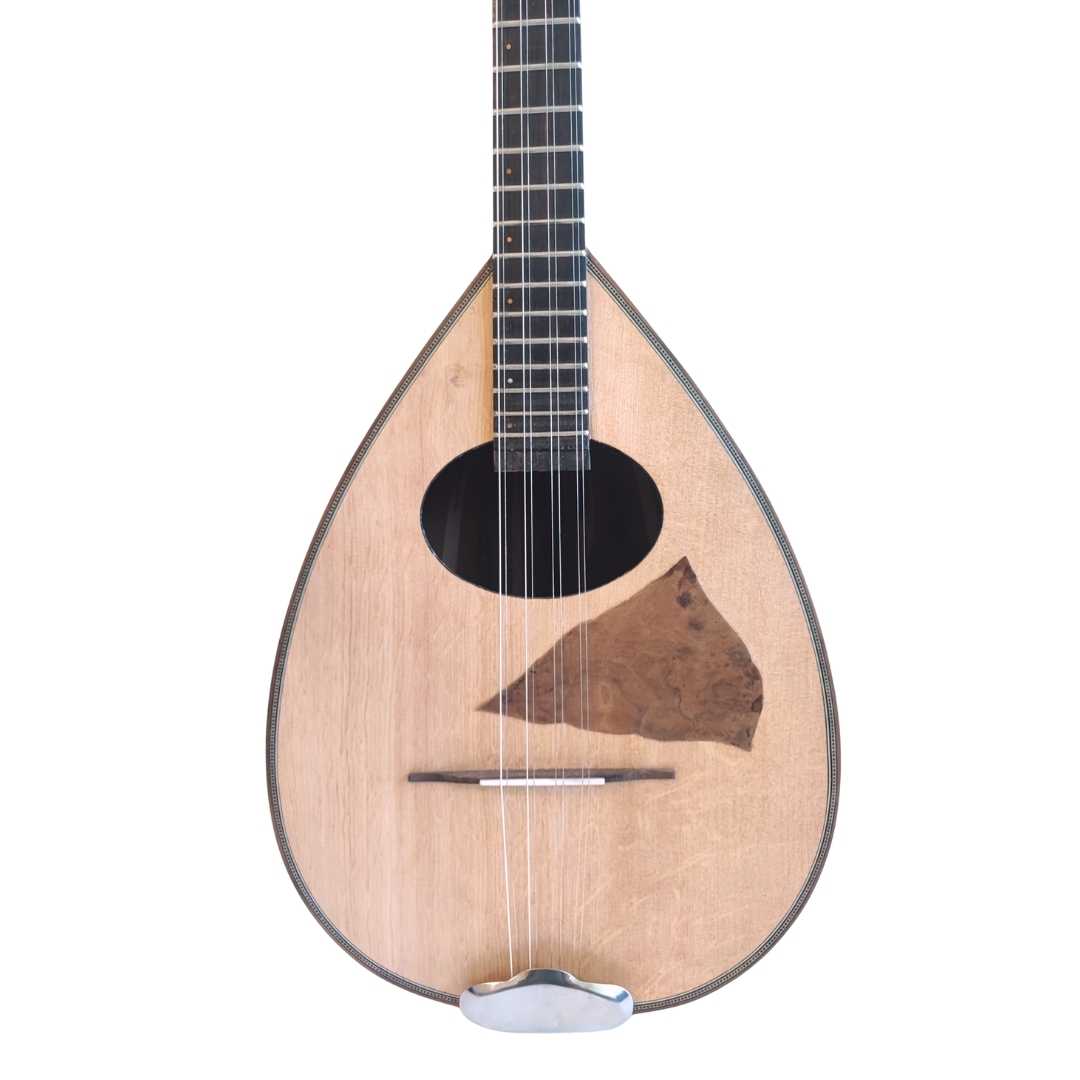
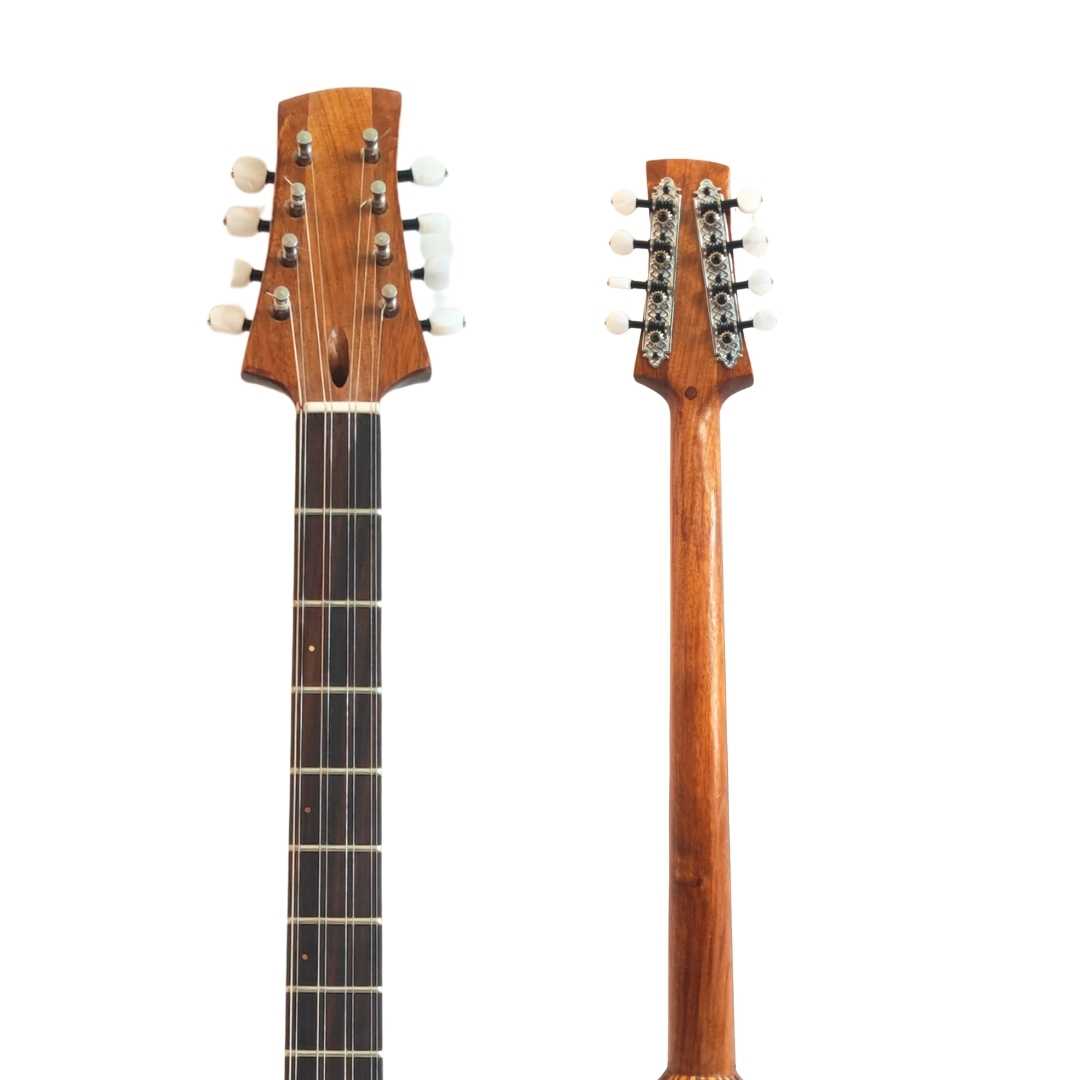
The soundboard is solid spruce, a tonewood chosen for clarity and projection — it lets fast tremolo passages cut cleanly through an ensemble. The long mahogany neck carries an ebony fingerboard with fixed frets for precise equal-tempered intonation across the instrument’s wide range, and the ebony surface stays smooth and stable under heavy plectrum work.
Specifications
| Type | Greek tetrachordo bouzouki (4-course) |
| Bowl / Back | Mahogany & Walnut |
| Soundboard | Solid Spruce |
| Neck | Mahogany |
| Fingerboard | Ebony |
| Strings | 8 (four double courses) |
| Tuning | C–F–A–D |
| Scale length | 65 cm |
| Total length | 95.5 cm |
| Weight | 1.2 kg |
This bouzouki suits intermediate and advancing players who want a serious instrument for Greek repertoire, and its forgiving response also makes it approachable for committed beginners moving beyond their first instrument. The four-course C–F–A–D layout is the modern standard, offering a wider harmonic range than the older three-course model — well suited to players who want both traditional and contemporary repertoire on one instrument.
The tetrachordo bouzouki sits at the centre of rebetiko and laïko song, as well as contemporary Greek classical and fusion work. Where the three-course bouzouki (tuned D–A–D) carries the classic early rebetiko sound, the four-course C–F–A–D instrument adds range for modern melodic playing. For an amplified three-course option, see our electro-acoustic Greek bouzouki, or browse the full Greek bouzouki collection.
To keep the instrument in good condition, store it away from direct heat and sudden humidity changes, loosen the strings slightly during long storage, and wipe the soundboard and strings after playing. Check the tuning machines periodically, as the eight strings hold considerable combined tension.
Tune Your Bouzouki. Setting up your C–F–A–D courses? 🎛 Open the Tapadum Tuner for a quick, accurate reference.
Every bouzouki is inspected and set up before it ships. Our strings curator, Sertan Sarioglu, checks each instrument for tuning stability, neck geometry, and tonal projection, so it arrives ready to play. Worldwide shipping & 15-day return.

Reviews
There are no reviews yet.