
Meet the Makers: The Hands Behind Tapadum’s Instruments
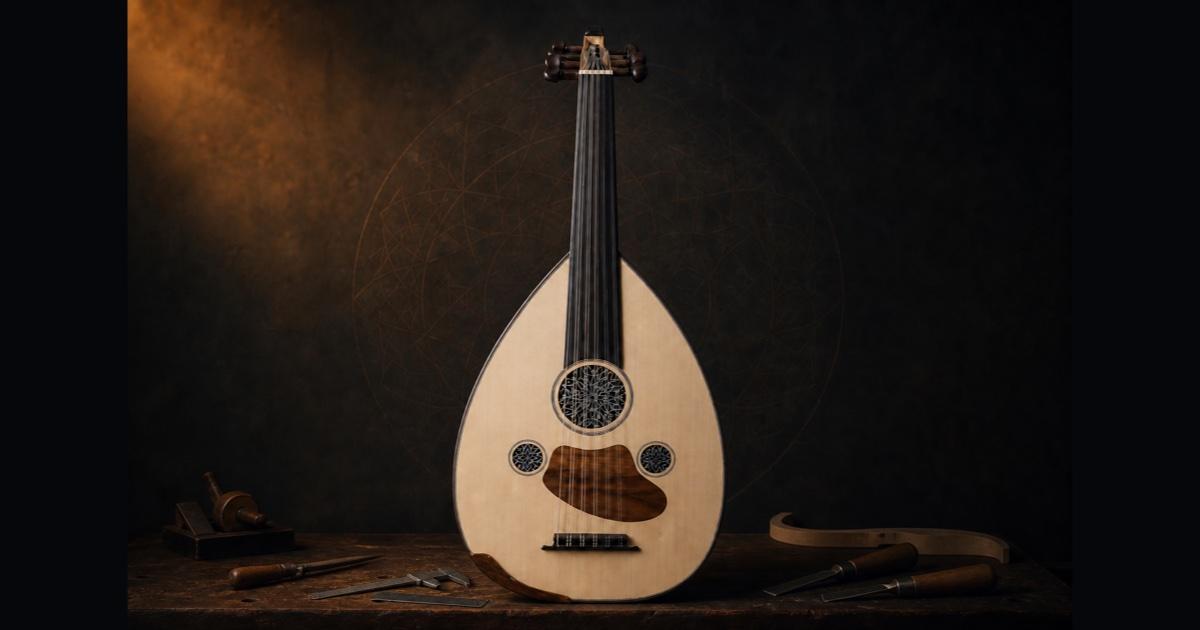
In brief: Tapadum instrument makers include oud and qanun luthiers, woodwind specialists, frame-drum builders, santur innovators and master potters. Some work in our Izmir ateliers; others are independent makers whose instruments we know and carry. What connects them is not a single house style, but close knowledge of the music each instrument must serve.
The hands behind Tapadum’s instruments are spread across workshops in Izmir, Istanbul, Menemen, Tehran, Isfahan, Bushehr and beyond. They work with different materials and musical traditions: spruce and mulberry, walnut and cane, clay and natural skin. Their methods differ because an oud, a ney anban and a tombak ask different questions of the maker.
Tapadum is not one anonymous factory. Our collection brings together instruments made in our own ateliers and instruments selected from independent craftspeople. This guide introduces some of those people, the specialisms they represent and the practical choices their work makes possible for musicians. You can also explore the complete Tapadum luthier directory.
What “handmade” means in a musical instrument
Handmade does not mean that every tool is old or every instrument is identical to a historical model. It means that skilled decisions remain in human hands: how a soundboard is graduated, where a neck meets a body, how a clay shell is shaped, whether a reed responds freely, and when an instrument is ready to leave the bench.
Those decisions are musical as much as visual. A clean rosette or polished bowl matters, but it cannot replace balance, response and a setup suited to the player. This is why we identify makers whenever reliable attribution is available. A maker’s name gives the musician a clearer path to the workshop, the instrument family and the experience behind a particular build.
“An instrument is not merely a tool — it is a companion to the artist’s emotions, a friend to stand beside them for years.”
— Ahmet Topan, oud maker in Izmir
Izmir’s oud-making lineages
Izmir is one of the strongest threads running through our string collection. The city’s oud makers do not all build the same instrument. Their work spans Turkish and Arabic setups, acoustic and electro-acoustic designs, and instruments intended for different stages of a player’s development.
Feramis Aktas: the Turkish oud as a living lineage
Feramis Aktas specialises in traditional Turkish ouds. His profile traces his working methods through master Sinai Ozkan and records more than four decades at the bench. That continuity matters because the oud is not defined by decoration alone: the relationship between bowl, soundboard, string length and setup determines how quickly the instrument speaks and how it carries Turkish maqam phrasing.
Mustafa Gezerdag: serious instruments for the beginning
Mustafa Gezerdag builds Turkish, Arabic, silent and electro-acoustic ouds in Izmir. His workshop is especially important to a principle we share: a beginner’s instrument should not be treated as disposable. As he puts it, “a beginner’s instrument is not a lesser instrument — it is the first one that decides whether the music continues.”
That idea also guides our complete oud guide: choose by musical tradition, setup and playing needs, not by ornament alone.
Necati and Ozgur Gurbuz: knowledge carried forward
Necati Gurbuz has built ouds, classical kemence and qanun in Izmir since the early 1980s. His workshop represents a broad form of lutherie in which knowledge moves between related instrument families. His stated approach is open rather than secretive: “If I hide the secret, the craft cannot grow.”
That continuity can be seen in the work of his son, Ozgur Gurbuz, a second-generation luthier and conservatory-trained instrument maker who designs qanuns in Kemeralti. Their profiles show that tradition is not a frozen recipe. It survives when techniques are taught, questioned and adapted by people who also understand the repertoire.
Clay shaped for rhythm: Ahmet Tashomcu
A clay darbuka begins very differently from a wooden lute. Before skin, tuning system or decoration, there is a vessel that must be centred, shaped, dried and fired without losing the proportions needed for tone and projection.
Ahmet Tashomcu is a master potter from Menemen, Izmir, whose clay work forms the shells of Tapadum darbukas and udu drums. His craft brings ceramic knowledge directly into musical instrument making. The curve of a darbuka’s body affects how comfortably it sits in the hands; the opening, wall and overall volume help shape the balance between the high tek and the low dum.
“Clay is like a good person — it endures the fire, withstands the water, and gives back to life what it takes from it.”
— Ahmet Tashomcu
For players comparing shell families, our complete darbuka buying guide explains the practical differences between clay, aluminium and copper.
Woodwinds: when the maker gives breath to wood
In a woodwind, small changes can transform the response. Bore, finger-hole placement, wall thickness and reed fit affect tuning, resistance and tone. The maker must understand not only the object, but also how a musician directs air through it.
Ali Riza Acar is an Istanbul-based specialist in Turkish and Anatolian woodwinds, including kaval, mey, duduk, zurna and ney. Working across several related instruments gives him a wide view of how bore and blowing technique interact. His profile describes the craft simply: “A master who breathes life into wood.”
These are not interchangeable flutes. A kaval asks for a different embouchure and airflow from a reed-driven zurna; a mey has its own resistance and tonal centre. Readers can meet these instruments individually in our guides to the kaval, mey and zurna.
Persian workshops: many specialisms, not one generic style
“Persian instrument maker” is too broad to describe a single craft. A santur maker works with bridges, courses and a tensioned soundboard. A tombak maker shapes a shell whose wall and opening must respond to fingers, palms and rolls. A setar maker balances a delicate bowl, a thin soundboard and movable frets. Each instrument has its own workshop language.
Mousavi: shaping the tombak from walnut
Mousavi is a Tehran-based tombak maker who hand-shapes walnut shells. In the finished instrument, the wood is not a decorative casing: it is the resonant body. The maker’s control of wall thickness, contour and opening helps determine the drum’s clarity, bass response and range of articulations.
Behrad & Zolani: tradition meeting mechanical invention
Behrad & Zolani bring together santur musicianship and mechanical invention. Their chromatic santur system adds movable sharping levers so that the player can change pitch organisation without relying only on the traditional process of repositioning bridges. It is an example of living craft: the identity of the santur is retained while a practical musical limitation is addressed.
Behbahani: a Persian Gulf instrument rooted in place
In Bushehr, Behbahani makes the ney anban, the droneless, double-chantered bagpipe of Iran’s Persian Gulf coast. The build joins a hand-stitched goatskin bag to cane-reed twin pipes. Its construction cannot be separated from the Bandari tradition it serves. Our ney anban profile explores that relationship between instrument, coast and repertoire.
Inside the Tapadum workshops
Tapadum’s own production work is centred in two ateliers in Izmir: one for string instruments and one for percussion. The Tapadum Strings & Percussion Workshop profile represents this shared production heart. Our showroom is in Brisighella, Italy; it is where instruments can be seen and played, not where the Izmir workshop work is performed.
Sertan Sarioglu connects several sides of this work. He is a musician and luthier who builds lavta, guitars and frame drums, designs his own Modern Mediterranean Lavta, and leads Tapadum’s string-instrument department. His maker’s principle is deliberately simple: make the best instrument possible now, then make the next one better.
The atelier also supports Tapadum Customs. Custom work is not an unlimited promise to reproduce every historical instrument. It is a conversation within the instrument families our workshops genuinely know and build.
How maker knowledge helps you choose
A maker profile is not a prestige label added after the instrument is finished. It gives useful context before you buy:
- Specialism: Does the workshop regularly build this exact instrument family?
- Musical tradition: Is the setup intended for the repertoire and tuning you plan to play?
- Construction choices: Are the woods, skin, reeds or mechanical parts appropriate for the response you need?
- Continuity: Is there a clear body of work, workshop lineage or documented practice behind the instrument?
- Support: Can the instrument be explained, adjusted and cared for after it leaves the bench?
Not every instrument in our collection is made in a Tapadum atelier, and not every independent maker has the same amount of public documentation. We state attribution where it is known and avoid inventing a personal story where it is not. That distinction is part of responsible curation.
To continue, browse the full luthier and maker collection, open the profiles connected to the instrument you are considering, and compare their specialisms before comparing decoration or price.
Frequently asked questions
Who makes Tapadum instruments?
Tapadum instruments come from two sources: our own string and percussion ateliers in Izmir, and independent makers whose instruments we select and carry. The maker is identified on the relevant profile or product page whenever reliable attribution is available.
Are all Tapadum instruments handmade?
Many instruments in the collection are handmade or workshop-made, but the exact production method differs by instrument and maker. We do not use “handmade” as a blanket claim when a product’s construction has not been documented.
Why does the maker matter when choosing an instrument?
The maker’s specialism helps explain the instrument’s setup, response and intended musical tradition. Two instruments with similar decoration can feel and sound very different because of decisions made in the body, soundboard, bore, skin or final setup.
Can I order a custom instrument from Tapadum?
Tapadum Customs accepts commissions within the instrument families our workshops genuinely build. A custom request begins with the musical need, dimensions, materials and practical limits rather than decoration alone.
Where can I learn more about an individual maker?
Visit the Tapadum luthier directory. Each available profile records the maker’s location, specialism and related instruments; some also include workshop history and first-person quotations.