Handpan Music: Players and Recordings Worth Hearing Before You Buy
What you’ll learn: where handpan music came from, three players whose recordings shaped how the instrument is heard today, which albums to start with, and what to listen for in those recordings before you choose a handpan of your own.
Handpan music is easiest to understand by ear: a few hours with the right recordings will teach you more about scales, sustain and touch than any spec sheet. The handpan (also written hand pan) is a steel instrument played with the hands, built around a central low note and a ring of tuned note fields. Its modern sound was shaped by a small group of players who put it on concert stages and online videos in the 2000s and 2010s. Manu Delago, the duo Hang Massive and Daniel Waples are three of the clearest reference points.
This guide introduces each of them, suggests where to start in their catalogues, and then turns that listening into practical questions you can bring to your first handpan.
Where Handpan Music Began
The handpan family grew out of one instrument. In 2000, Felix Rohner and Sabina Schärer of PANArt in Bern, Switzerland developed the Hang, drawing on the Caribbean steelpan. It was presented to the public at the Frankfurt trade fair in 2001. The name is a Bernese German word meaning both “hand” and “hillside”. PANArt announced in December 2013 that the Hang would no longer be made.
Interest in the Hang led other makers to build related instruments. According to Wikipedia’s handpan article, the word “handpan” first appeared in 2007 on the website of the American steelpan producer Pantheon Steel, as a general name for these new instruments. Many of the early recordings below were made on a Hang, but they define the sound most people now search for as handpan music.
A note on names: “Hang” is PANArt’s own name for the instrument it built in Bern. “Handpan” is the general name for the steel instruments that followed from many makers. We use “Hang” only when a player’s recordings were made on that specific instrument.
Manu Delago — Handpan Music on the Concert Stage
Manu Delago is an Austrian percussionist and composer, born in Innsbruck in 1984. He took up the Hang in 2003 and later moved to London to study jazz drums at the Guildhall School of Music & Drama. His career shows how far the instrument can travel: from solo pieces to orchestras and arena tours.
Delago played percussion and Hang in Björk’s live shows, from the Biophilia tour through to the Cornucopia performances. He also composed, performed and engineered for Anoushka Shankar’s 2016 album Land of Gold and joined her world tour. Their live album Between Us…, recorded with the Metropole Orkest under Jules Buckley, was nominated for Best Global Music Album at the 2023 Grammy Awards.
Where to start: Silver Kobalt (2015); Parasol Peak (2018), released as both an album and a film; Circadian (2019) and its 2020 live version; and his most recent album, Snow from Yesterday (2024).
Hang Massive — The Video That Spread the Sound
Hang Massive is the duo of Danny Cudd and Markus “Offbeat” Johansson. They met in 2010 and formed the group soon after. In 2011 they posted their piece “Once Again” on YouTube; by 2020 it had passed 49 million views.
A duo recording is a good place to hear how two instruments share the work. Listen for which part holds the low notes and which carries the melody, and for how the central low note anchors each phrase. Hang Massive is usually described as a world and ambient act, and that calm, spacious sound is one reason the handpan is so often linked with sound therapy and meditation.
Where to start: “Once Again” first, then the studio album Distant Light (2016). Their earlier albums are Beats for Your Feet (2012) and As It Is (2013), followed by Luminous Emptiness (2018).
Daniel Waples — A Solo Voice Built Online
Daniel Waples is an English handpan player, born in Essex in 1984. He has performed under the name Hang in Balance since 2011. By the late 2010s, his YouTube videos had reportedly passed 40 million views. Where Delago often works with large ensembles and Hang Massive with two instruments, Waples is best known as a solo performer.
Solo handpan pieces are the closest thing to hearing the instrument in a quiet room. You can follow how one scale is explored over a whole piece, which is the experience you will have when you play alone at home.
Where to start: Lisn (2014), released as Daniel Waples & Friends; Banyan (2014), recorded with James Winstanley as The Hang Drum Project; and Sunset in India (2015).
How to Listen to Handpan Music Before You Buy
Listening with a few questions in mind turns these albums into a buying tool. Four things are worth paying attention to.
- The ding. Notice the central low note and how often a player returns to it. Its depth sets the floor of every piece.
- The scale’s mood. A minor scale such as Kurd sounds balanced and calm; Hijaz (Hicaz) sounds more dramatic and Middle Eastern. If a track moves you, try to name its character. Our guide to handpan scales and tuning explains the common families.
- Sustain and overtones. Listen to how long a note rings and whether it blooms or fades quickly. Materials matter here: nitrided and stainless-steel instruments in the same scale can sound noticeably different.
- Solo or layered. Ensemble and studio recordings add other instruments and space around the handpan. Solo pieces tell you more about the instrument itself.
If you already have an instrument, or want to understand what you are hearing, the Tapadum Handpan Tuner shows the pitch and overtones of each note in your browser.
From Listening to Playing
Most of the handpans in our collection are tuned to D Kurd, the most common handpan scale. We also carry D Hicaz models for players drawn to a more modal sound, and note counts in our range run from 9 to 15. Gurkan, our percussion curator, tests each model for tone and playability before it reaches the shop, listening for the same qualities described above.
For a first instrument, our guide to choosing a beginner handpan explains why a nine-note D Kurd is the usual starting point. The complete handpan guide covers sound, scales and sizes in more depth. You can browse every model in our handpan collection, and the instruments we carry can be tried by appointment at our showroom in Brisighella, Italy. Once you own one, our handpan care guide will help keep it sounding as it did on day one.
Frequently Asked Questions
Who are the most influential handpan players?
Three of the most widely heard are Manu Delago, the Austrian percussionist who played in Björk’s live shows; the duo Hang Massive, whose 2011 video “Once Again” passed 49 million views by 2020; and Daniel Waples, the English solo player known as Hang in Balance. Their recordings are a natural first stop for anyone exploring handpan music.
Where should I start listening to handpan music?
Start with Hang Massive’s “Once Again” for the classic duo sound, then Daniel Waples’ Sunset in India (2015) for a solo player’s approach. Manu Delago’s Silver Kobalt (2015) or Circadian (2019) shows how the handpan works inside a larger band.
Is a Hang the same as a handpan?
No. The Hang is the specific instrument developed by PANArt in Bern in 2000, and it is no longer made. “Handpan” (or hand pan) is the general name, first used in 2007, for the steel instruments that many other makers built afterwards. Many famous early recordings were made on a Hang.
Can listening to recordings help me choose a handpan scale?
Yes. Recordings let you hear the mood of a scale before you commit to one. A calm, balanced minor sound usually points to D Kurd, the most common beginner scale; a more dramatic, Middle Eastern colour points to Hijaz (Hicaz). Try to hear an instrument in person or in a solo recording before buying.
Why do handpans sound different on different recordings?
The scale, the steel and its finish, the player’s touch and the recording itself all change the sound. Nitrided and stainless-steel instruments in the same scale can differ in sustain and timbre, and studio recordings often add space or other instruments around the handpan.
Handpans to Explore
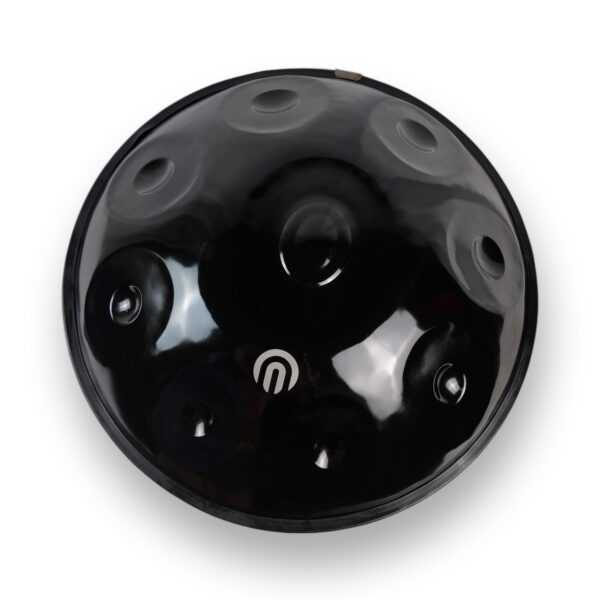
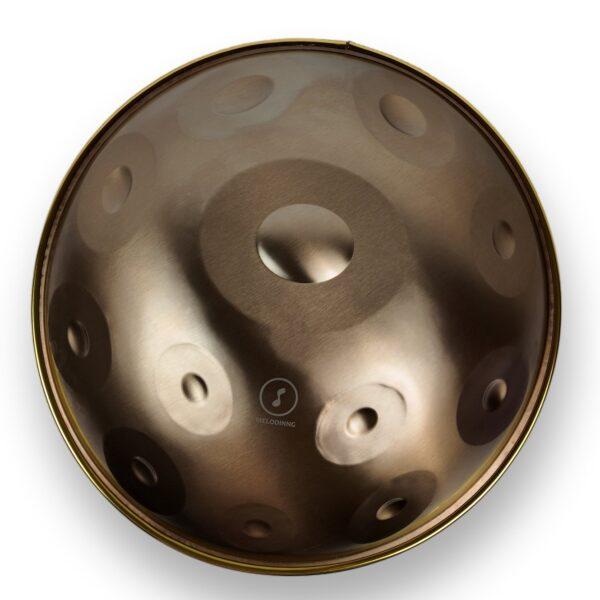
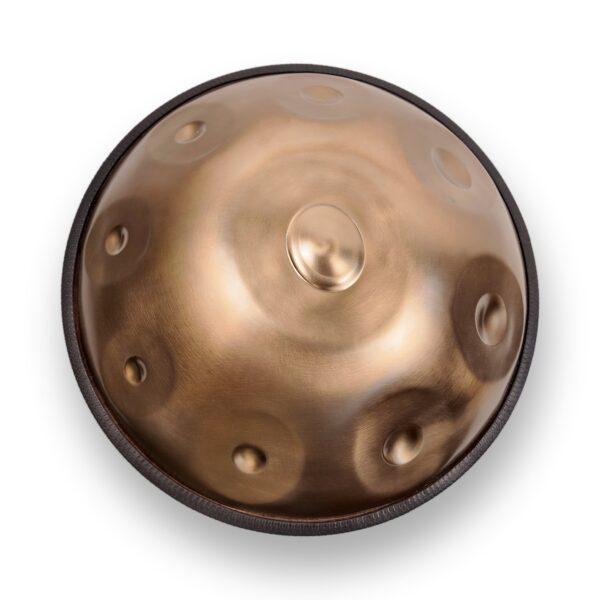
Four instruments from our collection that cover the two scales and the range of note counts discussed above: