
The Handpan: A Complete Guide to Scales, Sound, and Choosing Your First One (2026)
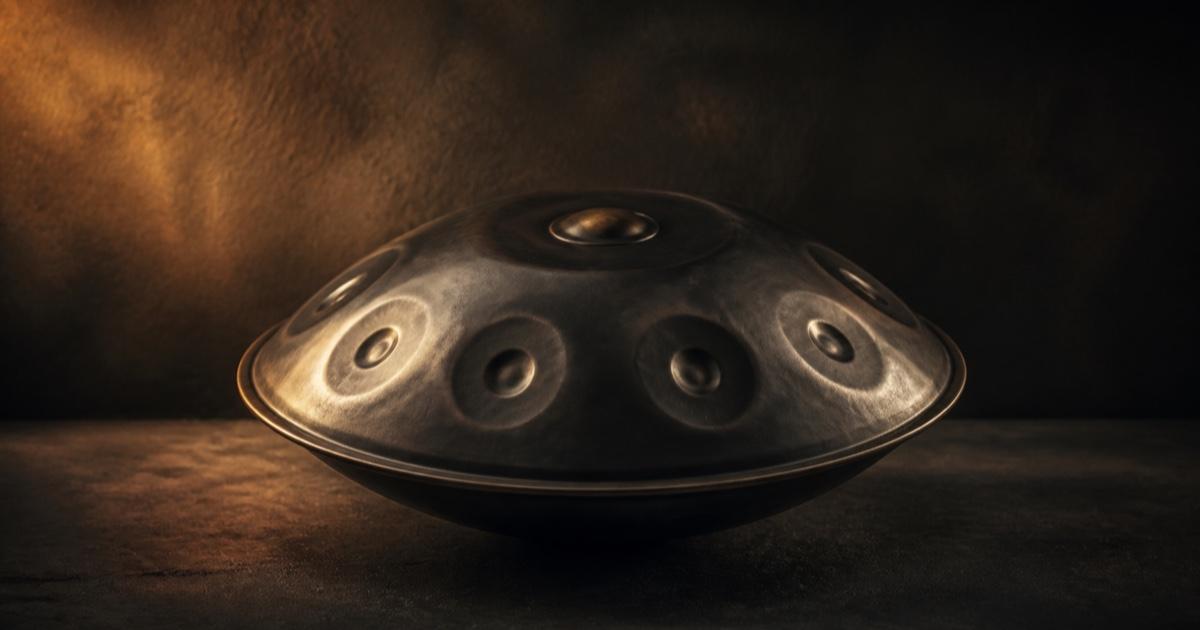
A handpan is a melodic steel percussion instrument played with the hands. Its central low note, usually called the ding, is surrounded by tuned note fields arranged as one fixed scale. That layout makes the instrument unusually approachable: you do not need to choose notes from the full chromatic keyboard, yet touch, timing and tone control still leave years of room for musical growth.
This guide explains how a handpan produces sound, how D Kurd and Hicaz differ, what note count and steel mean in practice, and how to choose an instrument that will remain satisfying after the first impression. If you already know you want a first instrument and prefer a shorter decision guide, begin with our handpan guide for beginners.
What Is a Handpan?
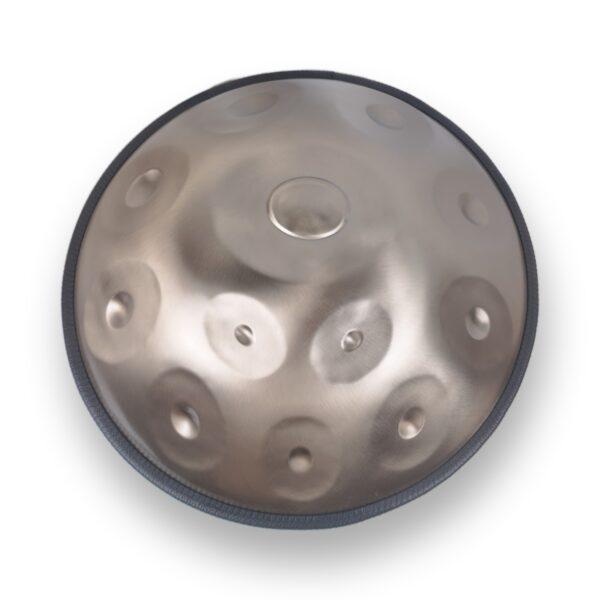
A handpan is built from two shaped steel shells joined at the rim. The upper shell contains the central ding and the surrounding note fields. The lower shell normally has an opening called the gu, which interacts with the enclosed air volume and contributes to the instrument’s low cavity resonance.
Each tuned field is more complex than a single metal note. Acoustic analysis of handpan note fields describes principal components close to a 1:2:3 frequency relationship: the fundamental, its octave, and a compound fifth. The shell, neighbouring fields and air cavity also interact, so the sound after one touch is richer than those three components alone. For readers who want the technical detail, the University of Sheffield thesis Analysis and Synthesis of the Handpan Sound examines these modes and how striking position changes timbre.
This is why visual appearance cannot prove quality. A beautiful finish may catch the eye, but a good instrument also needs a stable fundamental, controlled overtones, clean note separation and an even response across the playing surface.
From a Swiss Original to Today’s Handpans
The modern story begins in Bern in 2000, when Felix Rohner and Sabina Schärer created the first instrument of this kind. The design grew from their experience with steelpan making and from experiments with resonant instruments. Other makers later developed related instruments, and handpan became the broad name used for this expanding family.
That first Swiss instrument and today’s handpans are related but not the same thing: handpan describes the wider family that followed. A detailed academic history is available in City, University of London’s doctoral research, a study of the history and global spread of the handpan.
How Handpan Sound Is Built
Handpan making combines shell forming, repeated hammering, heat or surface treatment, and many rounds of tuning. The maker adjusts tiny areas of tension and curvature until each field responds at the intended pitch and its important partials align. Because changing one area can influence another, tuning is not a simple one-note-at-a-time process.
When our percussion team evaluates a handpan, we do not begin with volume. We listen for a clean response under a light touch, then compare the note fields for balance. We also listen for unwanted buzzing, unstable beating, excessive cross-talk and a note that needs much more force than its neighbours. Finally, we check the shell, rim and case protection before the instrument is prepared for dispatch.
Workshop perspective: a responsive handpan should reward control, not force. If one field only speaks when struck hard, the player will compensate with tension and the whole instrument will feel less musical.
Handpan Scales: D Kurd, Hicaz and the Real Choice
A handpan’s notes are fixed when the instrument is made. You can maintain or professionally retune an existing setup, but you cannot casually change from one scale to another as you would change a guitar tuning. Scale choice is therefore the first decision.
D Kurd
D Kurd is a common starting scale because its minor colour is cohesive and forgiving during improvisation. On a typical 9-note layout, the central D ding is joined by eight notes that support simple melodies, drones and repeating rhythmic patterns. It works well for solo practice, ambient playing and sessions where predictable harmonic relationships matter.
Hicaz
Hicaz introduces the characteristic augmented-second colour associated with a wide family of Turkish, Arabic and neighbouring modal traditions. It feels more directional and dramatic than D Kurd. Players already drawn to that intervallic colour may prefer it immediately; others may find D Kurd easier for an open-ended first exploration.
Neither scale is objectively better. Listen to complete demonstrations through headphones, notice which tonal centre you want to return to, and think about the musicians or instruments you expect to play with. Our guide to handpan tuning and scales goes deeper into scale families and how a tuner shapes each field.
How Many Notes Should Your First Handpan Have?
A 9-note handpan—one ding plus eight surrounding fields—is the standard starting format in our collection. It provides enough melodic range for real phrases without crowding the shell or overwhelming a new player. It is also easier to learn spatially: your hands begin to remember where each note lives.
Instruments with 10, 12 or more notes extend the range, sometimes by placing additional fields on the lower shell. Those notes can be valuable for composition and performance, but more is not automatically better. Extra fields make the layout denser, can demand more precise hand placement and usually increase cost.
Choose the smallest layout that contains the musical range you genuinely need. A balanced 9-note instrument is a stronger first purchase than a crowded instrument selected only because its specification lists more notes.
Nitrided or Stainless Steel?
| Material | Typical playing character | Practical consideration |
|---|---|---|
| Nitrided steel | Controlled sustain, clear attack and good separation for rhythmic playing | Needs regular moisture control and surface care |
| Stainless steel | Longer sustain and a more blended, resonant response | More corrosion-resistant, but still needs drying and careful storage |
| Coated or coloured finish | Depends on the underlying steel and treatment | Follow the care instructions for that exact surface; colour alone does not identify the material |
These are useful tendencies, not guarantees. Shell thickness, geometry, treatment and the tuner’s decisions also affect sustain and response. Product names such as “titanium” may describe a surface treatment or finish rather than a solid titanium shell, so read the individual construction details instead of judging by colour.
If humidity, fingerprints and storage are your main concern, see our complete handpan and steel tongue drum care guide.
How a Handpan Is Played
Most players sit with the instrument resting securely on the lap or use a stable stand. The hands alternate between the ding, surrounding fields, shoulders and carefully controlled percussive sounds. A quick, relaxed contact lets a note ring; pressing or leaving the finger on the surface shortens it.
Handpans are designed for controlled hand playing. Hard mallets and heavy strikes can stress a note field or disturb tuning. A beginner benefits more from learning three consistent touches—a light fingertip note, a thumb note and a simple muted stroke—than from trying to play loudly.
The fixed scale lowers the barrier to making a coherent phrase, but rhythm remains central. Start slowly, leave space between notes and listen to how the sustain overlaps. The goal is not to fill every beat.
Handpan or Steel Tongue Drum?
A handpan belongs to a family of hand-played steel instruments that developed after 2000. A steel tongue drum produces notes through cut tongues rather than hammered note fields. Tongue drums are often more compact, more tolerant of firmer playing and available at a lower entry cost, while handpans generally offer a wider range of touch, articulation and shell resonance.
If you are deciding between these families, see the steel tongue drum buyer’s guide.
Handpan in Meditation and Music Therapy
Handpans are widely used in meditation, yoga, sound baths and therapeutic music settings because one player can combine pulse, melody and sustained resonance without amplification. That use is real; medical promises are a different matter.
Handpan-specific clinical evidence is still limited. A recent qualitative study in The Arts in Psychotherapy explored how three music therapists experienced using the instrument in practice. It reports professional perceptions of accessibility, sensory engagement and non-verbal interaction, but it does not prove that a handpan treats a medical condition. The appropriate conclusion is modest: the instrument can be a flexible musical resource in qualified practice, while outcomes depend on the person, context and therapeutic method. See the study Music therapists’ lived experiences of using the Handpan in clinical practice.
For a more careful separation between musical experience and health claims, read our guide to handpan meditation and sound therapy.
How to Choose Your First Handpan
- Choose the scale before the finish. Listen to D Kurd and Hicaz through good headphones. The colour you want to hear repeatedly matters more than the shell colour.
- Start with a balanced note count. Nine notes suit most beginners; choose additional fields only when you can explain what musical range they add.
- Compare response at a light touch. Notes should not require sharply different force, and no field should sound dead beside its neighbours.
- Listen for stability. Excessive beating, buzzing or uncontrolled sympathetic noise can make an attractive instrument tiring to play.
- Match steel to your playing and environment. Nitrided steel favours definition; stainless often favours sustain and easier corrosion care.
- Plan transport protection. A fitted padded or hard case protects the rim and note fields. Check what the exact product includes rather than assuming every model has the same accessories.
- Buy from a seller who checks the sound. A handpan cannot be evaluated from photographs alone. Tuning, balance and response must be heard and played.
Red flag: avoid listings that describe only colour, diameter and note count but say nothing about scale, material, tuning or the person responsible for quality control.
Explore the Tapadum Handpan Collection
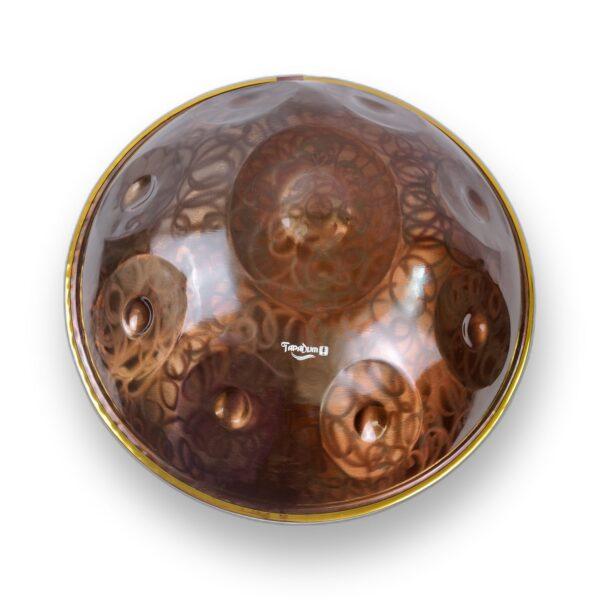
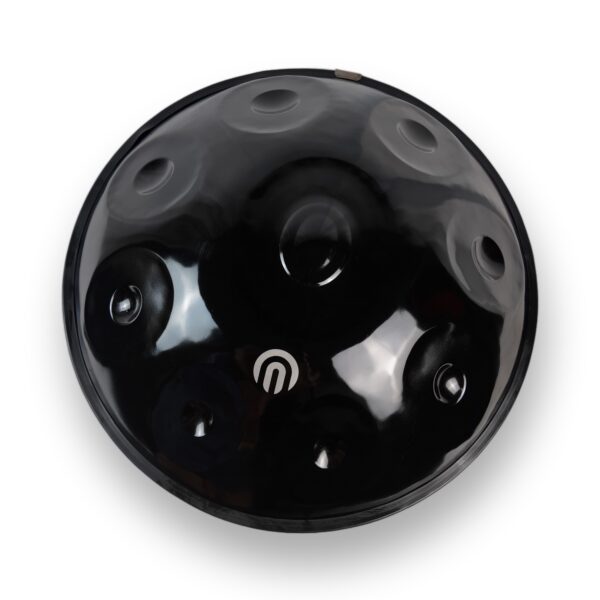
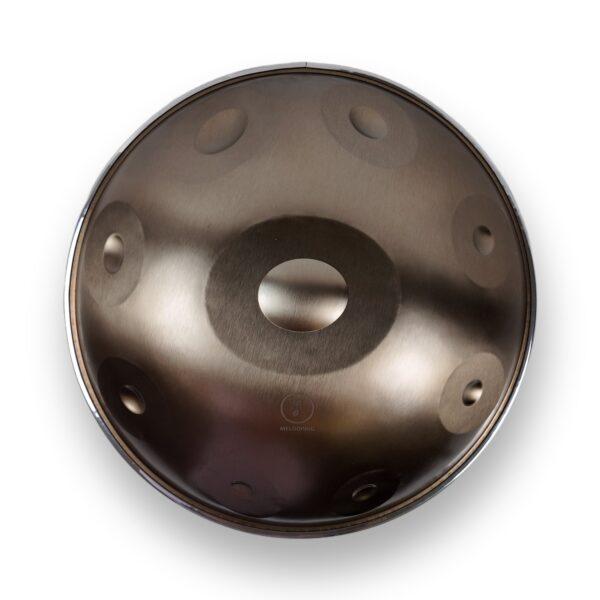
Our current collection includes entry and professional instruments in D Kurd and Hicaz, with nitrided, stainless and treated finishes. Stock and prices change, so the live product page—not a fixed number in an article—is the reliable source.
Browse the canonical handpan collection, or compare these currently listed examples:

For safe transport, our handpan case and stand guide explains what protection changes between home storage, local sessions and travel. Worldwide shipping & 15-day return.
Frequently Asked Questions
What is a handpan?
A handpan is a hand-played steel percussion instrument with a central ding surrounded by tuned note fields. The fields form one fixed scale and produce layered partials rather than a single simple tone.
Is a handpan easy for beginners?
It is easy to produce a coherent first phrase because the notes belong to one scale. Developing touch, rhythm, dynamics and clean articulation still takes practice.
What is the best first handpan scale?
D Kurd is a common and flexible starting point, especially for minor, meditative improvisation. Hicaz is a strong alternative for players specifically drawn to its augmented-second colour.
How many notes should a beginner choose?
Nine notes—one ding and eight surrounding fields—are enough for a wide range of first melodies and rhythms. More notes are useful when they serve a clear musical need.
Is stainless steel better than nitrided steel?
Neither is universally better. Stainless steel often sustains longer and resists corrosion more easily; nitrided steel often gives clearer separation and a more controlled decay. Tuning quality remains more important than the material label alone.
Can a handpan be retuned?
A qualified tuner can correct drift or restore damaged tuning within limits. Retuning is specialist work; it is not a practical way to convert an instrument into a completely different scale.
How should I protect a handpan?
Wipe it dry after playing, avoid impact and extreme heat, and use a fitted case for transport. Follow the care instructions for the exact steel and surface treatment.
[…] Neither instrument is a downgrade of the other — they’re built for different goals. If you want to sit down and immediately play something musical, without years of technique, the tongue drum wins. If you want the deeper dynamic control and overtone complexity that comes from years of handpan practice, that instrument rewards the investment differently. For a deeper look at how the handpan sounds and plays, see our complete handpan guide. […]
[…] you are weighing the two, our complete handpan guide lays out the trade-offs. For sizes and scales, see the steel tongue drum buyer’s guide, and […]
[…] Beginners guide, and if you’re still deciding between a handpan and a related instrument, our complete handpan guide and Steel Tongue Drum Buyer’s Guide both walk through D Kurd’s role across the wider […]
[…] Our Handpan Tapadum (9 Notes, D Kurd) uses the D Kurd scale, one of the most common starting scales for exactly this kind of work — melodic, minor-toned, forgiving to improvise on. If you’re deciding between a handpan and a similar instrument, we compare the options directly in our complete handpan guide. […]
[…] much as through music. If you are still deciding between a handpan and its relatives, our guide to handpans and similar instruments compares the […]
[…] your first instrument, the best handpans for beginners compares the models directly, and our complete handpan guide is worth reading if you are still deciding which family you […]
[…] New to the instrument? Our steel tongue drum buyer’s guide covers scales and sizes, and our complete handpan guide explains how the families […]