
Oud Strings Guide: Kurschner Sets, Materials & When to Change
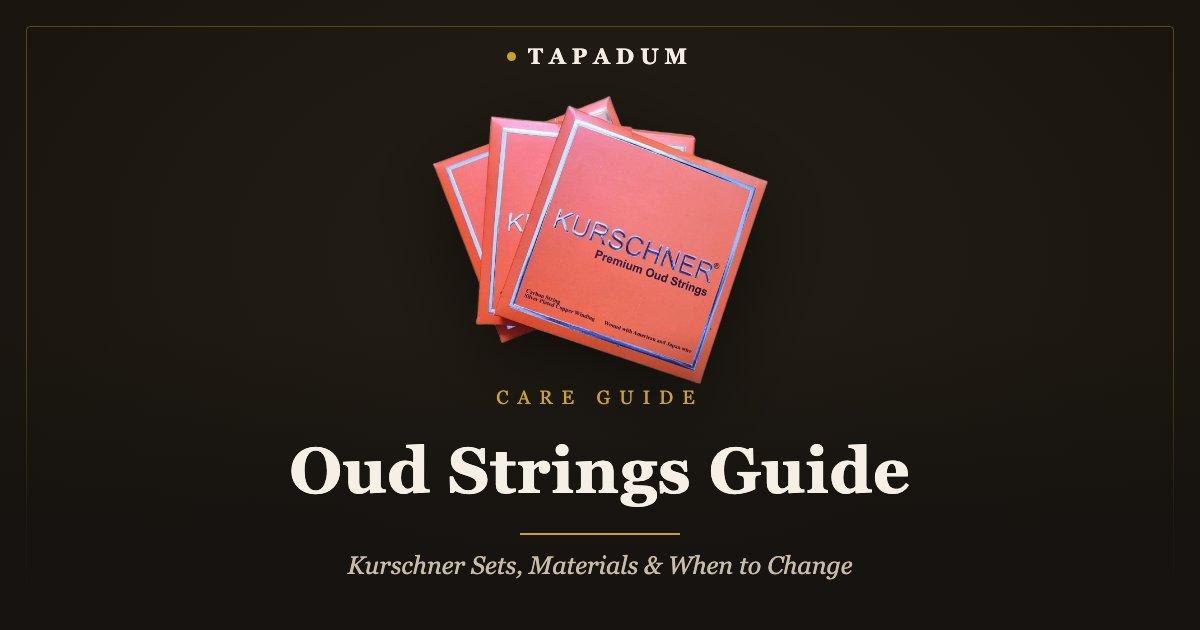
What you’ll learn: what actually separates a Turkish oud string set from an Arabic one (it’s not just tuning), how often to change your strings based on how much you play, and the signs that tell you it’s time before your ear does.
Tapadum’s Kurschner oud string sets split into two materials, not just two tunings: the Turkish set (€89) is nylon and silk, while the Arabic 2 set (€92) is PVF carbon in three gauges. Regular players should expect to change strings every few weeks; occasional players can stretch that to several months.
Turkish vs Arabic String Sets — What’s Actually Different
The two sets aren’t interchangeable, and the difference goes deeper than which tuning system they’re built for. The Turkish set uses nylon and silk construction, tuned for the brighter, more focused voice Turkish maqam playing calls for. The Arabic 2 set uses PVF carbon instead, available in three gauges — 0.08mm, 0.09mm, and 0.10mm — which gives players room to fine-tune tension and brightness for the deeper, more sustained phrasing Arabic maqam repertoire demands. Carbon strings also read as more durable and tonally clearer than nylon, which is part of why the Arabic set carries a slightly higher price.
How Often to Change Your Oud Strings
There’s no fixed calendar answer — it comes down to playing frequency. A player practicing daily or performing regularly will typically need a fresh set every few weeks, since repeated string contact with the fret-free fingerboard and constant retuning wear the winding down faster than the ear notices at first. An occasional player, picking up the oud a few times a week, can often stretch a set to several months before tone or tuning stability suffers.
Signs Your Strings Need Replacing
Watch for three signals rather than counting weeks. A string that’s gone dull or lost its overtone shimmer — especially noticeable on the higher courses — is the clearest sign. Tuning that won’t hold through a full practice session, even after the wood has settled, often points to fatigued windings rather than a peg problem. And visible fraying or discoloration near the bridge or nut means the string is past its working life regardless of how it still sounds.
Matching Strings to Your Tuning System
Before ordering, confirm which tuning system you play — Arabic Standard, Arabic High, Turkish Standard, or the Bolahenk alternative — since string sets are matched to a specific tuning’s tension requirements. We cover all four systems in our complete oud guide. If you’re unsure which tuning your teacher or ensemble expects, confirm before ordering rather than guessing — a string set under the wrong tension either won’t reach pitch cleanly or will sit under more strain than it’s built for.
Frequently Asked Questions
What’s the difference between Tapadum’s Turkish and Arabic oud string sets?
The Turkish set is nylon and silk; the Arabic 2 set is PVF carbon available in three gauges (0.08mm, 0.09mm, 0.10mm). Beyond tuning, the carbon strings are generally more durable and tonally brighter than the nylon set.
How often should I change my oud strings?
Regular players should expect to change strings every few weeks; occasional players can often go several months. Watch tone and tuning stability rather than counting weeks strictly.
How do I know when a string needs replacing?
A dulled tone with lost overtones, tuning that won’t hold through a session, or visible fraying near the bridge or nut are the three clearest signs.
Can I use Arabic strings on a Turkish oud, or vice versa?
The sets are matched to different tuning systems and tension requirements, so mixing them risks poor intonation or excess string strain. Match your string set to the tuning your instrument and repertoire actually use.
Are carbon strings better than nylon strings for oud?
Neither is objectively better — carbon (Arabic 2 set) offers more durability and tonal clarity, while nylon and silk (Turkish set) is voiced for the brighter, more focused sound Turkish maqam playing calls for. The right choice depends on your repertoire.