
How Much Does an Oud Cost? A Price Guide by Level
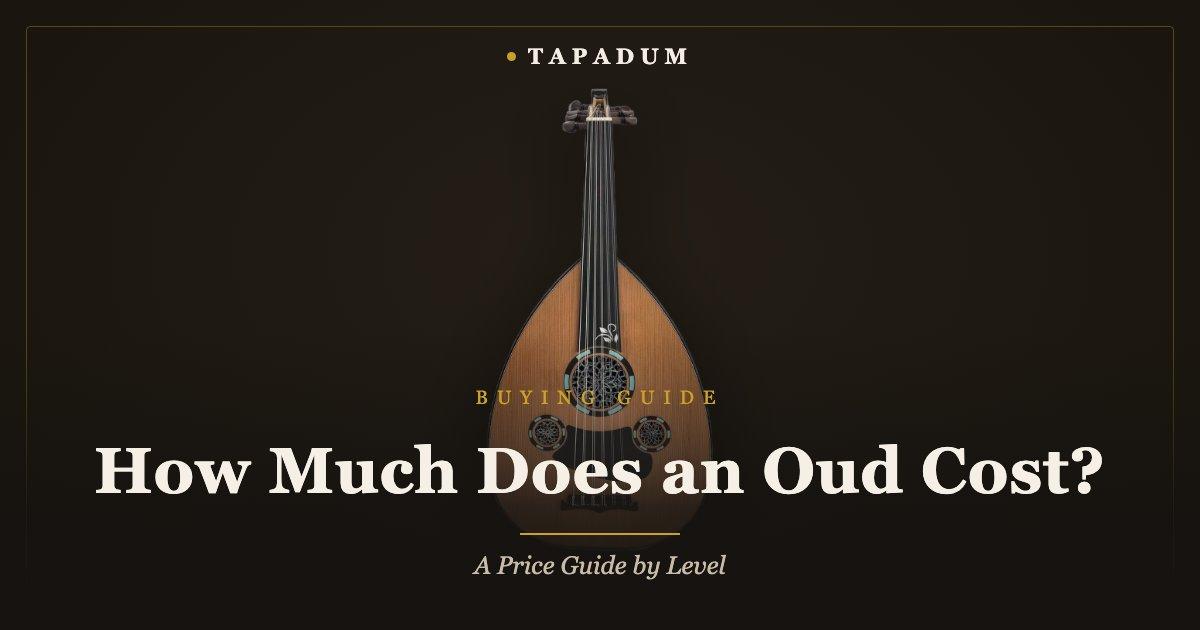
What you’ll learn: what you actually get at each Tapadum oud price tier — €549 to €1,300 — and why the jump from one tier to the next is about tonewood, hand-carving, and individual quality control, not just a bigger number.
A genuinely playable oud from Tapadum starts around €549 and runs to roughly €1,179 for a professional master-luthier instrument with a built-in pickup. Electric and silent ouds sit in their own track, from €629 to €699. The price isn’t random — it tracks three things: how the wood was sourced and aged, whether the bowl was carved by hand or built on a jig, and how much individual attention the instrument gets before it ships.
Entry Tier: €549–€599 — Sultan Collection Beginner Ouds
The Turkish Oud Smyrna (€549) and Arabic Oud Smyrna (€549) anchor this tier — solid cedar or spruce tops, geared or fixed hardware built to survive a beginner’s first clumsy months. We cover exactly which of these to buy and why in our beginner oud guide. Below this range, expect plywood soundboards that can’t hold a stable setup — the real reason cheap ouds frustrate new players, more than any lack of skill.
Step-Up Tier: €628–€979 — Second Instruments and Entry Master-Luthier
The Nova Turkish Oud (€628) uses traditional friction pegs and a spruce top voiced for ensemble clarity — built for players moving beyond their first instrument, not starting on one. A step further up, the Professional Turkish Oud by Feramis Aktas (Maple, €979) is the most accessible entry point into a genuine master-luthier line, built by a workshop with an unbroken lineage back to master Sinai Ozkan.
Professional Tier: €934–€1,300 — Master-Luthier and Amplified Concert Instruments
This tier is where wenge and cedar tonewoods, hand-carved bowls, and concert-level setup live. The Cedar Top Professional Oud (€1,199) is built for players who have outgrown a beginner instrument. Wenge-bowled Arabic ouds with cedar tops run €1,116, and the Professional Turkish Oud by Feramis Aktas with pickup (€1,179) adds a built-in microphone for working musicians who record and perform live.
Electric and Silent Ouds: A Separate Price Track
Electric ouds don’t follow the acoustic price ladder because you’re paying for pickup electronics and construction method, not tonewood aging. The Silent Electric Oud MG-E2 (€629) uses a frame-style, no-soundbox build for headphone practice and pedalboard work. The semi-hollow Arabic electric oud (€699) keeps a resonant bowl for lower-feedback stage use. We go deeper on which electric oud fits which use case in our complete electric oud guide.
What You’re Actually Paying For
In my own quality-control work, the price gap between tiers comes down to three things. First, tonewood: a properly aged spruce or cedar soundboard takes longer to source and costs more than a rushed one, and it’s the single biggest factor in how an oud ages tonally over its first few years. Second, construction method: hand-carved bowls take a luthier days longer than staves assembled on a jig, and that labor shows up in the price. Third, individual attention — every oud that leaves our Izmir workshop passes its own tuning-stability and soundboard-response check before it ships to our Brisighella, Italy showroom, and that per-instrument inspection costs more than batch processing ever would.
When a Cheap Oud Costs You More
An oud priced well under €500 usually cuts one of those three corners, most often the tonewood. Plywood soundboards can’t be set up to hold stable intonation, which means more repair visits and a frustrating first year — the “savings” disappear fast once you account for that. If your budget is tight, a well-built entry instrument like the Smyrna beats a cheaper alternative every time.
Frequently Asked Questions
What’s the cheapest genuinely playable oud at Tapadum?
The Turkish Oud Smyrna at €549 is the entry point into instruments built with proper tonewood and hardware that holds tuning — below that range, plywood soundboards become a real risk.
Why do master-luthier ouds cost so much more than beginner models?
Hand-carved bowls, longer-aged tonewoods, and individual quality control at the Izmir workshop all add labor and time that mass-produced beginner instruments skip.
Are electric ouds more expensive than acoustic ouds?
Not necessarily — electric and silent ouds (€629–€699) sit in the middle of the acoustic price range. You’re paying for pickup electronics and frame construction rather than tonewood aging.
Is a €1,000+ oud worth it for an intermediate player?
If you’ve outgrown a beginner instrument’s tonal range and setup, yes — the Cedar Top Professional and similar instruments are built for players who need concert-level projection and stability, not just a bigger price tag.
Does a higher price always mean a better oud?
Within Tapadum’s collection, yes, because every tier reflects a real difference in tonewood, construction method, or electronics. Outside a trusted workshop, price alone isn’t a reliable quality signal — provenance and individual inspection matter more.