
Description
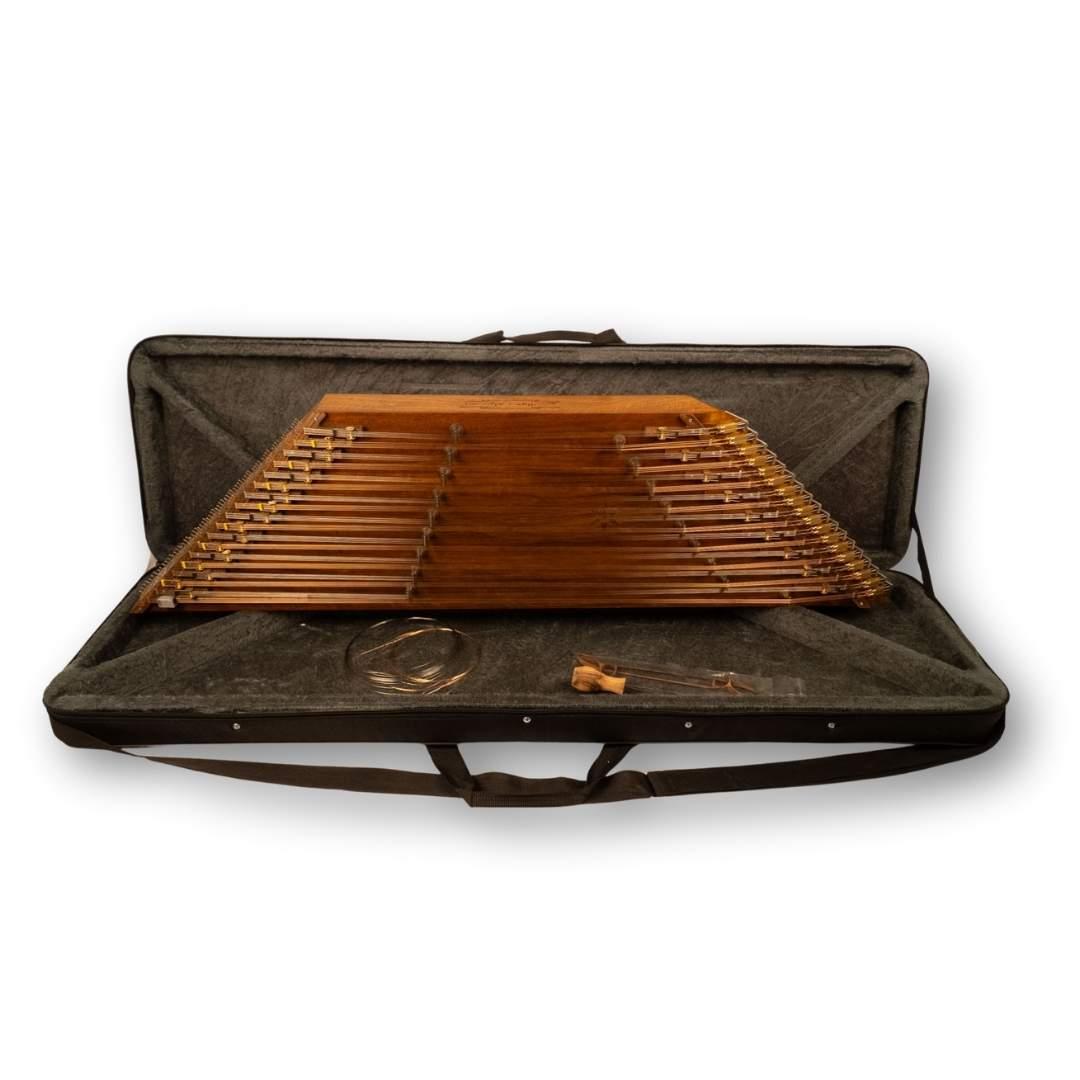
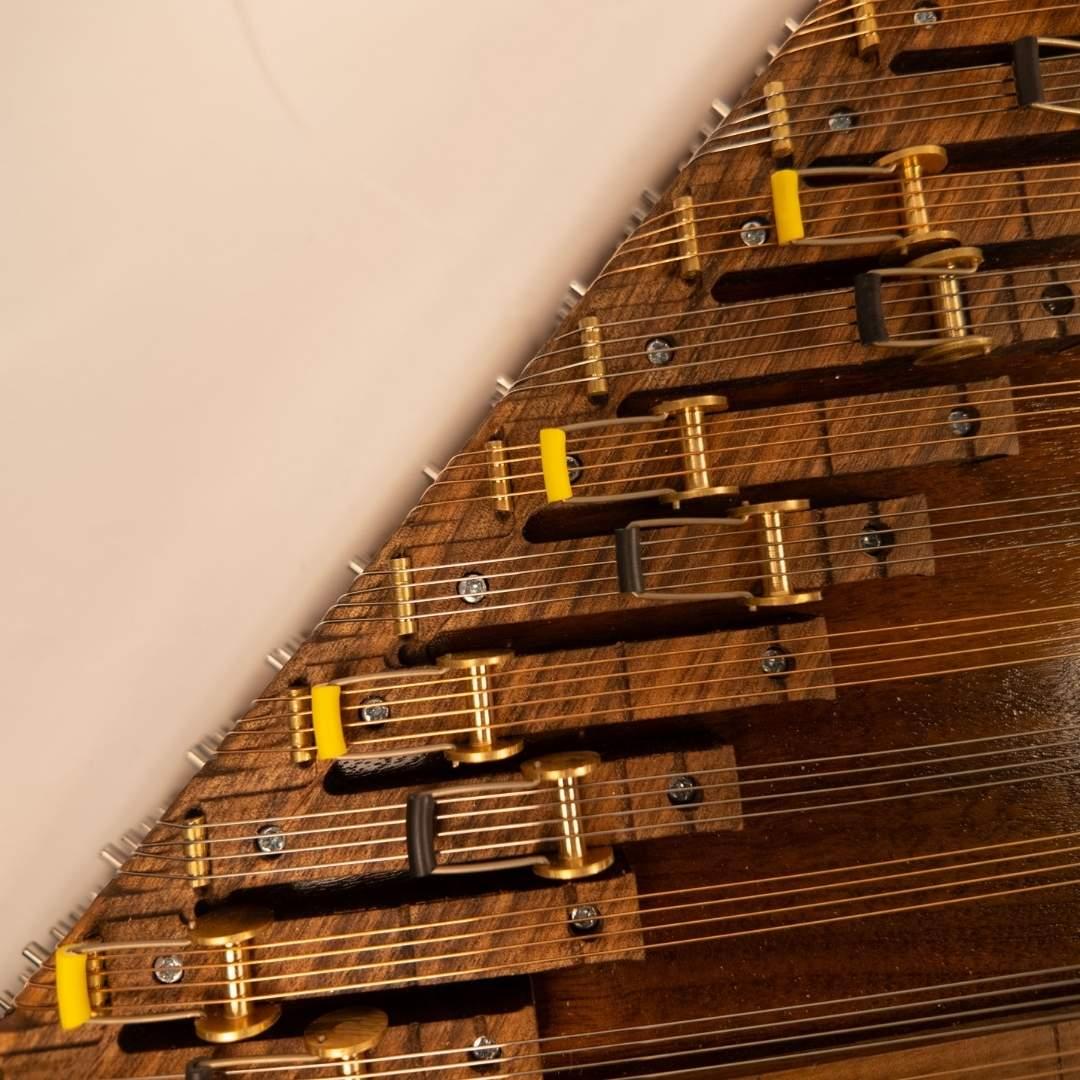
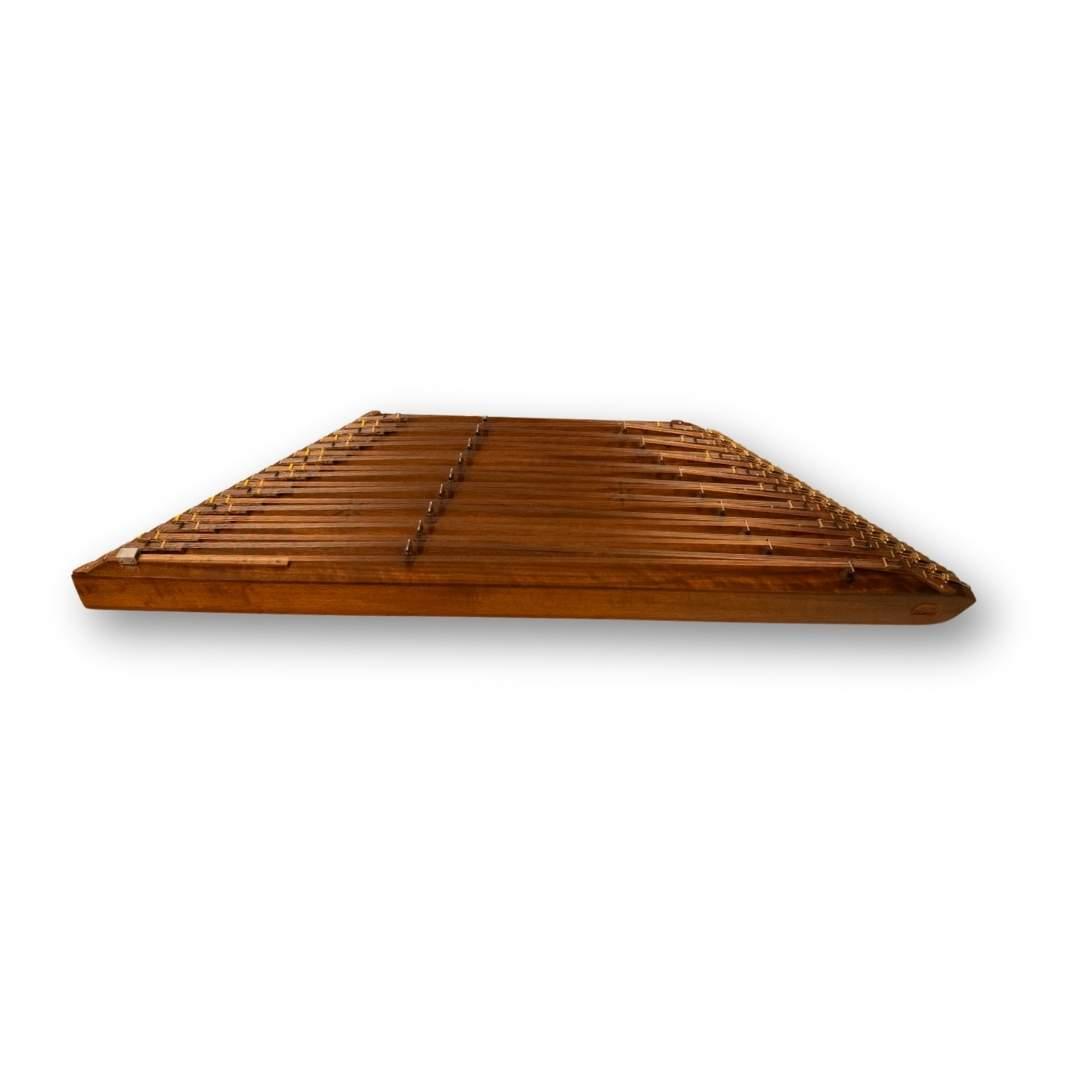
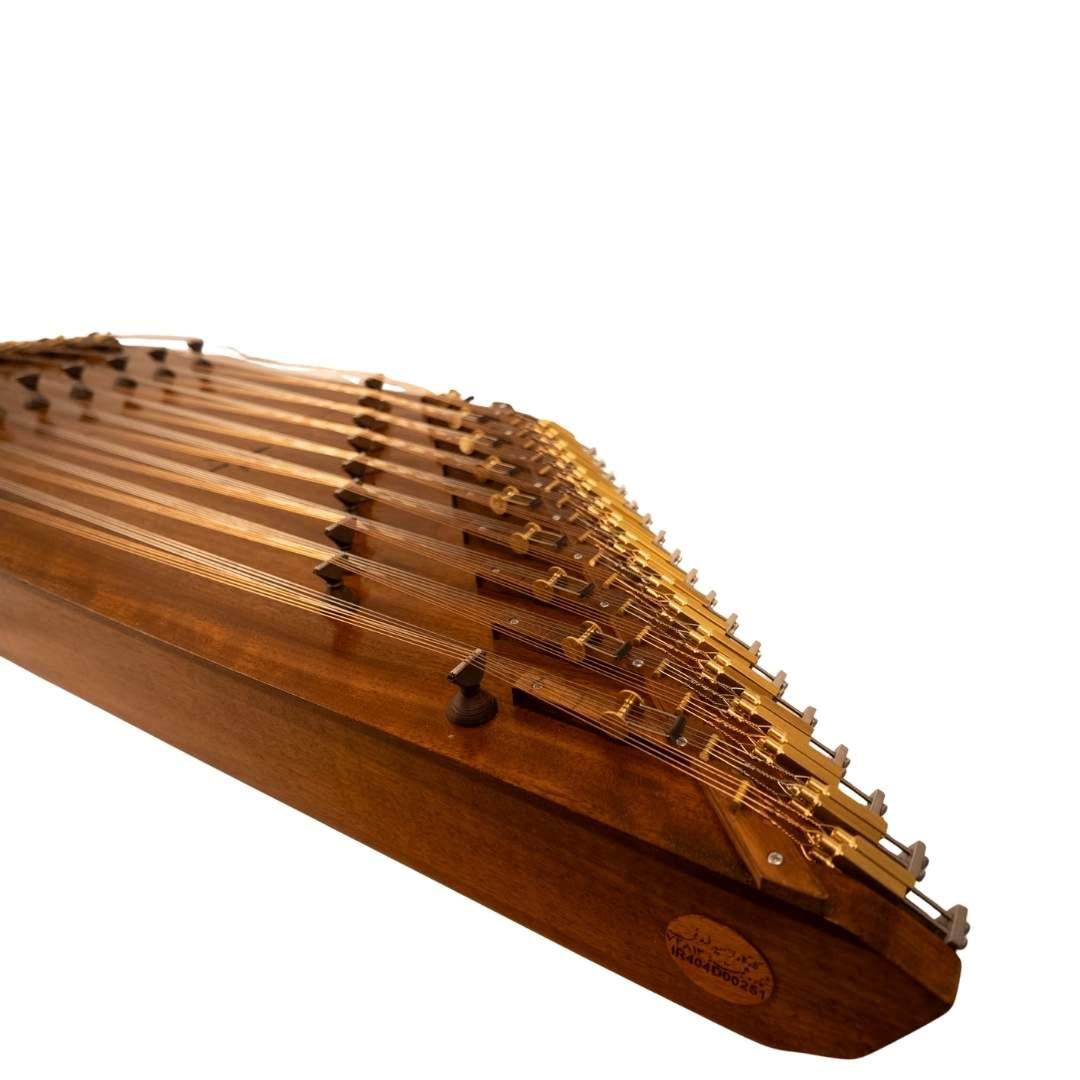
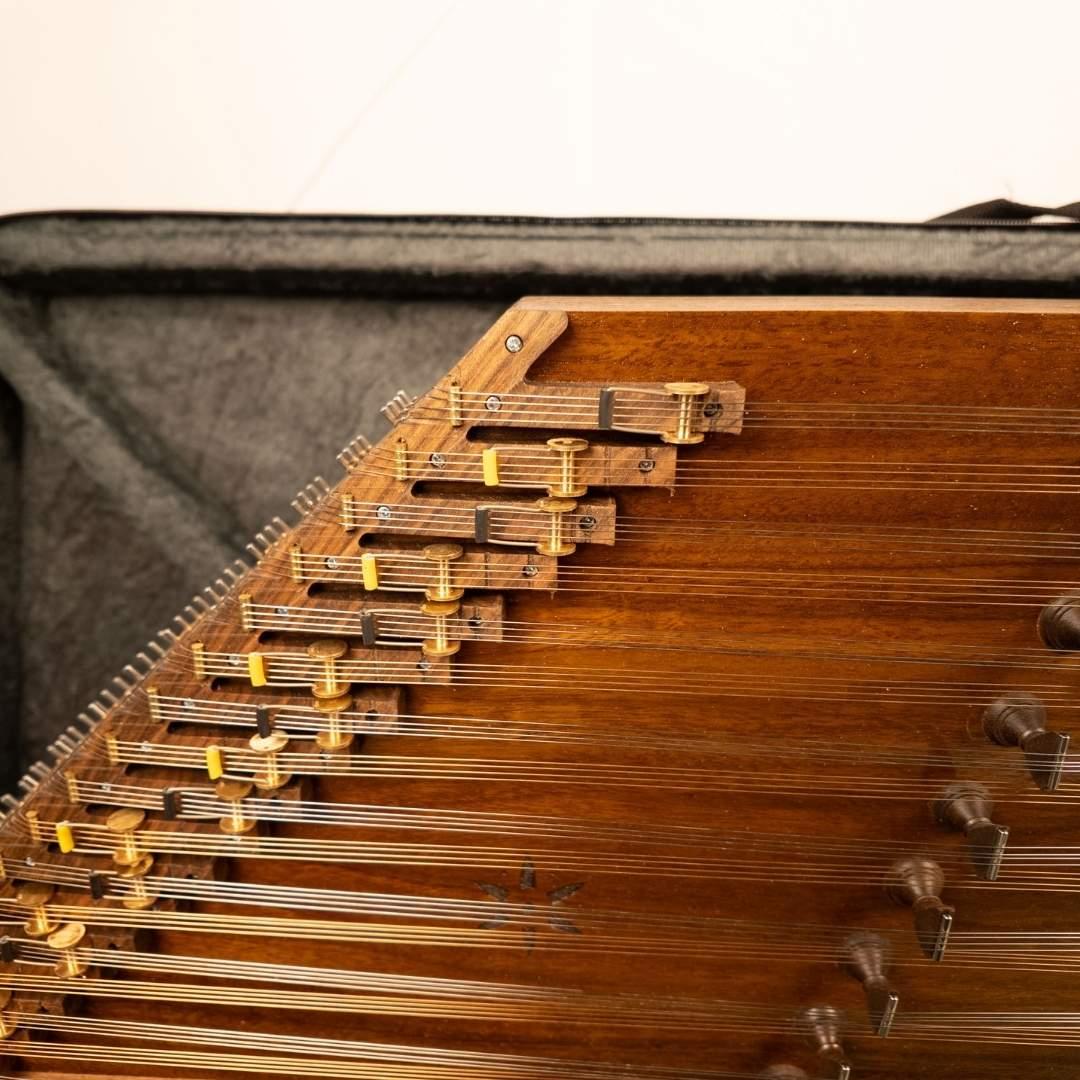
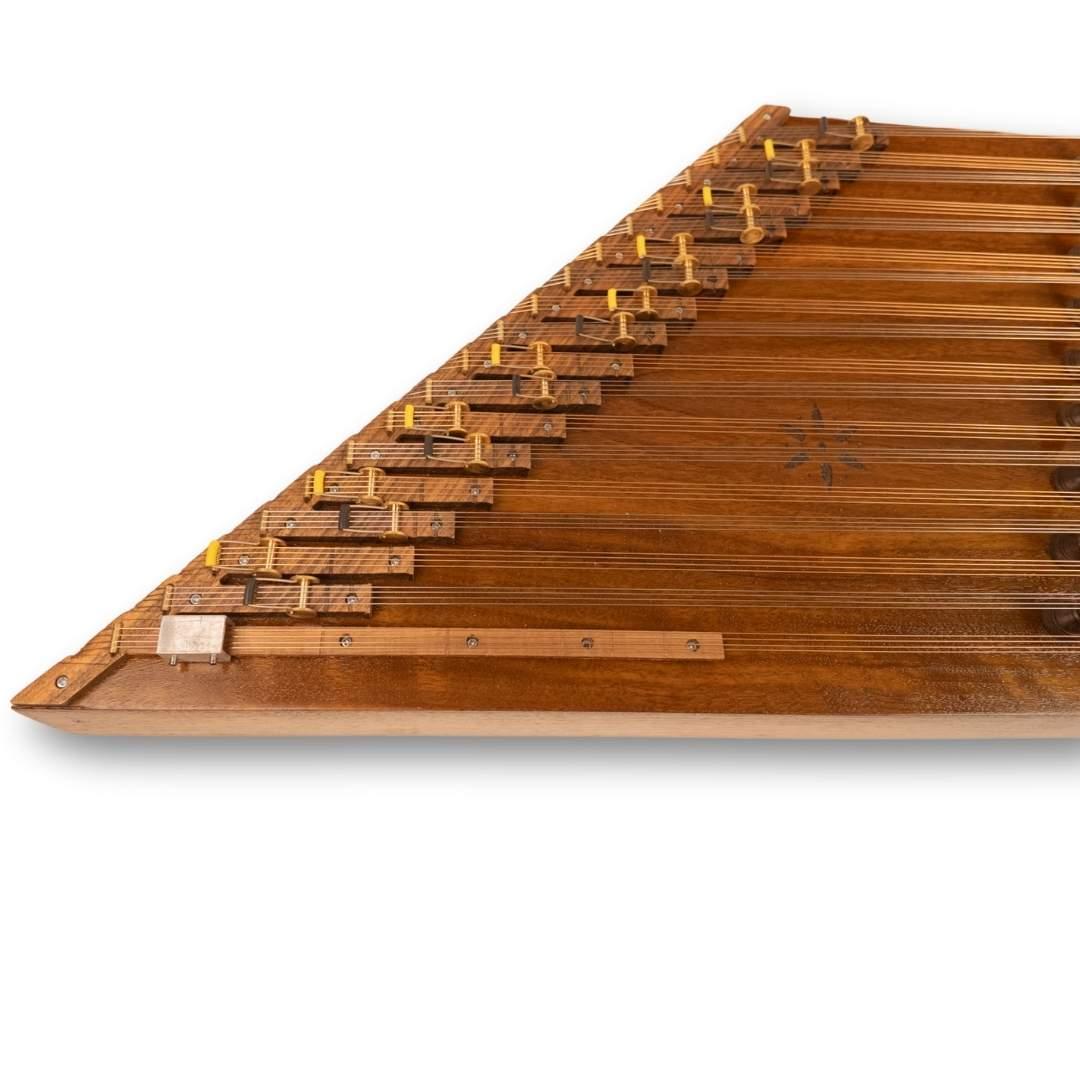
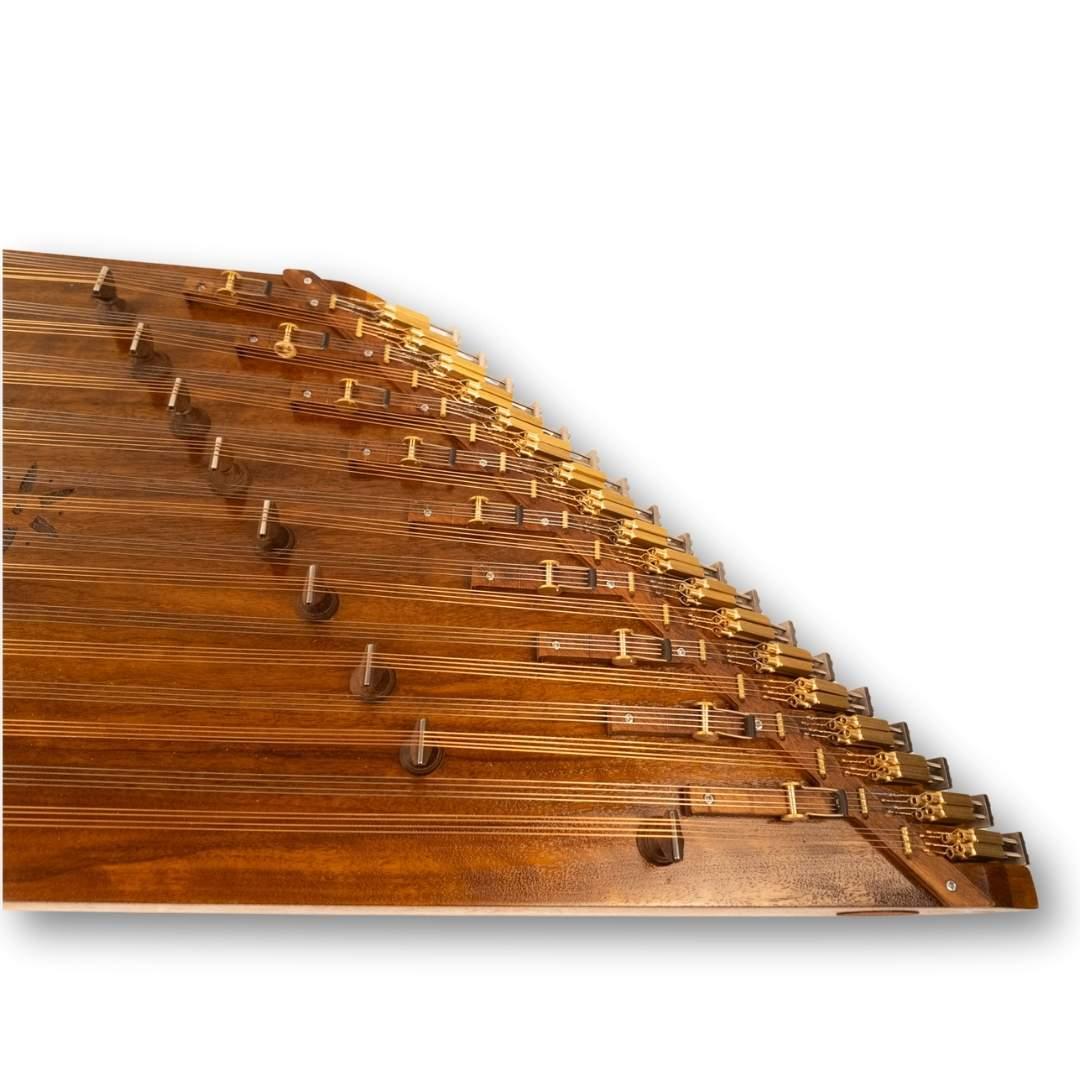
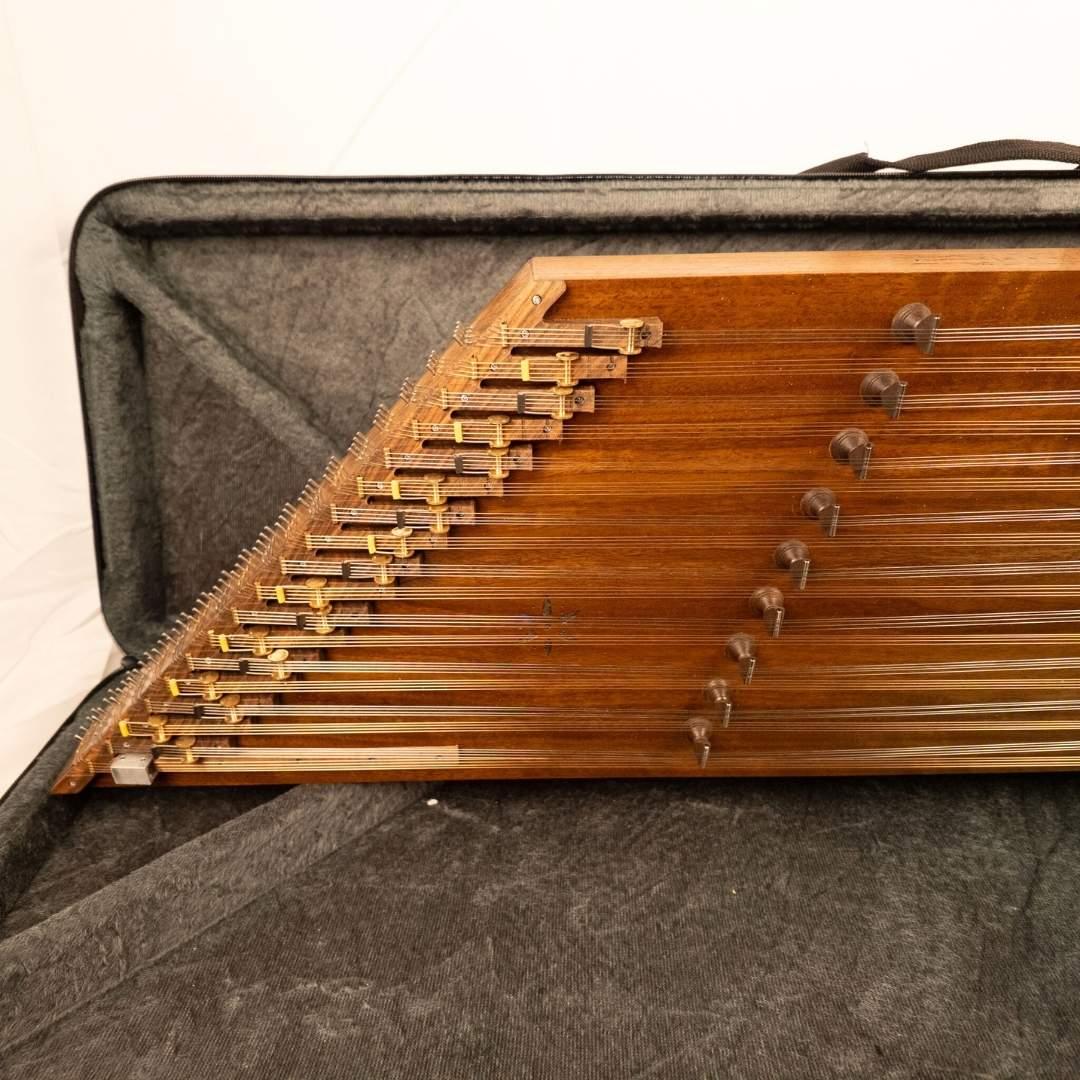
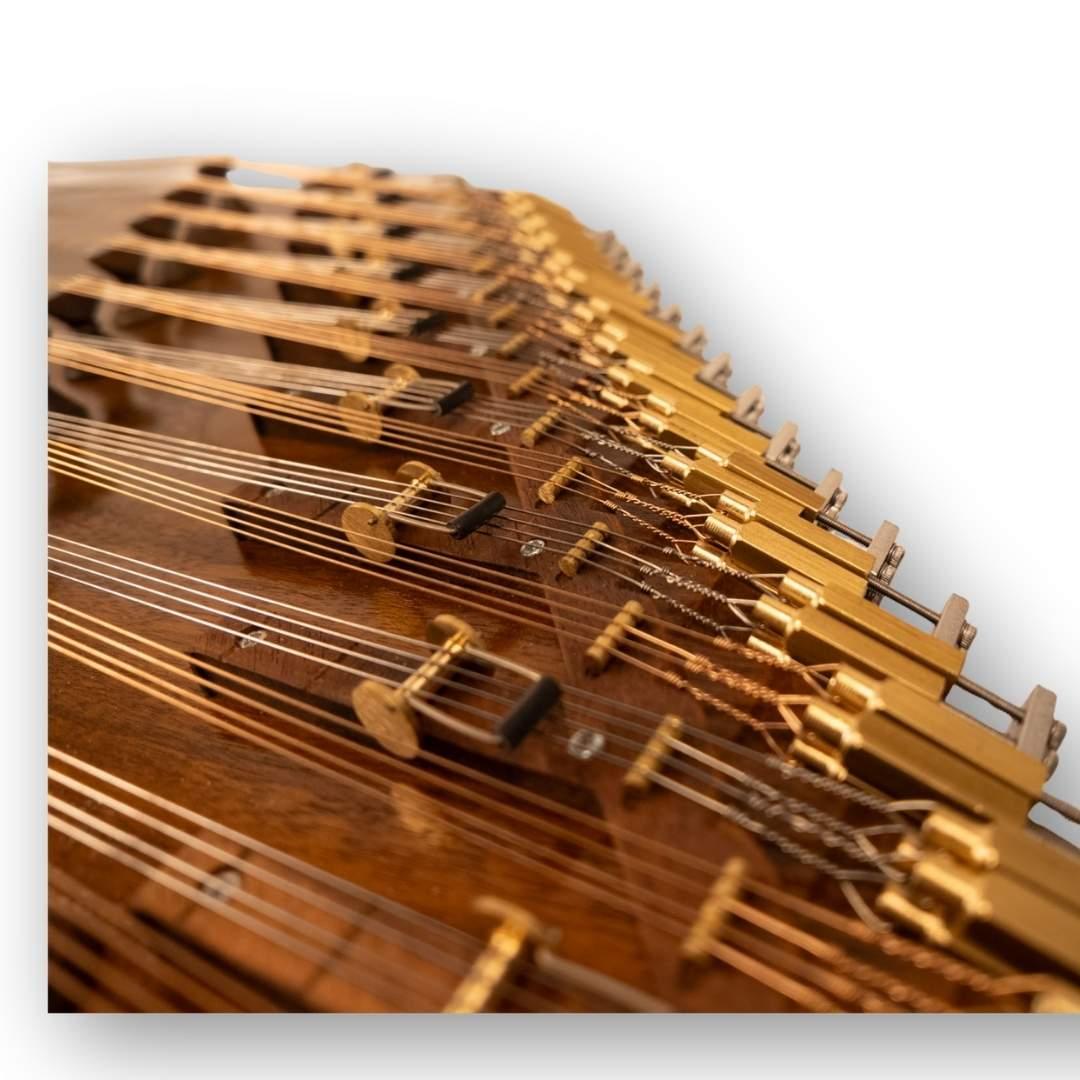
The Special Santur with Mandals is a nine-bridge hammered dulcimer built around a mechanism no traditional santur carries: a row of mobile sharping levers, designed by Behrad & Zolani — the Tehran-trained santur master Kourosh Zolani and the Iranian-Canadian inventor Mohssen Behrad. A conventional mandal lifts its course by a half-step and locks there. These levers travel — through as much as three semitones — and stop anywhere along that path, including the points that fall between the notes of the tempered scale.
What a mobile lever changes
The mandal principle comes from the qanun, where a bank of small levers has let players shift a course mid-piece for centuries. What is different here is that the travel is continuous rather than stepped. You can raise a course a half-step, a whole step, or settle it on a koma — one of the small intervals that Persian, Turkish and Arabic modal systems depend on and that a fixed lever cannot reach. Modulation between maqams stops being a retuning job and becomes a movement of the hand, made while the piece is still running.
Nine bridges, walnut body
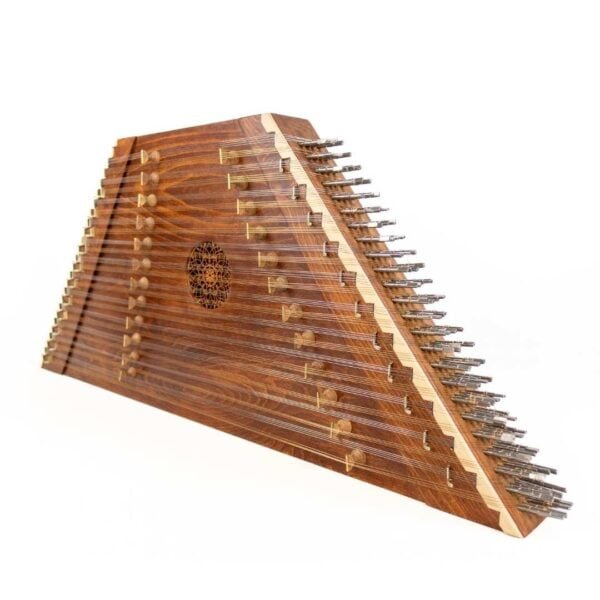
The instrument follows the classical Persian layout: courses stretched over two parallel rows of nine bridges (kharak), each course sounding two different pitches depending on which side of its bridge you strike. The body is walnut, a dense wood that gives a warm centre and a long, even decay rather than a bright attack that fades quickly. The courses are played with mezrab — light wooden mallets held between the fingers — the technique behind the santur’s rapid runs and its overlapping shimmer.
Who this santur is for
This is an instrument for a player who works across tuning systems rather than inside one. If your repertoire stays within a single dastgah, a traditional instrument from our santur collection will serve you and cost considerably less; if you need fixed half-step changes only, the sharping-lever models earlier in the range already do that. The mobile mandal earns its place when the music asks for intervals the tempered scale does not contain — Arabic maqam degrees, Persian koma, and the microtonal writing of contemporary composers.
Repertoire and traditions
Persian classical dastgah and avaz playing sit at the centre of this instrument’s repertoire, and the same family runs through Greek santouri, Turkish and Indian practice. With levers that reach between the notes, it also carries into Arabic maqam ensembles, into cross-tradition work where one instrument has to meet another’s tuning, and into film, ambient and improvised music.
Care and maintenance
Keep the instrument in a stable environment, away from direct heat and from swings in humidity — both the soundboard and the seating of the bridges respond to moisture. Return the levers to their resting position before storing it, check the tuning regularly, and wipe the strings with a soft cloth after playing. Spare strings, mallet sets and tuning keys are in our santur accessories range, and our complete guide to the Persian santur covers tuning and mallet technique in more depth.
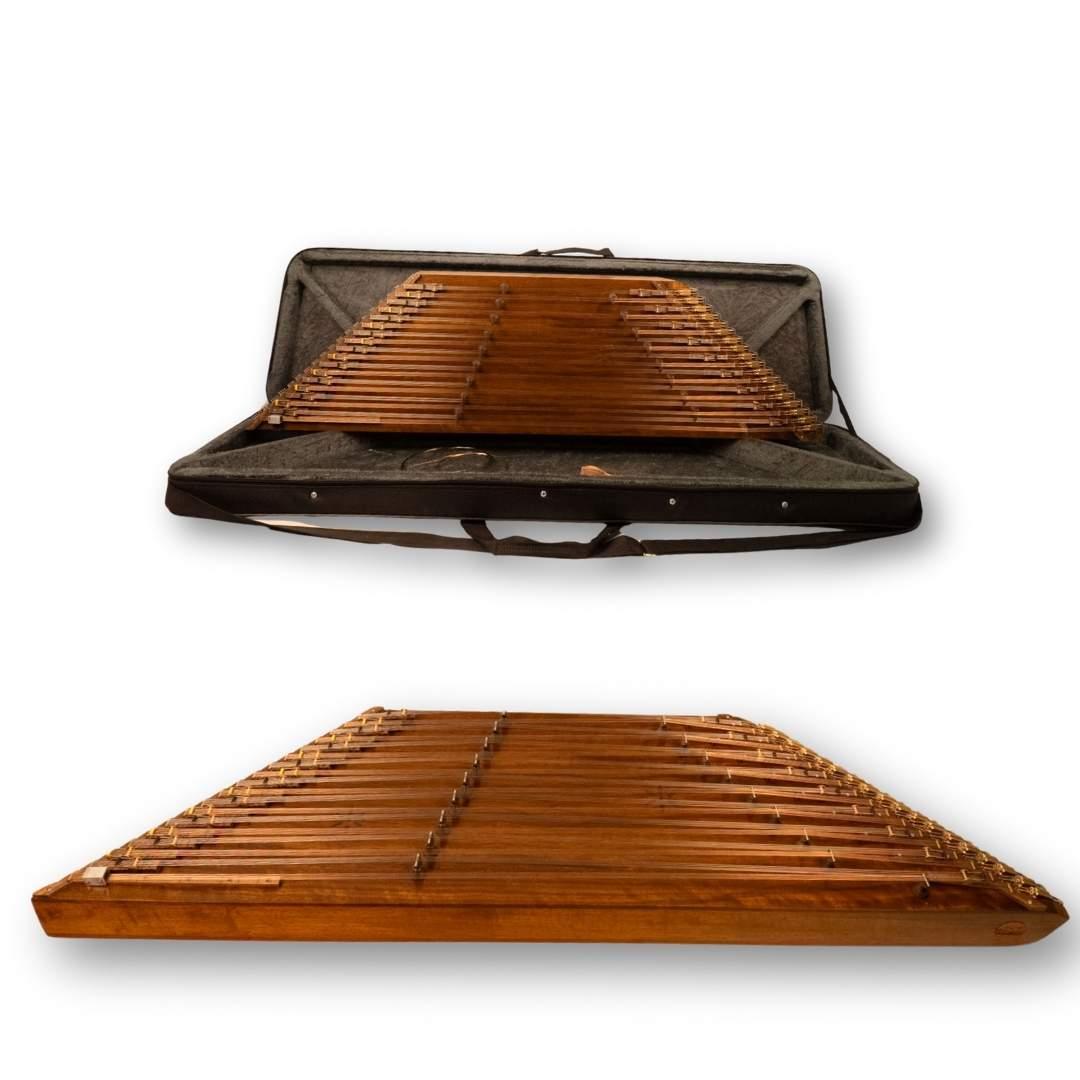
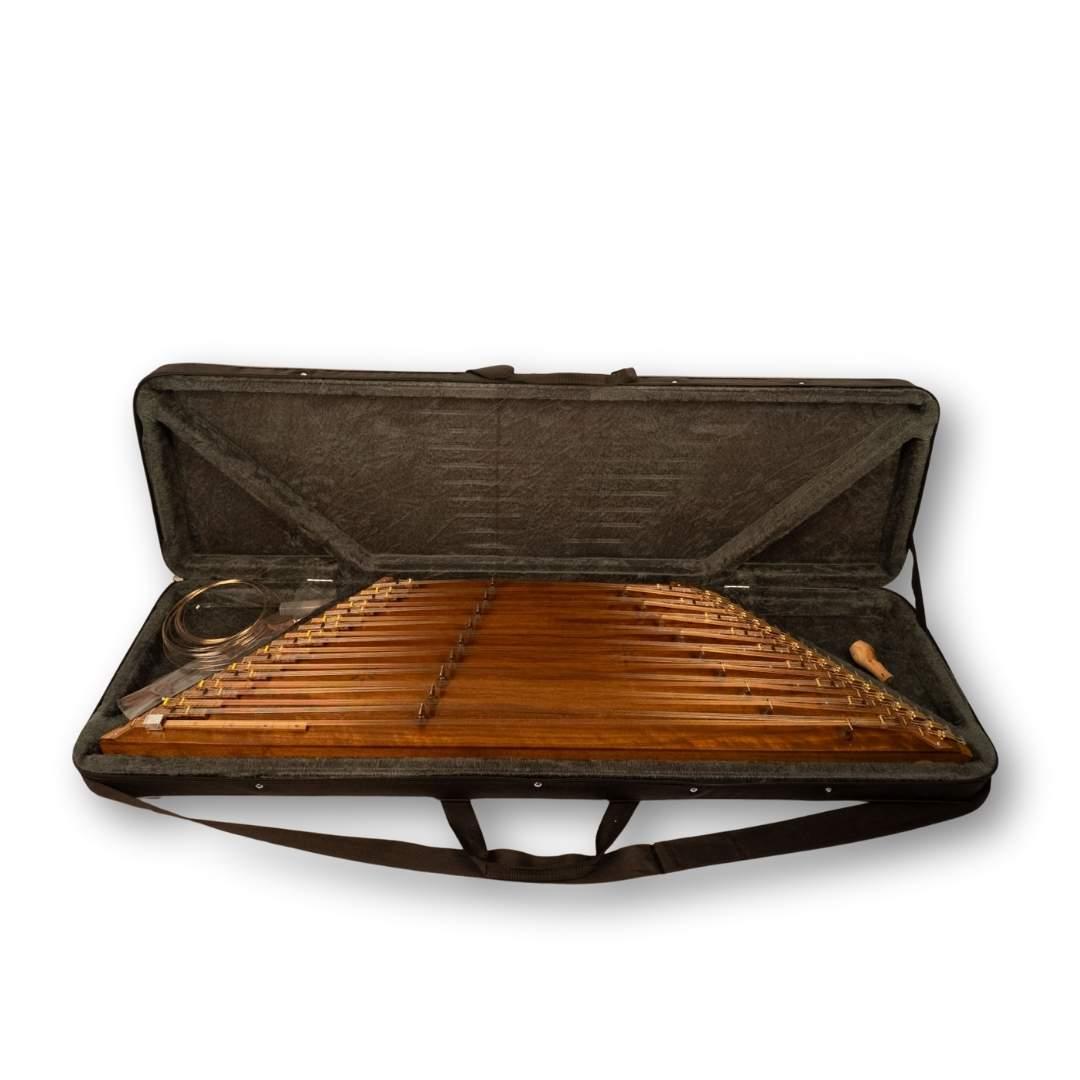
Ships in a hard case with traditional mezrab mallets, a tuning key and a spare string set. Worldwide shipping & 15-day return.

Reviews
There are no reviews yet.