
The Shourangiz: Hossein Alizadeh’s Modern Take on the Persian Tar
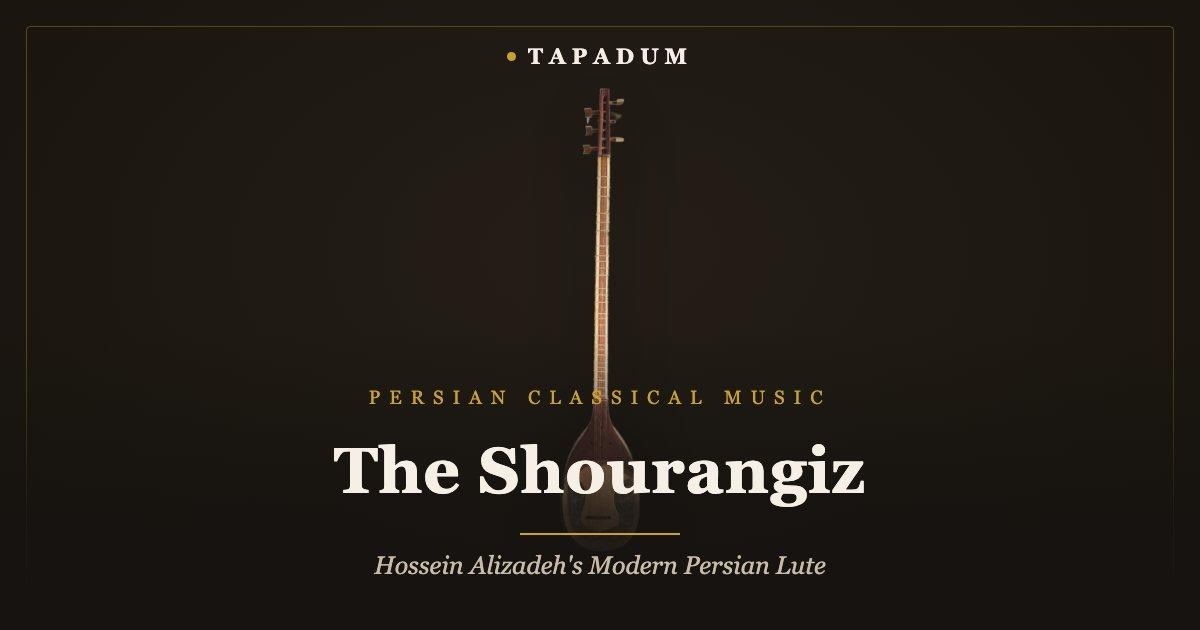
What you’ll learn: what the shourangiz actually is, why master musician Hossein Alizadeh designed it as an alternative to the tar, how its part-wood, part-skin body sets it apart, and how it’s tuned and played.
The shourangiz is a Persian lute designed in the late twentieth century by Hossein Alizadeh, one of Iran’s most celebrated contemporary musicians, as a lighter and brighter alternative to the tar. It sits between the tar and the setar in size, and its name — roughly “stirring enthusiasm” in Persian — points directly at the energetic, expressive voice Alizadeh built it to carry.
This guide covers what the shourangiz is, why Alizadeh designed it, how it’s built and tuned, and where it fits next to its better-known relatives.
What Is the Shourangiz?
The shourangiz is a plucked lute that combines features of the tar and the setar without being a copy of either — bigger than a setar, smaller than a tar, and voiced somewhere between the two. It was designed specifically to carry Persian classical repertoire with a lighter touch and brighter projection than a full-sized tar, while keeping the core sound identity of Iranian classical music intact.
Hossein Alizadeh’s Design
Hossein Alizadeh designed the shourangiz to give Persian classical musicians an instrument built for a different technical approach than the tar — more agile, easier to carry, and suited to contexts where the tar’s fuller body and heavier projection weren’t what a piece called for. Alizadeh is one of the most significant figures in modern Persian classical music, a virtuoso tar and setar player and composer, and the shourangiz reflects his broader pattern of extending the classical instrument family rather than replacing it.
Construction: Part Wood, Part Skin
The clearest physical difference between the shourangiz and its two relatives is the soundboard. A setar’s face is entirely wood; a tar’s is entirely skin. The shourangiz splits the difference — its face is part wood, part skin — which is a large part of why its voice sits tonally between the two instruments rather than simply being a smaller tar or a bigger setar.
Tuning and Playing
Like the tar and setar, the shourangiz doesn’t have one fixed tuning — its double courses are typically tuned in unison, and the specific tuning shifts with the dastgah (modal system) being performed and the vocal range of any singer it’s accompanying. Playing technique follows Persian classical convention for plucked lutes in this family, adapted to the instrument’s lighter frame and brighter response.
Shourangiz vs Tar vs Setar
Where the tar is built to lead an ensemble with a full, skin-faced voice, and the setar is built for the softest, most intimate solo playing, the shourangiz occupies real middle ground — lighter and more agile than the tar, with more projection than the setar’s bare-nail technique typically produces. It isn’t a beginner’s instrument or a simplified version of either; it’s a genuinely distinct voice Alizadeh built for a specific technical and tonal gap between the two.
Availability
We’re being direct about this: our Persian Shourangiz is a genuinely rare, handcrafted instrument, and stock runs thin — check current availability before planning around it specifically. If you want to explore this part of the Persian lute family while waiting, our Persian tar guide and setar buying guide cover the two instruments the shourangiz sits between.
Frequently Asked Questions
Who invented the shourangiz?
Hossein Alizadeh, a celebrated Iranian tar and setar virtuoso and composer, designed the shourangiz in the late twentieth century as a lighter, more agile alternative to the tar.
What’s the difference between a shourangiz, a tar, and a setar?
Size and soundboard material sit in between: a setar’s face is entirely wood, a tar’s is entirely skin, and the shourangiz’s is part wood, part skin. It’s larger than a setar and smaller than a tar, with a voice tonally between the two.
Is the shourangiz a beginner instrument?
No. It’s a distinct instrument built for a specific technical and tonal niche between the tar and setar, not a simplified or entry-level version of either.
How is a shourangiz tuned?
Like the tar and setar, it doesn’t have one fixed tuning. Its double courses are typically tuned in unison, and the specific tuning shifts with the dastgah being performed.
Why is the shourangiz called by that name?
“Shourangiz” translates roughly to “stirring enthusiasm” in Persian, reflecting the energetic, expressive voice Alizadeh designed the instrument to carry.