
The Kopuz: The Ancient Ancestor of the Baglama Family
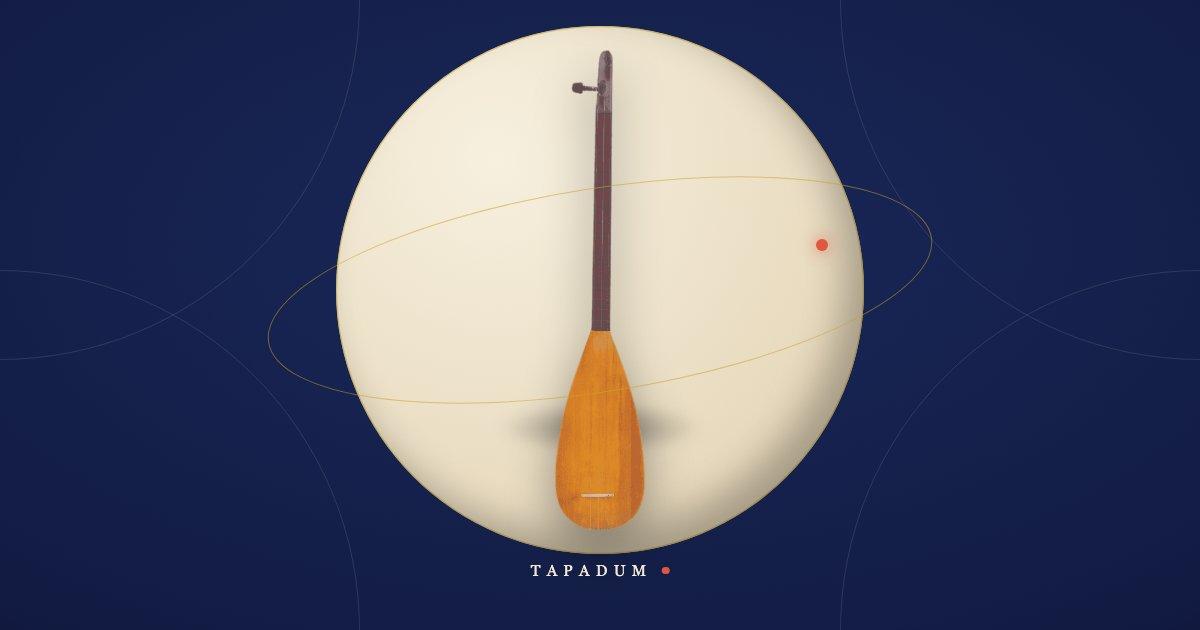
What you’ll learn: where the word “kopuz” comes from and why it’s called the oldest instrument of the Turks, its role in shamanic trance and in the epic tales of Dede Korkut, how it became the ancestor of the baglama family, and what makes today’s revived kopuz — the Dede Sazi — different to play from a modern baglama.
Long before the baglama had a name, there was the kopuz — a word that meant simply “musical instrument” across the Turkic-speaking world, and came to mean one instrument in particular: the long-necked lute that historians and musicologists call the oldest national instrument of the Turks. Almost every stringed instrument in Anatolian Turkish music, the baglama most of all, traces its lineage back to it.
What Is a Kopuz?
The name survives today in a family of related words across Central Asian Turkic languages — komis, kobuz, kobiz, kubuz, homis — all pointing to the same root. It wasn’t a single fixed design so much as a category: a plucked or bowed long-necked lute carried across the steppe by nomadic and semi-nomadic Turkic peoples, appearing in forms that varied by region and era.
From Shamanic Trance to the Epic of Dede Korkut
The kopuz’s earliest documented role wasn’t musical entertainment — it was spiritual work. In the belief systems of the Central Asian steppe, particularly the Tengrist traditions of the Altay region, religious figures known as Kam or Baksı used the kopuz to enter trance states, calling on protective spirits and driving away malevolent ones. The instrument was considered to carry real power, not just accompany a ritual.
That sacred weight carried into Turkic epic storytelling. In the Book of Dede Korkut, the foundational epic of Oghuz Turkic culture, the kopuz appears in the hands of Dede Korkut himself — and, as the old telling goes, when he played, arguments among warriors fell silent. The instrument shifted from a shaman’s tool for contacting the spirit world to the companion of the wandering bards known as ozans, who carried tribal history and legend from village to village on its strings.
The Ancestor of the Baglama Family
Musicologists trace the baglama — and by extension the whole Anatolian saz family — directly back to the kopuz. As Turkic peoples settled from Central Asia into Anatolia, the instrument’s design gradually specialized: frets were added, string courses were doubled and tripled, and a plectrum-driven technique developed. What emerged over centuries was the baglama family we know today. The kopuz is also cognate with instruments still played across the wider Turkic world, from the Kazakh kobyz to the Kyrgyz komuz — a reminder that Anatolia’s stringed-instrument tradition is one branch of a much larger, older family tree.
Today’s Kopuz: The Dede Sazi Revival
No original kopuz from the instrument’s earliest era survives intact, so the kopuz played today — often sold as the Dede Sazi or Balta Saz — is a modern reconstruction, built from historical descriptions and iconography and revived over the past several decades in Turkey. What sets it apart from a standard baglama isn’t just history — it’s technique. Where most baglama-family instruments use doubled or tripled string courses played with a pick (mızrap), the kopuz is strung with single strings and played fingerstyle, typically tuned C–G–C low to high. That fingerstyle technique, closer to a lute or oud hand than a baglama pick hand, is the clearest audible difference between the two.
Tapadum’s own Turkish Kopuz – Dede Sazi follows this reconstruction: a body carved from a single piece of walnut or mulberry, traditional wooden tuning pegs, and a warm, resonant tone suited to the instrument’s fingerstyle playing. At roughly 75 cm long and 3 kg, it sits comfortably alongside a baglama in size while sounding distinctly different in the hand.
Who Should Explore a Kopuz Today?
A kopuz isn’t usually anyone’s first stringed instrument — it rewards players who already have some baglama or lute background and want to explore the technique and history behind the whole family. It suits collectors and folk-music historians drawn to the instrument’s shamanic and epic associations, baglama players curious about where their instrument’s fretting and tuning logic actually came from, and performers working in an ozan-influenced storytelling style where a single-string, fingerstyle voice fits better than a plectrum-driven one.
If you’re choosing your first Turkish string instrument, our Choosing Your First Baglama guide is the more practical starting point — the kopuz is where you go next, once you already know what you’re listening for.
Frequently Asked Questions
Is the kopuz the same instrument as the baglama?
No, though they’re closely related. The kopuz is the historical ancestor of the baglama family. Today’s kopuz is played fingerstyle with single strings, while the baglama uses doubled or tripled string courses played with a pick — the clearest practical difference between them.
What was the kopuz originally used for?
Its earliest documented role was spiritual rather than purely musical: Kam and Baksı religious figures in Central Asian Tengrist tradition used it to enter trance states. It later became central to Turkic epic storytelling, most famously in the Book of Dede Korkut.
Is a modern kopuz historically accurate?
No original kopuz from its earliest era survives intact, so today’s instrument — often sold as a Dede Sazi or Balta Saz — is a modern reconstruction based on historical descriptions and iconography, revived in Turkey over recent decades rather than an unbroken continuous design.
How is a kopuz tuned?
The common modern tuning is C–G–C, low to high, with the two C strings in unison and the G sitting below. It’s a single-string instrument rather than the doubled or tripled courses found on most baglama-family instruments.
Is the kopuz related to instruments outside Turkey?
Yes. The name and instrument family are cognate with related long-necked lutes found across the wider Turkic-speaking world, including the Kazakh kobyz and the Kyrgyz komuz — different regional descendants of the same steppe tradition.

Tapadum is an ethnic music store based in Italy, specializing in handcrafted instruments from the Middle East, the Mediterranean, and the Balkans. Free EU shipping & 15-day return. Explore the full Baglama-Saz collection.